The documentary Home (27 min) is available to watch at the top of the page.
* To watch the film, please enable YouTube/Vimeo cookies through the blue cookie icon at the bottom of the page.
Working in documentary sometimes brings up doubt and mistrust. Even a deep love of the genre cannot hold off the discomfort that rises at the invasion of private lives that certain films depend on. Add to that the cases where the creative liberties documentary filmmakers take with historical fact cross ethical lines with no reckoning at all. And to top that, there is the growing tendency toward stylistic conservatism, driven by commercial pressure, which is stripping documentary of original thought.
And then there are documentary films that remind you why the genre matters. They bring you close to lived experiences that through other modes of representation such as fiction or journalism might have remained more remote, predictable or superficial. They are films that excel at creating a shared sense of intimacy and kinship accessible especially through documentation of fellow humans. Smadar Palgi’s short documentary Home (2020) is one of them.
Winner of Best Student Film awards at the Docaviv International Documentary Film Festival and at the Solidarity Human Rights Film Festival in 2020, Home follows two women as they take on the cleaning of the severely filthy, cluttered and neglected apartment where one of them lives with her twelve cats. As the cleaning progresses, so does the viewer’s familiarity with the tenant’s life. We are never given a full picture, just as the cleaning never produces a sparkling new apartment. Still, little by little, an elusive depth of the tenant’s character comes into view, along with the complex traits that drive her hoarding and the neglect of her home.
We learn that the tenant once worked in high-tech and lived with a partner. She had cancer, and the treatment left her with a heart condition. While still employed and with means, she and her former partner would hire a cleaner. Today she tends the cats’ litter box with stubborn precision, yet finds it hard to summon the emotional strength to look after herself. Her struggle with the cleaning process documented in the film shifts between a refusal to dispose of anything and a stated wish to change. At certain moments, she openly touches on her pain and emotional difficulty, while at other times, her unusual responses to inquiries regarding the state of her apartment challenge conventional ideas of a home and of cleanliness. When the question of whether she suffers from compulsive hoarding surfaces in the fascinating conversation between the two women, the tenant answers, “I don’t know,” leaving the matter open to the viewer’s interpretation. This is not a film out to diagnose, categorize, or judge. It aims to share an experience.
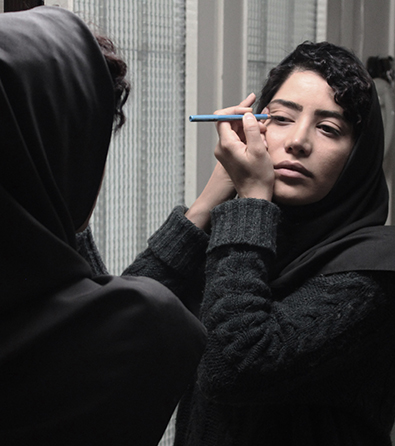
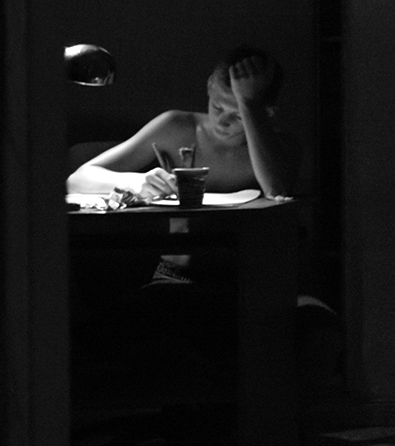
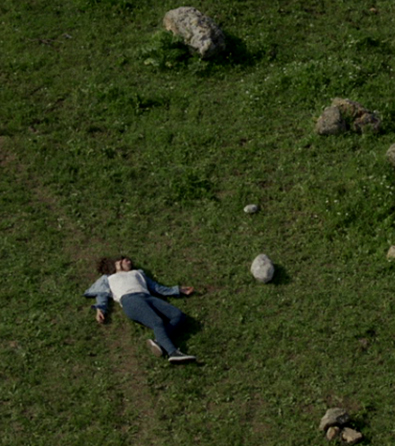
Most striking of all, we are never shown the tenant’s face. Leaving her anonymous, the film relies on her words and voice timbre as well as intriguing visual glimpses of her body and gestures to create empathy. The other woman in the film, the nature of whose relationship with the tenant is never revealed, appears only briefly on screen, in a wide shot and from a distance. The close-ups are reserved for the objects and dirt flooding the apartment, for the labor of cleaning, and for the cats.
The result is a cinematically unique film that offers a complex and ambivalent point of view on its subject matter while touching the finest threads of life as it skillfully shifts between the acts of concealing and revealing. It is a quality that recalls another short film recently reviewed in this magazine, Nir Dvortchin’s Turn Over the Stones. Dvortchin also happens to be the editor and co-writer of Home. Together, Palgi and Dvortchin exemplify the extraordinary young talent coming out of Israel’s film schools, in their case Sapir College.
Short films are where this sort of talent gets a chance to break through. They allow creative daring and experimentation that tend to be rarer in feature films due to commercial demands. Perhaps that is why it stings to see the Ministry of Culture logo filling the screen at the beginning of the film, knowing that a few years after Home was released, Miki Zohar used his position as Minister of Culture to advance a reform of the film industry favoring films with commercial potential. Zohar has also campaigned against films that take a critical view of social and political issues in Israel. His attempt to silence critical voices led to a threat to repeal the Cinema Law, designed to guarantee public funding for the film industry without government interference in content.
As a result, we risk watching fewer and fewer films that, like Home, engage viewers’ critical thought through clever uses of narrative devices and aesthetics. To demonstrate how Home achieves such quality, it is worth delving into the layered effect of the choice to turn the camera away from the two women and onto the apartment itself. Firstly, it is a choice that immerses the viewer in the apartment, seemingly close enough to touch its surfaces. The sensory experience is at times unpleasant, especially when the camera focuses on insects hiding under the furniture or skittering across the filthy floor. But it is honest. The film does not spare the viewer the discomfort. It looks straight at what hoarding and neglect mean, while inviting us to explore and reflect on these experiences. It is a choice that challenges our impulse to look away from dirt, just as it feeds our curiosity, while also protecting the tenant’s privacy, as well as presenting her with an empathetic eye, as a round character.
Shifting the visual focus away from the people also creates a filmic perspective in which humans are decentered. This practice is made most clear in the first two minutes of the film, where no human presence appears on screen at all. Only cats are seen outside the building, peeking through a window and roaming the apartment. The disturbance of this feline universe comes in the form of a jarring doorbell sound, marking the arrival of the woman who has come to help with the cleaning, the “outside help” that changes the fabric of domestic life by shifting the focus to the people in it. Later, the tenant describes the condition of the apartment as something happening to someone else, not to her. As if, in her mind’s eye, she is not part of her own circumstances; she is not a presence within her home. Moreover, she contrasts her love for her cats with her lack of care for herself. Thus, one can read the opening two minutes of the film, in which cats are the leading figures, as a cinematic rendering of the tenant’s inner experience and worldview.
Finally, the choice to visually focus on the apartment can be perceived as a device that helps frame the film’s central inquiry, also implied by its title: what a home is. This theme is most directly expressed in the film when the woman who has come to help says to the tenant, “Sometimes I think that home for you isn’t what home means for most people.” This is a question that specifically relates to the tenant’s subjective experience with hoarding and neglect and allows the viewer to reflect on her mindset and emotional tendencies. At the same time, as her face is kept off-screen and with the question left lingering in the room, it can be interpreted collectively as well.
Some viewers may start asking what home is for them: whether it is a sanctuary, a temple, as the tenant wonders while discussing other people’s perception of home; whether it offers protection, unlike in the case of the tenant, who has never felt safe at home. The question may also lead the mind toward other associations of the word “home” in modern Israeli culture. There it can also mean the homeland, or its citizens, in commonly used phrases like “defending the home” and “guarding the home.”
This collective and political context, of a home as a neglected space or one that fails to shelter, subtly emerges from the film through shots taken outside the apartment, showing the tenant’s building among others with the same run-down look, the kind Israelis see everywhere. The link grows sharper in one short scene that stands apart from the rest of the film, the only time the tenant is filmed outside her home. The occasion is a demonstration, part of the long campaign by disability rights activists to raise disability benefits to the level of the minimum wage. The scene suggests that the tenant’s financial hardship grew out of her declining health, which probably limited her capacity to work, and consequently left her at the mercy of her own tendency to neglect her home, carrying her down to where she is now.
Seen in a wider context, the scene brings to the surface the neglect of disadvantaged populations in Israel’s political and socio-economic reality, a neglect that runs across communities, ethnic groups and borders to different degrees and intensities. Interpreting the film through the tenant’s personal circumstances alone already gives it richness and complexity. But a viewer who also thinks about what a neglected home means collectively, about a home that fails to see or protect the humans in and around it, may feel a chill when the tenant sums up her situation: “Until I acknowledge that I’m the one in the garbage, I won’t be able to get out of the garbage.” How badly we need original films of true depth like Home, films that let us see the experience of others different from us. Films that may invite us to acknowledge the circumstances we ourselves are living in.