The documentary In My Room (70 min) is available to watch at the top of the page.
* To watch the film, please enable YouTube/Vimeo cookies through the blue cookie icon at the bottom of the page.
A web-camera turns on. A boy’s face fills the frame, too close. Cut to another boy, his hand dropping back to his side after he reaches up to start recording. The gesture recurs from one teenager to the next: they start recording, step back, and take their place facing it. The screen splits, and similar images multiply, several teenagers at once. Some dance; others look into the lens and speak the same words. Nearly all of them film themselves in the privacy of their own bedrooms.
Ayelet Albenda’s In My Room (2017) makes singular use of several teenagers’ self-documentation to examine the liminal state they inhabit, and the way social networks become a private-public space in which they shape their identities.
Since the rise of digital cameras built into computers and phones, self-documentation has become easier, cheaper, and faster for everyone. At the same time, the entrenchment of social networks such as YouTube and Instagram has fueled a mounting drive to create and share these recordings, and to fold the self into the fabric of the online community. For many teenagers, recording themselves and sharing the results with this community is their only way to form social bonds, to feel wanted, to belong. Over time, these platforms have become an open archive of audiovisual material that can be reused as raw footage for film, which I would define as “YouTube appropriation films.”
The availability of these videos online allows filmmakers, Albenda in particular, to appropriate existing footage and assemble it into documentaries that reveal the personal through its self-representation. This appropriation derives from YouTube’s dual nature, both a repository of videos and a social network. The duality creates an internal contradiction, since the private and public dimensions coexist. The lonely teenagers record themselves in their rooms and share their private feelings, and the camera functions as a kind of personal visual diary.
These public sharing platforms, including those that host this kind of footage, aim to capture the attention of strangers and to forge digital social bonds between viewer and viewed. YouTube’s archive offers filmmakers several ways to organize the material. The first is a “horizontal use” of videos grouped around a similar action, such as stringing together several dance clips, in sequence or side by side. The second is a “vertical use” of the archive, gathering videos from a single channel filmed over a long stretch of time. Vertical use makes it possible to compress a long stretch of real-life time into a short span of screen time.
Horizontal use of the archive can be seen in several video works, such as those of Natalie Bookchin. In Mass Ornament (2009), Bookchin gathered numerous YouTube videos of teenagers dancing in their rooms. She appropriated them and assembled a mass dance, in which the lonely teenagers become, through editing, a troupe. Their sheer multiplication underscores the teenagers’ urge to resemble one another, performing dance moves that have circulated online. At the same time, it reveals the individuality of each of them in the attributes of their bodies and their surroundings.
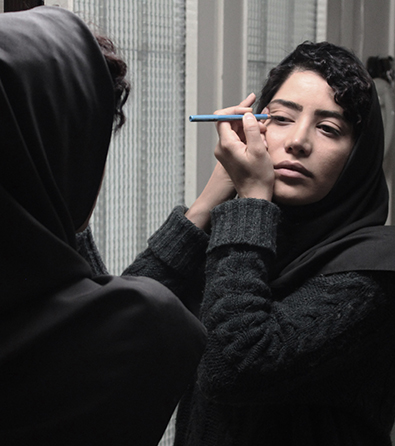
Albenda’s first YouTube appropriation film, True Colors, uses the archive similarly. Stringing together makeup tutorials by several teenage girls, it examines femininity, highlighting what the girls share and what sets them apart. It also probes the gap between the cultural image of femininity and the girls’ need to imitate and adopt that image through the act of applying makeup.
The film underscores how, in the contemporary neoliberal era, every person becomes an entrepreneur of the self, obliged to market and brand themselves. The girls turn their faces into their primary economic asset, converting the attention they receive into capital. This is where Albenda’s approach parts from Bookchin’s, in her vertical use of the archive. Across her films, Albenda seeks not only to stress how alike her subjects appear, but also to give them the space and time to speak in their own words.
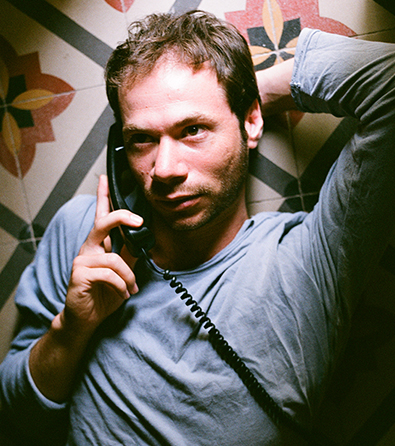
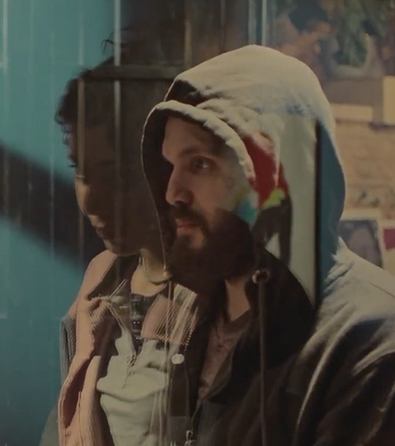
In My Room opens with horizontal use, presenting the hidden world of teenagers’ bedrooms, and shifts into vertical use as the six teenagers the film will follow begin to emerge: Arieh, who creates makeup tutorials; Lina, a Muslim girl examining her femininity within religious tradition; Liam (formerly Lydia), who documents his gender transition; Ryan, who grapples with the gap between the perception of masculinity and the loneliness he carries; Rachel, who struggles with her body image; and Sierra, who faces online bullying around her sexuality and later becomes pregnant.
As the film follows the six teenagers’ YouTube channels, viewers are drawn into the changes they undergo over time. In My Room sets out to show how the private-public space of teenagers becomes the place where they wrestle with their problems and shape their identities. We witness, for instance, the process Liam goes through, beginning with the gender questions that first surface within his earlier self, passing through the transition itself, and finding, at last, peace with himself, his identity, and his new body.
Among other things, the film reveals the inner dialogue teenagers conduct with themselves, and with (or despite) the anonymous online audience, around questions of sexuality and gender. Throughout the film, comments by YouTube viewers surface on screen, drawing us into that online exchange and the words aimed at the six of them. It underscores how fraught this exchange can be. Some comments are warm and supportive; others, even when they seem positive at first glance, reveal themselves at once as troubling, such as those Rachel receives offering advice on how to sustain her bulimia. It takes no position, but lays bare the complexity of online discourse.
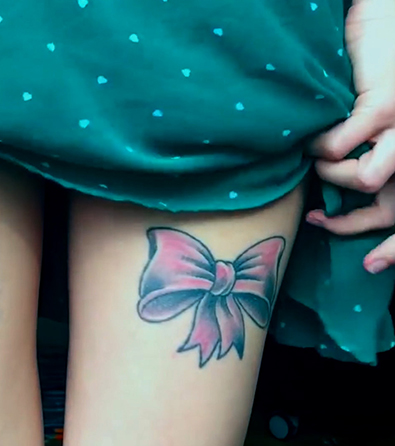
Through horizontal and vertical use of the archive, In My Room lets us witness both how the teenagers change and grow over time and the similarities in their personal struggles. Consider the way Arieh wrestles with his homosexuality, or the way Ryan contends with his loneliness and the difficulties of his heterosexual relationships, which unsettle the prevailing perception of masculinity. Alongside these, the body image that Lina, Rachel, and Sierra grapple with, each in her own way, highlights the burdens that society imposes on women and girls in particular.
A central means of expression in the film is its camerawork, the way the teenagers film themselves. The videos Albenda found date to the early 2010s, when home cameras were not yet of high quality. Self-documentation tends to place the subject at the center of the frame, with the wall behind flattening the image into two dimensions, without depth. These grainy, flat videos produce what the scholar Laura Marks calls “haptic visuality.” Such a viewing experience does not let the eye plunge into depth to make out objects clearly; instead, the gaze grazes the surface, and the eyes themselves begin to function as organs of touch. Haptic visuality unsettles vision as a system that commands from a distance, lending the image a more sensory, bodily relation. The haptic quality of the teenagers’ videos in In My Room creates closeness and intimacy between them and us, a sense that we are there with them in the room rather than far away.
Weaving the videos together into a full documentary film realizes the teenagers’ need for an audience. Albenda shared with me that she deliberately sought out teenagers’ channels with only a handful of views. The teenagers in the videos address unknown, anonymous viewers who watch and comment, forming with the creator a community of the isolated. Now, by making their videos part of a film, Albenda can grant them the attention they needed, even if only after the fact. Lifted from the margins of social media and featured in the film, these videos are given a second life and hopefully reshape the way teenagers picture themselves online.
Albenda’s choice of teenagers whose videos do not seek to commercialize their bodies is essential, since the viewers’ attention is never asked to settle into a consumer’s gaze. The contrast sharpens against another YouTube appropriation film, Viral Dreams (2021) by Udi Nir and Sagi Bornstein, which appropriates videos by several content creators during COVID-19. In the film, one clearly observes how the creators funnel their loneliness and fear into commercial videos meant to convert feelings into views and capital. Albenda’s film, by contrast, sets out to present the teenagers’ emotions directly and honestly, and to reveal what their rooms conceal, precisely in the mundanity of their real lives.
In this spirit, the fact that the film can be watched for free on the very platform the teenagers’ videos came from is a force pushing back against the flood of commercial images in which we are now submerged. More than that, it is a heartwarming meeting point, a reminder that even when we feel lonely, we are not alone.