Planning a culture-focused trip to Warsaw? This guide brings together the best museums in Warsaw for art and design, leading contemporary art galleries, Polish design collections, modern and postwar architecture, and key historical sites. Highlights include the National Museum in Warsaw, the Museum of Modern Art in Warsaw, Zachęta National Gallery of Art, the Gallery of Polish Design, the Poster Museum at Wilanów, and POLIN Museum of the History of Polish Jews.
You will also find selected design and vintage shops, places to eat, and recommendations on where to stay near Warsaw’s main museums, galleries, and cultural districts.
To access our exclusive Warsaw Treasure Map, simply click here and become a Culture Treasures member. The map pins every place in this guide and adds bonus cafés, boutiques and cultural venues.
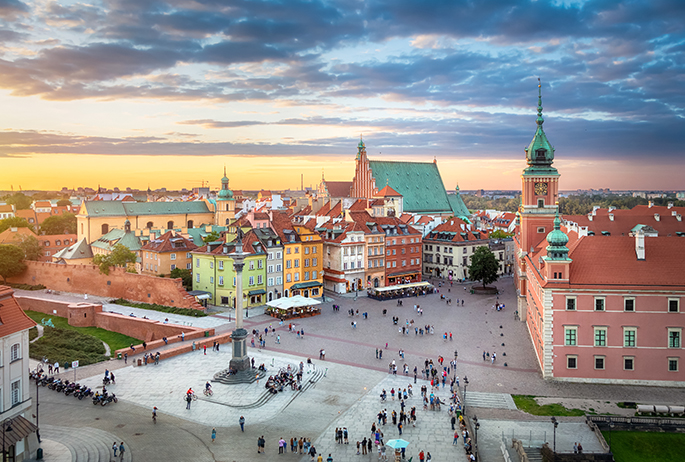 The Old Town. Photo: Envato Elements
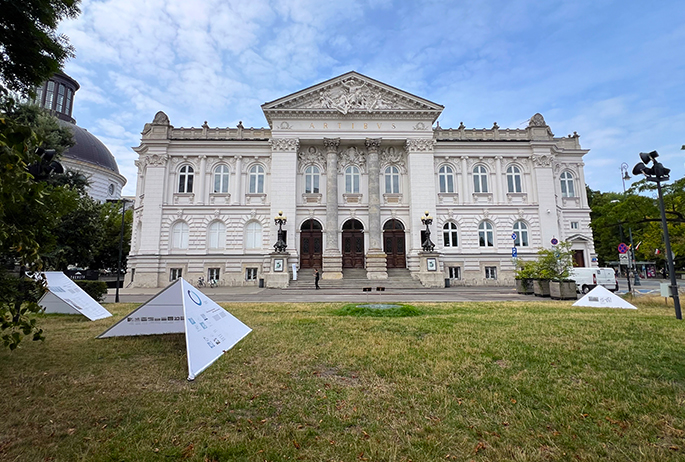 Zachęta National Gallery of Art. Photo: Shachaf Dekel
 Zachęta National Gallery of Art. Photo: Shachaf Dekel
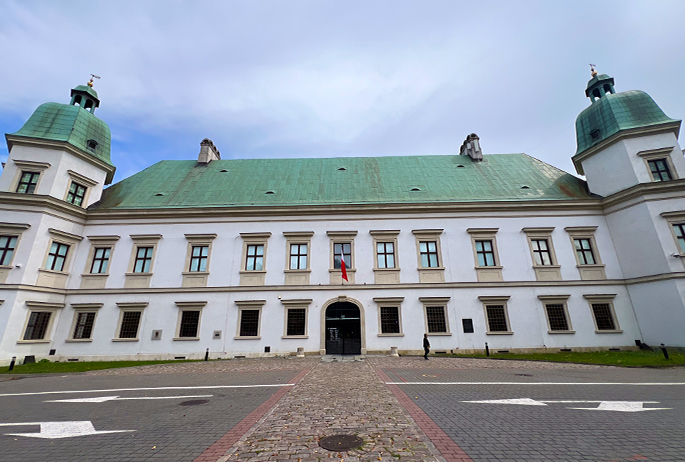
- Ujazdowski Castle Centre for Contemporary Art. Photo: Shachaf Dekel
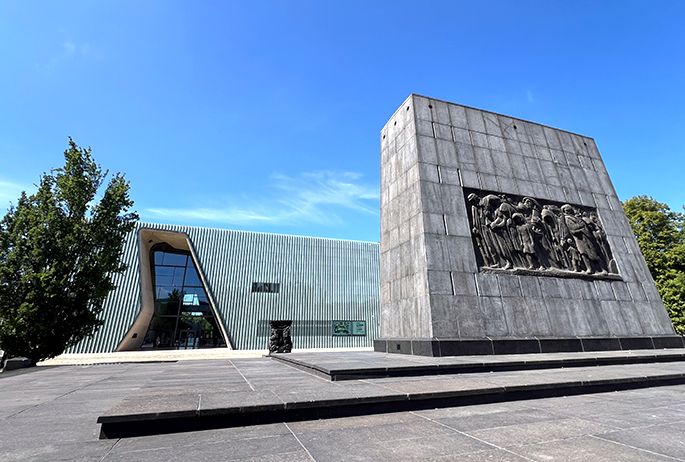
- POLIN Museum and the Monument to the Ghetto Heroes. Photo: Shachaf Dekel
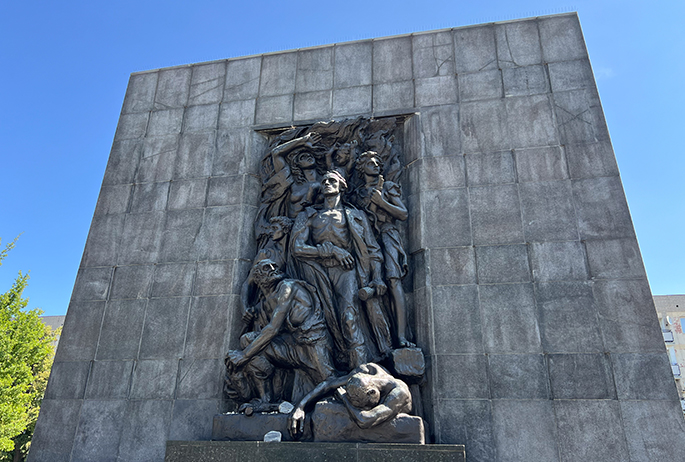
- The Monument to the Ghetto Heroes. Photo: Shachaf Dekel
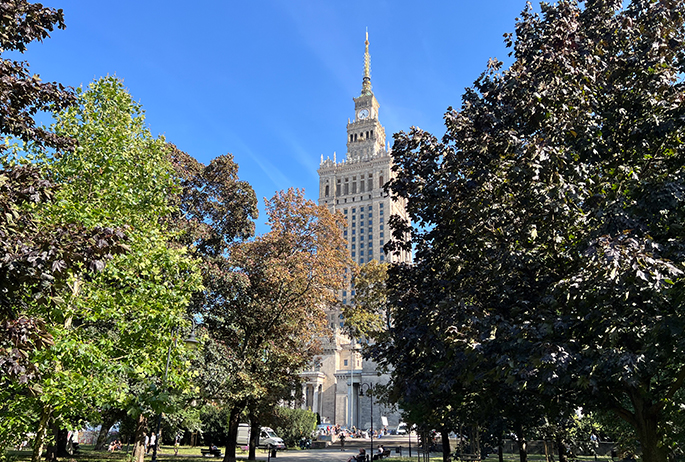
- The Palace of Culture and Science. Photo: Shachaf Dekel
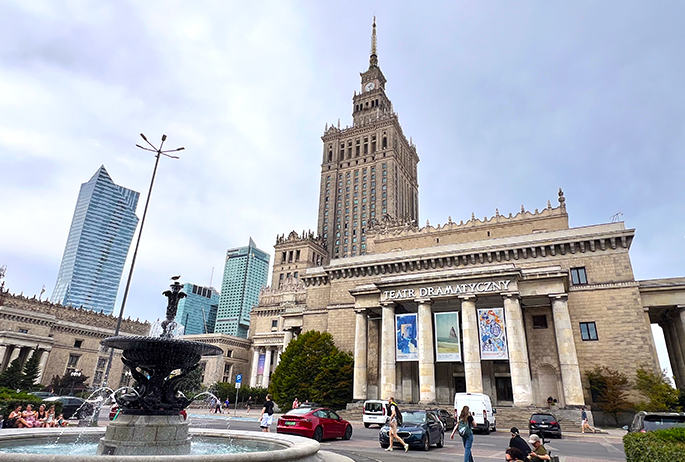
- Teatr Dramatyczny at the Palace of Culture and Science. Photo: Shachaf Dekel
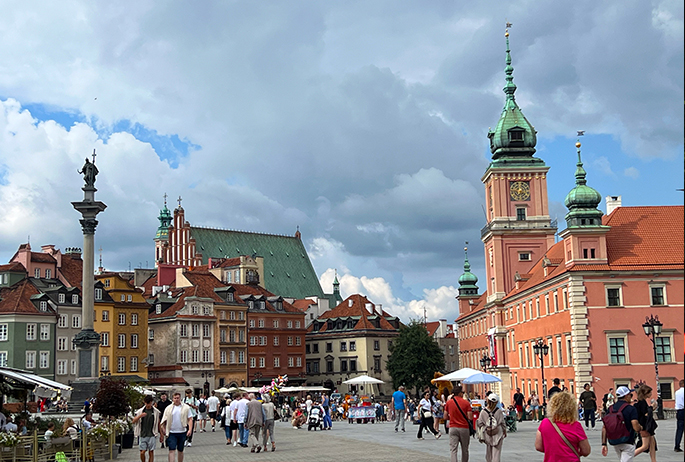
- The Royal Castle in the Old Town of Warsaw. Photo: Shachaf Dekel
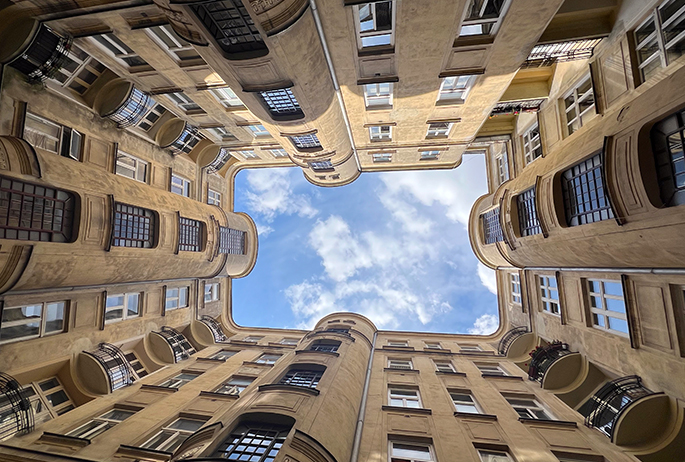
- Courtyard view in Warsaw. Photo: Shachaf Dekel
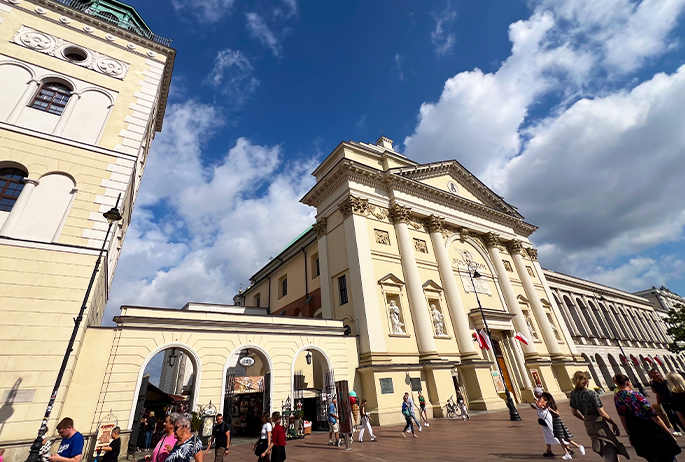
- The Old Town of Warsaw. Photo: Shachaf Dekel
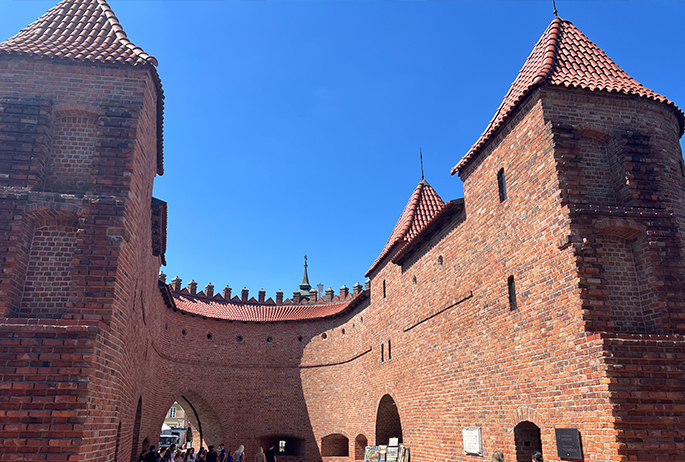
- The Barbican. Photo: Shachaf Dekel
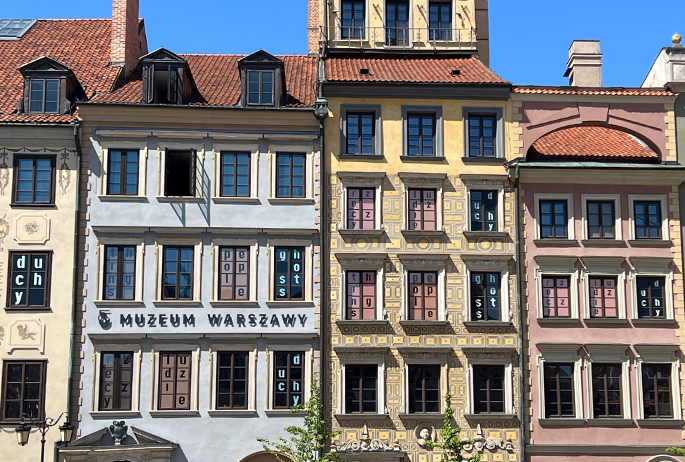
- The Old Town of Warsaw. Photo: Shachaf Dekel
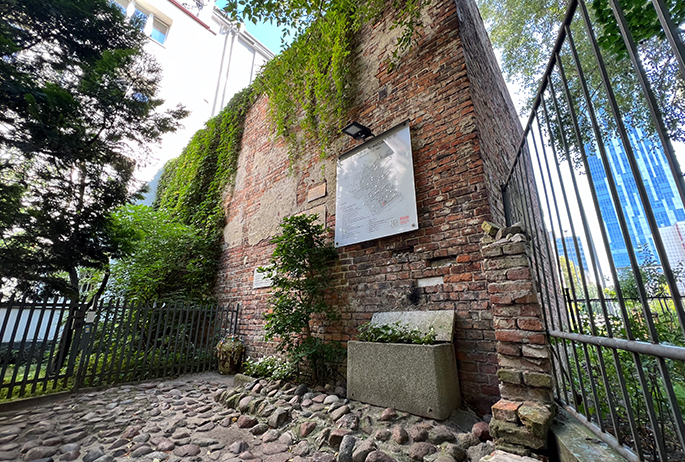
- Warsaw Ghetto Wall Fragments. Photo: Shachaf Dekel
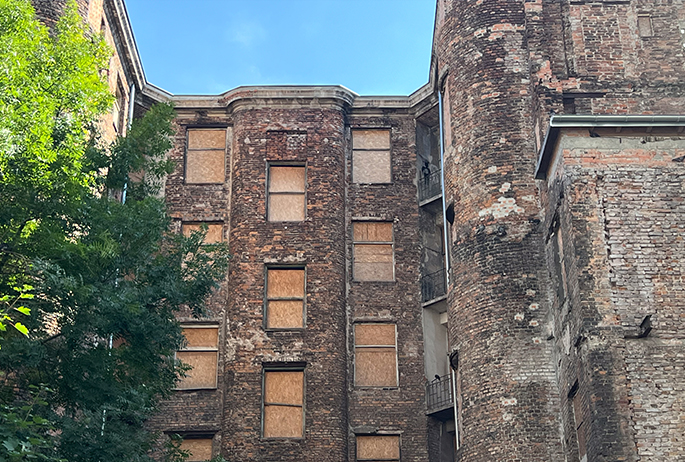
- Remains of the Warsaw Ghetto. Photo: Shachaf Dekel
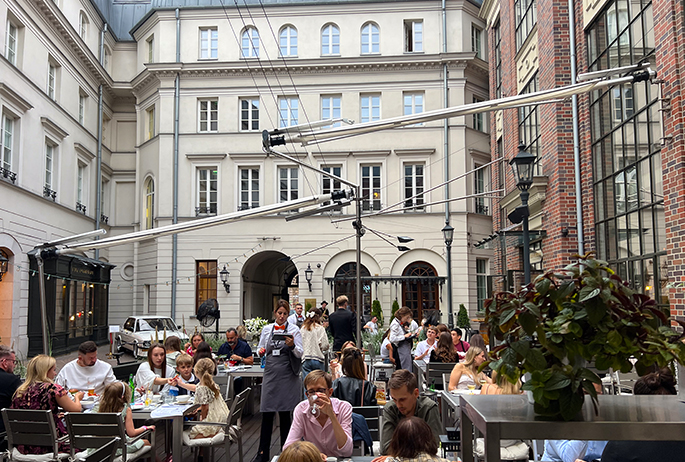
- Der Elefant restaurant. Photo: Shachaf Dekel
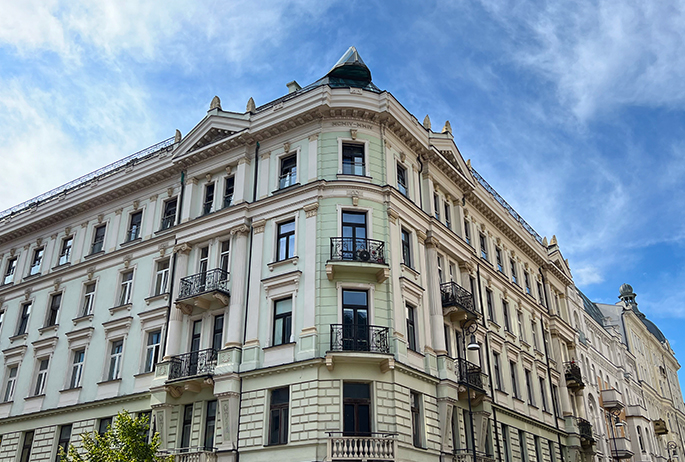
- Warsaw. Photo: Shachaf Dekel
Where to Stay in Warsaw for Museums and Cultural Attractions
For a culture-focused stay in Warsaw, Śródmieście and the Royal Route provide the easiest access to major museums, contemporary art galleries, and central architecture, while the Old Town and New Town place you closer to Warsaw’s reconstructed historic center. The hotels below cover different price ranges and locations across these areas.
For a more detailed selection focused on architecture and interior design, see our Best Boutique & Design Hotels in Warsaw: Where to Stay guide.
With the interactive map below, you can compare all available accommodation options in the city and find the best prices from a variety of leading providers.
Luxury Hotels in Warsaw
For a luxury stay in Warsaw, Raffles Europejski Warsaw is one of the city’s landmark addresses, set on Krakowskie Przedmieście near the Presidential Palace, the Royal Route, and the Old Town. Hotel Bristol, a Luxury Collection Hotel, Warsaw is another historic choice on the Royal Route, well placed for visitors who want to stay close to the Old Town, Teatr Wielki, and central cultural institutions. Nobu Hotel Warsaw works well for travelers who prefer a more contemporary luxury stay in the city center, between the prewar core and the business district. Mamaison Hotel Le Regina Warsaw offers a quieter high-end base in the New Town, within walking distance of the Old Town and the Vistula side of the historic center. Hotel Bellotto, set in a restored palace near the Royal Castle, is a strong choice for travelers who want a smaller luxury hotel in the heart of the historic district. InterContinental Warszawa can work well when rates are favorable, especially for travelers who want a large central hotel near the Palace of Culture and Warsaw Central Station.
Mid-Range Hotels in Warsaw
For a mid-range stay across some of Warsaw’s most appealing areas, PURO Warszawa Stare Miasto is especially well located for exploring the Old Town and nearby cultural landmarks on foot. Flaner Hotel works well for travelers who want a central boutique base near Krakowskie Przedmieście and the university quarter. H15 Boutique Hotel is a good option in the city center for those looking for a design-led stay with easy access to central Warsaw and the southern edge of Śródmieście. Hotel Indigo Warsaw – Nowy Świat is particularly well placed for the Royal Route, Nowy Świat, and many of the city’s museums, restaurants, and galleries. Polonia Palace Hotel, opposite the Palace of Culture and Science, is one of the most practical central options for first-time visitors who want strong transport connections and straightforward access to the city center.
Affordable Hotels in Warsaw
For more affordable hotels in well-connected areas, Motel One Warsaw-Chopin combines compact contemporary rooms with music-inspired graphic details and a streamlined, modern interior aesthetic. Moxy Warsaw Praga has an industrial, informal design language, with exposed materials, bold graphics, flexible communal spaces and references to the former Koneser distillery complex. Colette LoftAffair Collection is a good fit for travelers who prefer apartment-style accommodation in a central location rather than a traditional hotel.
Best Art Museums in Warsaw
National Museum in Warsaw (Śródmieście)
Why go: For one of Warsaw’s broadest surveys of art history, with collections ranging from antiquity and medieval art to Old Masters, 19th-century Polish painting and 20th-century design.
Tip: Allow time for the Gallery of 19th-Century Art and the Gallery of Polish Design, which together give useful context for Polish visual culture across fine and applied arts.
The National Museum in Warsaw presents six permanent galleries. Its collections include ancient Mediterranean material, the medieval Nubian wall paintings of the Faras Gallery, Polish and European medieval art, Old Masters, major works of 19th-century Polish painting, and Polish design from the early 20th century to the present. Temporary exhibitions extend the permanent displays with projects focused on Polish and international art.
Museum of Modern Art in Warsaw, MSN Warsaw (Śródmieście)
Why go: For modern and contemporary art in a purpose-built museum that has become part of the redevelopment of Warsaw’s central Plac Defilad.
Tip: Look at the relationship between the galleries, central staircase and long horizontal windows, which connect the exhibition spaces visually to the city outside.
MSN Warsaw opened its permanent home on Marszałkowska Street in 2024. Designed by Thomas Phifer and Partners, the four-level building contains more than 4,500 square meters of exhibition space alongside a cinema, auditorium, educational rooms, café and shop. Its program combines presentations from the museum’s collection with temporary exhibitions, film, performance and projects examining contemporary artistic and social questions.
Warsaw Contemporary Art Galleries and Cultural Venues
Zachęta National Gallery of Art (Śródmieście)
Why go: For temporary exhibitions examining Polish and international art of the 20th and 21st centuries, presented in one of Warsaw’s principal public contemporary art institutions.
Tip: Check both the main gallery and the separate Zachęta Project Room, which has a smaller program focused on individual projects and experimental exhibition formats.
Founded in the 19th century, Zachęta presents a program of temporary exhibitions across painting, photography, sculpture, installation and moving image. The institution also organizes Poland’s participation in the Venice Biennale and maintains an extensive documentation archive devoted to Polish artistic life after 1945. For a deeper look at the gallery’s history, architecture, and role in Polish contemporary art, read our in-depth article on Zachęta National Gallery of Art.
Zachęta Project Room (Śródmieście)
Why go: For smaller-scale exhibitions that allow artists to develop projects in response to the gallery’s specific space and curatorial program.
Tip: The Project Room is located separately from the main Zachęta building at Gałczyńskiego 3, close to Nowy Świat.
Operating as a branch of Zachęta National Gallery of Art, the Project Room has been based on Gałczyńskiego Street since 2010. Its exhibitions focus on individual artistic practices, thematic projects and work developed specifically for the space. The gallery occupies a ground-floor unit in a 1950 building designed by architect Zygmunt Stępiński.
Ujazdowski Castle Centre for Contemporary Art (Ujazdów)
Why go: For a multidisciplinary contemporary art program spanning exhibitions, moving image, performance, sound and artistic research.
Tip: The cinema and artist residency program are integral parts of the institution, so check the program beyond the current gallery exhibitions.
The Centre for Contemporary Art has been based in the reconstructed Ujazdowski Castle since the 1980s. Its program combines exhibitions by Polish and international artists with film, talks, performances, publications and residencies. The institution also maintains a collection and media archive documenting contemporary artistic practice in Poland and internationally.
Raster Gallery (Śródmieście)
Why go: For a commercially active gallery that has played an important role in the development and international circulation of Polish contemporary art since the early 2000s.
Tip: Check the current exhibition before visiting, as the program is organized around focused solo and group presentations rather than a permanent display.
Founded in 2001 from projects initiated by art critics Łukasz Gorczyca and Michał Kaczyński, Raster developed from the earlier Raster magazine and Naświetlarnia garage gallery. The gallery has supported artists including Michał Budny, Rafał Bujnowski, Aneta Grzeszykowska and Wilhelm Sasnal, while maintaining an active presence in international exhibitions and art fairs.
Foksal Gallery (Śródmieście)
Why go: For a gallery whose history is closely connected to experimental and conceptual practices in postwar Polish art.
Tip: Pay attention to the gallery’s publications and archival material, which are important to understanding its role beyond individual exhibitions.
Founded in 1966 by critics and artists including Wiesław Borowski, Anka Ptaszkowska, Mariusz Tchorek, Tadeusz Kantor, Henryk Stażewski, Zbigniew Gostomski and Edward Krasiński, Foksal Gallery developed as a site for radical approaches to contemporary art rather than as the expression of a single movement. It remains in its original rooms in an annex of the Zamoyski Palace and continues to present contemporary exhibitions alongside projects addressing its own institutional history.
Warsaw Design Guide: Museums and Cultural Spaces
Gallery of Polish Design, National Museum in Warsaw (Śródmieście)
Why go: For a chronological survey of Polish applied and industrial design from the early 20th century to the present.
Tip: Look for the shifts between craft-based reform movements, interwar modernism, postwar mass production and experimental prototypes that never entered industrial manufacture.
The permanent Gallery of Polish Design presents furniture, textiles, ceramics, household equipment, industrial products, models and prototypes. Its chronology includes the Kraków Workshops, the Ład Artists’ Cooperative, the modernist Praesens group, postwar reconstruction, Socialist Realism, post-1956 modernism and contemporary design. Archival photographs and film material place the objects within changing conditions of production and everyday life.
Poster Museum at Wilanów (Wilanów)
Why go: For an extensive history of Polish poster design, from early 20th-century graphic culture through the Polish School of Posters to contemporary practice.
Tip: Because works on paper are light-sensitive, the objects in the permanent display rotate every three months, making repeat visits materially different.
Reopened in March 2026 after a major modernization, the Poster Museum at Wilanów is a branch of the National Museum in Warsaw and was the world’s first museum devoted specifically to the poster. Its permanent exhibition, Polish Posters: The Collection, draws on nearly 36,000 Polish works and traces poster design through Young Poland, interwar advertising, postwar propaganda, the Polish School of Posters and contemporary graphic design. The exhibition design was developed by Syfon Studio.
Warsaw Architecture Guide: Buildings and Landmarks
Palace of Culture and Science (Śródmieście)
Why go: For one of Warsaw’s defining examples of Socialist Realist architecture and for the complex relationship between monumental architecture, Soviet influence and postwar urban planning.
Tip: The 30th-floor terrace, 114 meters above ground, provides a useful overview of the contrast between Warsaw’s reconstructed historic center, postwar development and contemporary high-rise skyline.
Completed in 1955 and designed by Soviet architect Lev Rudnev, the Palace of Culture and Science combines a monumental high-rise composition with decorative references drawn from Socialist Realism and Polish historical architecture. The 237-meter building contains theaters, cinemas, cultural institutions and event spaces, making it both an architectural monument and a functioning cultural complex.
University of Warsaw Library, BUW (Powiśle)
Why go: For a late-20th-century library in which architecture, landscape and public space are integrated through an extensive system of planted terraces and roof gardens.
Tip: Access to the upper roof garden is seasonal. The lower garden remains accessible in winter, but the roof closes from November through March.
Designed by Marek Budzyński and Zbigniew Badowski and completed in 1999, the University of Warsaw Library combines large-scale glass and metal surfaces with vegetation that extends across the building and its roof. The garden creates a continuous public landscape above the library, while the architecture connects academic functions to the surrounding Powiśle district and the Vistula. Admission to the garden is free.
Keret House (Wola)
Why go: For an architectural intervention that turns the narrow residual space between two existing buildings into an inhabitable structure.
Tip: The house is not a conventional museum and interior access is limited, so confirm current visiting arrangements before planning a trip specifically around it.
Designed by architect Jakub Szczęsny and completed in 2012, Keret House is inserted into the narrow gap between buildings on Żelazna and Chłodna streets. Named after writer Etgar Keret, the structure functions as an artistic and architectural project rather than a standard residential building. Its constrained width makes circulation, storage, light and basic domestic functions part of the architectural concept. The location also places the work within an area profoundly altered by the destruction and reconstruction of 20th-century Warsaw.
Warsaw Uprising Mound Park (Mokotów)
Why go: To see a recent landscape architecture project in which postwar rubble, spontaneous vegetation and a memorial landscape are treated as interconnected layers of Warsaw’s urban history.
Tip: Walk through the lower park and lapidarium before continuing to the top of the mound. Fragments of the destroyed city are visible within retaining walls, rubble concrete and other elements of the landscape.
Completed in 2023 by Archigrest and topoScape, the park transforms an artificial mound created from debris after the destruction of Warsaw during World War II. Rather than clearing the site, the designers retained its self-seeded vegetation and reused material excavated during construction in new concrete, gabions and landscape structures. The project combines ecological succession, material reuse and commemoration within an 8.3-hectare public park. It received the 2024 European Prize for Urban Public Space and a 2024 Landezine International Landscape Award.
Browary Warszawskie (Wola)
Why go: To examine a large-scale urban regeneration project that integrates surviving 19th-century brewery structures with contemporary housing, offices and a network of publicly accessible streets and squares.
Tip: Look at the contrast between the restored brick brewery buildings and the newer architecture, particularly the Brewhouse Apartments, where movable copper-toned mesh shutters alter the appearance of the façade according to their position.
Designed by JEMS Architects and opened in 2021, Browary Warszawskie redevelops the former Haberbusch and Schiele brewery site as a mixed-use urban quarter. Historic elements including the Brewhouse, Laboratory, Schiele Villa and 19th-century storage cellars were incorporated into a new masterplan organized around pedestrian routes and public spaces. Contemporary buildings respond to the scale and materials of the industrial complex without reproducing its historical architecture. The project received major Polish architecture and public-space awards, including the Grand Prix of the SARP Award of the Year and the Grand Prix of the Architectural Award of the Mayor of Warsaw.
Design and Vintage Shops in Warsaw
Mysia 3 (Śródmieście) is a small multi-level retail complex in central Warsaw combining Polish and international fashion, jewelry, interior objects and photography. For design, the most relevant current tenants include NAP for furniture and home accessories, ORSKA for jewelry, BALAGAN and ELEMENTY for Polish fashion, and the Leica Store, which also presents photography-related events and equipment. The building previously housed the state censorship office during the communist period.
Nomad Warsaw (Powiśle) founded by Joanna Marcysiak, presents handwoven Moroccan rugs alongside ceramics, glass, lighting and other objects produced by independent designers and craftspeople. The store places particular emphasis on material processes and small-scale production, with works sourced from makers in Europe, North Africa and beyond.
366 Concept Showroom (Śródmieście) specializes in licensed reissues of Polish furniture from the postwar period, alongside contemporary pieces. Its Warsaw showroom presents the company’s furniture collections, fabrics and finishes, providing a useful complement to the historical objects shown in the Gallery of Polish Design at the National Museum. Visits to the Warsaw showroom are by appointment, so book ahead rather than arriving without a reservation.
Look Inside (Nowa Praga) has operated in Nowa Praga since 2016 and specializes in vintage and second-hand objects from the 20th century. Its stock includes Polish furniture, ceramics, glass, clocks, electronics, posters and domestic objects, alongside selected pieces from elsewhere in Europe. The shop is also part of Praskie Zagłębie Vintage, a local network of antique dealers, craftspeople and independent businesses.
EIGHT Concept Store (Śródmieście) at Szpitalna 8 developed from the former TFH Koncept and combines independent fashion, jewelry, design objects, art and temporary cultural programming. The space works with designers and artists from Poland and the wider Central and Eastern European region and also hosts exhibitions, installations and collaborative events.
Where to Eat and Take a Break in Warsaw
Der Elefant (Śródmieście) is a restaurant at Plac Bankowy 1 with a menu centered on steaks, fish and seafood. The entrance is set within an enclosed courtyard between the surrounding historic buildings, designed by Oscar-winning production designer Allan Starski, with brick façades and metal galleries that create a distinct urban setting away from the street. The courtyard is particularly appealing in the evening, when the enclosed space feels more intimate and separate from Plac Bankowy. Reservations are recommended for dinner.
Klub SPATiF (Śródmieście), on Aleje Ujazdowskie, continues the history of a postwar club associated with Warsaw’s actors, filmmakers, writers and artists. Today it operates as a bar, club and cultural venue with concerts, performances and other events. Its significance lies less in the food than in its long connection to the city’s artistic and theatrical milieu.
Bułkę przez Bibułkę (Śródmieście and other locations) is a lively all-day breakfast and brunch spot with a warm, informal interior and the easy atmosphere of a neighborhood café, despite its central locations. The menu ranges from eggs, omelettes and pancakes to bagels and sandwiches, accompanied by coffee from a local Warsaw roaster. It is particularly enjoyable for a relaxed breakfast or late brunch, although the most popular branches can be busy on weekends.
Bazyliszek Restaurant (Old Town / Stare Miasto) is located at Rynek Starego Miasta 1/3 and has operated on the Old Town Market Square for more than 25 years. The menu includes traditional Polish dishes, while the restaurant’s name refers to the Warsaw legend of the Basilisk associated with the Old Town.
Warsaw Historical Sites and Cultural Landmarks
The Old Town, Stare Miasto
Why go: To examine one of Europe’s most extensive postwar reconstruction projects and the way Warsaw used architectural history to rebuild its civic center after 1945.
Tip: Rather than reading the district simply as preserved medieval fabric, look closely at the reconstructed façades, street pattern and relationship between the Market Square, Royal Castle and city walls. Consider a guided tour for deeper context.
Warsaw’s Historic Centre was largely destroyed during World War II and systematically reconstructed after the war using archival plans, paintings, photographs and surviving architectural fragments. The project rebuilt structures from different historical periods while restoring the prewar urban form, an approach that led UNESCO to inscribe the Historic Centre of Warsaw on the World Heritage List.
Royal Castle in Warsaw (Old Town)
Why go: For reconstructed royal interiors and collections that connect the political history of the Polish-Lithuanian Commonwealth with European painting and decorative arts.
Tip: On the ground floor, the Lanckoroński Gallery includes two paintings by Rembrandt, Girl in a Picture Frame and A Scholar at his Writing Table.
The castle developed from the residence of the Mazovian dukes and became a principal royal and parliamentary seat of the Polish-Lithuanian Commonwealth. It was severely damaged in 1939 and subsequently destroyed by German forces during World War II. Its postwar reconstruction recreated ceremonial and residential interiors while incorporating surviving architectural fragments and recovered works of art. The collections include European painting, sculpture and decorative arts alongside the reconstructed State Rooms.
St. John’s Archcathedral (Old Town)
Why go: For a key religious and political building whose present Gothic form is largely the result of postwar reconstruction.
Tip: The crypts contain the tombs of figures from Polish political, religious and cultural history and add a different historical layer to the reconstructed church above.
St. John’s developed from a medieval parish church into Warsaw’s principal cathedral and was associated with major ceremonies of the Polish monarchy and state. The building was largely destroyed during the Warsaw Uprising and reconstructed after the war in a form intended to recover its Gothic character rather than reproduce later architectural alterations.
Warsaw Barbican (Old Town)
Why go: For a reconstructed section of Warsaw’s early modern defensive system and a useful point for understanding the former boundary between the Old and New Towns.
Tip: Walk the surviving and reconstructed sections of the city walls rather than treating the Barbican as an isolated monument.
Built in the 16th century as part of the city’s fortifications, the Barbican lost much of its defensive function as military technology developed. It was heavily damaged during World War II and reconstructed in the 1950s as part of the broader rebuilding of Warsaw’s historic center.
New Town, Nowe Miasto
Why go: To extend the architectural reading of Warsaw beyond the fortified Old Town and examine another major area reconstructed after World War II.
Tip: Continue north from the Barbican through the New Town Market Square to compare its more open urban structure with the denser Old Town.
Despite its name, Warsaw’s New Town originated in the late 14th century as a separate settlement outside the Old Town walls. The district developed around its own market square, churches and civic institutions. Much of its present appearance is the result of postwar reconstruction, with façades and streets reflecting different phases of Baroque and later urban development.
Jewish History and World War II Memory Sites in Warsaw
POLIN Museum of the History of Polish Jews (Muranów)
Why go: For a museum devoted to a thousand years of Jewish life in the Poland, extending far beyond the history of the Holocaust.
Tip: The Core Exhibition is extensive. Allow at least two hours and pay particular attention to the reconstructed painted ceiling of the Gwoździec synagogue and the galleries addressing Jewish urban life before World War II.
The Core Exhibition is organized across nine galleries tracing Jewish life in the Polish lands from medieval settlement to the present. Historical objects, documents, reconstructions, film and interactive media are used to examine religious life, trade, urban culture, political change, migration, the Holocaust and postwar Jewish experience. The museum building, designed by Finnish practice Lahdelma & Mahlamäki, stands opposite the Monument to the Ghetto Heroes and is organized around a high, curving central hall that divides and reconnects its two sides. For a deeper look at the museum’s architecture, permanent exhibition, and curatorial approach, read our in-depth article on POLIN Museum of the History of Polish Jews.
Monument to the Ghetto Heroes (Muranów)
Why go: To examine one of the earliest major postwar monuments commemorating the Warsaw Ghetto Uprising and Jewish resistance.
Tip: View both sides of the monument. The western bronze relief represents armed resistance, while the reverse addresses deportation and mass death.
Created by sculptor Natan Rapoport and unveiled on 19 April 1948, the fifth anniversary of the Warsaw Ghetto Uprising, the monument combines bronze figuration with a monumental granite structure. Its position directly opposite POLIN Museum creates an important dialogue between commemoration of destruction and the museum’s much broader account of Jewish life in Poland.
Former Warsaw Ghetto: Urban Traces and Memorial Route (Muranów / Wola)
Why go: To understand how the former ghetto is embedded within the present-day city through street alignments, memorial markers, surviving fragments and postwar urban reconstruction.
Tip: This is best approached as a route rather than a single site, linking POLIN, the Monument to the Ghetto Heroes, surviving wall fragments and Umschlagplatz. Consider booking a guided tour for deeper historical context.
The Warsaw Ghetto was established by Nazi Germany in 1940 and became the largest Jewish ghetto in Nazi-occupied Europe. More than 400,000 people were confined within its boundaries at its peak. Deportations to Treblinka began on a mass scale in 1942, followed by the Warsaw Ghetto Uprising in April 1943 and the systematic destruction of the district. Much of the historical topography was erased after the war, so understanding the area today depends on reading dispersed physical traces and memorial sites rather than a preserved urban ensemble.
Warsaw Ghetto Wall Fragments (Wola / Śródmieście)
Why go: For rare surviving physical traces associated with the boundaries of the former Warsaw Ghetto.
Tip: Access to wall fragments located within residential courtyards can change, so check the current route before visiting.
Several sections of brick wall associated with the former ghetto boundary survive within the modern city, including fragments around Sienna Street. Their significance lies in the contrast between the limited surviving fabric and the almost complete destruction and later rebuilding of the surrounding district.
Umschlagplatz Memorial (Muranów)
Why go: To mark the site from which Jews from the Warsaw Ghetto were assembled for deportation, primarily to the Treblinka extermination camp.
Tip: Include it as the northern point of a route through the former ghetto rather than visiting it as an isolated memorial.
The present memorial, designed by Hanna Szmalenberg and Władysław Klamerus and unveiled in 1988, stands near the site used as the deportation point during the Grossaktion Warsaw of 1942. The enclosed white stone form carries a sequence of Jewish first names and inscriptions referring to the hundreds of thousands of people deported from the ghetto.
Pawiak Prison Museum (Muranów)
Why go: For a museum and memorial documenting the history of one of Warsaw’s principal sites of imprisonment and political repression during the German occupation.
Tip: Its location makes it possible to combine the visit with POLIN and the former Warsaw Ghetto sites, while keeping the histories of the prison and the ghetto institutionally distinct.
Originally established as a 19th-century prison, Pawiak became a major Gestapo prison during the German occupation. Political prisoners, members of the resistance and Jewish prisoners were held, interrogated, tortured and deported from the site. The prison was destroyed in 1944. The museum incorporates surviving material, reconstructed spaces, documents and personal objects connected to prisoners and their families.