London’s cultural landscape extends from historic collections and major national museums to contemporary galleries, experimental design, modern and postwar architecture, and an extensive theater scene. Its cultural institutions are distributed across distinct neighborhoods, each offering a different relationship between art, architecture, public space, and urban history.
This London art and design guide brings together museums, contemporary galleries, design destinations, architectural landmarks, theaters, street art, and cultural experiences across the city. It also includes recommended places to stay near London’s main museums and cultural districts, helping you plan a culture-focused visit around areas such as South Kensington, Bankside, Bloomsbury, Mayfair, the South Bank, and East London.
Culture Treasures members can access the London Treasure Map, which includes every place featured in this guide, alongside additional cafés, shops, and cultural venues across the city.
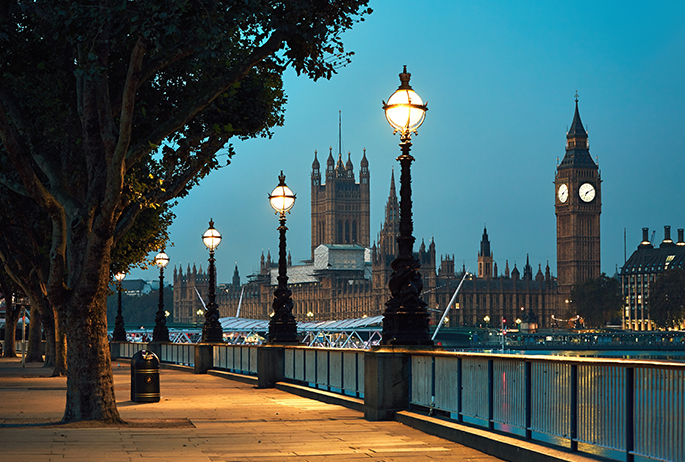 The Palace of Westminster viewed from the South Bank. Photo: Envato Elements
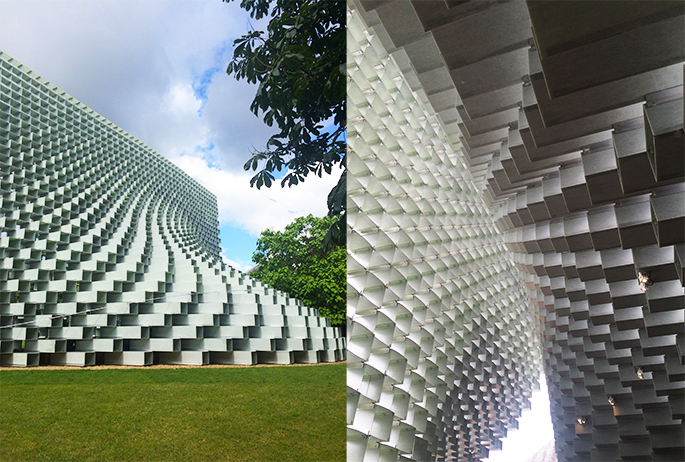 Serpentine Pavilion 2016 by Bjarke Ingels Group (BIG). Photo: Shachaf Dekel
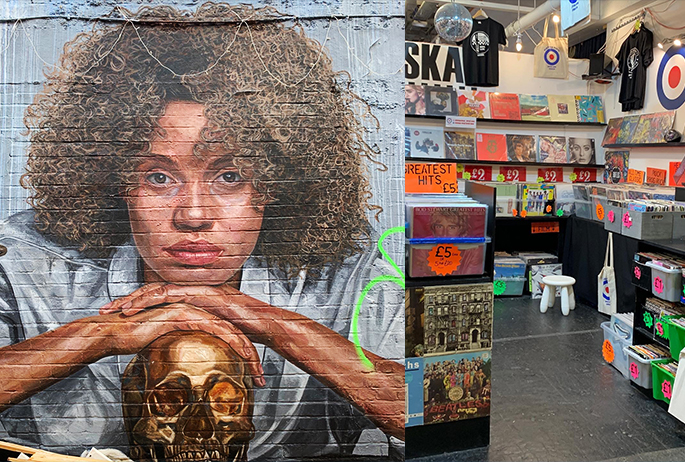
 Street art and a record shop in Shoreditch. Photos: Shachaf Dekel
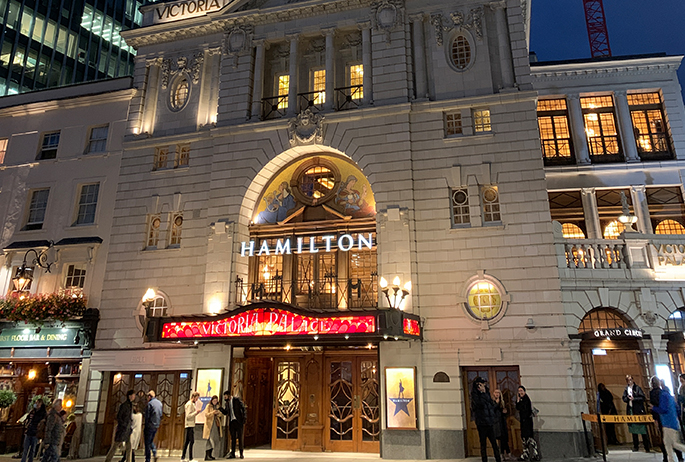
- Victoria Palace Theatre. Photo: Shachaf Dekel
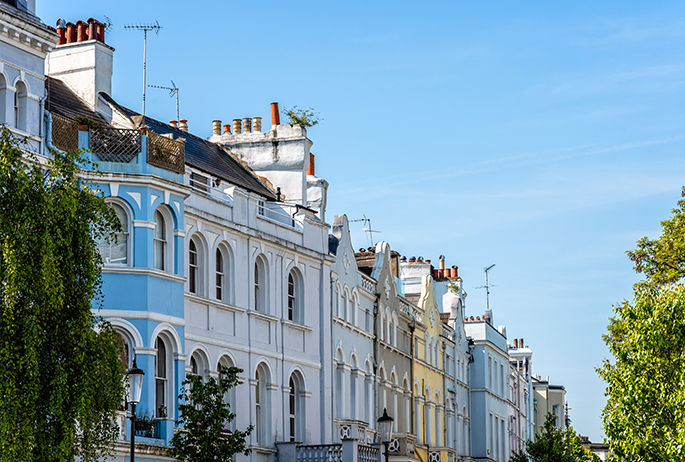
- Terraced houses in London. Photo: Envato Elements
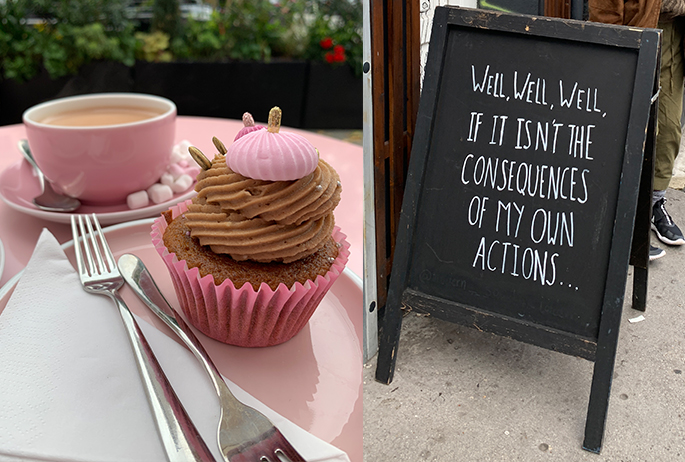
- A London café and street scene. Photos: Shachaf Dekel
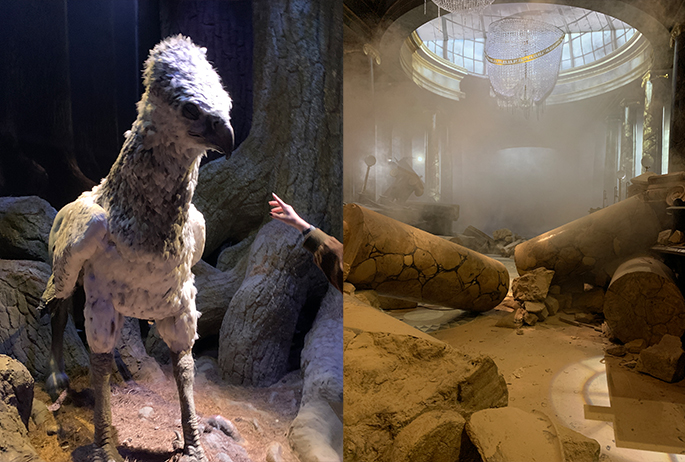
- Warner Bros. Studio Tour London: The Making of Harry Potter. Photos: Shachaf Dekel
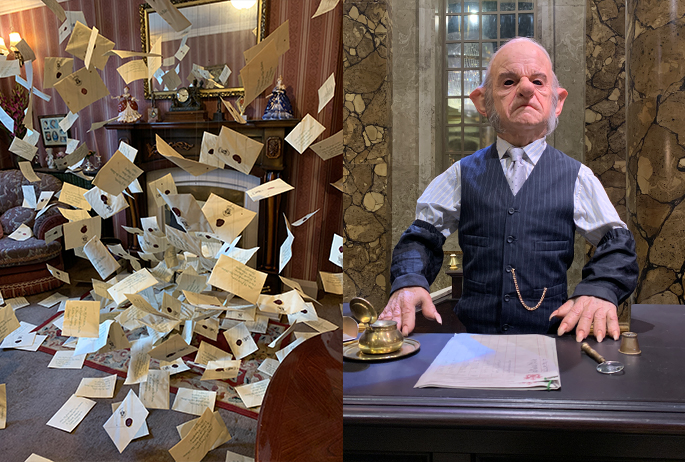
- Warner Bros. Studio Tour London: The Making of Harry Potter. Photos: Shachaf Dekel
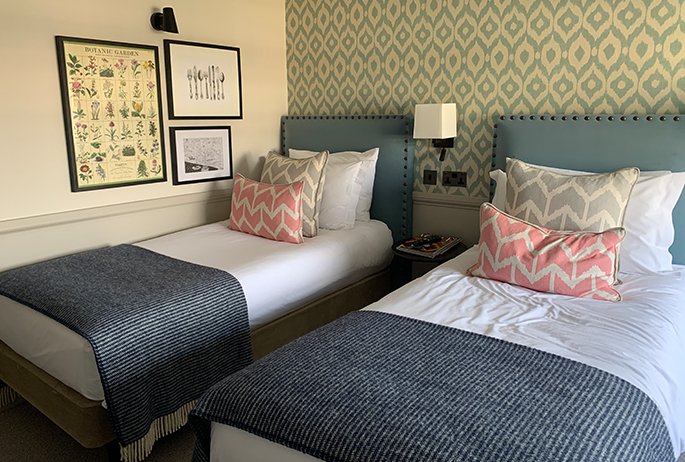
- Lime Tree Hotel. Photo: Shachaf Dekel
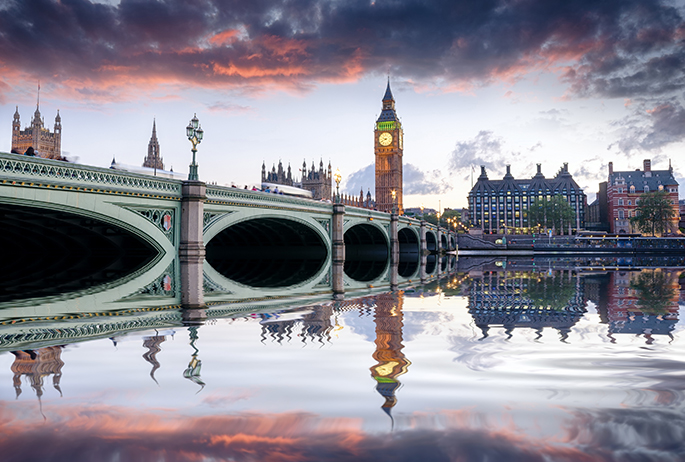
- Westminster Bridge and the Palace of Westminster. Photo: Envato Elements
Where to Stay in London for Museums and Cultural Attractions
Choosing where to stay in London can make it easier to explore the city’s museums, galleries, theaters, architecture, and major cultural attractions. South Kensington provides convenient access to the Victoria and Albert Museum and the Design Museum, while Bankside and the South Bank are well placed for Tate Modern, the Hayward Gallery, Shakespeare’s Globe, and the National Theatre. Bloomsbury, Covent Garden, Mayfair, Shoreditch, and the City of London are also useful bases for different cultural routes.
For a closer look at each property, its design, location, and cultural surroundings, explore our complete guide to the best boutique and design hotels in London.
Use the interactive map below to compare available hotels across London’s cultural districts and check current rates from multiple booking providers.
Luxury Hotels in London
For a luxury stay in central London, Hotel Cafe Royal is set on Regent Street between Mayfair and Soho, within walking distance of Piccadilly Circus, the West End theaters, and major cultural landmarks. Broadwick Soho, located in the heart of Soho, offers a bold, design-led boutique stay surrounded by some of the city’s best restaurants, bars, and nightlife. Just north of Oxford Street, The Mandrake provides a more secluded and atmospheric experience, known for its distinctive interiors and proximity to Fitzrovia and central shopping areas.
Mid-Range Hotels in London
For a mid-range stay across some of London’s most appealing neighborhoods, The Ampersand Hotel in South Kensington is ideally positioned near the Victoria and Albert Museum, the Natural History Museum, and Hyde Park. In Covent Garden, The Henrietta Hotel places you steps away from theaters, galleries, and lively piazzas. Artist Residence London, in Pimlico, offers a quieter, residential setting within walking distance of the Tate Britain. The Lime Tree Hotel, in Belgravia, is set in a classic townhouse close to Sloane Square and King’s Road. In East London, The Hoxton, Shoreditch sits at the center of a creative district known for galleries, cafés, and nightlife, while nhow London, located between Shoreditch and Islington, provides a contemporary design-focused stay with good connections to both areas.
Affordable Hotels in London
For more affordable stays in well-connected areas, The Buxton on Brick Lane combines a small hotel with a popular pub and bakery in one of East London’s most busiest streets. Wombat’s City Hostel London, near Tower Bridge and the Tower of London, offers a social, large-scale hostel experience within walking distance of the Thames. St Christopher’s Inn Village – London Bridge, located close to Borough Market and the South Bank, is a convenient base for budget-conscious travelers who want easy access to central London.
Best Art Museums in London
Tate Modern (Bankside / Southwark)
Why go: To examine international modern and contemporary art through collection displays, temporary exhibitions, commissions, performance, film, and large-scale installations in the Turbine Hall.
Tip: Admission to the collection displays is free, while temporary exhibitions generally require tickets. Level 10 of the Blavatnik Building provides views across the Thames, subject to the opening hours of the facilities on that level.
Tate Modern is housed in the former Bankside Power Station, designed by Sir Giles Gilbert Scott and constructed in stages after the Second World War. The building’s 99-meter chimney remains a defining element of its industrial architecture. Herzog & de Meuron converted the power station into a museum, which opened in 2000, and later designed the extension above the former oil tanks, completed in 2016 and now known as the Blavatnik Building. The museum presents international art from 1900 to the present through thematic collection displays rather than a strictly chronological sequence.
Wellcome Collection (Euston / 183 Euston Road)
Why go: To examine health and human experience through historical collections, contemporary art, medical research, and interdisciplinary exhibition making.
Tip: Admission is free. The galleries and Reading Room follow different hours from the research library, so check the current visitor information before planning a research visit.
Developed from the collections of pharmaceutical entrepreneur Sir Henry Wellcome, the institution combines historical medical objects, archival material, contemporary art, and commissioned work. Its permanent gallery, Being Human, considers health, identity, medicine, and the body in the twenty-first century, while rotating exhibitions examine social, scientific, and cultural approaches to care and human experience. The building also contains a Reading Room, research library, café, and bookshop. For a detailed introduction to the institution and its collections, read our in-depth article about the Wellcome Collection.
The National Gallery (Trafalgar Square / Westminster)
Why go: One of the world’s great collections of Western painting from about 1250 to 1900, with masterpieces by Leonardo, Raphael, Titian, Velázquez, Rembrandt, Turner, Van Gogh, and Monet.
Tip: General admission is free. Book paid exhibitions in advance, and consider joining a guided tour for added context.
Founded in 1824 when the government bought John Julius Angerstein’s 38 paintings, the Gallery first opened on Pall Mall before moving in 1838 to William Wilkins’s purpose-built home on Trafalgar Square. The collection has grown to more than 2,000 paintings and is arranged by school and period, so you can trace the story from medieval altarpieces to the color and light of the 19th century. Daily talks and free guided highlights help you navigate the hits without rushing.
The British Museum (Bloomsbury / Great Russell Street)
Why go: To examine archaeological objects, works of art, and material cultures from different regions and historical periods, including the Rosetta Stone, the Parthenon Sculptures, Egyptian funerary collections, and Assyrian palace reliefs.
Tip: General admission is free, but booking a timed entry is recommended. Temporary exhibitions generally require separate tickets, and a guided tour can provide additional historical and archaeological context. Consider joining a guided tour for added context.
Established by an Act of Parliament in 1753 and opened to the public in 1759, the British Museum developed from the collections of physician and naturalist Sir Hans Sloane. It now holds approximately eight million objects. The Queen Elizabeth II Great Court, redesigned by Foster + Partners and opened in 2000, is covered by a tessellated glass-and-steel roof surrounding the restored Reading Room. The galleries organize objects through geographical, archaeological, and historical contexts rather than presenting a single chronological account of global culture.
Tate Britain (Millbank / Westminster)
Why go: To follow the development of British art from the sixteenth century to the present through painting, sculpture, works on paper, photography, and installation.
Tip: Admission to the collection displays is free, while temporary exhibitions generally require tickets. Check the current program before visiting, and allow time for the galleries devoted to J. M. W. Turner.
Opened in 1897 as the National Gallery of British Art, Tate Britain presents approximately 500 years of British art. The collection includes works by artists such as William Blake, J. M. W. Turner, John Constable, the Pre-Raphaelites, Henry Moore, Barbara Hepworth, and Francis Bacon, alongside modern and contemporary British art. The collection displays are organized chronologically, with rooms devoted to individual artists and thematic relationships across different periods.
Tate Britain is housed in a Grade II* listed gallery designed by Sidney R. J. Smith and constructed in Portland stone on the former site of Millbank Prison. Later additions include the Duveen Galleries, designed by John Russell Pope with W. H. Romaine-Walker and Gilbert Jenkins and opened in 1937, and the Clore Gallery, designed by James Stirling and completed in the 1980s.
Contemporary Art Galleries in London
Saatchi Gallery (Chelsea / Duke of York’s HQ, King’s Road)
Why go: Large-scale rotating contemporary art shows with a focus on new voices and timely themes.
Tip: Exhibitions change often and many are ticketed. Combine with a stroll down King’s Road or Sloane Square.
Founded on Sir Charles Saatchi’s contemporary collection and now a charity, the gallery presents large-scale, media-savvy exhibitions that spotlight emerging artists and global trends in visual culture.
White Cube Bermondsey (SE1 / 144–152 Bermondsey Street)
Why go: To see solo and group exhibitions of contemporary and postwar art in gallery spaces designed for large-scale painting, sculpture, film, and installation.
Tip: Check the programs at both White Cube Bermondsey and White Cube Mason’s Yard, as the two London locations present separate exhibitions.
Opened in 2011 in a converted 1970s warehouse, White Cube Bermondsey contains several exhibition galleries, private viewing rooms, an auditorium, and a bookshop. Its gallery program includes new bodies of work, historical presentations, research-led exhibitions, and projects developed with artists and artistic estates.
Serpentine – South & North (Kensington Gardens)
Why go: Free contemporary art across two sister galleries in the park, plus the annual summer Pavilion commission.
Tip: Visit both spaces – South is the original 1930s tea pavilion, North is the restored Magazine building with a contemporary extension. The Pavilion typically runs June to October.
Serpentine South and Serpentine North stage international exhibitions, talks, and commissions. Each summer a temporary Pavilion by an invited architect turns the lawn into one of London’s most-watched design moments.
Whitechapel Gallery (East End / 77–82 Whitechapel High St)
Why go: A historic engine of contemporary art with forward-looking shows and a century-plus track record of firsts.
Tip: Start early, then loop Brick Lane and Spitalfields for cafés and street art.
Founded in 1901, Whitechapel has premiered landmark exhibitions and today presents rotating programs across photography, film, sculpture, and installation. Expect sharp curation and timely themes.
Gagosian (Mayfair / Grosvenor Hill and Davies Street)
Why go: To see solo and group exhibitions by modern and contemporary artists represented by one of the largest international commercial gallery networks.
Tip: The two London galleries may present different exhibitions and follow separate schedules. Check both locations before visiting.
Gagosian’s London program is presented at 20 Grosvenor Hill and 17–19 Davies Street in Mayfair. The galleries stage exhibitions across painting, sculpture, photography, film, and installation, including new bodies of work, historical presentations, and projects developed in collaboration with artists and artistic estates.
Pace Gallery (Mayfair / 5 Hanover Square)
Why go: Global gallery known for innovation across media, with a strong program of contemporary and postwar art.
Tip: Check for media-heavy installations and performance programs that change the space.
Pace’s London home offers focused exhibitions by established and emerging artists, often exploring technology, light, and form.
Victoria Miro (Islington / 16 Wharf Road)
Why go: Canal-side gallery with museum-scale rooms and a waterside garden, championing leading contemporary artists.
Tip: Check both buildings on site; schedules can be split across spaces.
Founded in 1985, the gallery consolidates its London exhibitions at its expansive N1 location, known for ambitious installations and painterly shows.
Royal Academy of Arts (Piccadilly / Burlington House)
Why go: Artist-led institution with major exhibitions year-round and the famous Summer Exhibition.
Tip: Book the blockbuster shows in advance and leave time for the historic John Madejski Fine Rooms when open.
The RA combines headline temporary exhibitions with an annual open-submission Summer Exhibition, keeping dialogue between artists and audiences at the center.
180 Studios (The Strand / 180 The Strand, WC2)
Why go: Immersive exhibitions and installations inside a Brutalist complex, a hub where visual art, fashion, music, and film collide.
Tip: Most shows are timed and ticketed; weekday mornings are quieter. Pair your visit with Somerset House or a Thames walk over Waterloo Bridge. Restaurants on site make it easy to linger.
A multidisciplinary arts venue in London, 180 Studios transforms industrial spaces into large-scale galleries and production rooms. Expect ambitious, multi-sensory shows and collaborations with leading photographers, filmmakers, designers, and musicians.
Hayward Gallery (South Bank / Southbank Centre)
Why go: Landmark Brutalist gallery known for major contemporary art exhibitions and bold installations.
Tip: Book ahead for headline shows. Combine with a South Bank stroll and check the outdoor sculpture terraces when accessible.
Opened in 1968 and part of the Southbank Centre, the Hayward is built for experimentation, raw concrete spaces, lofty galleries, and roof-lighting restored in a 2015–2018 refurbishment that brought natural daylight back into the upper halls.
Newport Street Gallery (Vauxhall)
Why go: Damien Hirst’s free public gallery in a Stirling Prize–winning conversion, museum-scale rooms showing works from his collection and guest-curated exhibitions.
Tip: Check opening days and current shows before you go; it’s an easy add-on to a riverside walk toward Battersea.
Opened in 2015, the gallery is housed in a row of former Victorian workshops reimagined by Caruso St John. The sequence of lofty spaces suits sculpture and large-format painting, with exhibitions that range across postwar and contemporary art.
Gasworks (Vauxhall / 155 Vauxhall Street, SE11)
Why go: Artist-led contemporary art space known for international residencies and free exhibitions that spotlight emerging voices.
Tip: Check dates, galleries open during exhibitions (typically Wed–Sun). Nearest stations are Vauxhall (Victoria line) and Oval (Northern line). Don’t miss Open Studios at the end of each residency cycle.
Founded in 1994, Gasworks combines a public gallery with studios for London-based artists and a rolling residency program for artists from around the world (part of the Triangle Network). Shows are compact, idea-driven, and often tied to work developed on site, with talks, workshops, and community projects rounding out the program. For a deeper dive into Gasworks, read our in-depth article.
London Design Museums and Galleries
Design Museum (Kensington / 224–238 Kensington High Street)
Why go: To examine contemporary design through objects, systems, materials, manufacturing processes, and the relationship between designers, producers, and users.
Tip: Admission to the permanent collection display is free, while temporary exhibitions usually require a ticket. Check the exhibition program and book timed entry in advance when required.
The museum’s program covers product, furniture, graphic, fashion, transport, architectural, and digital design. Its permanent display, Designer Maker User, examines the development of modern and contemporary design from the perspectives of designers, manufacturers, and consumers.
The museum is housed in the Grade II* listed former Commonwealth Institute, completed in 1962 to designs by Robert Matthew, Johnson-Marshall and Partners. Its redevelopment combined an OMA masterplan, architectural refurbishment and structural adaptation by Allies and Morrison, and interiors by John Pawson. The project retained the building’s copper-covered hyperbolic paraboloid roof while reorganizing the interior around a central atrium.
Victoria and Albert Museum (South Kensington / Cromwell Road)
Why go: To study decorative arts, design, fashion, and material culture across periods, regions, and disciplines within one of the most extensive museum collections devoted to art and design.
Tip: The permanent Fashion Gallery is closed for redevelopment and is scheduled to reopen as The Burberry Gallery in spring 2027. Selected fashion holdings remain accessible through temporary exhibitions and V&A East Storehouse. Check the museum’s official website for current displays.
Founded in 1852 as the Museum of Manufactures and renamed the Victoria and Albert Museum in 1899, the V&A holds collections spanning approximately 5,000 years of human creativity. Its displays range from the Cast Courts and British Galleries to collections of ceramics, furniture, jewelry, metalwork, photography, fashion, and textiles. Together, they allow visitors to examine design through materials, production methods, ornament, function, and social use.
V&A East Museum (Stratford / East Bank, Queen Elizabeth Olympic Park)
Why go: To explore how art, design, architecture, fashion, and performance are interpreted through contemporary curatorial perspectives and connections between global collections and East London.
Tip: Admission to the permanent galleries is free, while some temporary exhibitions may require tickets. Check the current program and booking requirements before visiting.
Opened on 18 April 2026, V&A East Museum extends the V&A’s collection and curatorial program into East London. The five-story building was designed by O’Donnell + Tuomey, while the permanent galleries were developed by JA Projects in collaboration with the V&A East Youth Collective. Two permanent galleries titled Why We Make bring together more than 500 objects spanning art, architecture, design, performance, and fashion. A rotating six-monthly New Work commission program introduces projects by contemporary practitioners.
V&A East Storehouse (Here East, Queen Elizabeth Olympic Park)
Why go: To see how museum collections are stored, conserved, researched, and made accessible outside the conventional gallery format.
Tip: Use the Order an Object service to request access to objects held on site. Advance booking is required, so consult the official instructions before your visit.
Opened on 31 May 2025, V&A East Storehouse is a purpose-built public collections facility designed by Diller Scofidio + Renfro in collaboration with UK architects Austin-Smith:Lord. It is housed within part of the former London 2012 Olympics Media Centre and provides public access to more than half a million works, approximately 350,000 library books, and around 1,000 archives.
The four-level building is organized around the Weston Collections Hall, where storage racks, conservation activity, and more than 100 small curated displays are visible to visitors. Large-scale objects include Frank Lloyd Wright’s Kaufmann Office, a two-story section of Robin Hood Gardens, and a fifteenth-century gilded wooden ceiling from the Torrijos Palace. The building also contains study facilities and the David Bowie archive.
For a closer look at the architecture, collection displays, conservation spaces, and Order an Object service, read our in-depth article on V&A East Storehouse.
Fashion and Textile Museum (Bermondsey)
Why go: To examine fashion and textile design through focused exhibitions that connect garments, printed textiles, graphic identities, production methods, and changing patterns of consumption.
Tip: The museum does not maintain a permanent collection display. Check the current exhibition before visiting, as each program focuses on a specific designer, movement, period, or aspect of fashion and textile history.
Founded by Dame Zandra Rhodes in 2003, the museum is housed in a building designed by Mexican architect Ricardo Legorreta. Its collection traces fashion and textile design from 1947 to the present, with works associated with designers including Christian Dior, Balenciaga, Biba, Mary Quant, and Vivienne Westwood. Rather than presenting the collection chronologically, the museum develops rotating exhibitions that examine fashion through design practice, manufacture, visual culture, and social context.
Crafts Council Gallery (Islington)
Why go: To engage with contemporary craft through exhibitions that focus on material knowledge, making processes, technical research, and the relationship between craft, design, and artistic practice.
Tip: Admission is free. The gallery is generally open from Wednesday to Saturday while exhibitions are running, but visitors should confirm the current program and opening hours before traveling.
Operated by the Crafts Council, the UK’s national charity for craft, the gallery presents exhibitions and public programs examining contemporary making, material knowledge, and the development of craft practices. Its study area contains approximately 5,000 publications supporting research into contemporary craft and material practice.
William Morris Gallery (Walthamstow)
Why go: To examine William Morris’s work across textile and wallpaper design, furniture, books, printing, political writing, and the development of the Arts and Crafts movement.
Tip: The gallery is currently closed for the Renewal Project 2026. The building is scheduled to reopen in phases ahead of the exhibition Earthly Paradise, opening on 3 October 2026. Check the official website for the confirmed reopening arrangements before traveling.
The gallery is housed in Water House, the former family home where Morris lived from 1848 to 1856. Its collection traces his work as a designer, manufacturer, writer, publisher, and social activist, alongside the practices of Morris & Co. and artists and designers associated with the Arts and Crafts movement. Displays examine the relationship between pattern, materials, hand production, domestic interiors, book design, and Morris’s critique of industrial manufacturing.
Gallery FUMI (Mayfair): A contemporary design gallery presenting one-off and limited-edition furniture, lighting, ceramics, textiles, and sculptural objects by an international roster of artists and designers, with an emphasis on material experimentation and making processes.
David Gill Gallery (St James’s): A gallery specializing in collectible art and design, presenting commissioned and historical work by international artists, architects, and designers across furniture, lighting, ceramics, glass, and sculpture.
Sarah Myerscough Gallery (Mayfair): A gallery dedicated to contemporary crafted art and material-led practice, representing international artists working across collectible design, sculpture, furniture, installation, and architectural applications, with a particular focus on wood and other natural materials.
London Architecture Guide: Buildings and Landmarks
Serpentine Pavilion (Kensington Gardens / beside Serpentine South)
Why go: To examine an annual architectural commission that tests temporary construction, material systems, public use, and the relationship between a new structure and its landscape setting.
Tip: The 2026 Pavilion is open from 6 June to 25 October and admission is free. Opening hours may vary during performances and events, so check the current schedule before visiting.
Established in 2000, the Serpentine Pavilion program commissions an international architect or architectural practice to design a temporary structure beside Serpentine South. The pavilion functions as both an architectural installation and a setting for talks, performances, and public gatherings.
The 2026 Pavilion, titled a serpentine, was designed by the Mexico City-based LANZA atelier, founded by Isabel Abascal and Alessandro Arienzo. The structure examines enclosure, movement, material assembly, and the spatial relationship between the pavilion, the surrounding lawn, and Serpentine South.
Sir John Soane’s Museum (Holborn / 13 Lincoln’s Inn Fields, WC2A)
Why go: An architect’s dream house, three conjoined Georgian townhouses filled with lightwells, mirrors, hinged picture walls, and an extensive collection from antiquities to Hogarth. Seti I’s alabaster sarcophagus is the showstopper.
Tip: Free entry, usually Wed–Sun. Queues are common; arrive early and time your visit for the Picture Room panel openings.
Created by Sir John Soane as a teaching collection and preserved by an 1833 Act of Parliament “as nearly as possible” as he left it in 1837, the museum spans Nos. 12–14 Lincoln’s Inn Fields. Expect layered displays of architectural models and casts, Piranesi prints, Venetian views by Canaletto, and William Hogarth’s series A Rake’s Progress and An Election, all arranged to dramatize Soane’s experiments with space and natural light.
Barbican Centre (City of London / Barbican Estate)
Why go: Landmark Brutalist multi-arts center for orchestral music, theater, film, and contemporary art, plus a lush indoor conservatory.
Tip: Book headline shows early. Visit the Conservatory on its limited open days and explore the free Curve gallery; the lakeside terrace is great between events.
Opened in 1982 and designed by Chamberlin, Powell and Bon, the Centre anchors the 35-acre Barbican Estate. Venues include Barbican Hall (up to 1,949 seats), the Barbican Theatre (around 1,150), the studio-scale Pit (about 150), three cinemas (one 280-seat screen and two 153-seat screens), the Barbican Art Gallery, and The Curve. It’s the London Symphony Orchestra’s home, with regular seasons by the BBC Symphony Orchestra, and its Conservatory is London’s second-largest.
Battersea Power Station (Nine Elms / Battersea)
Why go: To experience the adaptive reuse of a Grade II* listed power station as a public riverside destination combining industrial architecture, shopping, dining, entertainment, and cultural events.
Tip: Entry to the Power Station and its restored Turbine Halls is free. Check the current exhibitions and events before visiting.
Constructed in two principal phases between 1929 and 1955, the power station was developed under engineer Leonard Pearce, with J. Theo Halliday and Sir Giles Gilbert Scott responsible for its architecture. Following its closure in 1983, the building was restored and converted by WilkinsonEyre, reopening to the public on 14 October 2022.
Visitors can explore the restored Turbine Halls and a riverside complex containing more than 170 shops, restaurants, bars, leisure and entertainment venues. The site also includes cinemas, public outdoor spaces, and a rotating program of exhibitions, performances, and seasonal events. Control Room B retains its original 1950s control panels and now operates as a bar, providing public access to part of the station’s technical interior.
Design District (Greenwich Peninsula / North Greenwich)
Why go: To explore a compact urban cluster in which 16 buildings by eight architectural practices test different approaches to massing, facades, materials, circulation, creative workspace, and shared public space.
Tip: The district is located approximately one minute from North Greenwich Underground station. Its pedestrian routes and public spaces can be explored independently, while access to working interiors depends on the businesses, events, and public programs operating at the time of the visit.
Opened in 2021, Design District is a purpose-built workspace campus for creative industries. Its 16 buildings were designed by eight architecture studios: 6a Architects, Adam Khan Architects, Architecture 00, Barozzi Veiga, David Kohn Architects, HNNA, Mole Architects, and SelgasCano. Landscape practice Schulze+Grassov designed the public realm connecting the buildings.
The masterplan places buildings with contrasting structural systems, materials, colors, and facade treatments within a fully pedestrianized site. Workshops, studios, offices, food venues, event spaces, and communal facilities are arranged around narrow passages and shared outdoor areas, creating a study in architectural variation and proximity between different creative practices.
Design and Art Shopping in London
Dover Street Market (St James’s / 18–22 Haymarket, SW1Y)
Why go: Rei Kawakubo and Adrian Joffe’s multibrand fashion and design store, high fashion, streetwear, and one-off installations under one roof, plus Rose Bakery.
Tip: Go early on weekends; start at the top floor and work down. Exhibits and shop-fits change often, so it’s worth revisiting.
Relocated from its original Mayfair home, the London flagship is housed in a landmark Haymarket building with six floors of constantly reimagined spaces. Expect seasonal capsules, artist interventions, and a gallery-like approach to display that turns shopping into a cultural visit.
LN-CC (Dalston / 18–24 Shacklewell Lane, E8)
Why go: Avant-garde multi-brand concept store known for immersive interiors and future-leaning fashion edits.
Tip: Hours can be limited; check opening days or book personal shopping. Look out for in-store events and installations.
Late Night Chameleon Café (LN-CC) pioneered the “retail as experience” idea in East London. The current space returns with striking set pieces and tightly curated collections, alongside a club-style area for launches and performances.
PINCH (Belgravia / 200 Ebury Street, SW1W)
Why go: Material-focused British furniture and lighting, designed for longevity with natural materials and fine craft.
Tip: The showroom is compact but dense with detail, book an appointment if you want guidance on finishes and lead times.
Founded by Russell Pinch and Oona Bannon, PINCH refines classic forms into contemporary pieces that age gracefully. The Ebury Street showroom presents the full collection, from dining tables to upholstery and lighting.
Labour and Wait (Shoreditch & Marylebone / 85 Redchurch St E2; 48 Dorset St W1)
Why go: Timeless, utilitarian homewares and workwear sourced from traditional makers, functional design with enduring appeal.
Tip: The Redchurch Street shop gets busy; Marylebone is a good alternative. There’s also a small outpost inside Dover Street Market.
Established in 2000, Labour and Wait champions tools and objects made to last, from enamelware and brushes to Japanese stationery. Its edit favors honest materials and classic forms, with seasonal specials and occasional collaborations.
London Theater Guide: West End and Off-West End
National Theatre (South Bank / Upper Ground, SE1)
Why go: Three stages devoted to new writing, bold revivals, and leading performers.
Tip: General entry is free. Book shows early, especially Fridays. The Olivier, Lyttelton, and Dorfman each feel different, so check seating plans.
Not a West End house but a riverside landmark, the National presents premieres and major revivals that often transfer to the West End or Broadway. Expect wide-ranging work plus talks, exhibitions, and river views.
Victoria Palace Theatre – Hamilton (Victoria / Victoria Street, SW1)
Why go: A restored West End jewel hosting the hit musical Hamilton.
Tip: Performances sell out. Try weekday matinees or same-day lottery. Arrive early to explore the ornate Edwardian interior.
Rebuilt and modernized behind its historic facade, the theater is now best known for Hamilton, which continues its long London run with strong demand.
Shakespeare’s Globe (Bankside / 21 New Globe Walk, SE1)
Why go: Open-air Shakespeare in a faithful reconstruction of the Elizabethan playhouse.
Tip: Groundling tickets are the most atmospheric and the best value. Performances proceed in most weather, so dress accordingly.
Opened to the public in 1997 after decades of research and campaigning, the Globe offers productions that echo early staging practices along with tours, workshops, and an indoor Sam Wanamaker Playhouse season.
The Old Vic (Waterloo / The Cut, SE1)
Why go: Independent producing theater known for star-led new work and inventive classics.
Tip: Check for Previews and Rush tickets. It is a short walk from Waterloo station and sits opposite the Young Vic for easy double bills.
Founded in 1818, the Old Vic built its reputation on Shakespeare and great actors. Today it pairs accessible pricing with high-profile seasons and community programs.
Off-West End and Fringe Theater Highlights
Young Vic (Waterloo): Daring directors and fresh takes, with strong outreach and talent development.
Almeida Theatre (Islington): Studio-scale productions that often transfer, strong new writing and reimagined classics.
Arcola Theatre (Dalston): New writing and community focus in a former paint factory, with sustainability initiatives.
Bush Theatre (Shepherd’s Bush): Champion of new playwrights with intimate spaces and a lively bar.
Donmar Warehouse (Covent Garden): 250-seat powerhouse for inventive staging and top casts.
Gate Theatre (various London venues): A producing company founded in 1979, presenting international and politically engaged theater, performance, and interdisciplinary projects at partner venues across London. Check the venue listed for each production before booking.
Royal Court (Sloane Square): Premier home for new writing, from emerging voices to major breakthroughs.
Southwark Playhouse (Borough and Elephant): A producing theater operating two venues near Elephant and Castle, with programs spanning new writing, musicals, revivals, and work by emerging theater companies.
Street Art in London
London’s street art scene changes constantly, with murals, paste-ups, and stencils spread across areas like Shoreditch, Brick Lane, and Waterloo. Exploring on foot is part of the experience, but because works often disappear or are painted over, it can also be worth joining a guided street art tour for added context.
Leake Street Graffiti Tunnel (Waterloo / SE1)
Why go: London’s longest legal graffiti wall, an ever-changing corridor of murals beneath Waterloo Station.
Tip: Go weekdays or early mornings for fewer crowds; evenings often have artists at work (mind the fresh paint).
About 300 meters long, Leake Street became a legal street-art zone after Banksy’s Cans Festival (May 2008). Since then it’s stayed in constant flux, with new layers appearing daily, great for photography and for seeing pieces evolve in real time.
Brick Lane Street-Art Loop (Shoreditch/ Spitalfields, E1)
Why go: A dense pocket of large-scale murals, paste-ups, and stickers across a few walkable blocks.
Tip: Use Brick Lane as your spine, then wander Sclater St, Hanbury St, Grimsby St, and the Seven Stars Yard car park; walls change fast, so every visit is different.
Expect big name and local talent side by side. Hanbury Street has hosted ROA’s famous “crane” (status can change), Grimsby Street features STIK’s stick-figure “Screamers,” and Seven Stars Yard is a reliable hotspot with walls that refresh frequently.
Banksy in London (context & where/what to look for)
Why go: Understand the backstory before you chase specific walls, surviving works remain, although their condition and visibility can change.
Tip: Treat online “exact locations” with caution; focus on current pieces you can verify on the day, and remember some famous works live on only as prints or replicas.
Banksy’s Girl with Balloon first appeared in Shoreditch and at the South Bank by Waterloo Bridge; none of the original London wall pieces remain. One Nation Under CCTV was on Newman Street (Fitzrovia) and was painted over in 2009. Pulp Fiction (the banana guns) was near Old Street station and removed in 2007. Kissing Coppers is outside London, in Brighton, where the original was removed and a replica installed at the pub.
Cultural Attractions and Experiences in London
Sherlock Holmes Sites (Marylebone, Charing Cross, and South Norwood)
Why go: Follow Sherlock Holmes through London beyond Baker Street, from the museum and statue to a Holmes-themed pub and a blue plaque marking Arthur Conan Doyle’s former home.
Tip: Plan ahead and group the sites by area. Baker Street is the easiest starting point, and booking a guided Sherlock Holmes walking tour is a good option if you want literary context as well as filming and story locations.
A Sherlock Holmes day in London usually begins at Baker Street, where the Sherlock Holmes Museum stands at 221B Baker Street and is arranged as a period home inspired by the stories. Just outside Baker Street station you can also see the bronze Sherlock Holmes statue, created by John Doubleday and unveiled in 1999. From there, many visitors continue to The Sherlock Holmes pub near Charing Cross, which keeps the theme alive in a more atmospheric, old-London setting, before heading farther out to South Norwood, where an English Heritage blue plaque marks 12 Tennison Road, where Arthur Conan Doyle lived from 1891 to 1894.
Warner Bros. Studio Tour London – The Making of Harry Potter (Leavesden / near Watford)
Why go: Walk real film sets from the Harry Potter movies, Great Hall, Diagon Alley, Forbidden Forest, Platform 9¾ with the Hogwarts Express, and the Gringotts Wizarding Bank expansion.
Tip: Tickets are timed and must be booked in advance. From London Euston take the train to Watford Junction, then the dedicated shuttle (about 15 minutes). Plan 3–4 hours on site; coach packages from central London are also available.
About 20 miles northwest of central London, the self-guided tour sits inside the working studio complex where much of all eight films were made. You’ll see original costumes and props, board the Hogwarts Express set and pose with a trolley “through” the wall, and walk the marbled hall of Gringotts. Expect behind-the-scenes effects reveals, backlot sets like Privet Drive, and treats such as Butterbeer at the Backlot Café.
Shoreditch (East End / E1–EC2)
Why go: London’s street-art heartland with indie boutiques, cafés, and a nightlife scene.
Tip: Come on a Sunday to pair murals with markets, Brick Lane Market and nearby Columbia Road Flower Market, then refuel at Boxpark. Nearest stations: Shoreditch High Street (Overground) and Old Street (Northern line).
Shoreditch blends constantly changing murals and paste-ups with creative retail and food culture. Use Brick Lane as your spine and wander side streets like Sclater and Hanbury for large-scale pieces, then dip into Boxpark Shoreditch, the shipping-container hub for pop-ups and street food. On Sundays, Brick Lane Market sprawls with vintage and global eats, while Columbia Road bursts with flowers a short walk away. It’s lively day and night, with bars, music venues, and late kitchens tucked along Shoreditch High Street, Redchurch Street, and Great Eastern Street.
Brick Lane Markets (Shoreditch/ Old Truman Brewery & Brick Lane, E1)
Why go: East London’s busiest weekend market cluster, vintage fashion, makers, and an international street-food hall, plus daily vintage finds.
Tip: Sunday is the big day; arrive 10:00–11:00 to beat crowds. Loop Brick Lane Vintage Market (open daily), Backyard Market (weekends), and the Upmarket food hall (weekends).
Centered on the Old Truman Brewery, the area bundles several markets and street stalls into one walkable loop. Expect racks of vintage clothing and accessories, independent designers’ jewelry and prints, and a deep bench of global bites inside the food hall and in nearby yards. Weekends buzz, while the underground Vintage Market runs seven days for thrifting any time.
Kynance Mews (South Kensington / SW7)
Why go: One of London’s most photogenic mews, arched entrances, setted lanes, and cascades of wisteria each spring.
Tip: Best for photos in late April to May when the wisteria blooms. It’s a residential street: go early, keep noise down, and don’t block doorways. Nearest stations: Gloucester Road and South Kensington.
Built as stabling for the Cornwall Gardens development and originally called Cornwall Mews, Kynance Mews runs between Gloucester Road and Launceston Place, marked by three Grade II–listed brick arches. Designed in the mid-19th century (architect Thomas Cundy III), the mews has evolved into a coveted address while retaining its village feel, hence its frequently photographed status when the wisteria and Virginia creeper flare across the facades.
St Dunstan-in-the-East (City of London / EC3R)
Why go: A bomb-damaged medieval church reborn as a pocket garden, ivy-clad walls, traceried windows, and Wren’s elegant spire create one of London’s most atmospheric hideaways.
Tip: Go early on weekdays before the lunch crowd. Sit by the central fountain and pair your visit with a walk to the Sky Garden or the Tower of London. Nearest stations: Monument and Tower Hill.
Founded around 1100, the church was repaired after the Great Fire of 1666; Sir Christopher Wren later added its distinctive (Gothic-styled) steeple between 1695 and 1701. Structural problems led to a near-complete rebuild in 1817–21 by David Laing, retaining Wren’s tower. The Blitz of 1941 left the walls and spire standing; rather than rebuild, the City opened the ruins as a public garden in 1971, a landscaped public garden amid the Square Mile.
Diana, Princess of Wales Memorial Playground (Kensington Gardens / by Kensington Palace)
Why go: Peter Pan–inspired adventure garden with a full-size wooden pirate ship set in sand, teepees, and sensory play woven through lush planting, designed so children of all abilities can explore.
Tip: The playground reopened on August 5, 2026, following a major renewal. Entry is free; check the official website for current opening hours and queue information.
Opened in 2000 as a memorial to Princess Diana, the playground sits beside Kensington Palace and reimagines Barrie’s world through natural materials and imaginative landscapes: a climbable galleon “beached” in a sandy cove, winding paths with tactile cues, and quiet nooks for creative play. It’s staffed during opening hours and set next to a small café and seating, making it an easy family stop within Kensington Gardens.