Tokyo brings together major art museums, contemporary galleries, design institutions, specialist shops, and an exceptional concentration of modern and contemporary architecture. Institutions such as Mori Art Museum, The National Art Center, Tokyo, and the Museum of Contemporary Art Tokyo sit alongside 21_21 DESIGN SIGHT, independent gallery clusters in Roppongi and Tennoz, and significant works of architecture across Aoyama, Omotesando, Ginza, Shibuya, and other parts of the city.
This guide covers Tokyo’s best art museums, contemporary galleries, design spaces, architecture, and specialist shops, together with the most practical areas and hotels for a culture-focused stay.
To access our Tokyo Treasure Map, simply click here and become a Culture Treasures member. The map includes every place in this guide, together with additional cafés, design shops, and cultural venues across the city.
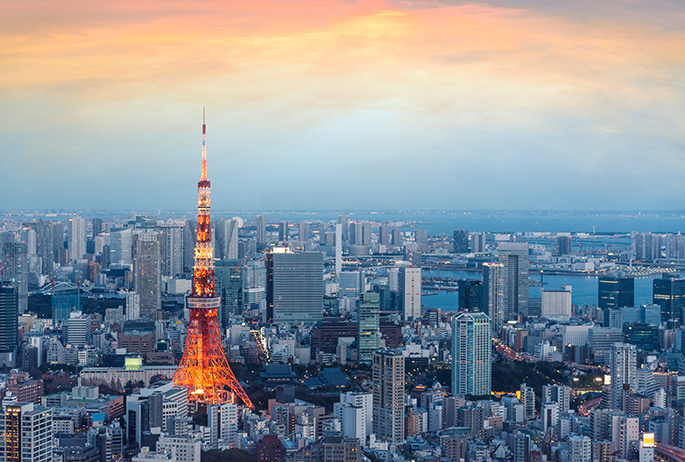 Tokyo Tower. Photo: Adobe Stock
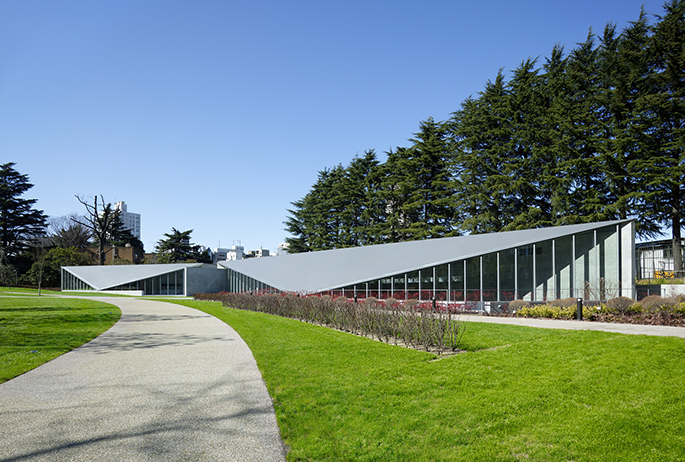 21_21 Design Sight Design Museum in Tokyo. Photo: Masaya Yoshimura
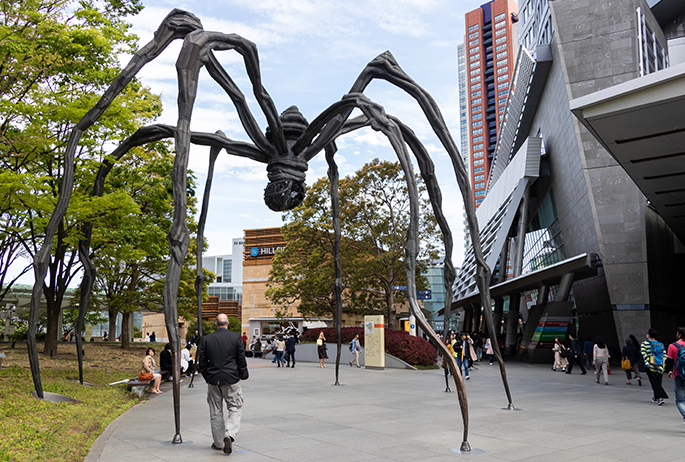
 Maman by Louise Bourgeois at Roppongi Hills, below the Mori Art Museum, Tokyo. Photo: thaneeh.gmail.com /depositphotos.com
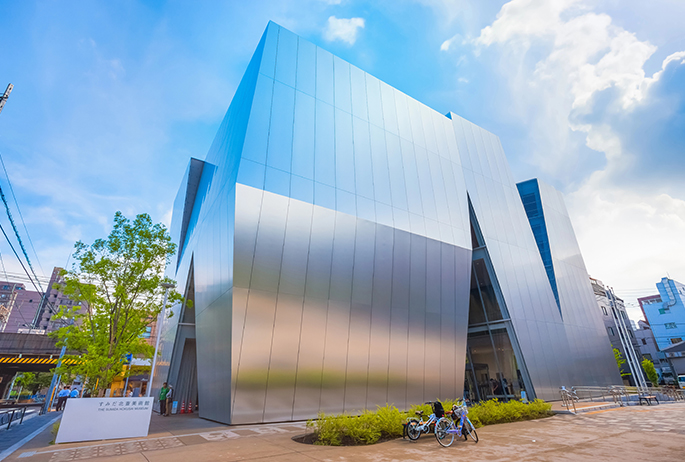
- The Sumida Hokusai Museum, Tokyo. Photo: cowardlion /depositphotos.com
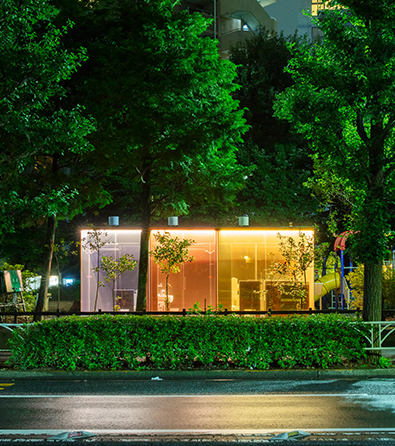
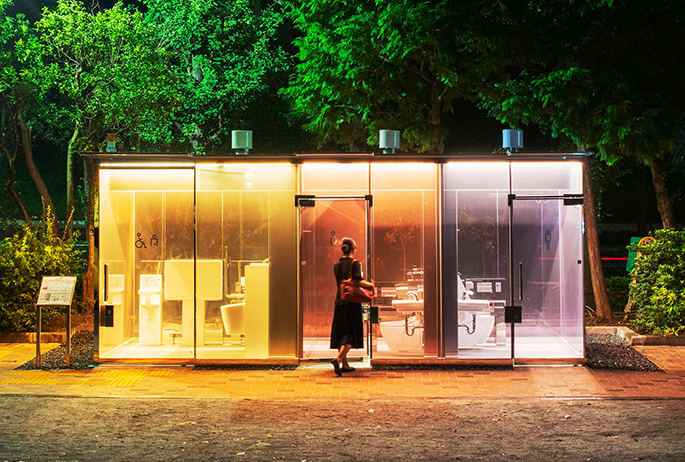
- Yoyogi Fukamachi Park Toilet by Shigeru Ban. Photo: Satoshi Nagare. Courtesy: Shibuya City
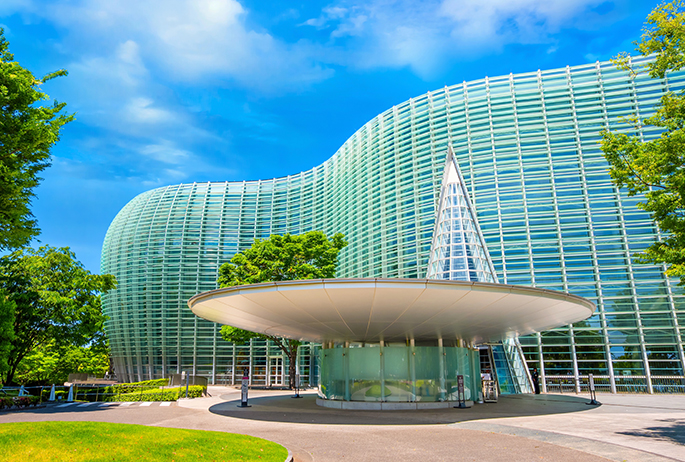
- The National Art Center, Tokyo. Photo: cowardlion /depositphotos.com
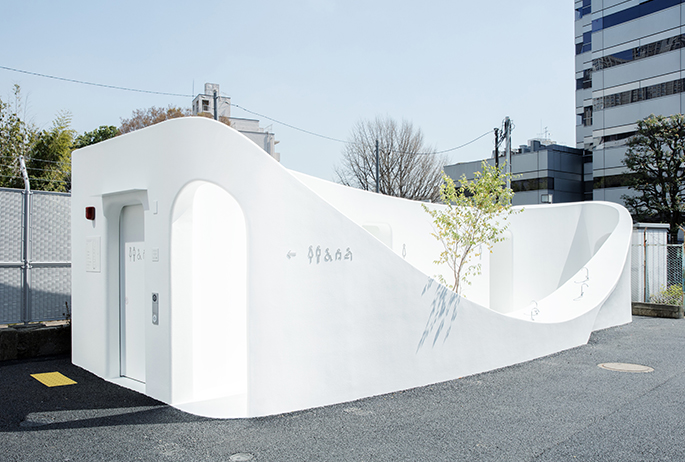
- Nishisando Public Toilet by Sou Fujimoto. Photo: Satoshi Nagare. Courtesy: Shibuya City
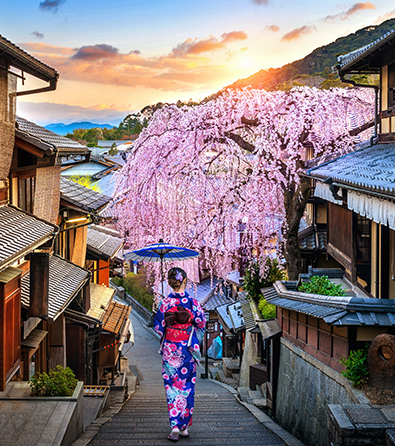
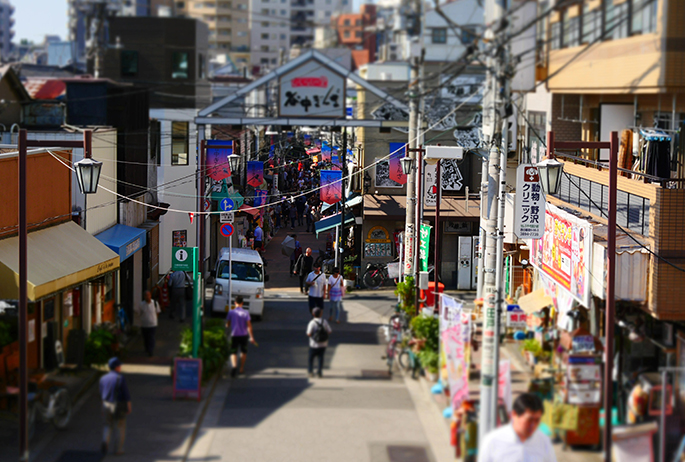
- Yanaka Ginza, Tokyo. Photo: KhunTa /depositphotos.com
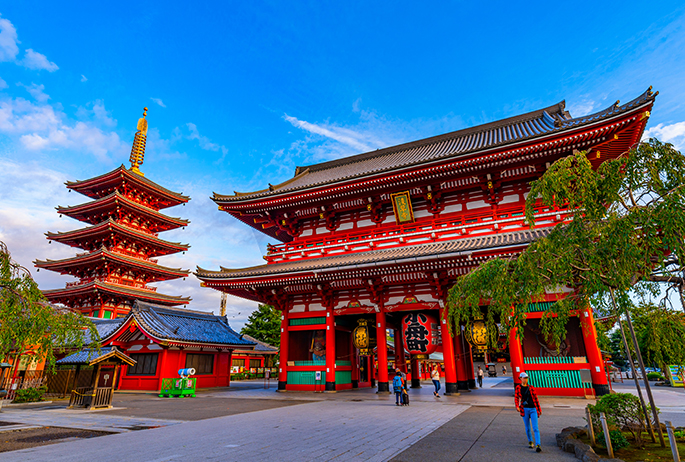
- Sensō-ji Temple, Tokyo. Photo: Adobe Stock
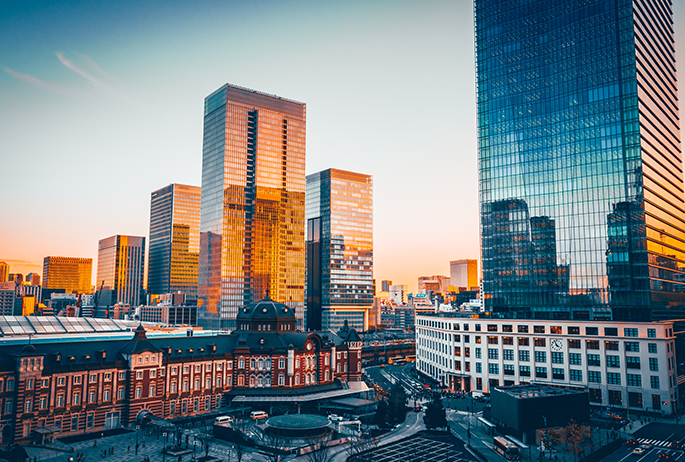
- Tokyo Station and Marunouchi Skyline, Tokyo. Photo: Adobe Stock
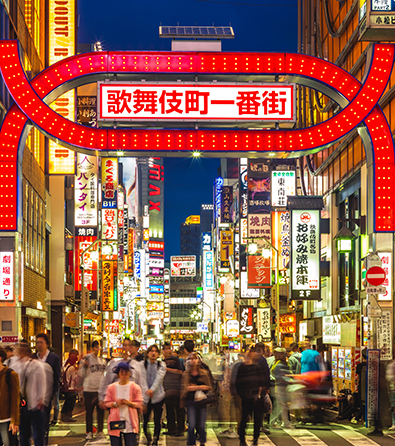
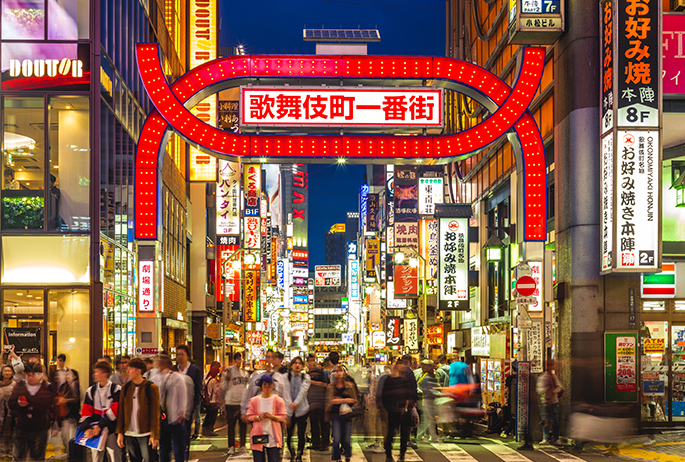 Kabukicho, Tokyo. Photo: richie0703 /depositphotos.com
Where to Stay in Tokyo for Museums and Cultural Attractions
Choosing where to stay in Tokyo can make a substantial difference to a culture-focused trip. Roppongi is especially convenient for Mori Art Museum, The National Art Center, Tokyo, 21_21 DESIGN SIGHT, and several contemporary galleries. Aoyama, Omotesando, and Harajuku work particularly well for travelers interested in architecture, design, and fashion, while Ginza, Marunouchi, and Nihonbashi provide convenient access to museums, galleries, Tokyo Station, and the city’s eastern districts. Shibuya and Yoyogi are useful bases for exploring contemporary culture, design shops, and architecture across western Tokyo.
For a curated selection of boutique and design hotels, chosen for their architecture, interiors, and connection to Tokyo’s cultural context, read our guide to the best boutique and design hotels in Tokyo.
With the interactive map below, you can compare all available accommodation options in the city and find the best prices from a variety of leading providers.
Luxury Hotels in Tokyo
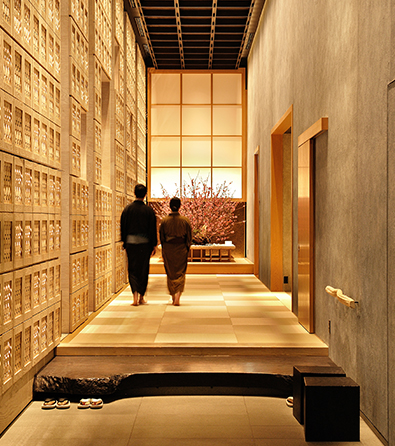
For a luxury stay in Otemachi, HOSHINOYA Tokyo translates the ryokan typology into a 17-storey urban building, with tatami extending through the interiors, shared ochanoma lounges on each guest floor, and a hot-spring bath on the top floor. Four Seasons Hotel Tokyo at Otemachi is located on the upper floors of Otemachi One Tower, with direct access to Otemachi Station and views toward the Imperial Palace Gardens. The Tokyo Station Hotel in Marunouchi is set within the historic Tokyo Station building, completed in 1914 and designated an Important Cultural Property. The hotel itself opened in 1915 and reopened in 2012 following the station building’s conservation and restoration. In Ginza, The Tokyo EDITION, Ginza has 86 rooms and suites with interiors designed by Kengo Kuma in collaboration with Ian Schrager, in a compact property just off Ginza’s Chuo Street. The Okura Tokyo in Toranomon reopened in 2019 with a new complex that preserves key elements of Yoshiro Taniguchi’s celebrated 1962 modernist lobby. The reconstructed interior was developed by his son, architect Yoshio Taniguchi, retaining the original spatial proportions, furnishings, lighting, and decorative motifs within the new hotel. Park Hyatt Tokyo in Shinjuku is set on the upper floors of Kenzo Tange’s Shinjuku Park Tower. Reopened in December 2025 after a 19-month renovation by Studio Jouin Manku, the hotel retains key elements of John Morford’s original 1994 interiors while introducing redesigned guest rooms and updated public spaces. TRUNK(HOTEL) YOYOGI PARK in Tomigaya is a 25-room hotel designed by Keiji Ashizawa Design, with interiors developed in collaboration with Norm Architects. Exposed concrete, timber, custom furniture by Karimoku and Ariake, and extensive planting establish a direct relationship with the adjacent Yoyogi Park. Cerulean Tower Tokyu Hotel is a five-minute walk from Shibuya Station, with guest rooms from the 19th floor upward and wide views across the city. Its location makes it a practical base for exploring Shibuya, Harajuku, Omotesando, Aoyama, and other cultural areas in western Tokyo. The Aoyama Grand Hotel opened in 2020 on the former site of Aoyama Bell Commons, a significant fashion and cultural landmark in the district. Its 42 rooms draw on mid-century modern interiors, while its location near Gaienmae, Omotesando, and Aoyama places it within one of Tokyo’s most concentrated areas for contemporary architecture and design.
Mid-Range Hotels in Tokyo
For a mid-range stay, TRUNK(HOTEL) CAT STREET in Jingumae is a 15-room boutique hotel with architectural design supervision by Mount Fuji Architects Studio and hotel interiors by Jamo Associates. Dark geometric volumes, planted terraces, and interiors incorporating reclaimed timber form the architectural character of the property, within walking distance of Cat Street, Omotesando, and central Shibuya. Hotel Indigo Tokyo Shibuya is a 272-room hotel five minutes from Shibuya Station, with interiors by HBA that interpret the district through references to fashion, street culture, music, and the geometry of Shibuya Crossing. Hotel K5 in Nihonbashi Kabutocho is housed in a 1923 former bank building transformed into a 20-room hotel by Stockholm-based Claesson Koivisto Rune. Original architectural elements are combined with cedar, exposed concrete, planting, custom furniture, and interconnected spaces for dining, coffee, and music. SOIL Nihonbashi Hotel in Ningyocho is a 14-room hotel designed by Kiyoaki Takeda Architectural Design Office and opened in 2025. Its “Backstreet Gardening” concept extends planting across balconies, interiors, and a rooftop garden, linking the architecture to the small-scale streets and residential planting traditions of the surrounding neighborhood. Hotel GrandBach Tokyo Ginza is centered on music, with J.S. Bach integrated into the hotel’s concept and programming. Its location, one minute from Higashi-Ginza Station and four minutes from Ginza Station, makes it a practical base for galleries, design stores, and cultural venues across Ginza. MUJI HOTEL GINZA is integrated with the MUJI Ginza flagship, with 79 rooms planned and designed by UDS under the design supervision of Ryohin Keikaku. The interiors use wood, stone, and earth alongside reused materials, including paving stones from Tokyo’s former tram network and metal recovered from old ships. THE LIVELY TOKYO AZABUJUBAN is a 62-room hotel near Azabu-Juban Station, with flexible guest-room layouts and shared lounge and workspace areas. Its location provides convenient access to Roppongi, Azabudai Hills, and the museums and galleries of central Minato. For families and groups, MIMARU SUITES Tokyo Nihombashi provides two-bedroom apartment-style accommodation with kitchens, living and dining areas, and in-room laundry facilities. The 36 suites are designed for four to six guests, making the property particularly practical when the room cost is shared across a larger group.
Affordable Hotels in Tokyo
For more affordable stays, OMO3 Asakusa by Hoshino Resorts is located one minute from Senso-ji Temple and within a short walk of Asakusa Station. Its 13th-floor OMO Base overlooks the temple and Tokyo Skytree, making it a practical lower-cost base for exploring Asakusa, Ueno, and the eastern side of the city. OMO5 Tokyo Gotanda by Hoshino Resorts opened in 2024 on the upper levels of the Gotanda JP Building. Its 188 rooms, shared OMO Base, and elevated garden look across the surrounding city, while the Yamanote Line provides direct access to Shibuya, Shinagawa, and other central districts. ONSEN RYOKAN YUEN SHINJUKU adapts elements of the traditional ryokan to a 193-room urban hotel. Its open-air bath uses hot-spring water transported from Hakone, combining a distinctly Japanese bathing experience with a central Shinjuku location. toggle hotel suidobashi TOKYO was designed by Irie Miyake Architects & Engineers, with architectural design supervision and interiors by Klein Dytham architecture. A two-color system extends across the exterior, corridors, and 84 guest rooms, while the top-floor café looks over the railway lines, Kanda River, and surrounding urban infrastructure. DDD HOTEL in Nihonbashi-Bakurocho was created through the renovation of a 37-year-old business hotel by CASE-REAL. The restrained interiors are complemented by PARCEL, a contemporary art gallery converted from the building’s former multi-storey parking area. BnA_WALL in Nihonbashi combines a 26-room art hotel with an artist studio, café-bar, and a large-scale mural space. Each guest room was developed as an individual artwork, extending from the walls and ceilings to furniture and lighting, and part of every room booking is paid directly to the artist responsible for its design. Nohga Hotel Akihabara Tokyo was designed by The Range Design around references to the district’s electronics, music, and subcultures. Japanese-made furnishings and materials are used throughout the guest rooms, each of which includes a sound system, while contemporary artworks across the hotel interpret aspects of Akihabara’s cultural history. MOXY Tokyo Kinshicho offers compact rooms and extensive shared spaces in Sumida, with access to the eastern side of Tokyo including Asakusa, Tokyo Skytree, and Akihabara. Its relatively moderate room rates make it a practical option for travelers prioritizing location and value over extensive in-room space. Waves Nakameguro is a compact hostel-style property close to Naka-meguro Station, with private rooms, shared facilities in some room categories, and a communal lounge. Its location provides an affordable base for exploring Nakameguro, Daikanyama, and the Meguro River area.
Best Art Museums in Tokyo
Mori Art Museum (Roppongi)
Why go: For major contemporary art exhibitions alongside focused presentations from a growing collection centered on Japan and the Asia-Pacific region.
Tip: Combine the museum with The National Art Center, Tokyo, 21_21 DESIGN SIGHT, and the contemporary galleries around Roppongi.
Opened in 2003 at the top of Roppongi Hills Mori Tower, Mori Art Museum presents large-scale exhibitions of contemporary art from Japan and abroad. Its collection now comprises approximately 520 works across painting, photography, sculpture, video, and installation, with selections presented through the MAM Collection series.
The National Art Center, Tokyo (Roppongi)
Why go: For large-scale temporary exhibitions spanning modern and contemporary art, historical collections, fashion, design, and other fields of visual culture.
Tip: Check the exhibition program before visiting, as the institution does not maintain a permanent art collection and several exhibitions may run simultaneously.
Opened in 2007, The National Art Center, Tokyo was designed by Kisho Kurokawa and is defined by an undulating glass curtain wall facing the surrounding landscape. Rather than building a permanent art collection, the institution uses its extensive galleries for temporary exhibitions and maintains an art library and research collections devoted to art-related publications and archival material.
Museum of Contemporary Art Tokyo (Kiyosumi-Shirakawa)
Why go: For one of Tokyo’s most substantial collections of postwar and contemporary Japanese art, presented alongside international contemporary art and temporary exhibitions.
Tip: Combine the museum with the galleries and independent cultural spaces around Kiyosumi-Shirakawa.
Opened in 1995, the Museum of Contemporary Art Tokyo holds approximately 6,100 works, with particular strength in Japanese art from the postwar period to the present. Its MOT Collection exhibitions draw from painting, sculpture, photography, video, installation, and other media, while temporary exhibitions address individual artists and broader developments in contemporary practice. The museum reopened in 2019 following a major renovation.
The National Museum of Modern Art, Tokyo (Takebashi)
Why go: For a major collection of modern Japanese art from the late 19th century to the present, with particular strengths in Nihonga, yōga, printmaking, sculpture, photography, video, and installation.
Tip: If time is limited, prioritize the MOMAT Collection galleries, where approximately 200 works are selected from the museum’s collection for each exhibition period.
The National Museum of Modern Art, Tokyo holds a collection of approximately 14,000 works centered on the development of modern and contemporary Japanese art. Its holdings include 18 Important Cultural Properties and are presented through regularly renewed exhibitions that place different periods, artists, and media in historical context.
The National Museum of Western Art (Ueno)
Why go: For Western art from the Renaissance through the early 20th century, presented within Le Corbusier’s only completed building in Japan.
Tip: Allow time to examine the Main Building and restored forecourt as part of the visit, rather than treating the architecture only as a setting for the collection.
Established in 1959 around the Matsukata Collection, The National Museum of Western Art holds more than 6,000 works, including paintings and sculpture from the Renaissance to the 20th century. Its Main Building, designed by Le Corbusier and completed in 1959, was inscribed on the UNESCO World Heritage List in 2016 as part of The Architectural Work of Le Corbusier.
Tokyo Photographic Art Museum (Ebisu)
Why go: For a museum devoted specifically to photography and moving images, with historical and contemporary material from Japan and abroad.
Tip: Check both the exhibition and screening programs, as film and moving-image presentations form an important part of the museum’s activities.
Opened in its current form in 1995, Tokyo Photographic Art Museum holds more than 39,000 works spanning the early history of photography and moving images through contemporary practice. The collection supports a program of exhibitions that examines photography as both an artistic medium and a record of social, technological, and cultural change.
WATARI-UM, The Watari Museum of Contemporary Art (Jingumae / Aoyama)
Why go: For a small private museum with a focused program of contemporary art exhibitions and a long history of presenting international artists in Tokyo.
Tip: Combine the museum with the galleries, architecture, and design spaces around Aoyama and Omotesando.
WATARI-UM opened in September 1990 in a building designed by Swiss architect Mario Botta. Developed from the activities of Galerie Watari, the museum presents contemporary art alongside lectures and interdisciplinary programs that extend into architecture, design, and visual culture.
Nezu Museum (Aoyama)
Why go: For pre-modern Japanese and East Asian art presented within a museum and garden that form an important contemporary architectural work by Kengo Kuma.
Tip: Allow time for both the galleries and the garden, which forms an integral part of the museum visit.
Founded in 1941 to preserve the collection assembled by Nezu Kaichirō, the museum now holds more than 7,600 works, including seven National Treasures and 93 Important Cultural Properties. The current main building, completed in 2009 and designed by Kengo Kuma, connects six galleries with views toward the garden through an extended roof, glass walls, and a bamboo-lined approach from Aoyama.
The Sumida Hokusai Museum (Ryogoku / Sumida)
Why go: For a museum devoted to Katsushika Hokusai, examining his work, artistic development, and connections to the Sumida area where he spent much of his life.
Tip: Check the current exhibition before visiting, as original prints, drawings, paintings, and books are rotated for conservation.
Opened in 2016, The Sumida Hokusai Museum was designed by Kazuyo Sejima as a compact, faceted structure divided by passages that connect the building to the surrounding neighborhood. Its exhibitions draw on works and research related to Hokusai and his pupils, including ukiyo-e prints, paintings, illustrated books, and archival material.
Contemporary Art Galleries and Cultural Venues in Tokyo
TERRADA ART COMPLEX (Tennoz)
Why go: To visit multiple contemporary art galleries within a single complex, with programs spanning Japanese and international artists across painting, sculpture, installation, photography, and new media.
Tip: Check the individual gallery schedules before visiting, as opening days and exhibition periods vary between spaces.
TERRADA ART COMPLEX I opened in 2016, followed by TERRADA ART COMPLEX II in 2020. Together they form Japan’s largest gallery complex and bring together galleries including ANOMALY, Tomio Koyama Gallery, KOTARO NUKAGA, Taka Ishii Gallery, SCAI PARK, and KOSAKU KANECHIKA, alongside artist studios and project spaces.
SCAI The Bathhouse (Yanaka)
Why go: To see postwar and contemporary art within one of Tokyo’s most distinctive gallery spaces, with a program connecting established Japanese artists and international contemporary practices.
Tip: Combine the gallery with a walk through Yanaka and the museums of nearby Ueno.
Established in 1993, SCAI The Bathhouse is set within a former public bathhouse with a history of approximately 200 years. The gallery has presented artists including Lee Ufan, Mariko Mori, Kohei Nawa, Anish Kapoor, and Apichatpong Weerasethakul, while also developing commissions and public art projects across Tokyo.
Ota Fine Arts (Roppongi)
Why go: To follow contemporary Japanese and Asian art through a gallery whose program has contributed to the international visibility of artists including Yayoi Kusama and successive generations of contemporary practitioners.
Tip: Check both the Piramide and 7CHOME programs, as the two Roppongi spaces may present different exhibitions.
Founded in Tokyo in 1994, Ota Fine Arts initially opened in Ebisu before relocating to Roppongi. Its program brings together artists from Japan and other parts of Asia, working across painting, sculpture, installation, video, photography, and performance. The gallery currently operates two exhibition spaces in Roppongi.
Taka Ishii Gallery (Roppongi / Kyobashi)
Why go: To follow Japanese and international contemporary art alongside an important program of postwar and contemporary photography.
Tip: If photography is a particular interest, also check the program at Taka Ishii Gallery Photography / Film in Roppongi.
Founded in Tokyo in 1994, Taka Ishii Gallery has developed a program spanning contemporary art and photography, representing artists including Daido Moriyama, Nobuyoshi Araki, Naoya Hatakeyama, Rei Naito, and contemporary artists from Japan and abroad. Its Tokyo spaces now include galleries in Roppongi, Kyobashi, and Tennoz, as well as a dedicated Photography / Film program.
Tokyo Gallery + BTAP (Ginza)
Why go: To examine postwar and contemporary East Asian art through one of the longest-established contemporary art galleries in Japan.
Tip: Combine the gallery with Shiseido Gallery and Ginza Graphic Gallery for a compact art and design route through Ginza.
Founded in Ginza in 1950, Tokyo Gallery introduced Japanese audiences to international postwar art while developing sustained relationships with artists associated with Japanese avant-garde movements. Its later program expanded to contemporary art from Korea and China, and in 2002 the gallery established Beijing Tokyo Art Projects in Beijing. Today, Tokyo Gallery + BTAP continues to work across postwar and contemporary East Asian art.
Shiseido Gallery (Ginza)
Why go: To see contemporary art within one of Japan’s longest-running non-profit exhibition spaces, with a history extending from early 20th-century Japanese art to current artistic practices.
Tip: Combine the gallery with Tokyo Gallery + BTAP and Ginza Graphic Gallery, all within the wider Ginza cultural district.
Established in 1919, Shiseido Gallery is considered the oldest art gallery still operating in Japan. Since the 1990s its program has concentrated primarily on contemporary art, presenting solo and group exhibitions by Japanese and international artists. Since 2001, the gallery has been located below the Tokyo Ginza Shiseido Building, with an exhibition space distinguished by a ceiling height of more than five meters.
Take Ninagawa (Higashi-Azabu)
Why go: To see contemporary art through a program that places different generations of Japanese artists in dialogue with international practices and histories of postwar experimental art.
Tip: Check the current exhibition before visiting, as the gallery generally develops focused presentations around individual artists or specific bodies of work.
Established in 2008, Take Ninagawa works with artists from different generations, connecting contemporary practices with precedents in Japanese postwar experimental art. Its program includes artists such as Shinro Ohtake, Aki Sasamoto, Kazuko Miyamoto, Tsuruko Yamazaki, Gozo Yoshimasu, and international artists working in relation to the cultural context of Japan.
Pace Tokyo (Azabudai Hills)
Why go: To see exhibitions from Pace’s international contemporary and 20th-century program within a Tokyo gallery designed by Sou Fujimoto.
Tip: Combine the gallery with Azabudai Hills Gallery and the architecture of the surrounding development before continuing toward Roppongi.
Pace opened its permanent Tokyo gallery at Azabudai Hills in 2024. Set across three levels of a building by Heatherwick Studio, the approximately 5,500-square-foot gallery has interiors designed by Sou Fujimoto, with curved walls and circulation spaces developed specifically for changing exhibitions. The Tokyo program draws from Pace’s international roster while also presenting artists with established connections to Japan.
GYRE GALLERY (Omotesando)
Why go: To see temporary exhibitions that connect contemporary art with design, material culture, architecture, and broader questions in visual culture.
Tip: Combine the gallery with the GYRE building itself and nearby works of architecture along Omotesando and Aoyama.
Located on the third floor of GYRE in Omotesando, GYRE GALLERY presents temporary exhibitions developed across art, design, fashion, environmental research, and other fields of contemporary culture. The gallery forms part of the wider GYRE building, designed by MVRDV and opened in 2007.
Tokyo Design Museums and Cultural Spaces
21_21 DESIGN SIGHT (Roppongi)
Why go: For exhibitions that examine design through material, product, graphic, fashion, spatial, and interdisciplinary practices, with particular attention to the relationship between design and everyday life.
Tip: Check the programs for Gallery 1 & 2 and Gallery 3 before visiting, as the spaces may present separate exhibitions and events.
Founded by Issey Miyake and opened in 2007, 21_21 DESIGN SIGHT develops exhibitions, talks, and workshops around design as a cultural practice. Its directors include graphic designer Taku Satoh and product designer Naoto Fukasawa. The building was designed by Tadao Ando Architect & Associates with Nikken Sekkei, with approximately 80 percent of its floor area below ground and a folded steel roof developed in response to Miyake’s concept of “A Piece of Cloth.” For a closer look at the institution and its architecture, read our dedicated article on 21_21 DESIGN SIGHT.
The Japan Folk Crafts Museum (Komaba)
Why go: For the material culture and ideas of the Mingei movement, explored through ceramics, textiles, woodwork, lacquer, painting, and other forms of vernacular craft from Japan and beyond.
Tip: Check the current exhibition before visiting, as selections from the collection rotate throughout the year.
Founded in 1936 by philosopher and critic Sōetsu Yanagi, The Japan Folk Crafts Museum holds approximately 17,000 works. The collection includes Japanese regional crafts, Korean ceramics and woodwork, Ainu and Okinawan textiles and objects, as well as works by figures associated with the Mingei movement, including Shōji Hamada, Kanjirō Kawai, Bernard Leach, Keisuke Serizawa, and Shikō Munakata. Yanagi also participated in the design of the museum building and its display environment, integrating architecture, furnishings, materials, and exhibition design into his conception of Mingei.
KARIMOKU RESEARCH CENTER (Nishi-Azabu)
Why go: To examine furniture and product design through materials, prototypes, manufacturing techniques, and experimental collaborations between Karimoku and designers working in Japan and internationally.
Tip: Check the current exhibition before visiting. The Archive changes with each research project, while the Materials Lab provides a more permanent view into wood species, finishes, manufacturing processes, and furniture development.
Opened in 2024, KARIMOKU RESEARCH CENTER was designed by Keiji Ashizawa Design as a platform for research, experimentation, and collaboration around furniture and material culture. The three-level center includes The Archive for exhibitions, The Materials Lab with furniture prototypes, wood samples, finishes, and manufacturing studies, and The Study for talks and interdisciplinary programs.
ginza graphic gallery (Ginza)
Why go: For exhibitions devoted specifically to graphic design, spanning typography, poster design, publishing, visual identity, illustration, and motion graphics.
Tip: Check the current program before visiting, as the gallery presents approximately eight exhibitions each year and closes between installations.
Established in 1986 by Dai Nippon Printing, ginza graphic gallery is dedicated to graphic design and visual communication. Its program brings together Japanese and international designers through exhibitions, lectures, and publications, examining both established practices and current developments across print and digital media.
Tokyo Architecture Guide: Buildings and Landmarks
Edo-Tokyo Open Air Architectural Museum (Koganei)
Why go: For a full-scale study of Tokyo’s domestic, commercial, and civic architecture from the Edo period through the mid-20th century, preserved through relocated and reconstructed buildings.
Tip: If time is limited, prioritize the House of Kunio Maekawa, House of Georg de Lalande, and the reconstructed shops and streetscapes of the East Zone.
Established in 1993, the Edo-Tokyo Open Air Architectural Museum preserves buildings of architectural and cultural significance that could no longer remain on their original sites. The collection includes residences, shops, public buildings, and other structures reconstructed with their interiors, allowing changes in materials, construction methods, domestic space, and urban life to be examined at full scale.
Azabudai Hills Podium by Heatherwick Studio (Azabudai)
Why go: To examine how landscape, circulation, and lower-level architecture are integrated across a large mixed-use development by Heatherwick Studio.
Tip: Explore the site at ground level and along the planted terraces before focusing on the towers, as Heatherwick Studio’s contribution is concentrated in the public realm and lower-level architecture.
Completed in 2023, Azabudai Hills combines buildings by several architectural practices within an urban redevelopment led by Mori Building. Heatherwick Studio designed the public realm and lower-level podium architecture, developing a pergola-like structural system that connects planted terraces, pedestrian routes, retail, cultural facilities, and public spaces across the site.
The Tokyo Toilet Project (Shibuya)
Why go: For a series of small public buildings that address accessibility, privacy, material, maintenance, and civic space through different architectural and design approaches.
Tip: Several projects can be seen on foot around Yoyogi, Tomigaya, and Jingumae. Wim Wenders’s film Perfect Days uses a number of the buildings as recurring settings.
THE TOKYO TOILET brings together 17 public facilities across Shibuya designed by 16 architects and designers. The individual projects range from Shigeru Ban’s glass-walled structures and Tadao Ando’s circular pavilion to works by Toyo Ito, Kengo Kuma, Fumihiko Maki, Sou Fujimoto, and others, using the everyday public toilet as a study in accessibility, construction, material, and the design of shared urban space. For a closer look at the project, read our dedicated article on THE TOKYO TOILET.
St. Mary’s Cathedral, Tokyo (Bunkyo)
Why go: For Kenzo Tange’s treatment of reinforced concrete shell construction as both structure and spatial form within one of Tokyo’s key works of postwar religious architecture.
Tip: Enter the cathedral if access permits. The relationship between the cross-shaped plan, the rising shell walls, and the vertical strips of light is considerably clearer from the interior.
Completed in 1964, St. Mary’s Cathedral was designed by Kenzo Tange to replace the earlier church destroyed during the Second World War. Eight curved shell walls rise from the plan to form a cruciform composition, with reinforced concrete surfaces clad externally in stainless steel. Inside, the converging structure directs daylight along the axes of the cross and toward the height of the sanctuary.
SunnyHills Minami-Aoyama (Aoyama)
Why go: For Kengo Kuma’s adaptation of traditional jigoku-gumi joinery into a three-dimensional timber lattice that defines both the structure and spatial character of a contemporary commercial building.
Tip: Step inside as well as viewing the exterior, as the timber lattice continues through the interior and is easier to understand as a structural system from within.
Completed in 2013, SunnyHills at Minami-Aoyama was designed by Kengo Kuma and Associates using jigoku-gumi, a traditional Japanese timber joint system. The building develops the technique into a three-dimensional lattice of slender wooden members, creating a continuous structural framework around and through the interior spaces.
Tokyo Apartment (Itabashi)
Why go: For Sou Fujimoto’s rethinking of collective housing as a compressed cluster of individual house-like volumes rather than a conventional apartment block.
Tip: This is a private residential building. View it only from the public street and avoid entering the property or photographing residents.
Completed in 2010 by Sou Fujimoto Architects, Tokyo Apartment contains four dwellings distributed across a cluster of pitched-roof volumes connected through exterior stairs and vertical circulation. Rather than aligning each apartment with a conventional floor, the project distributes rooms across different levels, producing a three-dimensional arrangement that Fujimoto developed in response to the density and fragmented scale of Tokyo.
Tokyo International Forum (Marunouchi / Yurakucho)
Why go: For Rafael Viñoly’s large civic complex and its Glass Building, where structure, circulation, and public space are organized around a monumental transparent atrium.
Tip: Walk through the ground-level plaza and then move onto the elevated bridges within the Glass Building to understand how the atrium connects the different parts of the complex.
Tokyo International Forum opened in 1997 following an international design competition won by Rafael Viñoly in 1989. The complex combines performance halls, conference spaces, public circulation, and a landscaped plaza, while the Glass Building is organized around a 60-meter-high atrium enclosed by curved glass walls and suspended beneath a large steel roof structure.
Okuno Building (Ginza)
Why go: For a rare surviving example of prewar reinforced-concrete apartment architecture in Ginza, now adapted for small galleries, studios, and independent businesses.
Tip: Opening hours vary between tenants. Look closely at the stairwells, corridors, original fittings, and manually operated elevator rather than visiting only the galleries.
Originally built as Ginza Apartments, the present Okuno Building combines two adjoining reinforced-concrete structures completed in 1932 and 1934. Many of the compact former residential units are now used as galleries, studios, and shops, while the narrow corridors, staircases, and manually operated elevator preserve elements of the building’s original domestic character.
Arimasuton Building (Minato / Mita)
Why go: For an unusual long-term self-build in reinforced concrete that challenges the conventional separation between architectural design and construction.
Tip: The exterior can be viewed from the public street. As the building remains closely connected to an ongoing private and collaborative project, check for announced events if you are interested in interior access.
Architect Keisuke Oka began building Arimasuton in Mita in 2005, developing the reinforced-concrete structure incrementally with the help of friends, students, artists, musicians, and other collaborators. The project evolved through making rather than a fixed set of conventional construction drawings, leaving the processes of casting, formwork, revision, and collective labor legible in the finished concrete.
Prada Aoyama Epicenter (Aoyama)
Why go: For Herzog & de Meuron’s integration of structure, façade, and retail space through a rhomboid steel framework and a varied system of flat, concave, and convex glazing.
Tip: Walk around the building before entering. The changing geometry and different types of glass alter both reflections and views through the façade from each side.
Completed in 2003, Prada Aoyama was designed by Herzog & de Meuron as a compact vertical flagship that leaves part of the site open at street level. Its rhomboid structural grid and glass envelope are treated as a single architectural system, with selected convex and concave panes modifying reflections, views, and the relationship between the interior and the surrounding city.
Harajuku Quest (Harajuku / Omotesando)
Why go: For OMA and Shohei Shigematsu’s architectural response to the contrasting scales and urban identities of Omotesando and Oku-Harajuku.
Tip: Enter from Omotesando and continue through the internal passage toward the smaller streets behind the avenue. The transition between the two sides is central to the architectural concept.
Completed in 2025, Harajuku Quest was designed by OMA under Shohei Shigematsu as a mixed-use complex connecting Omotesando with Oku-Harajuku. A transparent, vertically articulated façade addresses the main avenue, while stepped volumes and smaller-scale spaces respond to the neighborhood behind it. A pedestrian passage crosses the site between the two conditions, with plazas, terraces, and rammed-earth surfaces incorporated into the route.
Omotesando Hills (Omotesando)
Why go: For Tadao Ando’s response to the topography and scale of Omotesando through a low-rise mixed-use development organized around a continuous sloping circulation route.
Tip: Follow the Spiral Slope around the central atrium rather than moving directly between floors, as the gradual change in level is fundamental to the organization of the building.
Opened in 2006, Omotesando Hills was designed by Tadao Ando Architect & Associates with Mori Building as part of the redevelopment of the former Dojunkai Aoyama Apartments site. The main interior is organized around a six-level atrium encircled by the approximately 700-meter Spiral Slope, whose gradient closely follows that of Omotesando Avenue outside.
Gyre Building (Omotesando)
Why go: For MVRDV’s transformation of a multi-level commercial building as a vertical extension of the street, using shifted volumes, terraces, and external circulation to connect the different floors.
Tip: Move through the upper levels and exterior terraces rather than viewing only the façade from Omotesando.
Completed in 2007, GYRE was designed by MVRDV as a stack of displaced volumes along Omotesando. Circulation extends between the interior and external terraces, forming what the architects describe as a vertical promenade and allowing each level to maintain a different relationship with the street and surrounding buildings.
Spiral Building (Aoyama)
Why go: For Fumihiko Maki’s integration of exhibition, performance, retail, and social spaces through a continuous sequence of circulation rather than a conventional cultural-building plan.
Tip: Check the current exhibition or performance program, but also follow the internal route through the gallery, café, atrium, and hall to read the building as a complete architectural sequence.
Completed in 1985, Spiral was designed by Fumihiko Maki as an urban art center for art, design, music, and performance. A continuous looping route links galleries, café spaces, an atrium, and an assembly hall, making circulation itself part of the relationship between visitors, cultural programming, and the surrounding city.
DAIKANYAMA T-SITE (Daikanyama)
Why go: For Klein Dytham architecture’s campus-like approach to retail architecture, organized as a group of low-rise pavilions around existing trees, pedestrian paths, and a central bookstore.
Tip: Walk between the three main bookstore buildings as well as through the interiors. The relationship between the pavilions, landscape, bridges, and pedestrian routes is as important as the individual façades.
Opened in 2011, DAIKANYAMA T-SITE was designed by Klein Dytham architecture as a group of low-rise buildings centered on Tsutaya Books. Three principal pavilions are connected by bridges and a pedestrian route known as Magazine Street, while perforated façade panels develop the Tsutaya “T” as an architectural pattern across the complex.
Design Shops and Concept Stores in Tokyo
Comme des Garçons Aoyama (Aoyama) The Aoyama flagship was redesigned in 1999 through a collaboration between Rei Kawakubo, interior designer Takao Kawasaki, and Future Systems, which developed the undulating glass façade patterned with blue dots. The project integrates fashion display with architecture and interior design, reflecting Kawakubo’s longstanding experimentation with the conventions of retail space.
A Bathing Ape Harajuku (Harajuku) Founded in Harajuku in 1993 as the original label of NOWHERE, A Bathing Ape became one of the defining brands of Japanese streetwear. The Harajuku store continues the brand’s presence in Jingumae and presents the visual vocabulary associated with BAPE, including Ape Head, BAPE Camo, BAPE STA, and the Shark Hoodie.
MARUGO TOKYO (Kyobashi) Marugo was established in Kurashiki in 1919 and developed footwear from the split-toe construction of tabi and jikatabi. Its Tokyo store opened in Kyobashi in 2019 and presents contemporary footwear that adapts the separated-toe structure for walking, sport, and everyday use.
Hender Scheme sukima Ebisu (Ebisu) Founded in Tokyo in 2010 by Ryo Kashiwazaki, Hender Scheme works across footwear, leather goods, and objects, with particular attention to material, construction, and the changes produced through use over time. The Ebisu shop presents the brand’s seasonal collections alongside its continuing work with leather and small-scale production.
Kappabashi Kitchenware Street (Taito / Asakusa) Kappabashi developed as a specialist wholesale district serving restaurants and food businesses and remains concentrated around knives, ceramics, cookware, lacquerware, baking tools, and restaurant equipment. Its independent shops bring together industrially manufactured tools and products from specialist Japanese makers, providing a broad view of materials, production, and the design of professional kitchenware.
Nihonbashi Kiya (Nihonbashi) Established in 1792, Kiya is a specialist cutlery retailer with a long history in Nihonbashi. Its main store carries Japanese and Western-style kitchen knives alongside scissors, sharpening stones, cooking utensils, and household tools, with sharpening and repair services continuing the company’s emphasis on maintaining tools for long-term use.
Waltz (Nakameguro) Opened in 2015, Waltz specializes in cassette tapes, vinyl records, vintage books and magazines, VHS, and analog playback equipment. Its focus on physical media places cassette culture within a broader history of graphic design, music publishing, and analog formats rather than presenting it only as a nostalgic collecting category.
Kakimori (Kuramae) Opened in Kuramae in 2010, Kakimori develops writing tools and stationery around paper, ink, and customization. Visitors can assemble made-to-order notebooks by selecting covers, paper, bindings, and closures, while Inkstand on the floor above allows individual ink colors to be mixed from pigments.
MUJI Ginza (Ginza) Opened in 2019, MUJI Ginza is the brand’s global flagship, extending across the first six floors of the building shared with MUJI HOTEL GINZA. Alongside furniture, household goods, clothing, and everyday objects, the sixth floor includes ATELIER MUJI GINZA, where exhibitions on manufacturing, design, and art are presented three to four times a year alongside a library devoted to design-related subjects.
Dover Street Market Ginza (Ginza) Opened in 2012, Dover Street Market Ginza brings together Comme des Garçons with Japanese and international fashion labels, artist installations, books, jewelry, and brand-specific spaces across seven floors. The store extends Rei Kawakubo’s concept of fashion retail as a spatial and cultural platform, with individual areas redesigned for new collections, collaborations, and installations.
PIGMENT TOKYO (Tennoz) Opened in 2015 in an interior by Kengo Kuma and Associates, PIGMENT TOKYO combines an art-material shop, laboratory, and educational program. Its collection includes approximately 4,500 pigment colors, more than 600 types of brushes, inkstones, ink sticks, washi, and materials used across Japanese and Western painting techniques.
CIBONE (Omotesando) Located on the lower level of GYRE, CIBONE brings together furniture, lighting, tableware, jewelry, art objects, and fashion by Japanese and international designers and makers. The store also presents exhibitions, temporary projects, and product launches, positioning contemporary objects within a wider context of interiors, craft, and material production.
Mizusai (Kuramae) Mizusai is a gallery and shop in Kuramae presenting contemporary Japanese ceramics alongside works in other materials and media. Opened in 2018, the space combines temporary exhibitions with a continuing selection of functional and sculptural objects by makers from different parts of Japan.
NUNO (Roppongi) Established in 1984, NUNO develops contemporary textiles through collaborations with weaving, dyeing, printing, and finishing workshops across Japan. Its Roppongi shop at AXIS Design Center presents original fabrics alongside clothing, scarves, bags, and made-to-order applications, bringing together experimental textile structures, traditional production knowledge, and new materials.
ISSEY MIYAKE GINZA / 442 (Ginza) Opened in 2023, ISSEY MIYAKE GINZA / 442 is a four-level flagship designed by Tokujin Yoshioka. Recycled aluminum panels form display, shading, and architectural elements throughout the interior, creating a restrained setting for the company’s continuing work in textile development, garment construction, and material experimentation.
Tokyo Art and Design Districts
Tokyo’s museums, contemporary galleries, design institutions, architecture, and specialist shops are distributed across several distinct cultural clusters rather than concentrated in a single art district. The areas below bring together the strongest concentrations of art, design, architecture, and material culture, making it possible to explore several related venues on foot within the same part of the city.
Roppongi / Azabudai / Azabu
Roppongi and the surrounding Azabu area form one of Tokyo’s strongest concentrations of contemporary art institutions and galleries. Mori Art Museum, The National Art Center, Tokyo, and 21_21 DESIGN SIGHT are joined by commercial galleries across Roppongi and Higashi-Azabu, while Azabudai Hills has extended the cultural route with Pace Tokyo and new exhibition spaces. The wider area also includes KARIMOKU RESEARCH CENTER in Nishi-Azabu, adding furniture, material, and product-design research to the contemporary art circuit.
Aoyama / Omotesando / Harajuku
This area brings together some of Tokyo’s most significant contemporary architecture with art museums, galleries, fashion, and design retail. Nezu Museum and WATARI-UM sit within a broader architectural landscape that includes works by Herzog & de Meuron, Tadao Ando, MVRDV, Fumihiko Maki, Kengo Kuma, and OMA. GYRE, CIBONE, Comme des Garçons, and other design-led stores extend the route into contemporary furniture, objects, fashion, and retail design.
Ginza / Marunouchi / Kyobashi
Ginza and the adjacent Marunouchi and Kyobashi areas combine one of Tokyo’s longest-established gallery histories with graphic design, fashion, and architecture. Tokyo Gallery + BTAP and Shiseido Gallery connect the district to the development of modern and contemporary art in the city, while ginza graphic gallery, MUJI Ginza, Dover Street Market Ginza, and ISSEY MIYAKE GINZA / 442 extend the route into graphic, product, and fashion design. Okuno Building and Tokyo International Forum add two contrasting periods of 20th-century architecture.
Kiyosumi-Shirakawa / Kinshicho
Museum of Contemporary Art Tokyo forms the institutional center of this eastern Tokyo art area, with contemporary galleries and independent spaces distributed through Kiyosumi-Shirakawa and farther east toward Kinshicho. KANA KAWANISHI GALLERY is located a short walk from the museum, while spaces such as Mujin-to Production extend the contemporary art route toward Kinshicho. The area is particularly useful for visitors interested in combining a major museum collection with smaller-scale gallery programs.
Kuramae / Ryogoku
Kuramae offers a different perspective on Tokyo design, shaped by small-scale manufacturing, traditional craft, specialist retail, and contemporary makers rather than major cultural institutions. Kakimori and Mizusai represent current approaches to stationery, paper, ink, ceramics, and functional objects, within a neighborhood historically associated with workshops producing furniture, footwear, prints, and other crafts. Across the Sumida River in Ryogoku, The Sumida Hokusai Museum adds an art-historical and architectural point to the route.
Daikanyama / Nakameguro
Daikanyama and neighboring Nakameguro form one of Tokyo’s strongest areas for independent fashion, product and interior design, specialist retail, and contemporary urban culture. In Daikanyama, Fumihiko Maki’s Hillside Terrace and Klein Dytham architecture’s DAIKANYAMA T-SITE provide two important architectural anchors, alongside design destinations such as The Conran Shop Daikanyama and independent fashion boutiques. A short walk downhill toward Nakameguro leads to smaller shops, fashion labels, design-led retail spaces, and bookstores distributed along the Meguro River and beneath the railway at Nakameguro Koukashita.