Barcelona brings together major art museums, contemporary art galleries, design institutions, and significant works of Catalan Modernisme, twentieth-century modernism, and contemporary architecture. Museu Nacional d’Art de Catalunya, Museu Picasso, Museu Tàpies, MACBA, and Fundació Joan Miró provide distinct perspectives on Catalan and international art, while Disseny Hub Barcelona extends the guide into product, graphic, fashion, and decorative design.
This guide also covers Barcelona’s architectural landmarks, design and vintage shopping, places to eat and drink, and the best areas to stay near its principal museums and cultural attractions.
To access our exclusive Barcelona Treasure Map, simply click here and become a Culture Treasures member. The map pins every place in this guide and adds bonus cafés, boutiques and cultural venues.
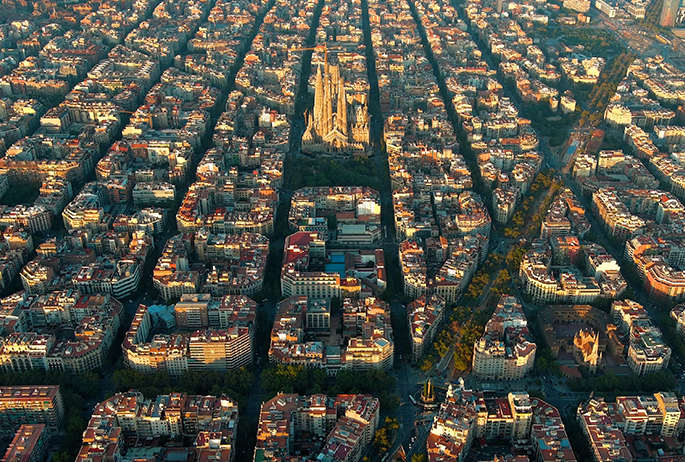 Barcelona. Photo: Envato Elements
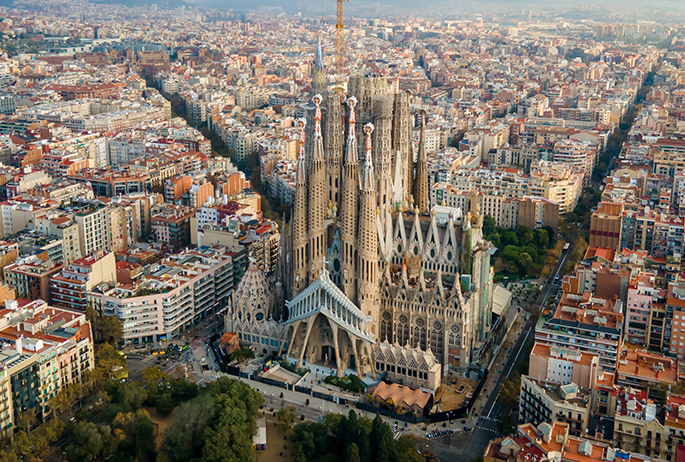
 Sagrada Familia. Photo: Envato Elements
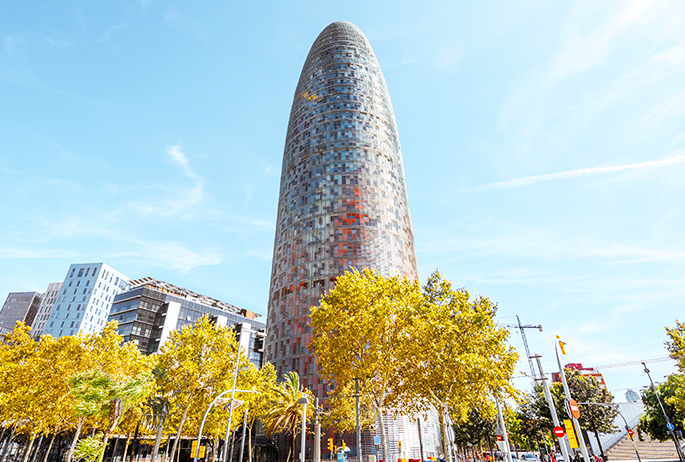
- Torre Glòries. Photo: Envato Elements
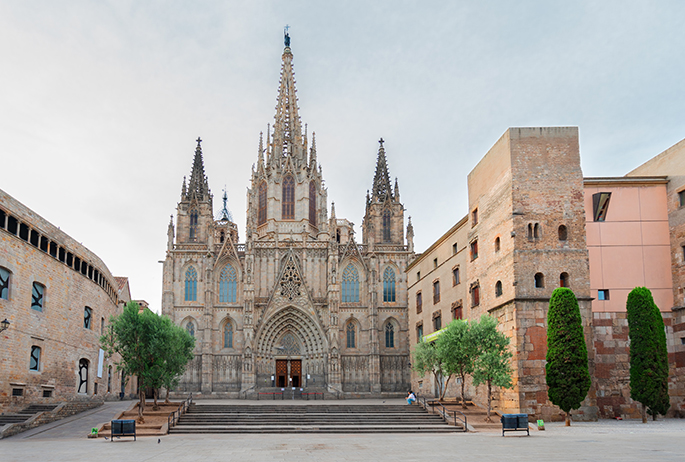
- Cathedral of Barcelona. Photo: Envato Elements
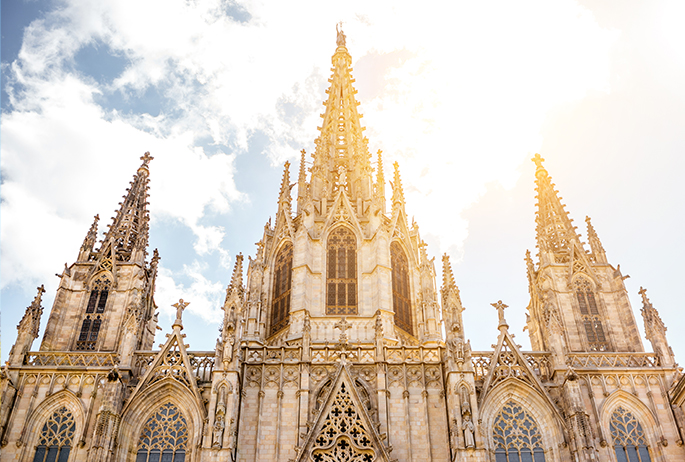
- Cathedral of Barcelona. Photo: Envato Elements
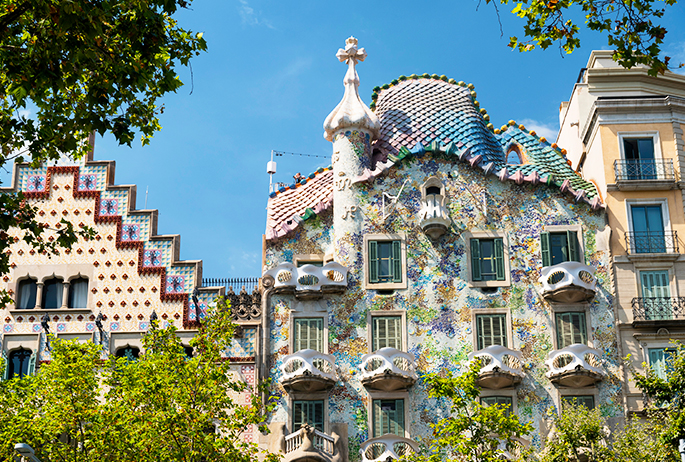
- Passeig de Gràcia. Photo: Envato Elements
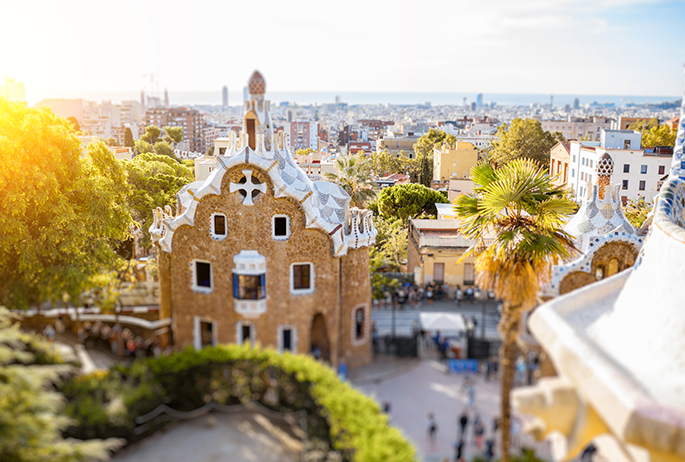
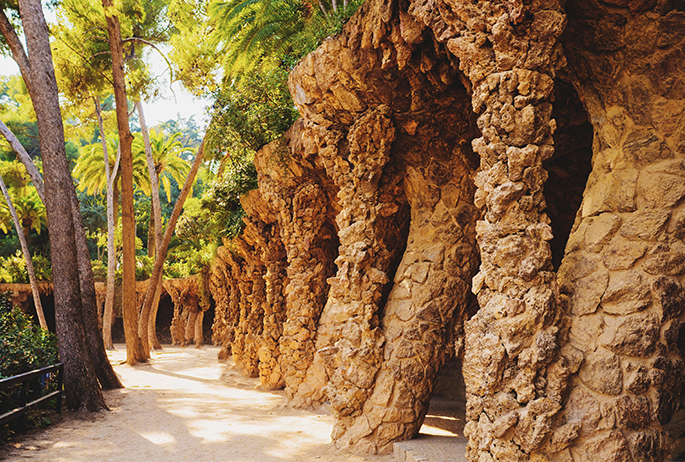
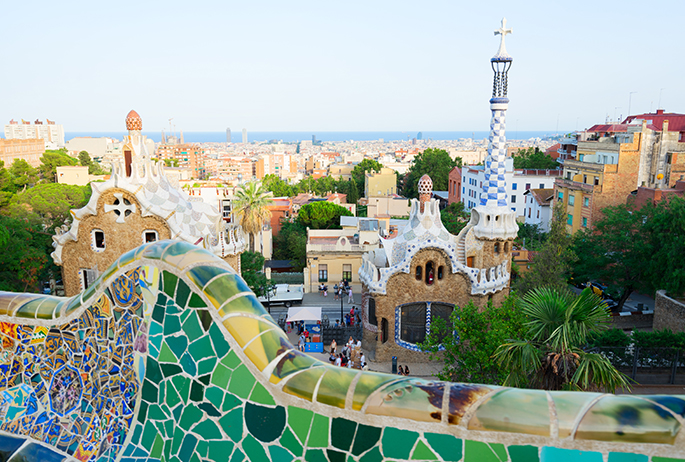
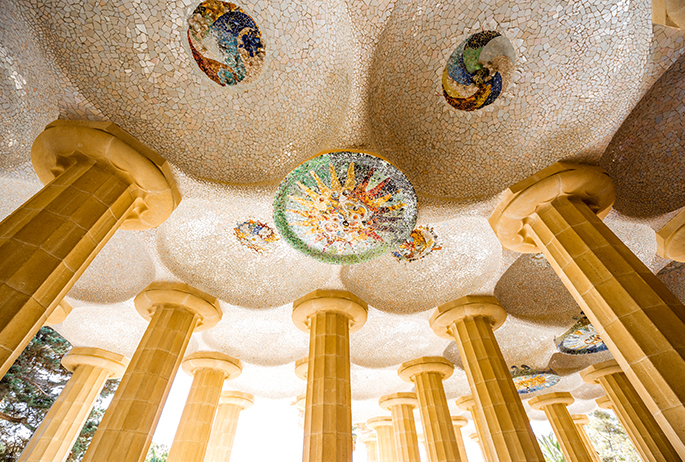
- Park Güell. Photo: Envato Elements
- Park Güell. Photo: Envato Elements
- Park Güell. Photo: Envato Elements
- Park Güell. Photo: Envato Elements
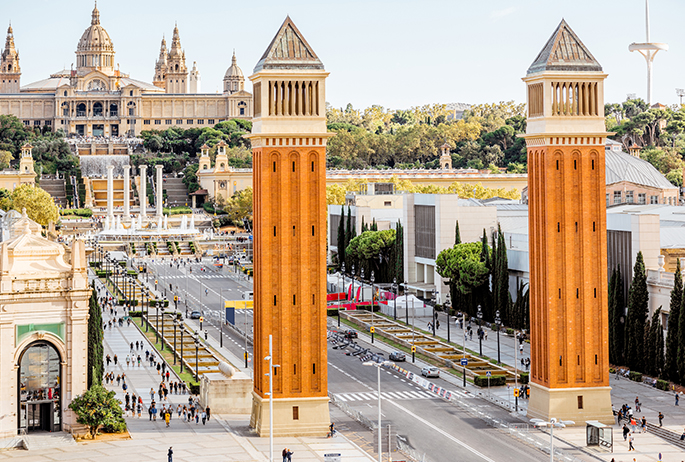
- Montjuïc National Palace. Photo: Envato Elements
- Montjuïc. Photo: Envato Elements
- Gothic Quarter. Photo: Envato Elements
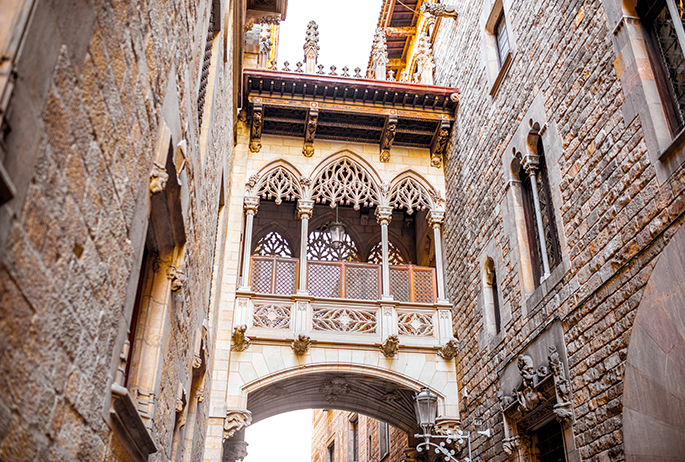 Bishop Street Bridge. Photo: Envato Elements

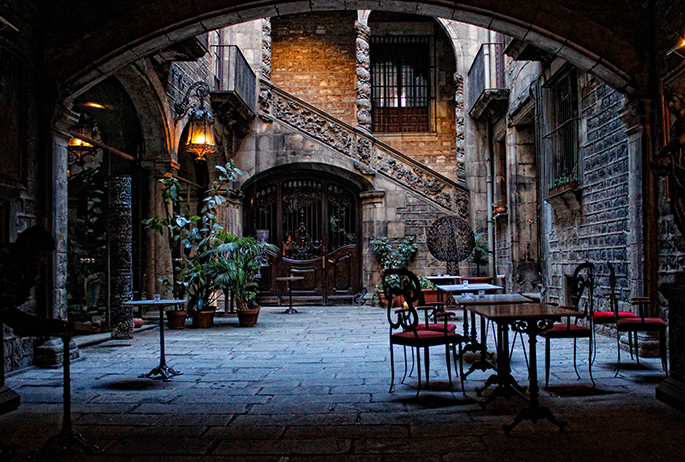
Where to Stay in Barcelona for Museums and Cultural Attractions
Choose your base according to the cultural routes you expect to use most. El Born and the Gothic Quarter are practical for Museu Picasso, Palau de la Música Catalana and old-city architecture; Eixample works well for Museu Tàpies, Casa Batlló and Casa Milà; Poble-sec provides direct access to the museums and architecture of Montjuïc; and Glòries and Poblenou are the strongest bases for Disseny Hub Barcelona, contemporary design and architecture.
Explore our complete guide to the best boutique and design hotels in Barcelona.
With the interactive map below, you can compare all available accommodation options in the city and find the best prices from a variety of leading providers.
Luxury Hotels in Barcelona
For a luxury stay in central Barcelona, Mercer Barcelona is one of the strongest choices in the Gothic Quarter, set next to the Cathedral in a historic building complex that places you within walking distance of the old city’s main landmarks. Alma Barcelona offers a quieter five-star base in Eixample, just off Passeig de Gràcia and close to Gaudí landmarks such as Casa Batlló and La Pedrera. Ohla Barcelona, in the Gothic Quarter, is located a short walk from the Cathedral, Las Rambla, and Plaça Catalunya, making it especially convenient for travelers who want to stay between the old city and the shopping core. The Barcelona EDITION is a polished option beside Santa Caterina Market, close to the Picasso Museum, the Gothic Quarter, and El Born.
Mid-Range Hotels in Barcelona
For a mid-range stay across some of Barcelona’s most appealing neighborhoods, Hotel Regina Barcelona offers a long-running central base just by Plaça Catalunya and Las Rambla, making it especially practical for first-time visitors. Casa Bonay, in Dreta de l’Eixample, is a strong choice for travelers drawn to independent design hotels and a location between the historic center and the modern grid of the Eixample. Seventy Barcelona, set between Eixample and Gràcia near Passeig de Gràcia, suits travelers who want a contemporary hotel with easy access to both shopping and local neighborhood life. Miiro Borneta works well for those who want to stay near El Born, close to Ciutadella Park, the Picasso Museum, and the old city. Yurbban Passage Hotel & Spa, on Carrer de Trafalgar, is a good boutique option for staying between El Born, the Gothic Quarter, and Plaça Catalunya. Hotel Brummell, in Poble-sec, is particularly well suited to travelers who want a smaller design-led stay near Montjuïc and within easy reach of the city center. The Hoxton, Poblenou is ideal for those interested in Barcelona’s more contemporary side, with a location by Glòries and good access to Poblenou, the Design Museum area, and the seafront.
Affordable Hotels in Barcelona
For more affordable stays in well-connected areas, Sixties Ramblas offers a lively base just off Las Rambla, useful for travelers who want to stay close to the Gothic Quarter and the waterfront. TOC Hostel Barcelona is a practical option near Plaça Universitat for travelers who want central access and hostel-style pricing. Unite Hostel Barcelona works well for those who prefer to stay closer to the beach and Poblenou. Bed and Bike Barcelona is a convenient lower-cost option in Eixample for travelers planning to explore the city actively, while Primavera Hostel, also in Eixample, offers a quieter budget-friendly base with good metro connections.
Best Art Museums in Barcelona
Museu Nacional d’Art de Catalunya (MNAC) (Montjuïc / Palau Nacional)
Why go: To trace Catalan art from Romanesque and Gothic collections through Modernisme and the twentieth century, with particular emphasis on the museum’s exceptional Romanesque mural paintings.
Tip: Do not stop after the medieval galleries. The Modern Art collection includes Catalan Modernisme and Noucentisme, with works by Ramon Casas, Santiago Rusiñol, Antoni Gaudí, Josep Maria Jujol, Pablo Picasso, and Joan Miró.
The Museu Nacional is housed in the Palau Nacional, constructed for the 1929 International Exposition. Its collections extend across Romanesque and Gothic art, Renaissance and Baroque painting, and modern art from the nineteenth and twentieth centuries. The Modern Art galleries encompass painting, sculpture, photography, posters, cinema, architecture, and decorative arts, tracing developments from Neoclassicism to the avant-gardes of the 1950s.
Museu Picasso (El Born / Carrer de Montcada 15–23)
Why go: To understand Picasso’s formative relationship with Barcelona through a collection particularly rich in works from his childhood, youth, and early artistic development, alongside the complete 1957 Las Meninas series.
Tip: Allow time for the buildings as well as the collection. The museum extends across five connected palaces on Carrer de Montcada, dating principally from the thirteenth to the fifteenth centuries and representing Catalan civic Gothic architecture. We recommend booking a guided tour in advance.
The collection is particularly significant for understanding Picasso’s formative years and his relationship with Barcelona. Key holdings include Science and Charity, drawings, paintings, prints, and ceramics, as well as the 58 paintings of the Las Meninas series, which Picasso donated to the museum in 1968. The courtyards, external staircases, and interconnected interiors of the five Montcada palaces make the architecture an integral part of the visit.
Museu Tàpies (Eixample / Carrer d’Aragó 255)
Why go: To examine almost seven decades of Antoni Tàpies’s artistic practice alongside the architecture of one of the Eixample’s important early Modernista buildings.
Tip: Pay attention to the former Montaner y Simón publishing house itself. Lluís Domènech i Montaner combined exposed brick and iron with industrial construction methods at an early stage in the development of Catalan Modernisme.
The Museu Tàpies collection comprises more than 2,100 works spanning painting, drawing, objects, sculpture, and graphic work. The institution opened to the public in 1990 as the Fundació Antoni Tàpies in the former Montaner y Simón publishing house, constructed between 1880 and 1882 and later restored and adapted by Roser Amadó and Lluís Domènech Girbau.
MACBA, Museu d’Art Contemporani de Barcelona (El Raval / Plaça dels Àngels 1)
Why go: To examine contemporary art from the second half of the twentieth century to the present through works by Catalan, Spanish, and international artists.
Tip: Expansion works are continuing around Plaça dels Àngels and the Convent dels Àngels. The first phase began in 2025 and is scheduled for completion in the first quarter of 2027, so check current access information before visiting.
Designed by Richard Meier in 1990 and built between 1991 and 1995, the museum combines rectilinear and curved volumes with curtain walls, skylights, galleries, and an atrium structured around natural light. The MACBA Collection focuses principally on work from the 1960s to the present and encompasses painting, sculpture, drawing, collage, assemblage, objects, installation, audiovisual work, and sound.
Fundació Joan Miró (Montjuïc / Parc de Montjuïc)
Why go: To explore one of the most comprehensive selections of Joan Miró’s work in a building designed by Josep Lluís Sert specifically for Miró’s work and contemporary creation.
Tip: Consider the architecture as part of the collection experience. Sert organized the museum around a central patio, naturally lit galleries, skylights, and a rooftop terrace, creating a close relationship between the artworks, interior spaces, and Montjuïc landscape.
Opened to the public in 1975, the Fundació Joan Miró brings together paintings, drawings, sculptures, textiles, ceramics, and an extensive body of prints spanning the artist’s career. Sert’s white-concrete building combines rationalist principles with Mediterranean elements including patios, ceramic floors, skylights, and Catalan vaulted ceilings. The foundation was enlarged in 1988 and 2000 by Jaume Freixa, a former student and collaborator of Sert.
Dalí Theatre-Museum (Figueres / Girona province)
Why go: To experience the museum Salvador Dalí conceived as his largest surrealist work, housing the world’s most extensive collection of his art.
Tip: The museum is in Figueres rather than Barcelona. We recommend booking a guided tour in advance and coordinate it with the current train timetable from Barcelona.
Inaugurated in 1974, the Dalí Theatre-Museum was created on the ruins of the former Figueres Municipal Theatre and conceived and designed by Dalí himself. More than 1,500 pieces encompass painting, drawing, sculpture, prints, installations, photography, holograms, and stereoscopic works, including pieces created specifically for the museum. The architecture, installations, and presentation of the collection were conceived as parts of a single artistic project.
Contemporary Art Galleries and Cultural Venues in Barcelona
La Virreina Centre de la Imatge (El Raval / La Rambla 99)
Why go: For research-led exhibitions examining photography, moving image, archives, visual culture, and the political and social conditions through which images are produced and circulated.
Tip: Admission is free. Its location on La Rambla makes it easy to combine with MACBA and àngels barcelona on a wider Raval contemporary art route.
Located in the Palau de la Virreina, the centre approaches the image as a field of artistic, historical, political, and cultural research rather than limiting its program to photography alone. Exhibitions and related public programs move across audiovisual work, archives, publishing, media culture, and critical approaches to contemporary image production, making La Virreina an important counterpart to Barcelona’s museum and commercial gallery networks.
Prats Nogueras Blanchard (Ciutat Vella / Carrer de Méndez Núñez 14)
Why go: To follow an intergenerational program that brings the conceptual legacy of Galeria Joan Prats into dialogue with the international perspective developed by NoguerasBlanchard.
Tip: The Barcelona gallery is close to the Trafalgar gallery cluster, making it easy to continue to Galeria Senda, 3 Punts Galeria, and Bombon Projects on the same route.
Prats Nogueras Blanchard was formed in March 2024 through the merger of two established galleries. Galeria Joan Prats, founded in Barcelona in 1976, developed a longstanding engagement with conceptual practices and artists including Muntadas, Perejaume, and Joan Brossa, while NoguerasBlanchard, founded in Barcelona in 2004, built an international and intergenerational program. The combined gallery works across its Barcelona and Madrid spaces with artists from different generations, disciplines, and geographical contexts, with particular connections to the Mediterranean and Latin America.
ADN Galeria (Eixample / Carrer de Mallorca 205 + ADN Platform, Sant Cugat del Vallès)
Why go: To see contemporary practices that examine social and political structures, activism, and the relationship between artistic production and the contexts in which it develops.
Tip: The main gallery remains at Mallorca 205 in Eixample. ADN Platform is now located at Víctor Hugo 1 in Sant Cugat del Vallès and is visited by appointment.
ADN combines its commercial gallery program with a broader cultural platform focused on the relationship between art and society. Its Barcelona headquarters presents exhibitions alongside smaller projects in ADN Locker Room, while ADN Platform supports independent curatorial projects, performances, public programs, and artist and curator residencies. The gallery’s program consistently engages with contemporary social, political, and institutional questions.
ProjecteSD (Eixample / Passatge Mercader 8)
Why go: For a conceptual and intergenerational program that places works from different periods and contexts in dialogue and gives particular attention to artists’ books and publishing.
Tip: Its Eixample location can be combined easily with Museu Tàpies and ADN Galeria for a focused art route through the neighborhood.
Founded in Barcelona in 2003 by Silvia Dauder, ProjecteSD brings together established and younger artists while resisting rigid distinctions between generations, media, and historical periods. The gallery has developed a parallel commitment to artists’ books and publishing since 2008, alongside exhibitions by artists including Dora García, Ana Jotta, Jochen Lempert, Matt Mullican, Asier Mendizabal, and Xavier Ribas. It has participated in Art Basel and other international fairs and received the Arte y Mecenazgo award for best gallery in 2014.
àngels barcelona (El Raval / Carrer del Pintor Fortuny 27)
Why go: For experimental contemporary practices that question historical, social, political, and media narratives while encouraging critical thinking across disciplines.
Tip: The gallery is in El Raval, making it easy to combine with MACBA on the same contemporary art route.
àngels barcelona develops a program across moving image, photography, performance, installation, and conceptual practice, with an emphasis on critical and experimental approaches. Its roster brings together several generations of artists, including Harun Farocki, Esther Ferrer, Joan Fontcuberta, Daniela Ortiz, Claudia Pagès, Lúa Coderch, and Pedro G. Romero.
Galeria Senda (Trafalgar / Carrer de Trafalgar 32)
Why go: For a broad contemporary art program bringing together established and younger national and international artists across painting, sculpture, photography, moving image, and installation.
Tip: Continue along Carrer de Trafalgar to 3 Punts Galeria at number 37 and Bombon Projects at number 53 for a compact contemporary gallery route.
Operating since 1991, Galeria Senda works across exhibitions, artistic production, and collaborations beyond the gallery itself. Its program includes artists working in a broad range of media, while its longstanding links with LOOP Barcelona and Talking Galleries connect the space to the city’s wider contemporary art and professional networks.
3 Punts Galeria (Trafalgar / Carrer de Trafalgar 37)
Why go: To explore a broad contemporary art program spanning painting, sculpture, photography, and other visual practices by Spanish and international artists.
Tip: The gallery is now at Trafalgar 37, close to Galeria Senda and Bombon Projects, making the three spaces easy to visit as part of the same gallery route.
Founded in 1994, 3 Punts Galeria promotes contemporary art across multiple disciplines and works with artists at different stages of their careers. Alongside its exhibition program in Barcelona, the gallery collaborates with cultural institutions and participates in international art fairs and initiatives supporting contemporary collecting.
Bombon Projects (Trafalgar / Carrer de Trafalgar 53)
Why go: To encounter a younger generation of Barcelona-based and international artists through a program that moves across sculpture, installation, painting, performance, and other contemporary practices.
Tip: Bombon sits a short walk from 3 Punts Galeria and Galeria Senda, making Trafalgar one of the most efficient gallery routes in central Barcelona.
Founded in Barcelona in 2017, Bombon Projects works closely with a generation of artists based locally and internationally while also revisiting historical practices from its surrounding cultural context. Its roster includes Eva Fàbregas, Joana Escoval, Lara Fluxà, Enric Farrés Duran, Rosa Tharrats, and Jordi Mitjà, and the gallery extends its program through international fairs and off-site projects.
House of Chappaz (Gràcia / Carrer de Ca l’Alegre de Dalt 55)
Why go: For experimental contemporary art with a strong connection to artists from the Mediterranean corridor and a program spanning different media, identities, and artistic approaches.
Tip: Check the current exhibition and opening schedule before visiting; the gallery operates from its permanent Gràcia space at Ca l’Alegre de Dalt 55.
House of Chappaz developed from Espai Tactel, founded in Valencia in 2011, which expanded to Barcelona in 2018. The project adopted the House of Chappaz name in 2021 and consolidated its activity in a single Barcelona space in 2024. Its program emphasizes experimental contemporary practices, with particular attention to artists connected to the Valencia-Barcelona Mediterranean corridor alongside a wider international perspective.
Barcelona Design Museums and Cultural Spaces
Design Museum of Barcelona (Glòries / Plaça de les Glòries Catalanes 37–38)
Why go: To explore Barcelona’s design history through extensive collections of product and graphic design, fashion, textiles, decorative arts, ceramics, furniture, and contemporary craft.
Tip: The permanent exhibitions cover different aspects of the collection, so check the current program before visiting if you have a particular interest in product design, graphic communication, fashion, or material culture. The museum is closed on non-holiday Mondays.
Opened in 2014, the Museu del Disseny de Barcelona brings together more than 80,000 objects originating from the city’s former museums of Decorative Arts, Ceramics, Textile and Clothing, and Graphic Arts. Its collections connect historical decorative and applied arts with twentieth- and twenty-first-century product, graphic, and fashion design, allowing visitors to examine how objects, materials, production methods, visual communication, and patterns of use have changed over time. The museum is housed within Disseny Hub Barcelona, designed by MBM Arquitectes as a major center for the city’s design institutions and collections.
FAD, Foment de les Arts i del Disseny (Glòries / Disseny Hub Barcelona)
Why go: To follow current developments in Catalan design, architecture, visual communication, craft, and fashion through exhibitions, awards, talks, and professional programs.
Tip: FAD is not a museum with a permanent display, so check its calendar before making a separate visit. Many of its exhibitions and public events take place within Disseny Hub Barcelona and can be combined with the Design Museum.
FAD is a nonprofit organization representing several of Catalonia’s principal creative disciplines through associations dedicated to industrial design, graphic design and visual communication, architecture and spatial design, art and craft, and fashion. Its programs include the FAD Architecture and Interior Design Awards, the Delta industrial design awards, the ADG Laus graphic design awards, exhibitions, debates, and initiatives connected to Barcelona’s wider design culture. Its headquarters are located within Disseny Hub Barcelona.
Roca Barcelona Gallery (Les Corts / Carrer de Joan Güell 211–213)
Why go: To examine the intersection of product design, architecture, materials, technology, and water through exhibitions and installations within a building conceived by OAB as part showroom and part professional cultural platform.
Tip: Admission is free and the gallery is currently open Monday to Friday, 10:00–19:00, with weekends closed. Check the exhibition and events program before visiting, as the content changes throughout the year.
Opened in 2009, Roca Barcelona Gallery occupies a 2,400-square-meter, three-level building developed by OAB, Office of Architecture in Barcelona, with Carlos, Borja, and Lucía Ferrater. Its laminated-glass envelope filters and distorts views between interior and exterior, while integrated lighting transforms its appearance after dark. Inside, product displays are combined with temporary exhibitions, installations, lectures, and workshops addressing architecture, interior design, materials, sustainability, and technological development.
Il·lacions Design Gallery (Ciutat Vella / La Rambla 130)
Why go: To discover contemporary Barcelona design through limited editions, prototypes, unique pieces, and collectible furniture and objects by established and emerging designers.
Tip: Visits are by appointment only, so arrange access in advance. The gallery is particularly relevant for visitors interested in locally produced contemporary furniture, lighting, objects, and experimental design.
Founded in Barcelona in 2011, Il·lacions works across exhibition-making, design production, publishing, collecting, and research, with a particular commitment to designers connected to the city’s contemporary creative scene. Its program moves between functional objects and more experimental or collectible approaches to furniture, lighting, and object design, presenting finished works alongside prototypes and limited editions.
Barcelona Architecture Guide: Buildings and Landmarks
Basílica de la Sagrada Família (Eixample / Carrer de Mallorca 401)
Why go: To examine Gaudí’s integration of structural geometry, natural forms, light, craft, and Christian symbolism in a building that has continued to evolve through successive generations of architects and craftspeople.
Tip: We recommend booking a guided tour in advance. The Basilica introduced a daily quiet hour from 9:00 to 10:00 in 2026, which can be particularly rewarding for experiencing the interior spatially. Tower access requires a separate ticket and involves an elevator ascent followed by stairs on the descent.
Construction began in 1882, with Antoni Gaudí taking over the project in 1883 and transforming the original Neo-Gothic scheme. Branching columns, ruled geometries, skylights, and stained glass shape the nave as a complex structural and luminous system, while the Nativity, Passion, and Glory façades articulate different parts of the building’s religious program. In February 2026, the exterior of the 176-metre Tower of Jesus Christ was completed, marking the highest point of the Basilica, although construction continues on other parts of the complex.
Sant Pau Recinte Modernista (El Guinardó / C. Sant Antoni Maria Claret, 167)
Why go: To study how Lluís Domènech i Montaner rethought hospital architecture through separate pavilions, gardens, natural light, ventilation, decorative arts, and an underground circulation system.
Tip: Allow time for both the interiors and the overall site plan. The visit includes restored pavilions, gardens, underground galleries, and the Administration Pavilion, making the spatial organization of the former hospital as important as its decorative details.
Construction began in 1902 according to Domènech i Montaner’s plan for a hospital organized as a series of specialized pavilions set within gardens. After his death in 1923, his son Pere Domènech i Roura supervised the final phase, and the hospital was officially inaugurated in 1930. Medical activity moved to a new hospital building in 2009, allowing the Modernista complex to be restored. Together with the Palau de la Música Catalana, it was inscribed on the UNESCO World Heritage List in 1997. For a more in-depth look at its history, design, and architectural significance, read our full article on Culture Treasures.
Casa Batlló (Eixample / Passeig de Gràcia 43)
Why go: To examine how Gaudí transformed an existing apartment building through a new façade, reorganized interiors, an enlarged light well, integrated ventilation, and an unusually fluid treatment of structure, surface, and ornament.
Tip: The architectural visit is most rewarding when you follow the building vertically, from the Noble Floor and central light well to the attic and roof terrace, rather than concentrating only on the façade.
Originally constructed in 1877, the building was acquired by textile industrialist Josep Batlló in 1903 and extensively remodelled by Gaudí between 1904 and 1906. Instead of demolishing it, Gaudí retained the existing structure while radically transforming the façade, interiors, circulation, light well, attic, and roof. The building forms part of the UNESCO-listed Works of Antoni Gaudí. A major restoration completed in 2025 also recovered the original treatment of the rear façade and private courtyard.
Casa Milà, La Pedrera (Eixample / Passeig de Gràcia 92)
Why go: To examine one of Gaudí’s most structurally innovative residential buildings, where a column-based system enabled flexible floor plans behind an undulating self-supporting stone façade.
Tip: Do not skip the attic and rooftop. The sequence from the courtyards through the catenary-arched attic to the sculptural ventilation towers and chimneys makes the building’s structural and spatial logic easier to understand.
Commissioned by Pere Milà and Roser Segimon and constructed between 1906 and 1912, Casa Milà was Gaudí’s final civil project. Its structural system reduces dependence on load-bearing interior walls, while two courtyards organize light and ventilation within the large residential block. The continuous stone façade and wrought-iron balconies operate independently of much of the internal structure, and the attic and rooftop transform functional elements such as stair enclosures, ventilation shafts, and chimneys into part of the building’s architectural composition. Casa Milà has been a UNESCO World Heritage Site since 1984.
Park Güell (Gràcia / Carrer d’Olot entrance)
Why go: To examine Gaudí’s attempt to integrate architecture, infrastructure, landscape, water management, and decorative craft within a planned residential development on a steep site.
Tip: Look beyond the well-known entrance structures and mosaic bench. The viaducts, retaining walls, drainage systems, Hypostyle Room, and circulation routes reveal how Gaudí used local stone and topography to integrate construction into the landscape. We recommend booking a guided tour in advance.
Work on Park Güell began in 1900 as a residential development initiated by Eusebi Güell. Gaudí organized roads, viaducts, communal spaces, and water-management systems around the existing terrain and Mediterranean vegetation, but poor sales meant that only two of the planned sixty houses were built and construction stopped in 1914. Barcelona City Council acquired the property and opened it as a municipal park in 1926. It became part of the UNESCO Works of Antoni Gaudí in 1984.
Palau de la Música Catalana (Sant Pere / Carrer del Palau de la Música 4–6)
Why go: To examine Lluís Domènech i Montaner’s synthesis of architecture, structure, stained glass, mosaics, ceramics, sculpture, and metalwork within a functioning concert hall.
Tip: If you are not attending a performance, take an architectural visit that includes the auditorium. The building’s use of natural light and the relationship between its structural system and applied arts are far clearer from inside than from the street.
Built between 1905 and 1908 as the home of the Orfeó Català, the Palau uses a relatively lightweight structural system and extensive glazing to bring daylight deep into a dense urban site. Its central stained-glass skylight, mosaics, sculptural elements, ceramics, and ironwork were conceived as integral parts of the architecture rather than applied decoration. Together with Sant Pau, it was inscribed on the UNESCO World Heritage List in 1997.
Pont del Bisbe (Gothic Quarter / Carrer del Bisbe)
Why go: To understand how twentieth-century interventions helped construct the architectural image now associated with Barcelona’s Gothic Quarter.
Tip: Look underneath the bridge as well as at its street elevation. The star-shaped vault, carved keystones, and neo-Gothic detailing make its twentieth-century origin easier to read once you know it is not medieval.
Despite its Gothic appearance, Pont del Bisbe was designed by Joan Rubió i Bellver and constructed in 1928 to connect the Casa dels Canonges with the Palau de la Generalitat. Rubió, a former collaborator of Gaudí, developed its neo-Gothic vocabulary from elements of the adjacent historic architecture. The bridge belongs to a broader period of restoration and architectural reinterpretation that profoundly shaped the present-day image of Barcelona’s Gothic Quarter.
Barcelona Pavilion, Fundació Mies van der Rohe (Montjuïc / Av. Francesc Ferrer i Guàrdia 7)
Why go: To study a seminal work of modern architecture through its treatment of free-flowing space, independent planes, slender structural columns, reflective surfaces, and precisely selected materials.
Tip: Pay particular attention to the material sequence rather than only the overall composition: Roman travertine, green marble, golden onyx, glass, chromed steel, water, and Georg Kolbe’s sculpture are used to define space without conventional enclosed rooms.
Ludwig Mies van der Rohe and Lilly Reich designed the German Pavilion for the 1929 Barcelona International Exposition. The original structure was dismantled in 1930, but its influence on twentieth-century architecture led Barcelona City Council to commission a reconstruction on the original site. Architects Ignasi de Solà-Morales, Cristian Cirici, and Fernando Ramos carried out the reconstruction between 1983 and 1986, using materials with the same characteristics and provenance as those employed in 1929.
Torre Glòries (Glòries / Avinguda Diagonal 209)
Why go: To examine Jean Nouvel and b720’s interpretation of the high-rise as a layered environmental envelope rather than a conventional glass tower.
Tip: The observation deck on the 30th floor, 125 metres above ground, provides an unusually clear view of Cerdà’s Eixample grid, the convergence of Diagonal, Gran Via, and Meridiana, and the transformation of the surrounding 22@ district.
Completed in 2005, the 144-metre tower was designed by Jean Nouvel in collaboration with Barcelona practice b720. Its ovoid form is enclosed by two principal layers: an inner skin of aluminium panels in graduated colours and an outer layer formed from more than 52,000 transparent and translucent glass panes. The resulting envelope moderates sunlight while giving the building its shifting appearance across the day. Mirador Torre Glòries opened to the public in 2022.
Santa Caterina Market (Sant Pere / Avinguda de Francesc Cambó 16)
Why go: To examine how Enric Miralles and Benedetta Tagliabue combined the rehabilitation of a nineteenth-century market with contemporary structure, public space, housing, archaeology, and urban regeneration.
Tip: Walk around the perimeter before entering. From street level the new roof appears only in fragments, while the relationship between the retained historic fabric, new openings, public spaces, and irregular market plan becomes clearer as you move around the building.
Completed in 2005 by Miralles Tagliabue EMBT, the project retains parts of the existing nineteenth-century market while inserting a new architecture that deliberately overlaps old and new fabric. Its most recognizable element is the undulating roof, constructed with steel, timber, and a surface of approximately 325,000 ceramic pieces whose colours refer to the fruit and vegetables traditionally sold in the market. Beyond the roof, the project reorganized circulation and stalls while integrating public space, housing, parking, archaeological remains, and neighborhood infrastructure into a broader urban intervention.
COAC, Col·legi d’Arquitectes de Catalunya (Gothic Quarter / Plaça Nova 5)
Why go: To follow contemporary architectural discourse in Catalonia through exhibitions, talks, archives, and public programming within the headquarters of the regional architects’ association.
Tip: Check the Centre Obert d’Arquitectura calendar before visiting, as the exhibitions change regularly. Even without entering, stop to examine the concrete friezes created by Carl Nesjar from drawings by Pablo Picasso.
Designed by Xavier Busquets, the COAC headquarters opened in the mid-twentieth century opposite Barcelona Cathedral. Picasso was commissioned to create drawings for its interior and exterior friezes, which Norwegian artist Carl Nesjar transferred onto concrete using a sandblasting technique. The building now houses the Centre Obert d’Arquitectura, which presents exhibitions, lectures, debates, and other programs addressing historical and contemporary architecture. The Picasso friezes were restored in 2022, and two interior panels were declared cultural assets of national interest in 2025.
Barcelona Art and Design Districts
Montjuïc: Museums, Architecture and Landscape
Why go: To explore one of Barcelona’s most layered cultural landscapes, where museums, architecture, gardens, exhibition infrastructure, and later Olympic interventions occupy the same hill.
Tip: Treat Montjuïc as a half-day route rather than a single stop. Combine MNAC, Fundació Joan Miró, and the Barcelona Pavilion, allowing extra time for walking between sites and changes in elevation.
The International Exposition of 1929 reshaped Montjuïc through the Palau Nacional, exhibition pavilions, gardens, fountains, and new public spaces. Later interventions, particularly those associated with the 1992 Olympic Games, added another major architectural and urban layer. The resulting landscape brings together art institutions, modern architecture, historic exhibition infrastructure, gardens, and panoramic public spaces.
Poblenou and 22@ Creative District
Why go: To trace Barcelona’s transformation from an industrial district into a major center for design, creative industries, technology, and contemporary architecture, while remnants of its manufacturing fabric remain embedded in the neighborhood.
Tip: Start around Glòries, where Disseny Hub Barcelona, Torre Glòries, and Mercat dels Encants are concentrated, then continue into Poblenou. Check the current Poblenou Urban District map for galleries, studios, design spaces, and events open during your visit.
The former industrial fabric of Poblenou now overlaps with the 22@ urban regeneration area and a growing network of creative businesses, cultural spaces, design schools, studios, and contemporary architecture. The district provides one of the clearest places in Barcelona to observe the relationship between industrial heritage and the city’s more recent design and technology economy.
Trafalgar Gallery Cluster (Sant Pere / Carrer de Trafalgar and surrounding streets)
Why go: For one of the densest concentrations of contemporary art galleries in central Barcelona, with established and younger spaces located within a compact walking area.
Tip: Check ArtBarcelona and Barcelona Gallery Weekend maps before visiting, as galleries keep independent opening schedules and may close between exhibitions.
Carrer de Trafalgar and the surrounding streets have developed into a recognizable contemporary gallery cluster. ArtBarcelona lists Trafalgar as one of the city’s principal gallery areas, while Barcelona Gallery Weekend organizes dedicated Trafalgar routes connecting spaces including 3 Punts Galeria, Bombon Projects, Prats Nogueras Blanchard, Pigment Gallery, Dilalica, Escat Gallery, and Suburbia Contemporary.
El Raval: Contemporary Culture and Art
Why go: To combine major contemporary cultural institutions with independent galleries, visual culture, publishing, and vintage shopping within a compact part of the historic center.
Tip: Build the route around MACBA and CCCB, then continue to La Virreina Centre de la Imatge, àngels barcelona, and Riera Baixa according to current exhibitions and opening hours.
The cultural transformation of El Raval accelerated in the late twentieth century with institutions including CCCB and MACBA. The CCCB opened in 1994 as part of a wider project to rehabilitate the neighborhood and its historic buildings for contemporary culture. Today the surrounding area brings together museums, exhibition spaces, galleries, bookshops, and independent retail within a dense urban setting.
Where to Eat and Drink in Barcelona
El Xampanyet (El Born / Carrer de Montcada 22): Historic bar-bodega established in 1929, known for anchovies, conservas, simple Catalan tapas, and a glass of Xampanyet. Reservations are not accepted, so arrive close to opening if you want to avoid the heaviest crowds.
Quimet & Quimet (Poble-sec / Carrer del Poeta Cabanyes 25): Family-run bar dating to 1914, known for high-quality conservas and inventive cold montaditos assembled at the counter. The space is extremely small, so arriving near opening remains the best strategy.
Bar del Pla (El Born / Carrer de Montcada 2): Contemporary Catalan cooking based on local, fresh, and seasonal ingredients, accompanied by a strong selection of natural, biodynamic, and organic wines. The kitchen operates continuously from lunchtime into the evening, making this a useful option outside conventional Spanish meal times.
Cervecería Catalana (Eixample / Carrer de Mallorca 236): Long-running Eixample tapas bar with an extensive selection of traditional and contemporary tapas and montaditos that changes daily. Expect a wait at peak lunch and dinner times; the broad menu makes it particularly useful for groups wanting to sample several different dishes.
La Cova Fumada (Barceloneta / Carrer del Baluard 56): Long-running neighborhood tavern closely associated with the origin of the Barceloneta bomba, alongside simple seafood and traditional Catalan dishes. Plan this as a breakfast or lunch stop rather than a late dinner; opening hours are concentrated in the morning and early afternoon.
Bar Cañete (El Raval / Carrer de la Unió 17): Lively Catalan and Mediterranean tapas bar centered on high-quality seasonal produce, fresh fish, and seafood from local markets. Reservations are accepted and recommended, particularly for dinner.
Design and Vintage Shops in Barcelona
BD Barcelona (Poblenou / Carrer de Ramon Turró 126) Barcelona furniture design company founded in 1972, with a catalogue spanning historic editions by Antoni Gaudí and Salvador Dalí alongside work by designers including Ettore Sottsass, Oscar Tusquets, Jaime Hayon, Konstantin Grcic, and Ronan Bouroullec. This is the company’s working Barcelona headquarters and showroom rather than a conventional retail boutique, so check current weekday opening hours before visiting.
Fusta’m (El Raval / Carrer de Joaquín Costa 62) Independent shop and restoration studio specializing in original furniture, lighting, and decorative objects primarily from the 1950s to the 1980s, alongside locally designed pieces and the shop’s own permanent collections. Its location close to MACBA makes it easy to include on the same Raval route as the contemporary art institutions and vintage shops.
Mercat dels Encants (Glòries / Carrer de los Castillejos 158) Large second-hand and antiques market with furniture, lighting, decorative objects, books, records, clothing, tools, and miscellaneous collectibles spread across hundreds of dealers. The market is open Monday, Wednesday, Friday, and Saturday; the traditional auction takes place in the morning on Monday, Wednesday, and Friday. Allow time to browse rather than arriving with one specific item in mind.
Palo Market Fest (Poblenou / Carrer dels Pellaires 30) Recurring weekend market at Palo Alto bringing together independent design, fashion, accessories, objects, food, and live cultural programming within a former industrial complex. It runs on selected weekends rather than every week, so check the current calendar before planning your visit and book entry in advance when required.
Holala! Tallers (El Raval / Carrer dels Tallers 73) Long-running Barcelona vintage shop with a large selection of authentic clothing and accessories sourced internationally. The first Holala Barcelona store opened on Carrer dels Tallers in 2001; the company also operates the larger Holala! Plaza near MACBA, which combines vintage fashion with accessories, furniture, and street-culture projects.
Lullaby Vintage (El Raval / Carrer de la Riera Baixa 22) Carefully selected vintage clothing and accessories organized by decade, with pieces for women, men, and children ranging from the 1920s to the 2000s and occasional designer finds. Its location places it directly within Riera Baixa’s wider cluster of vintage and second-hand shops.
Le Swing Vintage (Gothic Quarter / Carrer dels Lledó 4-6) Luxury vintage boutique founded in 1999, specializing in clothing and accessories from the 1920s to the present, with pieces by fashion houses including Chanel, Hermès, Dior, and Yves Saint Laurent alongside other European labels.
Riera Baixa vintage row (El Raval)
One of Barcelona’s most concentrated streets for independent vintage and second-hand shopping, with stores spanning different decades, styles, and price points. Current shops include Lullaby Vintage, Vilde Vintage, Club 80, Araña Raval, and Arepa Queer. On Saturdays, several shops extend onto the street as part of the Riera Baixa Street Market