Paris brings together world-renowned museums, major contemporary institutions, design venues, and distinctive neighborhoods, making it one of Europe’s richest cities for cultural travel. From the Louvre, Musée d’Orsay, and Musée de l’Orangerie to Palais de Tokyo, Fondation Louis Vuitton, Bourse de Commerce – Pinault Collection, and the new Fondation Cartier, the city offers a strong mix of historic collections and contemporary culture. This guide also helps you plan where to stay in Paris while exploring its key cultural routes.
To access our exclusive Paris Treasure Map, simply click here and become a Culture Treasures member. The map pins every place in this guide and adds bonus cafés, boutiques, and cultural venues.
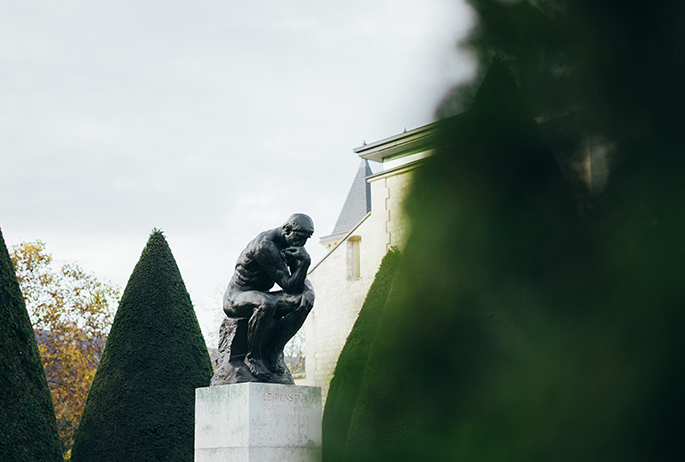 Musée Rodin. Photo: Envato Elements
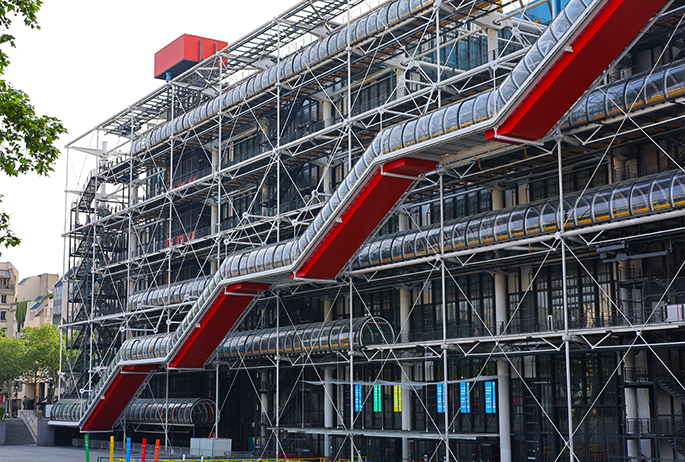 The Centre Georges Pompidou. Photo: Envato Elements
 The Centre Georges Pompidou. Photo: Envato Elements
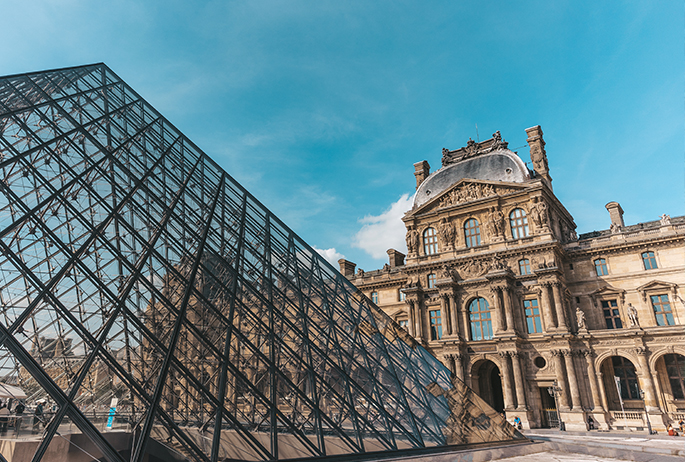
- The Louvre
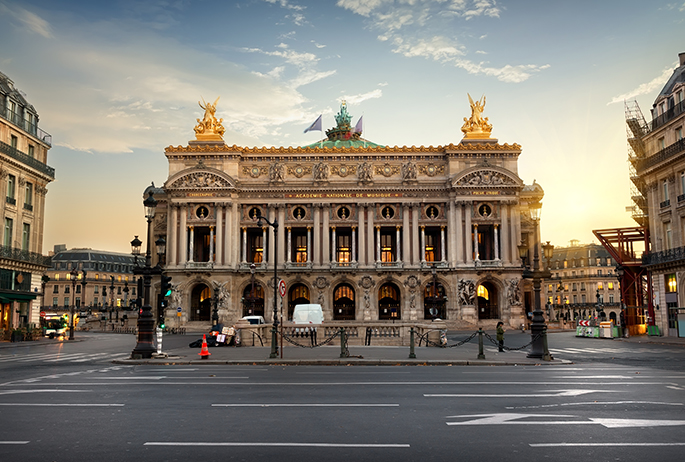
- The Paris Opera House. Photo: Envato Elements
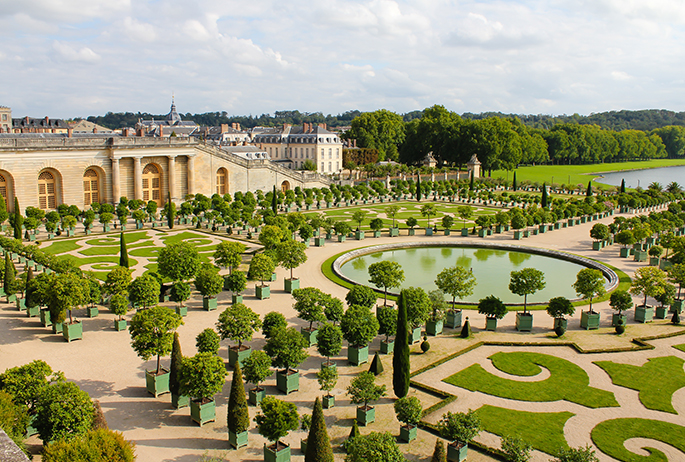
- Château de Versailles. Photo: Envato Elements.
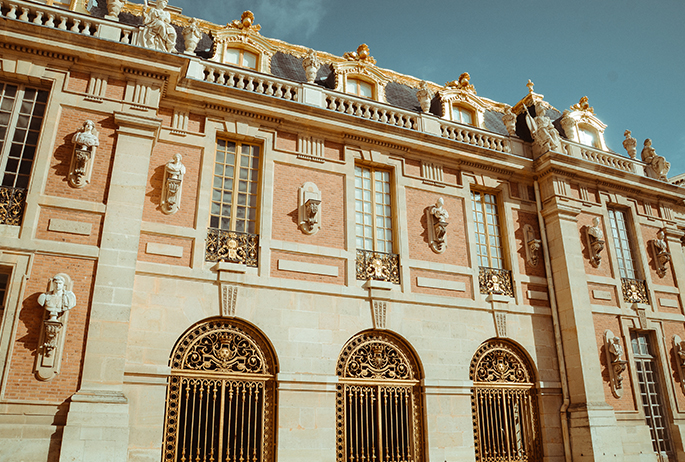
- Château de Versailles. Photo: Envato Elements.
- Paris. Photo: Envato Elements
- Paris. Photo: Envato Elements
- Paris. Photo: Envato Elements
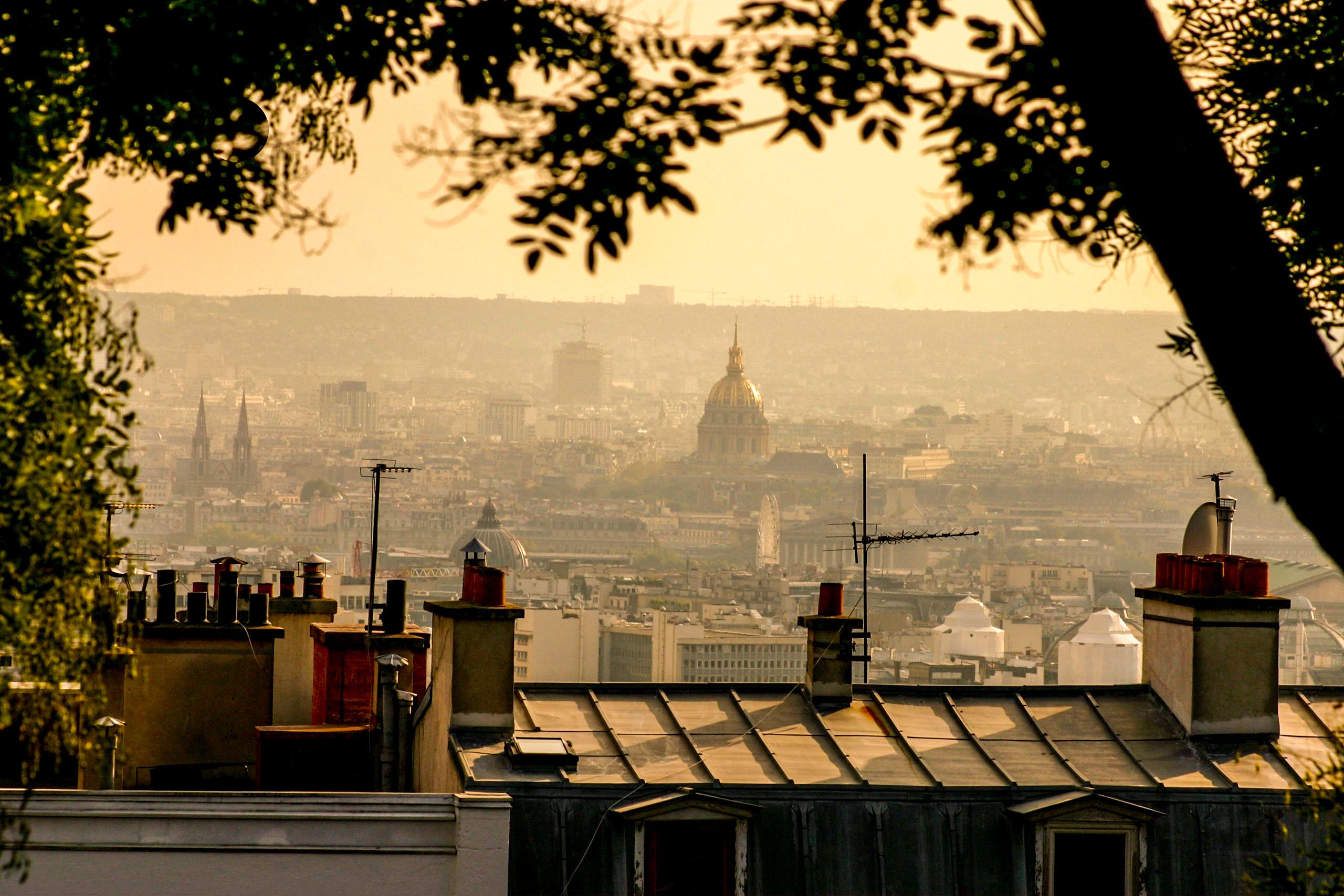 Paris. Photo: Envato Elements
Where to Stay in Paris for Museums and Cultural Attractions
Choosing where to stay in Paris can make a significant difference to a culture-focused trip. The Marais is especially convenient for contemporary galleries, the Musée Picasso, and cultural venues around Beaubourg, while Saint-Germain-des-Prés and the 7th arrondissement offer easy access to major museums and Left Bank galleries. The 1st and 9th arrondissements provide central bases for exploring both the Right Bank and the city’s principal cultural landmarks.
For a closer look at each property, its design, location, and cultural surroundings, explore our complete guide to the best boutique and design hotels in Paris.
With the interactive map below, you can compare all available accommodation options in the city and find the best prices from a variety of leading providers.
Luxury Hotels in Paris
For a luxury stay in central Paris, Mandarin Oriental Lutetia, Paris is one of the strongest Left Bank options, set on Boulevard Raspail in Saint-Germain-des-Prés and especially well placed for Le Bon Marché, galleries, and museums in the 6th and 7th arrondissements. Hôtel Madame Rêve is set within the landmark Poste du Louvre building in the 1st arrondissement, within walking distance of the Louvre, Bourse de Commerce – Pinault Collection, and Samaritaine. In the Marais, Hôtel Dupond-Smith, Hôtel Bourg Tibourg, and Hotel du Petit Moulin all work well for travelers who want a smaller boutique stay close to galleries, designer shops, and the historic core. La Chambre du Marais is another strong option on Rue des Archives, well placed for the Marais, the Picasso Museum, and the area’s independent boutiques.
Mid-Range Hotels in Paris
For a mid-range stay across some of Paris’s most appealing neighborhoods, Hôtel National des Arts et Métiers is especially well located between the Marais and Montorgueil in the 3rd arrondissement. The Hoxton Paris offers a lively base on Rue du Sentier in the 2nd arrondissement, convenient for the Grands Boulevards, covered passages, and central Right Bank routes. Pulitzer Paris is a good fit for travelers who want to stay near the 9th arrondissement’s theaters, restaurants, and shopping streets. In the 9th and 18th arrondissements, Le Pigalle, Hôtel Eldorado Paris, Monsieur Aristide, and Le Terrass’ Hôtel all suit travelers drawn to South Pigalle and Montmartre, while Hôtel Duo works well for those who want a compact central base near Hôtel de Ville. On the Left Bank, Seven Hotel Paris and Hotel Henriette are good boutique options near the Latin Quarter and Rue Mouffetard, while HOY Paris offers a smaller design-led stay in the 9th arrondissement.
Affordable Hotels in Paris
For more affordable hotels in well-connected areas, Moxy Paris Bastille is a practical option on the eastern side of central Paris, close to Bastille and within reach of the Marais and Canal Saint-Martin. Mama Shelter Paris West suits travelers who do not mind staying farther from the center, near Porte de Versailles. The People Belleville is one of the better-placed lower-cost options for travelers who want to stay in a lively neighborhood with good métro access. Mob Hotel Paris is another budget-conscious choice, though it is in Saint-Ouen rather than central Paris and makes most sense if you are happy to stay outside the city core.
Best Art Museums in Paris
Louvre Museum (1st arrondissement / Rue de Rivoli)
Why go: One of the world’s largest and most visited museums, with collections spanning nearly 9,000 years of art and cultural history.
Tip: Buy tickets in advance and plan your route; it’s impossible to see everything in one visit.
Housed in a former royal palace whose history dates back to the late 12th century, the Louvre displays approximately 35,000 works of art. Its collections span nearly 9,000 years and include Egyptian antiquities, Islamic art, European paintings, sculptures, and decorative arts, alongside celebrated works such as the Mona Lisa, the Venus de Milo, and the Winged Victory of Samothrace.
Musée d’Orsay (7th arrondissement / Left Bank of the Seine)
Why go: A former railway station transformed into a museum, housing one of the world’s foremost collections of Impressionist and Post-Impressionist art.
Tip: The museum remains open during reception-area renovations through summer 2028. Check current access information, visit the seasonal terrace, and consider joining a guided tour for a focused introduction to the collection.
Located in the Beaux-Arts Gare d’Orsay building, the museum presents art works by Monet, Degas, Renoir, Van Gogh, Cézanne, and other central figures in European art from 1848 to 1914. Its iron-and-glass structure and expansive natural light provide a distinctive setting for its collections of Impressionist, Post-Impressionist, Realist, and Symbolist art. The museum is also an important example of adaptive reuse, combining the architecture of a former railway station with contemporary museography.
Musée national Picasso-Paris (3rd arrondissement / Le Marais)
Why go: Home to the world’s richest public collection devoted to Picasso, housed in the 17th-century Hôtel Salé.
Tip: Visit early in the day for a quieter experience and time to explore the rotating exhibitions.
Set in the Hôtel Salé, the museum brings together paintings, sculptures, ceramics, drawings, prints, notebooks, photographs, and archival material. Spanning Picasso’s Blue and Rose periods, Cubism, and his later work, the collection offers an extensive view of both his œuvre and creative process.
Musée de l’Orangerie (1st arrondissement / Tuileries Gardens)
Why go: Home to Monet’s monumental Water Lilies panels, a peaceful oasis in central Paris.
Tip: Combine your visit with a stroll through the Tuileries Garden or nearby Place de la Concorde.
The museum’s two elliptical rooms were designed in close collaboration with Monet to present his monumental Nymphéas cycle as a continuous, immersive environment. The museum also houses the Jean Walter and Paul Guillaume Collection, with works by Cézanne, Matisse, Modigliani, Picasso, and other major figures of modern art.
Musée Rodin (7th arrondissement / Rue de Varenne)
Why go: A comprehensive presentation of Auguste Rodin’s sculpture, drawings, collections, and working methods, displayed in the Hôtel Biron and its gardens.
Tip: Allow time for the sculpture garden, where major works including The Thinker and The Gates of Hell are presented outdoors.
Located in the Hôtel Biron, the museum brings together Rodin’s sculpture, drawings, archival material, personal collection, and works associated with his studio. The garden extends the display into the surrounding landscape through monumental bronze and marble sculptures. The museum also examines Rodin’s artistic relationship with Camille Claudel and his contribution to the development of modern sculpture.
Palais de Tokyo (16th arrondissement / Avenue du Président Wilson)
Why go: One of Europe’s largest contemporary art centers, presenting experimental exhibitions, installations, performances, and interdisciplinary projects.
Tip: Palais de Tokyo remains open into the evening, making it a useful late-day cultural stop. Opening hours may vary on Thursdays and during special events, so check the current schedule before visiting.
Palais de Tokyo is housed in approximately 22,000 square meters of the monumental building created for the 1937 International Exhibition. It does not maintain a permanent collection, instead presenting a rotating program of exhibitions, installations, performances, and interdisciplinary projects.
Petit Palais (8th arrondissement / Avenue Winston Churchill)
Why go: Paris’s municipal fine arts museum, housed in an extensively decorated Belle Époque building created for the 1900 Exposition Universelle.
Tip: Admission to the permanent collection is free and includes works by Courbet, Cézanne, Delacroix, and other artists represented in the municipal collection.
Situated across from the Grand Palais, the Petit Palais houses the Musée des Beaux-Arts de la Ville de Paris. Its collection extends from antiquity to the early 20th century and includes painting, sculpture, decorative arts, icons, manuscripts, and rare books. The building’s exhibition halls, painted decoration, internal garden, and glazed roof form an integral part of the museum experience.
Bourse de Commerce – Pinault Collection (1st arrondissement / Les Halles)
Why go: A major private collection of contemporary art presented within a restored historic building transformed by Tadao Ando and a multidisciplinary architectural team.
Tip: Allow time to experience both the rotating exhibitions and the architecture of the central Rotunda. Check the current program before visiting.
Opened to the public in 2021, the Bourse de Commerce – Pinault Collection presents rotating exhibitions drawn from François Pinault’s contemporary art collection. The historic building was restored and transformed by Tadao Ando Architect & Associates, NeM / Niney et Marca Architectes, heritage architect Pierre-Antoine Gatier, and Setec Bâtiment. Tadao Ando’s cylindrical concrete structure creates a striking architectural dialogue with the building’s circular plan, metal-and-glass dome, and 19th-century painted panorama.
For a deeper look at the museum, its collection, and Tadao Ando’s architectural intervention, read our in-depth article on the Bourse de Commerce – Pinault Collection.
Fondation Cartier pour l’art contemporain (1st arrondissement / Place du Palais-Royal)
Why go: A major contemporary art foundation whose new home combines rotating exhibitions with a radical architectural transformation by Jean Nouvel.
Tip: Allow time to examine the architecture as well as the exhibition. Five large mobile platforms can alter the height, scale, and circulation of the galleries.
Opened at Place du Palais-Royal in October 2025, the Fondation Cartier is housed in the former Grands Magasins du Louvre, a 19th-century building whose historic façades have been retained while the interior has been completely reimagined. Jean Nouvel introduced vast open volumes, glass roofs, elevated walkways, and mobile platforms that allow the exhibition spaces to be configured in numerous ways. The Fondation presents rotating exhibitions and multidisciplinary programs spanning contemporary art, design, architecture, photography, performance, science, and the natural world.
Contemporary Art Galleries in Paris
Paris has a broad contemporary gallery scene extending from the Marais and Saint-Germain-des-Prés to the 8th arrondissement. Most commercial galleries are free to enter but may close between exhibitions, on Sundays, or during parts of August.
Perrotin (Le Marais): An international contemporary art gallery representing established and emerging artists working across painting, sculpture, installation, photography, film, and digital media.
Almine Rech (Le Marais and Avenue Matignon): An intergenerational program spanning postwar and contemporary art, with a sustained focus on painting, abstraction, material experimentation, and historically significant artistic positions.
Galleria Continua (Le Marais and Avenue Matignon): An international gallery presenting artists from diverse cultural and geographic contexts, with a program encompassing site-responsive installations, sculpture, multimedia work, and socially engaged practices.
Mennour (Saint-Germain-des-Prés and Avenue Matignon): An intergenerational program bringing contemporary artists into dialogue with significant artistic estates through exhibitions of painting, sculpture, installation, photography, and conceptual art.
Thaddaeus Ropac (Le Marais and Pantin): A gallery specializing in postwar and contemporary art, with a Marais exhibition space and a former industrial building in Pantin suited to monumental sculpture, installation, and other large-scale work.
Gagosian (8th arrondissement / Rue de Ponthieu): An international gallery presenting modern and contemporary art through solo, thematic, and historically focused exhibitions across painting, sculpture, photography, and installation.
White Cube (Avenue Matignon): The Paris space of the London-founded gallery presents solo and group exhibitions by international contemporary artists working across painting, sculpture, installation, film, and photography.
Hauser & Wirth (8th arrondissement / Rue François 1er): The gallery presents contemporary artists alongside modern and postwar artistic estates, with an emphasis on research-led exhibitions, archival material, and new bodies of work.
Cité internationale des arts (Le Marais and Montmartre): An international artist-residency institution supporting multidisciplinary practices through studios, exhibitions, open studios, performances, talks, and public programs. For further information, read our in-depth article on the Cité internationale des arts.
CENTQUATRE-PARIS (19th arrondissement): A multidisciplinary cultural institution presenting exhibitions, performances, concerts, artist residencies, workshops, and public programs within a former municipal funeral-services complex whose open communal spaces make artistic production visible to visitors.
Paris Design Museums and Galleries
Musée des Arts Décoratifs (1st arrondissement / Rue de Rivoli)
Why go: A major museum of decorative arts, design, fashion, and material culture, housed in the western wing of the Louvre Palace.
Tip: Displays in the fashion and textile departments rotate, so check the current exhibitions before visiting.
Located in the western wing of the Louvre Palace, the Musée des Arts Décoratifs explores decorative arts, design, fashion, textiles, jewelry, graphic arts, advertising, and toys from the Middle Ages to the present. Its extensive collections trace evolving approaches to materials, craftsmanship, domestic interiors, visual culture, and industrial production. Rotating exhibitions frequently examine fashion, historical interiors, contemporary design, and the relationship between art and everyday life.
le19M and la Galerie du 19M (19th arrondissement / Porte d’Aubervilliers)
Why go: A major center for contemporary craftsmanship that brings together specialist maisons d’art, a public exhibition gallery, and an architecturally distinctive building by Rudy Ricciotti.
Tip: Check the current exhibition dates before visiting, as la Galerie du 19M closes between programs and during seasonal breaks. Admission is often free, but advance reservation may be required.
Opened in 2021, le19M was created by Chanel to support and develop the specialist crafts associated with haute couture, fashion, and interior decoration. The building houses workshops devoted to embroidery, featherwork, pleating, millinery, shoemaking, goldsmithing, and other métiers d’art. Its public gallery presents rotating exhibitions, installations, collaborations, and workshops exploring craftsmanship, materials, design, and cultural exchange. Designed by Rudy Ricciotti, the seven-story building is wrapped in 231 slender white concrete elements whose intersecting forms evoke threads, fibers, and a protective textile structure.
Galerie kreo (6th arrondissement / Rue Dauphine)
Why go: One of the world’s most influential design galleries, known for collectible contemporary furniture and rare 20th-century pieces.
Tip: Explore the rotating exhibitions alongside the gallery’s selection of important French and Italian lighting from the 1950s to the 1980s.
Founded in 1999 by Clémence and Didier Krzentowski, Galerie kreo is an international reference for collectible design. The gallery produces limited-edition contemporary pieces created specifically for kreo by leading designers, while also presenting significant examples of postwar French and Italian lighting. Its exhibitions approach design through experimentation, materials, production methods, and the relationship between functional objects and contemporary culture.
Galerie Patrick Seguin (Bastille / Rue des Taillandiers)
Why go: A global authority on 20th-century French design, particularly the work of Jean Prouvé.
Tip: Don’t miss the gallery’s monographs and exhibition catalogues, which provide scholarly context for the designers and architectural works it presents.
Founded in 1989, Galerie Patrick Seguin is located in a 300-square-meter space designed by Jean Nouvel in the Bastille district. The gallery specializes in 20th-century French design and architecture, particularly the furniture and demountable buildings of Jean Prouvé, alongside work by Charlotte Perriand, Pierre Jeanneret, Le Corbusier, and Jean Royère. Its carefully researched exhibitions often connect furniture, architecture, and archival material.
Paris Architecture Guide: Buildings and Landmarks
Fondation Louis Vuitton (16th arrondissement / Bois de Boulogne)
Why go: A major destination for modern and contemporary art inside one of Frank Gehry’s most ambitious buildings.
Tip: The Fondation presents rotating exhibitions, and major shows can sell out, so check the current program and book in advance. Leave time to explore the terraces and architectural viewpoints.
Opened to the public in 2014, Fondation Louis Vuitton is housed in a building designed by Frank Gehry beside the Jardin d’Acclimatation in the Bois de Boulogne. Twelve curved glass sails wrap around white fiber-reinforced concrete forms, producing shifting reflections and views across the surrounding landscape. The Fondation presents rotating exhibitions of modern and contemporary art, selections from its collection, site-specific commissions, concerts, performances, film screenings, and talks.
Lafayette Anticipations (4th arrondissement / Le Marais)
Why go: A contemporary art foundation transformed by OMA into a flexible architectural framework for exhibitions, performances, and artistic production.
Tip: Check the current exhibition before visiting, as the mobile platforms allow the galleries to assume radically different configurations from one program to the next.
Opened in 2018, Lafayette Anticipations is housed in a late-19th-century industrial building renovated by OMA, the practice founded by Rem Koolhaas. A steel-and-glass exhibition tower was inserted into the existing courtyard, with four mobile platforms that can be repositioned to create dozens of spatial arrangements. Rather than imposing a fixed gallery sequence, the architecture functions as a reconfigurable curatorial instrument.
Centre Pompidou (4th arrondissement / Beaubourg)
Current status: The Centre Pompidou building is closed for a major renovation and is scheduled to reopen in 2030. During the closure, the institution continues to present exhibitions and cultural programs at partner venues in Paris, across France, and internationally.
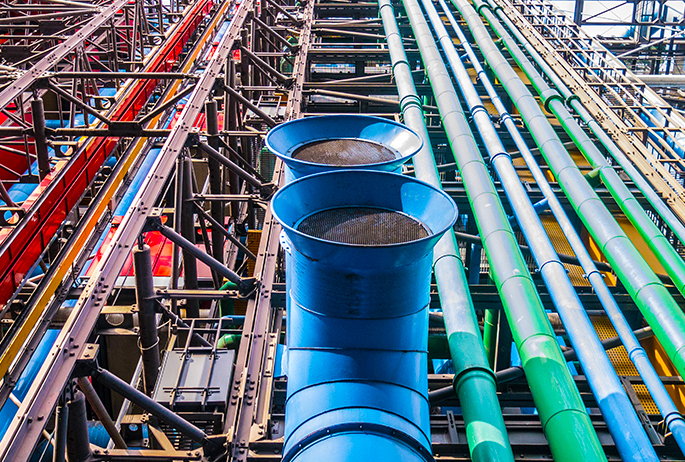
Designed by Renzo Piano and Richard Rogers and completed in 1977, Centre Pompidou transformed museum architecture by placing its structural and mechanical systems on the exterior. Its exposed framework, color-coded pipes, and external escalators made the building one of Paris’s most recognizable modern landmarks. During the closure, check the official Centre Pompidou program for exhibitions and events taking place at other venues.
Grand Palais (8th arrondissement / Champs-Élysées)
Why go: A restored Beaux-Arts landmark with a monumental glass-and-steel roof, hosting major exhibitions, art fairs, performances, and cultural events.
Tip: The Grand Palais reopened fully in June 2025 following a four-year restoration. It presents a rotating program of exhibitions, performances, and cultural events, so check what is on before visiting.
Built for the 1900 Exposition Universelle, the Grand Palais is one of Paris’s defining architectural landmarks. Its vast Nave combines a classical stone façade with an immense glass-and-steel structure. Following its restoration, the building once again hosts major international exhibitions, performances, art fairs, and interdisciplinary cultural programs, with several public areas accessible independently of ticketed exhibitions.
Fondation Jérôme Seydoux-Pathé (13th arrondissement / Avenue des Gobelins)
Why go: A refined intervention by Renzo Piano that places a curving contemporary structure behind the preserved façade of a historic theater and early cinema.
Tip: Combine the architectural visit with an exhibition or a silent-film screening accompanied by a live pianist, and check whether a guided architecture tour is available during your visit.
Completed in 2014, the Fondation Jérôme Seydoux-Pathé houses exhibition galleries, Pathé’s historical archives, research facilities, and a screening room devoted to silent cinema. Renzo Piano Building Workshop retained the sculpted 19th-century façade while inserting an organically shaped structure into the narrow site behind it. Its curved shell, covered with perforated aluminum panels, encloses timber-lined upper floors beneath a glazed roof and creates a carefully mediated relationship between the contemporary building and the surrounding residential block.
Philharmonie de Paris (Parc de la Villette / 19th arrondissement)
Why go: A landmark of contemporary architecture and acoustics, offering an ambitious program of classical, jazz, and global music.
Tip: Visit the on-site Musée de la Musique and, from April to October, check the current opening hours for the rooftop viewpoint, which offers panoramic views across northeastern Paris.
Designed by Jean Nouvel and opened in 2015, the Philharmonie de Paris contains a 2,400-seat auditorium organized around a central stage, with balconies positioned to reduce the distance between musicians and audiences. Located in Parc de la Villette, the institution presents classical music, jazz, experimental music, and musical traditions from around the world. In addition to concerts, it presents educational programs, family events, and exhibitions. The adjoining Musée de la Musique displays approximately 1,000 instruments and works of art, alongside interactive interpretation and rotating exhibitions devoted to musical cultures.
Palais Garnier – Paris Opera House (Opéra / 9th arrondissement)
Why go: One of the world’s most opulent opera houses, celebrated for its architecture and Paris Opera Ballet performances.
Tip: Book a guided or multimedia tour to explore the Grand Staircase, Marc Chagall’s painted ceiling, the Grand Foyer, and other public areas, even if you are not attending a performance.
Commissioned by Napoleon III, designed by Charles Garnier, and opened in 1875, the Palais Garnier is a major example of Second Empire architecture. Its interior brings together polychrome marble, gilded decoration, sculpture, painting, mosaics, and an elaborate sequence of ceremonial spaces. The building remains a venue for the Paris Opera Ballet, opera productions, concerts, and special events. Significant features include the Grand Staircase, Grand Foyer, auditorium chandelier, and Marc Chagall’s 1964 painted ceiling.
Bibliothèque nationale de France – BnF François-Mitterrand (13th arrondissement)
Why go: A monumental late-20th-century library complex designed by Dominique Perrault, organized around four glass towers and a sunken central garden.
Tip: Public exhibitions, guided architectural visits, and access conditions vary, so consult the BnF website before visiting.
Selected through an international competition in 1989, Dominique Perrault’s design places four 22-story towers at the corners of a vast wooden esplanade surrounding a 9,000-square-meter sunken garden. The François-Mitterrand site opened progressively during the 1990s and includes public and research reading rooms, exhibition spaces, auditoriums, cafés, and extensive underground repositories. Guided visits provide additional insight into the building’s architecture and, on selected tours, access to panoramic viewpoints.
Château de Versailles (Versailles / Île-de-France region)
Why go: A central monument of French court architecture, landscape design, decorative arts, and royal patronage from the 17th and 18th centuries.
Tip: Plan your visit early in the day and consider joining a guided tour.
The palace contains more than 2,300 rooms, including the Hall of Mirrors, state apartments, royal residences, chapels, and galleries decorated with painting, sculpture, gilding, textiles, and furniture. The gardens designed principally by André Le Nôtre include fountains, sculpture, formal parterres, ornamental groves, the Grand Trianon, and the Petit Trianon.
Versailles also hosts a rotating program of exhibitions, concerts, fountain shows, and costumed events. The annual Grand Masked Ball takes place in the Orangery and combines Baroque-inspired dress with performances and contemporary DJ sets, while other special events may provide access to selected rooms inside the palace. Dates, locations, dress requirements, and formats vary, so consult the official Château de Versailles program before planning a visit around an event.
Design and Art Shopping in Paris
Merci (Le Marais): A concept store combining fashion, furniture, homeware, stationery, books, and rotating creative collaborations within a distinctive historic setting.
Fleux (Le Marais): A group of design and lifestyle boutiques offering eclectic furniture, lighting, home accessories, gifts, and decorative objects.
Artazart (Canal Saint-Martin): A specialist bookshop and gallery dedicated to photography, illustration, graphic design, architecture, and visual culture, with a strong selection of books, independent magazines, posters, and limited-edition prints.
La Trésorerie (10th arrondissement / Rue du Château d’Eau): A design-led homeware store combining the spirit of a traditional French general store with durable furniture, tableware, textiles, kitchenware, and household objects selected from French, European, and Japanese makers.
EMPREINTES (Haut-Marais): A concept store devoted to contemporary French fine craft, presenting unique pieces and limited editions in ceramics, glass, textiles, jewelry, furniture, lighting, and decorative objects, all made in artists’ and designers’ workshops across France.
Yvon Lambert (Haut-Marais): An independent art bookshop, publishing house, and exhibition space offering artists’ books, monographs, exhibition catalogues, independent magazines, posters, editions, and works by contemporary artists.
7L (Saint-Germain-des-Prés / 7th arrondissement): Founded by Karl Lagerfeld in 1999, this specialist bookshop focuses on photography, architecture, art, design, fashion, landscape, and other forms of visual culture. It also operates as a publishing house and hosts a program of exhibitions and cultural events.
Sennelier (Quai Voltaire): A historic art-supply shop founded in 1887, known for its artist-quality paints, pastels, pigments, papers, and drawing materials.
Street Art and Public Art in Paris
Street art forms an important part of Paris’s contemporary visual culture, particularly in neighborhoods such as Belleville, the 13th arrondissement, Montmartre, and the area around Canal Saint-Martin. Artists associated with the development of the city’s street-art scene include Blek le Rat, Jef Aérosol, JR, DaCruz, Kashink, and C215. Because murals and interventions frequently evolve or disappear, a guided street-art tour can be a useful way to locate current works and understand their context.
Playground Duperré is a vividly designed basketball court in Paris’s 9th arrondissement. Its 2017 redesign by the fashion label Pigalle and the creative agency Ill-Studio transformed the compact urban court through bold colors and geometric forms.