Madrid brings together major museums, contemporary art galleries, design institutions, and significant examples of historic and modern architecture. The Prado, Reina Sofía, and Thyssen-Bornemisza form the city’s Golden Triangle of Art, while Matadero Madrid, CentroCentro, and independent gallery districts extend the cultural landscape beyond the major collections. This guide also covers Madrid’s design museums, architectural landmarks, creative neighborhoods, and the best areas to stay near its principal cultural attractions.
To access our exclusive Madrid Treasure Map, simply click here and become a Culture Treasures member. The map pins every place in this guide and adds bonus cafés, boutiques and cultural venues.
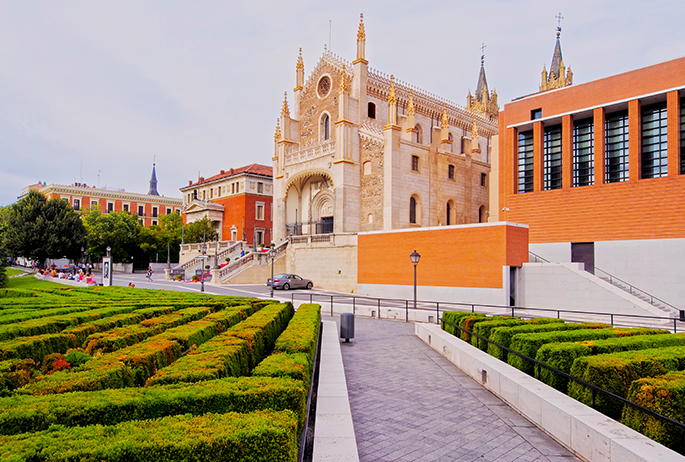 San Jerónimo el Real and Prado Museum. Photo: Envato Elements
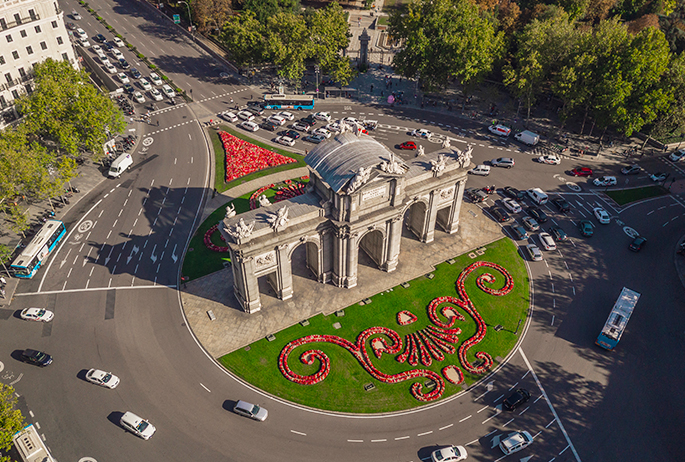 Puerta de Alcalá. Photo: Envato Elements
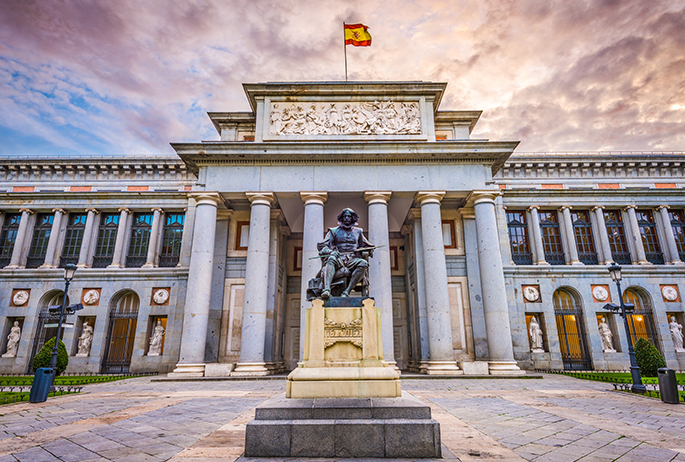
 Prado Museum. Photo: Envato Elements
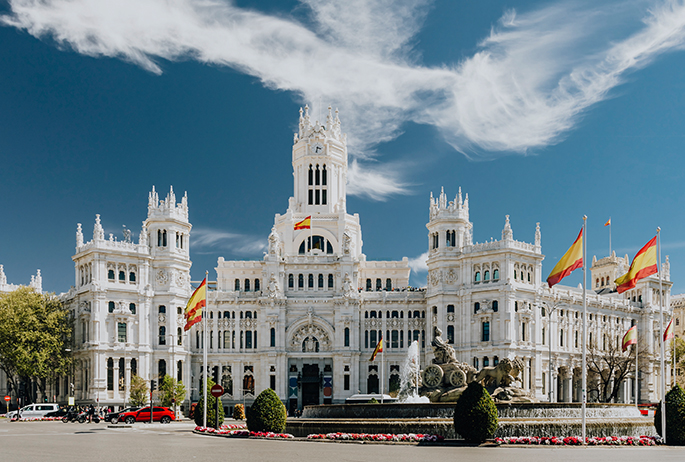
- Plaza de Cibeles. Photo: Envato Elements
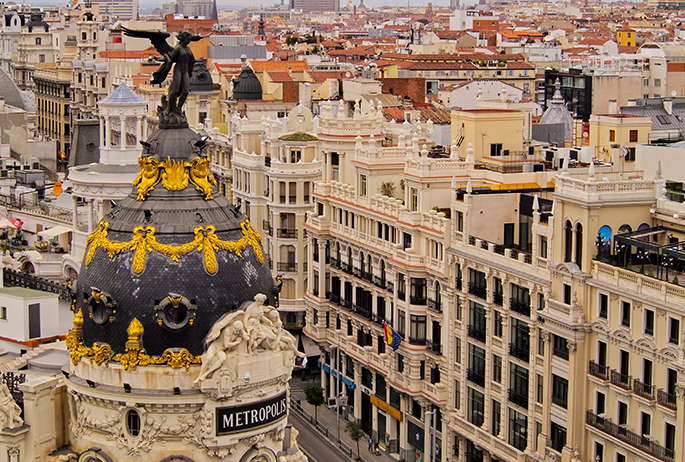
- Metropolis Building. Photo: Envato Elements
- Madrid. Photo: Envato Elements
- Madrid. Photo: Envato Elements
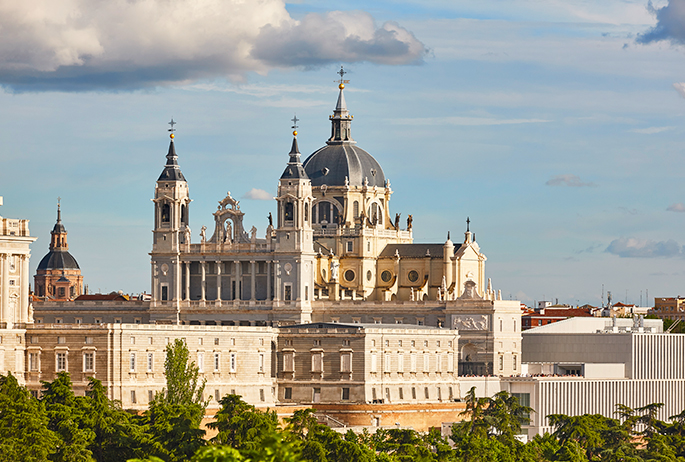
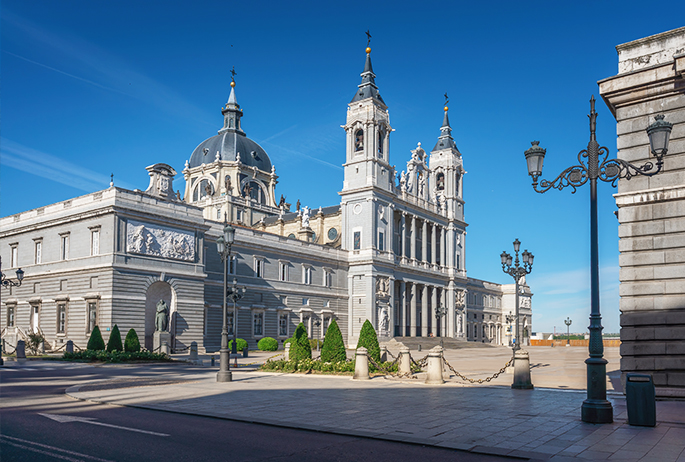
- Catedral de la Almudena. Photo: Envato Elements
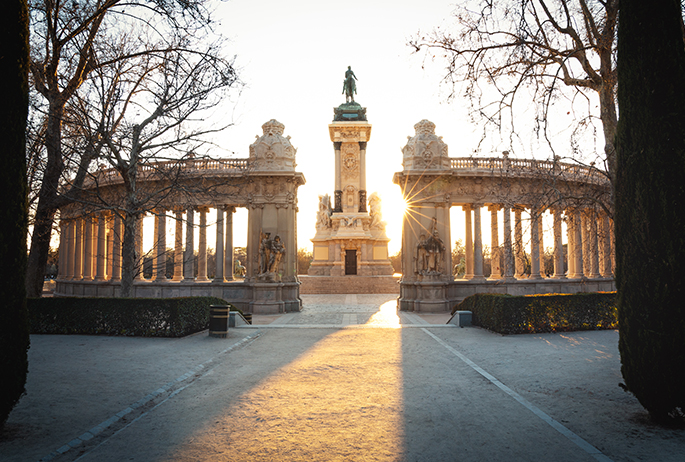
- The Monument to Alfonso XII. Photo: Envato Elements
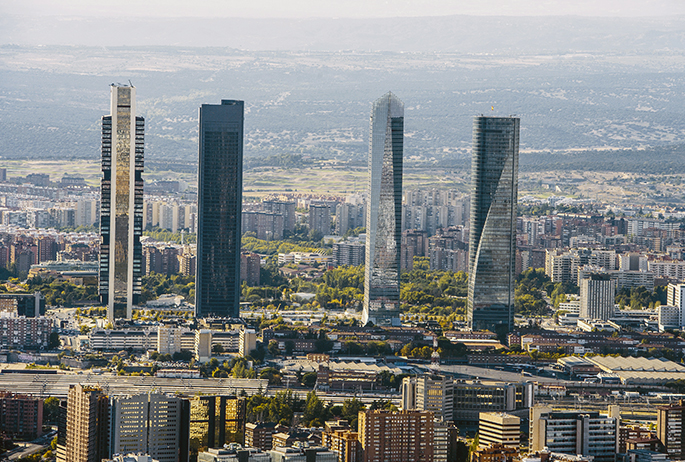
- Cuatro Torres Business Area. Photo: Envato Elements
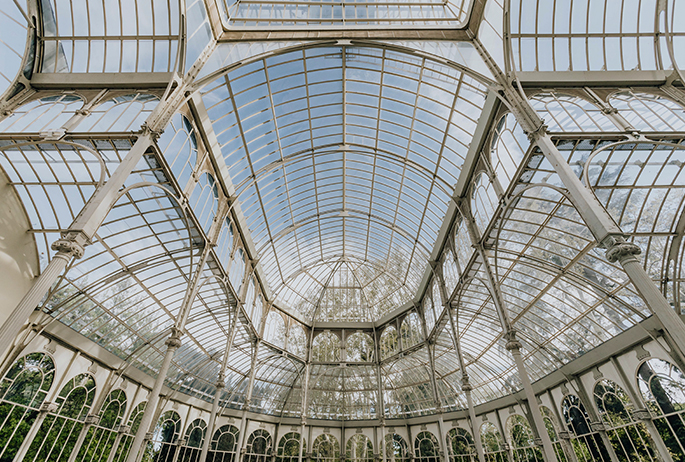
- Palacio de Cristal. Photo: Envato Elements
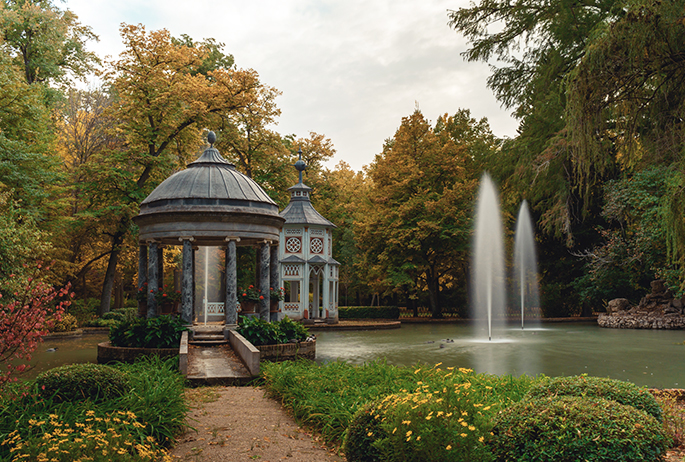
- Estanque de los Chinescos. Photo: Envato Elements
- Catedral de la Almudena. Photo: Envato Elements
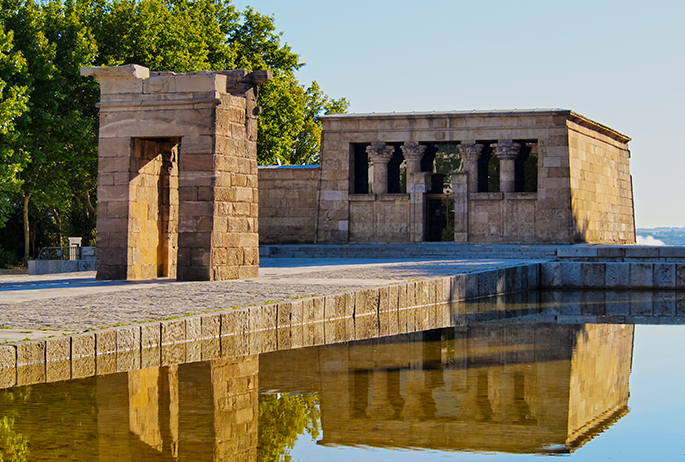
- Temple of Debod. Photo: Envato Elements
Where to Stay in Madrid for Museums and Cultural Attractions
Choosing where to stay in Madrid can make a significant difference to a culture-focused trip. Barrio de las Letras and the area around Paseo del Prado are especially convenient for the Prado, Thyssen-Bornemisza, Reina Sofía, and CaixaForum, while Centro and Gran Vía provide easy access to CentroCentro, Espacio Fundación Telefónica, and many of the city’s principal architectural landmarks. Chueca, Justicia, and Malasaña are better suited to travelers interested in contemporary galleries, independent design, and creative neighborhoods.
For a closer look at each property, its design, location, and cultural surroundings, explore our complete guide to the best boutique and design hotels in Madrid
With the interactive map below, you can compare all available accommodation options in the city and find the best prices from a variety of leading providers.
Luxury Hotels in Madrid
For a luxury stay in central Madrid, Brach Madrid is a strong choice in the Gran Vía area for travelers who want a design-led hotel within walking distance of the historic core and major shopping streets. The Palace, a Luxury Collection Hotel, Madrid stands out for its landmark setting in the UNESCO-listed Landscape of Light, close to the Prado, Thyssen-Bornemisza, and Retiro-facing cultural axis. Casa de las Artes, Meliá Collection is especially well placed for the Literary Quarter and the museum district, while The Madrid EDITION and Thompson Madrid both work well for travelers who want a polished contemporary base near Puerta del Sol, Plaza Mayor, and Gran Vía. In Salamanca, Tótem Madrid offers a more intimate luxury option on Madrid’s Golden Mile, close to designer boutiques and Retiro. URSO Hotel & Spa, on the border of Chamberí, Salesas, and central Madrid, is another strong high-end choice for travelers who want a quieter base with easy access to both Chueca and the historic center.
Mid-Range Hotels in Madrid
For a mid-range stay across some of Madrid’s most appealing neighborhoods, Only YOU Hotel Atocha is particularly well located on Paseo Infanta Isabel for travelers who want easy access to Atocha, Retiro, Lavapiés, and the Prado area. Barceló Torre de Madrid offers a highly visible Plaza de España base with straightforward access to Gran Vía and the western edge of the center. 7 Islas Hotel is a good fit for travelers who want to stay between Gran Vía and Malasaña, while Dear Hotel Madrid, also on Gran Vía near Plaza de España, suits visitors who want central access with skyline views. Hotel Vincci The Mint, on Gran Vía, is another practical option for travelers who want to stay in the middle of Madrid’s commercial and theater district.
Affordable Hotels in Madrid
For more affordable hotels in well-connected areas, Aloft Madrid Gran Via is a practical central option near Gran Vía and Plaza de España. Eric Vökel Boutique Apartments – Madrid Suites works well for travelers who prefer apartment-style accommodation near Malasaña and Plaza de España. Sleep’n Atocha is one of the better-placed lower-cost options for staying close to Atocha and the museum district. For hostel stays, The Hat Madrid is a useful base near Plaza Mayor, while Bastardo Hostel suits travelers who want to stay between Malasaña and Chueca.
Best Art Museums in Madrid
Museo del Prado (Jerónimos District)
Why go: To explore an exceptional collection of European art, with particular strengths in Spanish, Italian, and Flemish painting.
Tip: For a focused introduction to this extensive collection, consider joining a guided tour.
Opened in 1819, the Museo del Prado developed principally from the Spanish royal collections. Its holdings extend from the Middle Ages to the 19th century and include significant groups of works by Velázquez, Goya, El Greco, Titian, Rubens, and Bosch. Central works include Velázquez’s Las Meninas, Goya’s The Third of May 1808 and Black Paintings, and Bosch’s The Garden of Earthly Delights. The original Neoclassical building was designed by Juan de Villanueva, while Rafael Moneo’s Jerónimos extension opened in 2007.
Museo Reina Sofía (Atocha)
Why go: To examine Spanish modern and contemporary art through works by Picasso, Dalí, Miró, Juan Gris, Maruja Mallo, and other central figures.
Tip: Don’t leave after seeing Guernica. Dora Maar’s photographs documenting its production and material relating to the Spanish Pavilion at the 1937 Paris International Exhibition provide essential context for the painting.
The collection extends from the final decades of the 19th century to the present, with a principal focus on Spanish art in dialogue with international developments and Latin American practices. The museum is housed in the former Hospital de San Carlos, designed by José de Hermosilla and Francisco Sabatini. Jean Nouvel’s 2005 extension introduced additional galleries, auditoriums, a library, and a public courtyard beneath a large red roof.
Museo Nacional Thyssen-Bornemisza (Paseo del Prado)
Why go: To follow the development of Western painting from the late 13th to the 20th century through a collection that complements the Prado and Reina Sofía.
Tip: Look beyond the familiar Impressionist and modern works. The museum is also particularly strong in early Italian painting, the German Renaissance, Dutch art, and 19th-century American painting.
The collection includes works by Duccio, Van Eyck, Dürer, Caravaggio, Rembrandt, Monet, Morisot, Van Gogh, Kirchner, Mondrian, Georgia O’Keeffe, and Edward Hopper. The museum is housed in the Palacio de Villahermosa, whose Neoclassical form dates principally from the early 19th century. Rafael Moneo converted the former palace and bank into a museum between 1989 and 1992.
Galería de las Colecciones Reales (Royal Palace / Madrid de los Austrias)
Why go: To examine paintings, sculpture, tapestries, armor, furniture, and decorative arts assembled by the Spanish monarchy from the Middle Ages onward.
Tip: Allow time to study the building as well as the collection. Its long sequence of galleries descends beside the Royal Palace and opens toward views across the Campo del Moro gardens.
Opened in 2023, the Galería de las Colecciones Reales presents works drawn from the collections administered by Patrimonio Nacional. The display includes paintings by Titian, Velázquez, Caravaggio, and Goya alongside tapestries, court dress, carriages, clocks, and objects made for royal residences. The building was designed by Luis Moreno Mansilla and Emilio Tuñón. Its restrained granite exterior responds to the adjacent Royal Palace, while the interior is organized as a series of large, vertically stacked galleries integrated into the slope between Plaza de la Armería and Campo del Moro.
CaixaForum Madrid (Paseo del Prado)
Why go: To examine Herzog & de Meuron’s transformation of a former power station alongside rotating exhibitions spanning art, design, architecture, photography, and cultural history.
Tip: Before entering, observe how the historic brick shell is raised above street level to create a covered public space between the building and Patrick Blanc’s vertical garden.
Herzog & de Meuron retained the protected brick envelope of the Central Eléctrica del Mediodía while removing its original base and extending the building above and below ground. The upper addition is clad in sculpted cast-iron panels whose color relates to the historic masonry. Inside, flexible galleries and a sculptural circulation system accommodate temporary exhibitions and multidisciplinary programs.
Matadero Madrid (Arganzuela)
Why go: To explore the adaptive reuse of a former slaughterhouse as a center for contemporary art, design, film, performance, literature, dance, and digital culture.
Tip: Check the programs of the individual institutions before visiting, since the pavilions operate independently and not every space is continuously accessible.
Designed by Luis Bellido, the early-20th-century complex consists of brick pavilions organized according to their original industrial functions. Its gradual conversion has retained the overall layout and much of the material character of the former slaughterhouse. Current institutions include Cineteca Madrid, Central de Diseño, Medialab Matadero, Centro Danza Matadero, Nave 10 Matadero, Casa del Lector, and the Centre for Artists in Residence.
La Casa Encendida (Lavapiés / Embajadores)
Why go: To encounter contemporary artistic practices within a multidisciplinary program connecting culture with education, environmental questions, and social research.
Tip: Check the current program before visiting, as exhibitions may be accompanied by film screenings, performances, concerts, workshops, or research projects.
La Casa Encendida supports artists and researchers through exhibitions, residencies, public programs, and interdisciplinary projects. Its program frequently considers contemporary environmental and social questions through artistic production, education, and public discussion. The institution is housed in a protected Neo-Mudéjar building designed by Fernando Arbós y Tremantí and opened in 1913. The historic interior has been adapted to include galleries, classrooms, performance spaces, and a central courtyard.
Contemporary Art Galleries and Cultural Venues in Madrid
Travesía Cuatro (Justicia)
Why go: To follow a program connecting contemporary artistic practices in Europe and Latin America, with particular attention to artists working across different cultural and political contexts.
Tip: Combine the visit with Elba Benítez and Max Estrella, both within walking distance in the Justicia and Salesas gallery area.
Founded in Madrid in 2003 by Silvia Ortiz and Inés López-Quesada, Travesía Cuatro initially developed through exchanges between the Spanish and Mexican art scenes. Its program now brings together artists from a wider international field, working across painting, sculpture, installation, photography, and research-based practices. The gallery also operates spaces in Guadalajara and Mexico City.
Galería Elvira González (Justicia)
Why go: To see exhibitions devoted to European and American art from the second half of the 20th century alongside selected contemporary practices.
Tip: Check the exhibition program before visiting, since the experience may range from a focused presentation by one artist to a broader historical exhibition.
Founded in 1994, Galería Elvira González developed from Elvira González’s earlier work as director of Galería Theo. Its program has included artists associated with postwar abstraction, Minimalism, sculpture, photography, and contemporary painting, among them Eduardo Chillida, Donald Judd, Robert Mapplethorpe, Chema Madoz, Miquel Barceló, and Olafur Eliasson.
Galería Elba Benítez (Justicia)
Why go: To examine contemporary art in dialogue with architecture, cinema, public space, urbanism, and other cultural fields.
Tip: The gallery is set inside a courtyard on Calle San Lorenzo. Look for the street number, since the exhibition space is not immediately visible from the pavement.
Founded in 1990, Galería Elba Benítez presents Spanish and international artists working across installation, sculpture, photography, film, and conceptual practice. Its program has included Cristina Iglesias, Carlos Garaicoa, Ignasi Aballí, Vik Muniz, and Fernanda Fragateiro.
Galería Max Estrella (Salesas)
Why go: To see work by Spanish and international artists using photography, digital media, installation, sculpture, and conceptually based approaches.
Tip: The gallery is entered through an interior courtyard on Calle Santo Tomé, close to several independent galleries in Salesas and Justicia.
Founded in 1994, Max Estrella presents established and mid-career artists whose work engages with image production, technology, perception, public space, and material experimentation. Its program has included Daniel Canogar, Glenda León, Tomás Saraceno, Stéphane Couturier, and José Val del Omar.
NF / Nieves Fernández (Chamberí)
Why go: To encounter contemporary practices addressing representation, social structures, urban conditions, identity, and the politics of visibility.
Tip: As the gallery lies outside the central Justicia circuit, plan it as part of a Chamberí route rather than combining it with Doctor Fourquet.
NF / Nieves Fernández continues the work of Galería Nieves Fernández, founded in 1977. Its current program brings together artists from different generations and geographical contexts, working across installation, sculpture, photography, performance, and research-led projects.
Espacio Mínimo (Lavapiés / Doctor Fourquet)
Why go: To examine contemporary painting, sculpture, installation, photography, and video within one of Madrid’s principal gallery districts.
Tip: Visit on a Saturday around midday, when several galleries on Calle del Doctor Fourquet are open and can be followed as a compact walking route.
Founded in Murcia in 1992 and established in Madrid since 2000, Espacio Mínimo represents Spanish and international artists working across different media and conceptual positions. Its location on Doctor Fourquet places it close to Juan Silió, F2 Galería, 1Mira Madrid, and other independent exhibition spaces.
Sabrina Amrani (Malasaña and Carabanchel)
Why go: To explore an international program with sustained attention to artists connected to North Africa, the Middle East, South Asia, and the wider Global South.
Tip: Check which Madrid space is hosting the current exhibition. The Calle Sallaberry venue in Carabanchel is used for projects requiring substantially more space than the original gallery.
Founded in Madrid in 2011, Sabrina Amrani presents artists whose work addresses cultural, political, and social questions through photography, installation, film, sculpture, drawing, and performance. The gallery opened its 600-square-meter Carabanchel space in 2019, extending its program beyond the original Malasaña venue.
VETA by Fer Francés (Carabanchel)
Why go: To see contemporary painting presented at an architectural scale rarely available in Madrid’s central commercial galleries.
Tip: Combine the visit with Sabrina Amrani’s Sallaberry space and other Carabanchel studios, but check access details for each venue before traveling to the district.
Opened in 2021, VETA is set across two former industrial buildings in Carabanchel, including a former printing workshop and kitchen factory. Its 1,200-square-meter exhibition area allows for large paintings and installations, with a program that places artists from different generations and geographical contexts in dialogue.
Madrid Design Museums and Cultural Spaces
Museo Nacional de Artes Decorativas (Retiro)
Why go: To examine furniture, ceramics, glass, textiles, metalwork, jewelry, and historic interiors through the development of Spanish decorative arts.
Tip: Pay particular attention to the reconstructed 18th-century Valencian kitchen, where ceramic tiles, domestic objects, and spatial arrangement are presented as a complete interior.
Founded in 1912, the Museo Nacional de Artes Decorativas holds more than 70,000 objects dating from the Middle Ages to the present, with particular strengths in Spanish material culture and domestic design. The displays combine individual objects with reconstructed rooms, allowing furniture, textiles, ceramics, and architectural elements to be understood within their original functional settings.
Museo del Traje (Ciudad Universitaria)
Why go: To study the history of dress in Spain through garments, textiles, jewelry, accessories, traditional clothing, and the work of Spanish fashion designers.
Tip: Look beyond the chronological development of silhouette and style to the displays of construction, textile production, regional identity, and the social use of clothing.
The Museo del Traje examines dress as material culture, connecting fashion with technology, gender, social history, craft, and systems of representation. Its holdings range from rare surviving garments from the 16th and 17th centuries to traditional regional dress and contemporary Spanish fashion.
Museo ABC de Dibujo e Ilustración (Conde Duque)
Why go: To trace the development of Spanish drawing, illustration, editorial graphics, and visual journalism from the late 19th century onward.
Tip: Combine the museum with the nearby Conde Duque cultural center, whose exhibition and performance program adds a contemporary context to the historical graphic collection.
Museo ABC reopened in 2024 with a collection of approximately 150,000 works associated with the newspaper ABC and the magazine Blanco y Negro. The archive includes original illustrations, cartoons, drawings, prints, and editorial commissions by hundreds of artists. The museum is housed in a former Mahou brewery adapted by Aranguren & Gallegos Arquitectos. Their intervention introduced a folded metal and glass volume into the historic complex while retaining the relationship between the courtyard and the original industrial structure.
Espacio Fundación Telefónica (Gran Vía)
Why go: To examine relationships between technology, visual culture, photography, communication, and contemporary society within the historic Telefónica Building.
Tip: Pair a temporary exhibition with Exponential: From Analog to Digital, the permanent display examining the development and cultural consequences of telecommunications.
Espacio Fundación Telefónica presents exhibitions connecting art and photography with science, technology, and digital culture. The institution also organizes talks, workshops, publications, and educational programs concerned with technological and social transformation. The Telefónica Building was designed by Luis Ignacio de Cárdenas and completed in 1930. Its vertical organization drew on contemporary American office architecture while incorporating stonework and ornamental references adapted to its Gran Vía setting.
Librería La Fábrica (Barrio de las Letras)
Why go: To browse a specialist selection of publications on photography, contemporary art, design, architecture, and visual culture.
Tip: Check the events calendar for book presentations and conversations with photographers, artists, editors, and cultural practitioners.
Founded in Madrid in 1995, La Fábrica develops publishing, exhibitions, festivals, and cultural projects, including PHotoESPAÑA and Madrid Design Festival. Its bookshop on Calle Verónica reflects this editorial work through monographs, photobooks, exhibition catalogues, essays, and independent publications.
Madrid Architecture Guide: Buildings and Landmarks
Las Ventas Bullring (Guindalera)
Why go: To examine a major example of early-20th-century Neo-Mudéjar architecture through its brick construction, ceramic decoration, circulation system, and urban scale.
Tip: A guided visit provides access to the arena, seating tiers, circulation passages, and museum, making the building’s organization clearer than an exterior visit alone.
Las Ventas was designed principally by José Espeliú and completed after his death by Manuel Muñoz Monasterio. Inaugurated in 1931, the circular structure uses exposed brick, horseshoe arches, and ceramic panels bearing the coats of arms of Spanish provinces. The building remains associated with bullfighting and its contested cultural history, while also functioning as a venue for concerts and public events. It was declared a protected heritage monument in 1994.
Museo ICO (Barrio de las Letras)
Why go: To see exhibitions devoted specifically to architecture, urbanism, architectural photography, and the representation of the built environment.
Tip: Check the current exhibition before visiting, since the museum has no permanent display and each project approaches architecture through a different historical, photographic, or research-based framework.
Museo ICO has presented temporary exhibitions on Spanish and international architecture since 1996. Its program frequently draws on drawings, models, plans, photographs, films, and archival material to examine individual architects, buildings, urban transformations, and architectural culture.
Instituto del Patrimonio Cultural de España (Ciudad Universitaria)
Why go: To examine one of the most significant works of late-modern concrete architecture in Spain and the relationship between its structural system, conservation laboratories, library, workshops, and central courtyard.
Tip: Reserve an official guided visit, since the interior reveals the radial organization, concrete structure, glazed central dome, and specialized conservation spaces that cannot be understood fully from outside.
Designed by Fernando Higueras and Antonio Miró, the headquarters of the Instituto del Patrimonio Cultural de España is organized as a circular reinforced-concrete structure divided into radial segments. Its projecting roof forms and serrated perimeter led to the informal name Corona de Espinas, or Crown of Thorns. The building brings together laboratories, archives, workshops, and research facilities devoted to the conservation of Spain’s cultural heritage.
Fundación Francisco Giner de los Ríos (Chamberí)
Why go: To examine how amid.cero9 integrated new educational and cultural spaces with the historic buildings and garden of the Institución Libre de Enseñanza.
Tip: Check the foundation’s program before visiting. Public events provide the clearest opportunity to experience the garden, circulation routes, and relationship between the historic structures and the contemporary extension.
Completed in 2014, the project by amid.cero9, led by Cristina Díaz Moreno and Efrén García Grinda, retains the surviving historic buildings while arranging the new volumes around a central garden. A perforated metal lattice filters light, frames circulation, and mediates between the new structures and the planted courtyard. The design treats the garden as both a shared cultural space and an expression of the institution’s educational principles.
Palacio de Cristal (Retiro Park)
Why go: To examine Ricardo Velázquez Bosco’s use of iron, glass, brick, and ceramic ornament in a late-19th-century exhibition pavilion.
Tip: The building is closed for restoration until 2027. It can currently be viewed only from the surrounding paths and lake in Retiro Park.
Designed by Ricardo Velázquez Bosco and completed in 1887, the Palacio de Cristal was constructed for the Exposición General de las Islas Filipinas. Its iron-and-glass structure stands on a brick base decorated with ceramics by Daniel Zuloaga. The building later became an exhibition venue associated with the Museo Reina Sofía. The current restoration addresses the metal structure, glazing, ventilation, floors, and zinc dome.
Metrópolis Building (Calle de Alcalá / Gran Vía)
Why go: To study an early-20th-century commercial building in which Beaux-Arts composition is combined with sculpture, ornamental stonework, metalwork, slate, and gilding.
Tip: View the building from the opposite side of Calle de Alcalá, where the corner composition, dome, and relationship to the entrance of Gran Vía can be read together.
The building was designed by the French architects Jules and Raymond Février for the insurance company La Unión y el Fénix and completed in 1911. Its rounded corner, paired towers, Corinthian columns, and domed roof were designed to address a prominent junction in Madrid’s expanding commercial center. The original rooftop sculpture was replaced in 1977 by a winged figure of Victoria after the building was acquired by Metrópolis Seguros.
Temple of Debod (Parque del Oeste)
Why go: To examine an ancient Egyptian religious structure whose reliefs and successive architectural additions document ritual practices from the Meroitic to the Roman period.
Tip: Visit before sunset rather than arriving only for the view. Daylight makes the carved reliefs and sequence of gateways easier to study.
The temple was begun under the Meroitic ruler Adikhalamani in the second century BCE and later extended during the Ptolemaic and Roman periods. It was dedicated principally to Amun of Debod and Isis. Egypt donated the temple to Spain in 1968 in recognition of Spanish participation in the international campaign to preserve Nubian monuments threatened by the Aswan High Dam. It was reconstructed in Madrid and opened to the public in 1972.
Where to Eat and Drink in Madrid
Mesón del Champiñón (Madrid de los Austrias) Founded in 1964, Mesón del Champiñón is closely associated with mushrooms grilled on a small hotplate and served with chorizo, garlic, and parsley. Its vaulted brick interior reflects the cellar-like spaces beneath the arcades surrounding Plaza Mayor.
Barrutia y el 9 (Salesas) Set in a former neighborhood tavern on Calle Santa Teresa, Barrutia y el 9 retains the tiled surfaces and spatial character of the earlier establishment. Its menu is based on Spanish produce and traditional dishes interpreted through a concise contemporary approach.
Taberna La Concha (La Latina) Located on Cava Baja, Taberna La Concha specializes in house-made vermouth and a concise selection of tapas that combines Spanish ingredients with occasional international references. It is particularly relevant as part of Madrid’s contemporary vermouth culture rather than as a conventional historic tavern.
La Mallorquina (Puerta del Sol) Founded in 1894, La Mallorquina is one of Madrid’s longstanding pastry shops. Its best-known products include cream- and chocolate-filled napolitanas, seasonal roscones, and traditional Spanish pastries. The ground-floor counter provides a quick view of the bakery’s daily production, while the upper-floor café offers a quieter setting above Puerta del Sol.
Chocolatería San Ginés (Sol) Established in 1894 in the Pasadizo de San Ginés, this historic chocolatería remains closely identified with chocolate con churros. Its marble tables, tiled surfaces, and location in a narrow pedestrian passage preserve the spatial character of a traditional Madrid café.
Café de la Luz (Malasaña) Café de la Luz is arranged as a sequence of informal domestic interiors, with mismatched furniture, bookshelves, brick walls, and subdued lighting. The setting is more relevant for its interpretation of the neighborhood café as a furnished social space than for a specific architectural intervention.
Flamenco Shows in Madrid
Corral de la Morería (La Latina) Founded in 1956, Corral de la Morería is one of Madrid’s longest-established flamenco tablaos. Its program brings together dancers, singers, and guitarists from different generations, while the performance space retains the close relationship between stage and audience characteristic of the tablao format. The separate gastronomic restaurant is directed by chef David García and holds a Michelin star.
Las Carboneras (Madrid de los Austrias) Las Carboneras presents flamenco in a compact performance space near Plaza Mayor. Its program emphasizes the dialogue between dance, singing, guitar, and rhythmic accompaniment, allowing the structure of individual performances to remain clearly visible.
Torres Bermejas (Gran Vía) Torres Bermejas is distinguished by an interior modeled on the ornamental language of the Alhambra, with geometric tilework, carved surfaces, arches, and patterned ceilings. The elaborate setting frames a traditional tablao program of flamenco dance, singing, and guitar.
Design Shops in Madrid
Mestizo (Chueca) Mestizo presents furniture, lighting, textiles, tableware, art, and decorative objects alongside its own interior-design practice. The selection combines contemporary production with pieces informed by traditional materials, craft processes, and the visual character of earlier domestic interiors.
Cocol (La Latina) Cocol presents traditional and contemporary Spanish craft sourced from independent workshops across the country. Its selection includes ceramics, blown glass, basketry, wool blankets, embroidered textiles, woodwork, leather, and domestic objects. The store provides a useful introduction to regional materials and production methods that remain active outside industrial manufacturing.
González & González (Salesas / Justicia) González & González specializes in functional household objects selected for their materials, construction, and durability. The collection includes brushes, enamelware, metal containers, ceramics, stationery, cleaning tools, baskets, and kitchen utensils produced principally by established manufacturers and small workshops in Europe and East Asia.
El Moderno Concept Store (Malasaña) El Moderno presents contemporary objects for the home alongside stationery, prints, accessories, jewelry, and work by Spanish and international designers. The selection is oriented toward functional domestic objects and small-scale design rather than furniture alone.
Rughara (Chamberí) Rughara brings together independent fashion, footwear, jewelry, ceramics, art, and objects for the home, with particular attention to small-scale European and Spanish production. Its current Madrid spaces are in Chamberí rather than Malasaña.
Ecoalf (Madrid) Founded in Madrid, Ecoalf develops clothing and accessories using recycled and lower-impact materials. Its relevance to the guide lies in the company’s integration of material research, supply-chain development, and environmental criteria into a commercially scaled fashion brand.
Libros para un Mundo Mejor (Malasaña) This independent bookshop combines new and second-hand books with reading groups, writing workshops, and small cultural events. Its selection includes fiction, poetry, philosophy, ecology, feminism, psychology, and children’s literature, giving the shop a distinct editorial and community focus.
Vintage and Antique Shopping in Madrid
El Rastro (La Latina / Embajadores) Held every Sunday and public holiday, El Rastro extends along Ribera de Curtidores and the surrounding streets. Its stalls and permanent shops cover second-hand objects, clothing, books, records, tools, household goods, collectibles, and antiques. For furniture and decorative arts, continue beyond the central market route into the side streets and the permanent antique galleries.
El Rincón de Tía Jo (Malasaña) El Rincón de Tía Jo specializes in vintage clothing and accessories dating principally from the 1940s to the early 2000s. Each garment is inspected, cleaned, repaired when necessary, and presented with attention to period, construction, and continued use.
Williamsburg Vintage Clothes (Malasaña) Williamsburg Vintage Clothes focuses on vintage fashion and accessories, including denim, leather jackets, sportswear, printed shirts, and garments associated with late-20th-century American street and popular culture.
La Recova (Chueca and El Rastro) Founded in 2009, La Recova specializes in original furniture, lighting, and decorative objects from the 1950s and 1960s. Its selection is particularly useful for examining the materials, proportions, and production methods associated with European mid-century domestic design.
Retro City (Malasaña) Retro City specializes in second-hand and vintage clothing rather than furniture. Its selection includes printed shirts, coats, sportswear, denim, bags, belts, and accessories, with a particular concentration on garments from the final decades of the 20th century.
Madrid Art and Design Districts
Doctor Fourquet and Lavapiés Art District
Why go: To follow Madrid’s most concentrated central route of contemporary galleries, located between the Reina Sofía, Lavapiés, and Atocha.
Tip: Visit between late morning and early afternoon on Saturday, when several galleries are open and the route can be completed on foot without appointments.
Calle del Doctor Fourquet and the surrounding streets bring together galleries including Espacio Mínimo, Juan Silió, F2 Galería, 1Mira Madrid, and other independent spaces. Their programs span contemporary painting, sculpture, installation, photography, and conceptually based practices. The district’s proximity to the Reina Sofía and La Casa Encendida makes it possible to connect a commercial gallery route with institutional exhibitions in the same part of the city.
Carabanchel Art District
Why go: To explore a decentralized art district in which former workshops and industrial buildings support galleries, artist studios, production spaces, and collective projects.
Tip: Plan the route in advance. Carabanchel covers a large area, and many studios open only for scheduled events, guided routes, or annual programs such as Art/Banchel.
Carabanchel has developed into one of Madrid’s principal areas for artistic production, with more than 130 artists working across approximately 40 studios, workshops, galleries, and shared spaces. The district includes VETA, Sabrina Amrani’s Sallaberry gallery, Nave Oporto, 95 Art Gallery, and a growing network of independent initiatives. Its cultural identity is shaped by the reuse of former printing works, factories, garages, and manufacturing spaces rather than by a single institutional center.
Malasaña and Conde Duque
Why go: To examine the visual and social legacy of the Movida Madrileña alongside independent publishing, illustration, design retail, music, and contemporary cultural venues.
Tip: Focus the visit around Museo ABC, Conde Duque, Calle del Pez, and the streets between Plaza del Dos de Mayo and Calle de la Palma rather than treating the entire neighborhood as one route.
Malasaña became closely associated with the Movida Madrileña, the countercultural movement that emerged during Spain’s transition to democracy. Music, film, photography, graphic design, fashion, and independent publishing all contributed to the district’s cultural identity. Today its principal cultural references include Museo ABC, Conde Duque, specialist bookshops, small design businesses, vintage stores, and venues connected to Madrid’s independent music history.
Madrid Design Festival (Annual, February–March)
Why go: To follow exhibitions, installations, talks, studio visits, and professional programs across product design, graphic design, interiors, fashion, architecture, craft, and material research.
Tip: Review the program by venue and discipline rather than by date alone. The festival extends across the city, and some exhibitions continue after the principal festival period.
Organized by La Fábrica since 2018, Madrid Design Festival brings together museums, cultural institutions, design studios, schools, galleries, showrooms, and independent initiatives. Its principal program is complemented by Madrid Diseña, open studios, and projects distributed across several neighborhoods.