Berlin’s art and design museums, contemporary galleries, and architecture offer different ways to explore the city’s cultural landscape. This guide brings together museum collections, independent exhibition spaces, public art, design shops, and architectural landmarks, with practical tips for planning each visit.
You’ll also find selected hotels by neighborhood and budget, helping you choose where to stay in Berlin around the museums, galleries, and districts you want to explore.
To access our exclusive Berlin Treasure Map, simply click here and become a Culture Treasures member. The map pins every place in this guide and adds bonus cafés, boutiques and cultural venues.
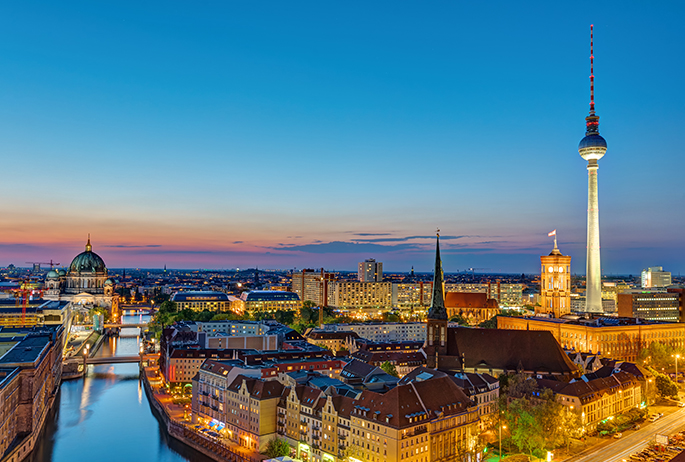 Berlin. Photo: Envato Elements
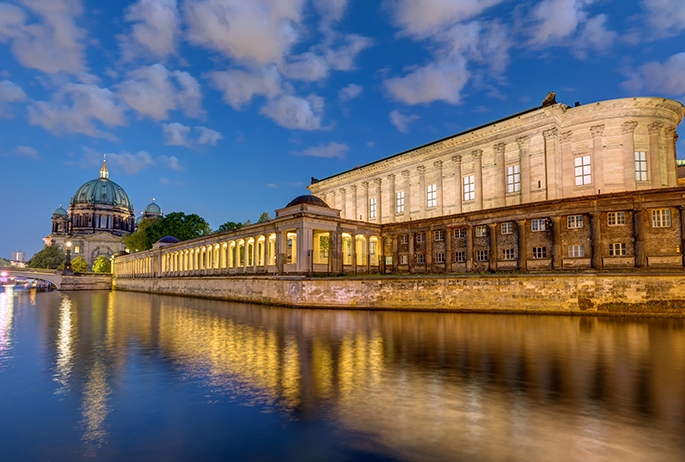
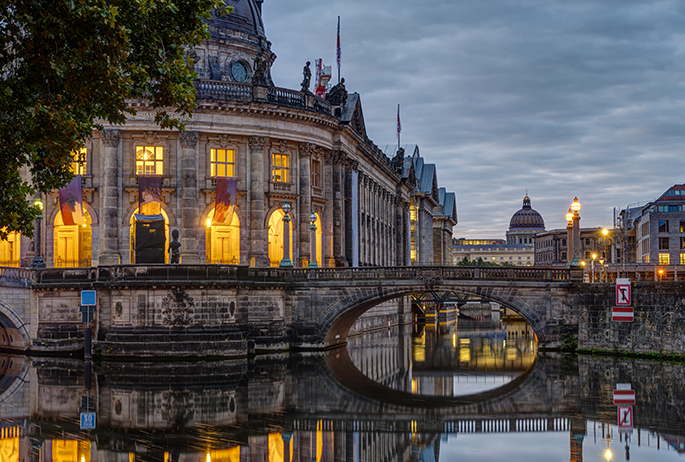 Museum Island. Photo: Envato Elements
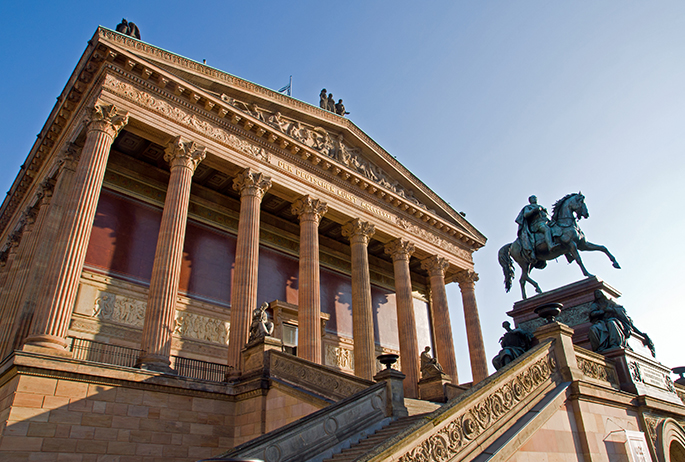
 Alte Nationalgalerie. Photo: Envato Elements
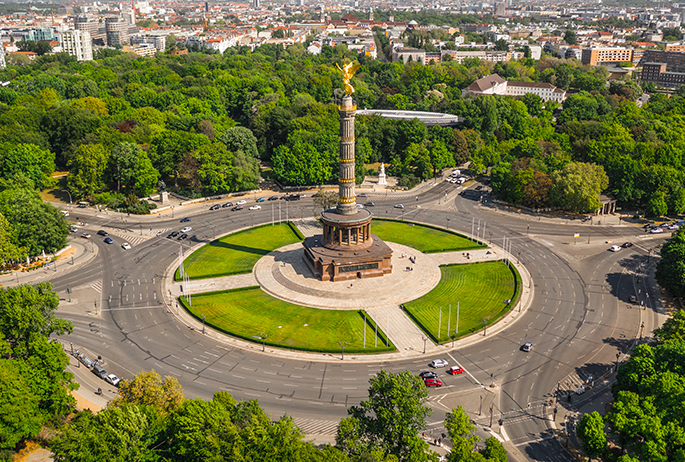
- Victory Column. Photo: Envato Elements
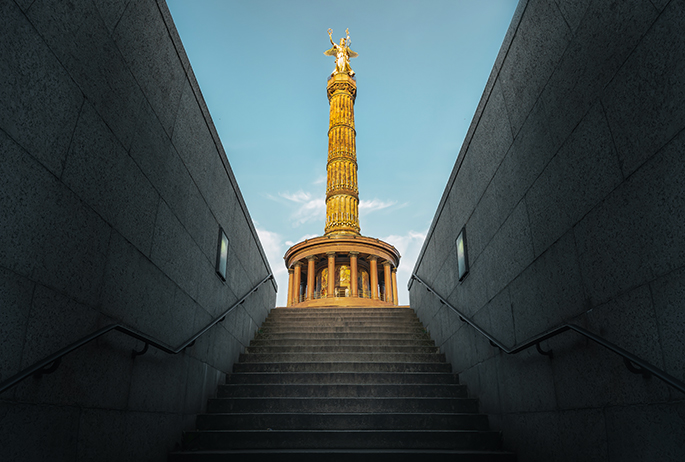
- Victory Column. Photo: Envato Elements
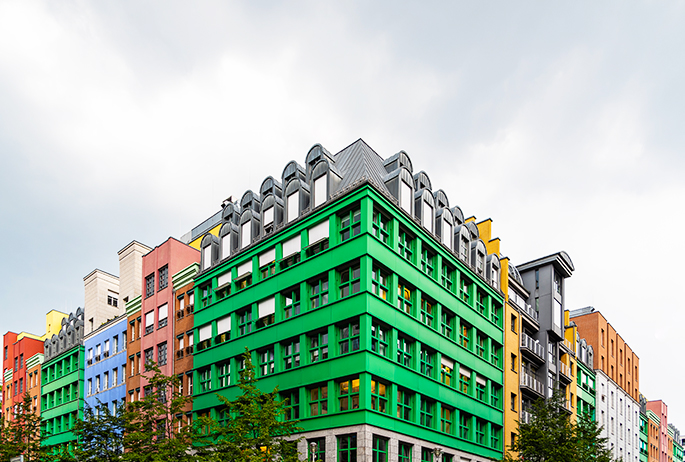
- Quartier Schützenstraße. Photo: Envato Elements
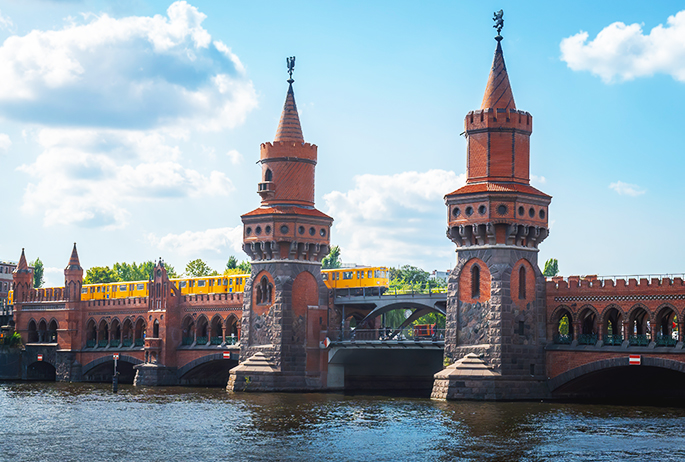
- The Oberbaum Bridge. Photo: Envato Elements
- Museum Island. Photo: Envato Elements
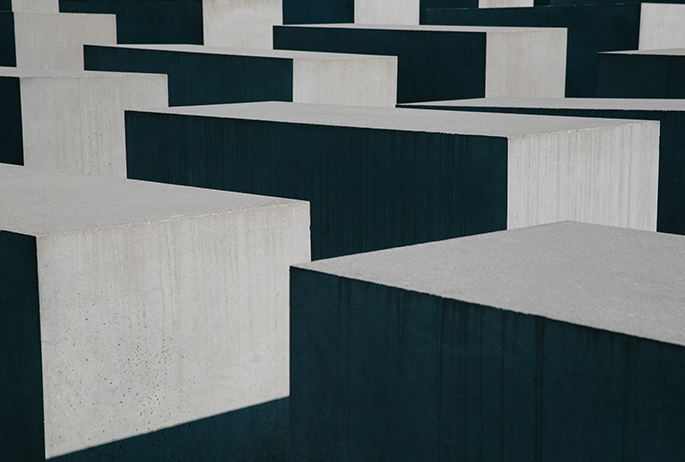
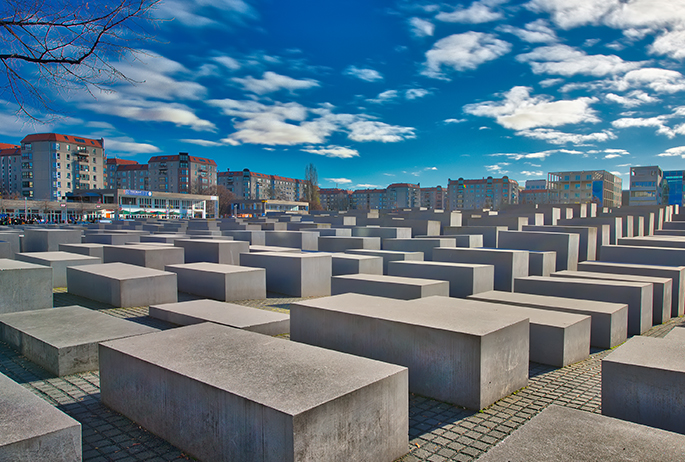
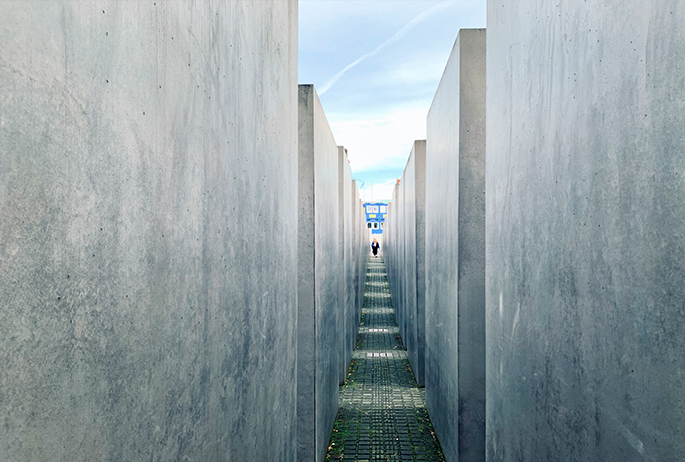
- The Memorial to the Murdered Jews of Europe. Photo: Envato Elements
- The Memorial to the Murdered Jews of Europe. Photo: Envato Elements
- The Memorial to the Murdered Jews of Europe. Photo: Envato Elements
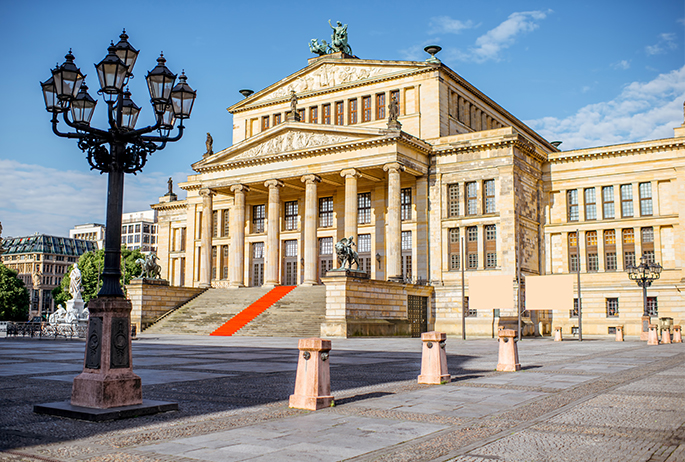
- The Konzerthaus. Photo: Envato Elements
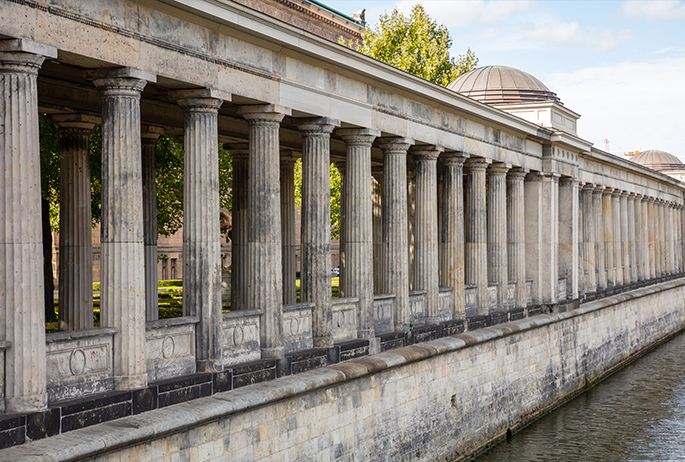
- Colonnade pillars. Photo: Envato Elements
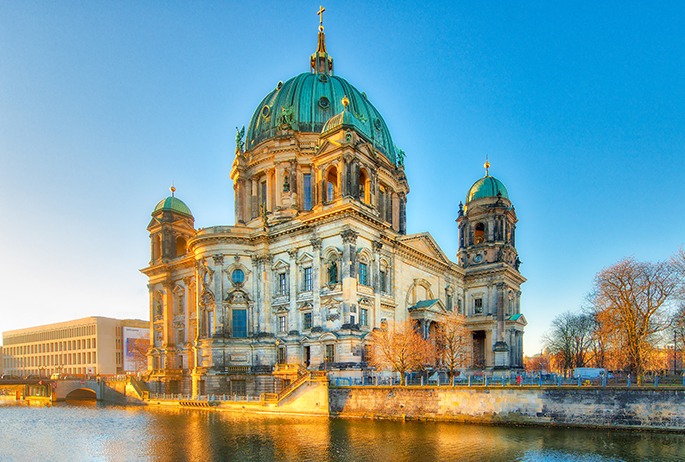
- Berlin Cathedral. Photo: Envato Elements
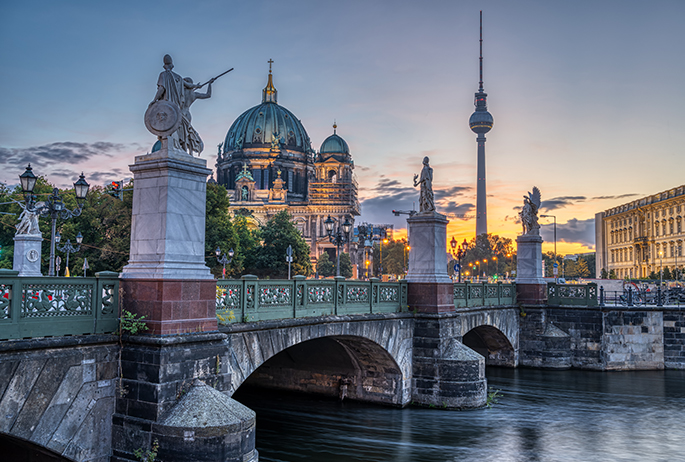
- Schlossbruecke. Photi: Envato Elements
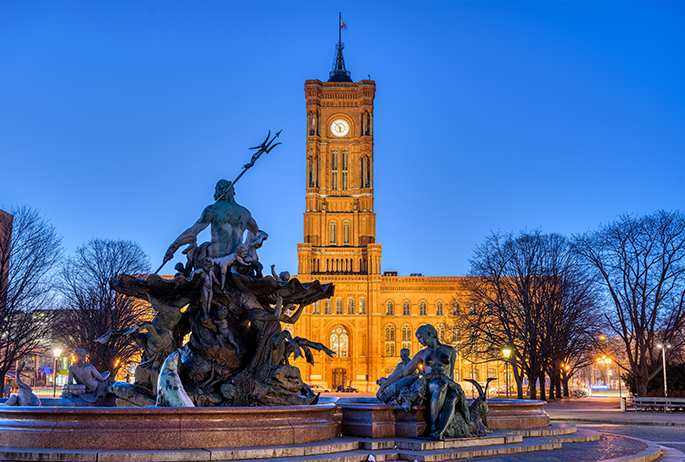
- Rotes Rathaus. Photo: Envato Elements
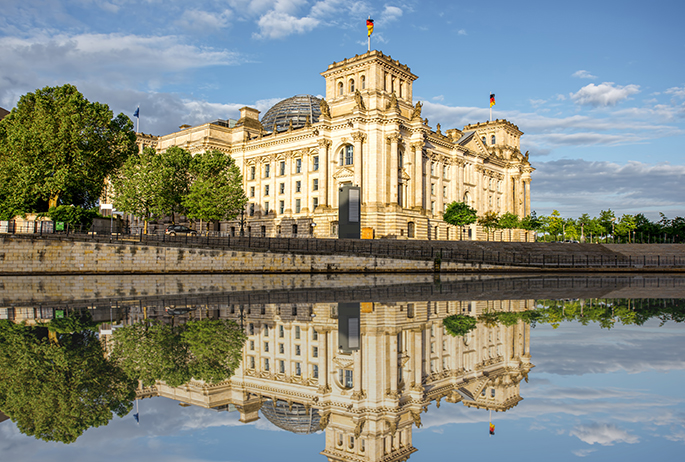 Reichstag Building. Photo: Envato Elements
Where to Stay in Berlin for Museums and Cultural Attractions
Where you stay in Berlin can shape your cultural itinerary. The selection below includes hotels with contemporary art collections, interiors informed by design history, and architectural conversions of historic buildings. Mitte offers access to Museum Island and the galleries around Auguststraße; Charlottenburg connects visitors with C/O Berlin and the galleries around Savignyplatz; Kreuzberg and Friedrichshain provide settings for exploring contemporary art and urban culture.
For a curated selection of boutique and design hotels, chosen for their architecture, interiors, and connection to Berlin’s cultural context, read our guide to the Best Boutique and Design Hotels in Berlin.
Use the interactive map below to compare accommodation locations and rates for your travel dates alongside the museums, galleries, and architectural sites you plan to visit.
Luxury Hotels in Berlin
For a luxury stay in central Berlin, Château Royal Berlin (Mitte) has 93 rooms and suites with contemporary artworks, custom furniture, and vintage pieces, near Brandenburg Gate. A Mediterranean restaurant, cocktail bar, and courtyard dining in fine weather complement the stay. Telegraphenamt (Mitte) offers 97 rooms and suites in the former main telegraph office beside Monbijou Park, close to Museum Island. ROOT Bistro serves breakfast, lunch, and dinner, with a separate cocktail bar. Wilmina (Charlottenburg) brings restrained contemporary interiors into a former women’s prison converted by Grüntuch Ernst Architects, with gardens and interconnected courtyards. Facilities include Lovis Restaurant and Bar, a sauna, gym, and unheated rooftop pool. Orania.Berlin (Kreuzberg) has 41 rooms and suites on Oranienplatz, furnished with solid wood, handwoven carpets, and silk curtains. A restaurant, bar with live music, and gym make it a base for exploring Kreuzberg.
Mid-Range Hotels in Berlin
For a mid-range stay, The Hoxton, Berlin (Charlottenburg) offers 234 rooms with Art Nouveau references near Kurfürstendamm. A lobby bar and outdoor terrace provide places to pause between visits to City West’s galleries and shops. Hotel Q! Berlin (Charlottenburg) has 77 rooms and suites with flowing interiors designed by GRAFT, near Savignyplatz. Facilities include a Thai restaurant, cocktail bar, courtyard, sauna, steam bath, and gym. 25hours Hotel Bikini Berlin (Charlottenburg) offers 149 rooms with city or zoo views, near C/O Berlin and Zoologischer Garten station. NENI restaurant, Monkey Bar, and a sauna included for hotel guests are its principal amenities. Sir Savigny Hotel is another good Charlottenburg option, close to Savignyplatz in the district’s literary quarter. The Circus Hotel, overlooking Rosenthaler Platz, offers a design-oriented base in Mitte surrounded by bars, galleries, and independent shops. Michelberger Hotel (Friedrichshain) has 100 individually configured rooms with wood furnishings, opposite Warschauer Straße station and near the East Side Gallery. A restaurant, café, wine bar, and courtyard give the hotel a sociable atmosphere.
Affordable Hotels in Berlin
For more affordable stays, Lulu Guldsmeden (Tiergarten) offers 81 rooms with Nordic and Balinese influences on Potsdamer Straße, between Tiergarten and Schöneberg. A Lebanese and Mediterranean-inspired restaurant, bar, and planted courtyard provide on-site dining and shared spaces. Hotel the YARD (Kreuzberg) has 55 air-conditioned rooms overlooking a landscaped garden, near the Jewish Museum Berlin. Breakfast is available, alongside a gym and a pool, sauna, and steam bath with an additional access fee; the pool and saunas are closed for maintenance October 4–12, 2026. art’otel berlin mitte, Powered by Radisson Hotels (Mitte) offers 109 rooms and suites featuring works by Georg Baselitz, near Märkisches Museum station. Facilities include Upside Down Bar & Restaurant, a gym, and sauna. HENRI Hotel Berlin (Charlottenburg) has 72 individually furnished rooms with period details in a historic building near Kurfürstendamm. Breakfast, a bar, and an honesty fridge are available, with a light evening meal included Monday through Thursday. The Circus Hostel (Mitte) offers dorm beds and private rooms at Rosenthaler Platz, with private or shared bathrooms depending on the category. A breakfast buffet, microbrewery bar, bike rental, and organized social activities suit travelers looking for a communal stay.
Best Art Museums in Berlin
Museum Island (Mitte)
Why go: Five museum buildings bring together archaeological collections, European sculpture, and nineteenth-century painting within a UNESCO World Heritage ensemble.
Tip: Choose your museums by collection rather than trying to visit the entire island in one day. The Pergamonmuseum remains closed, with a partial reopening scheduled for June 4, 2027.
The Altes Museum presents Greek and Roman antiquities; the Neues Museum includes Egyptian collections, including the bust of Nefertiti, alongside prehistoric and early historical objects. The Alte Nationalgalerie focuses on nineteenth-century painting and sculpture, while the Bode-Museum combines European sculpture with Byzantine art and the Numismatic Collection. The island’s buildings also reveal successive approaches to museum architecture, from Karl Friedrich Schinkel’s Altes Museum to later restorations and additions.
Berlinische Galerie (Kreuzberg)
Why go: Painting, photography, works on paper, and architectural material trace Berlin’s contribution to modern art.
Tip: Begin with “Art in Berlin 1880–1980” for historical context, then explore the temporary exhibitions. The nearby Jewish Museum offers a complementary visit.
The collection presentation follows artistic developments from the late nineteenth century into the 1980s, including Berlin Dada, New Objectivity, and art produced in the divided city. Bringing paintings and photographs together with architectural drawings and archival material gives the museum a perspective grounded in Berlin’s artistic and urban history.
Hamburger Bahnhof – Nationalgalerie der Gegenwart (Moabit)
Why go: Contemporary painting, sculpture, video, and installation unfold across a former railway terminus and its adjoining exhibition halls.
Tip: Use the “Endless Exhibition” guide to find permanently installed works throughout the building, garden, and surrounding spaces.
Hamburger Bahnhof presents the Nationalgalerie’s contemporary collection alongside rotating exhibitions. The former station’s central hall provides a setting for installations that engage with architectural scale, while the wider complex accommodates different media and exhibition formats. The “Endless Exhibition” connects artworks with the history and physical spaces of the museum, extending the visit beyond the temporary galleries.
Jewish Museum Berlin (Kreuzberg)
Why go: Jewish history and culture are presented within Daniel Libeskind’s architecture, where underground axes, concrete voids, and angled spaces address rupture, exile, and absence.
Tip: Reserve a free time slot for the core exhibition and allow time for the Holocaust Tower and Garden of Exile. The museum is closed on Mondays.
“Jewish Life in Germany: Past and Present” traces history from the Middle Ages to the present through objects, personal accounts, and multimedia displays. Libeskind’s zinc-clad building connects to the historic Kollegienhaus underground, making the route through the museum part of its interpretation of German-Jewish history. The architecture and exhibition offer distinct but interconnected ways to encounter that history.
Contemporary Art Spaces in Berlin
Boros Collection (Mitte)
Why go: Contemporary art from a private collection is presented within a converted World War II bunker, bringing artworks into direct relation with its concrete interiors.
Tip: Book a 90-minute guided tour in English or German in advance. Visits take place in small groups, and tickets cannot be refunded or rescheduled.
Karen and Christian Boros’ collection includes works by international artists from 1990 to the present. Successive presentations introduce different selections into the bunker’s rooms, while the guided visit addresses both the exhibited works and the building’s history, from civilian air-raid shelter to warehouse, techno club, and exhibition space.
KW Institute for Contemporary Art (Mitte)
Why go: Temporary exhibitions and commissioned works connect contemporary artistic practice with social, technological, and ecological questions.
Tip: Check exhibition dates before visiting, as the galleries close between programs. Include a stop at the courtyard’s Café Bravo, designed by Dan Graham.
Founded in 1991 in a former margarine factory on Auguststraße, KW operates without a permanent collection. Its program develops through exhibitions, performances, and public discussions, using the complex’s galleries and courtyard as settings for new artistic production. The location also allows a visit to be combined with the surrounding Mitte galleries.
Künstlerhaus Bethanien (Kreuzberg)
Why go: Exhibitions connected to an international studio program offer access to projects developed by artists working in Berlin.
Tip: Use the exhibition entrance at Kottbusser Straße 10 and check the program before visiting. Admission is free; this is a separate institution from Kunstraum Kreuzberg/Bethanien at Mariannenplatz.
Künstlerhaus Bethanien combines artist residencies, studios, and public exhibitions, linking artistic production with its presentation. The exhibition program introduces individual practices developed during artists’ stays, while scheduled Open Studios provide opportunities to encounter work in progress. Read our in-depth article on Künstlerhaus Bethanien for more on its history and residency program.
KINDL – Centre for Contemporary Art (Neukölln)
Why go: Contemporary installations, painting, sculpture, and video are presented in the industrial spaces of a former brewery.
Tip: Check the programs for both the Kesselhaus and Maschinenhaus before visiting. Café Babette provides a stop in the former brewhouse, where six large copper brewing vessels remain.
Built between 1926 and 1930 in an Expressionist architectural style, the brewery retains its brick façades and industrial interiors. The Kesselhaus accommodates site-specific projects within a tall boiler hall, while the Maschinenhaus presents solo and group exhibitions across several floors, including a dedicated video space. The different volumes allow artworks to be experienced in relation to the building’s scale and former use.
C/O Berlin (Charlottenburg / Hardenbergstraße 22–24)
Why go: Photography and visual media, with exhibitions ranging from historical bodies of work to contemporary approaches to image-making.
Tip: Weekend tours include an English-language option, with participation included in the admission ticket. Check the current schedule and register on site.
C/O Berlin presents exhibitions, artist talks, screenings, and educational programs in Amerika Haus. Designed by Bruno Grimmek and built in 1956–57, the former American cultural center became the foundation’s exhibition venue in 2014. Its program combines established photographers with emerging artists and examines how images are produced, circulated, and interpreted.
Contemporary Art Galleries in Berlin
Contemporary Fine Arts (Charlottenburg)
Contemporary Fine Arts presents painting, sculpture, photography, and works on paper by artists including Cecily Brown, Dana Schutz, Sarah Lucas, and Raymond Pettibon. The program encompasses figurative painting, sculptural assemblage, and photographic practices, with changing exhibitions across the ground and first floors of its gallery at Grolmanstraße 32–33, near Savignyplatz.
Galerie EIGEN + ART (Mitte)
Galerie EIGEN + ART brings together figurative painting and practices involving sound, technology, installation, and moving images. Its roster includes Neo Rauch, Tim Eitel, and Carsten Nicolai. The Berlin gallery is at Auguststraße 26; EIGEN + ART Lab, at Torstraße 220, presents a separate program with different opening days. Check the main gallery’s website before visiting, as it currently reports a technical closure affecting the Stef Heidhues exhibition.
carlier | gebauer (Kreuzberg)
Founded in 1991, carlier | gebauer presents an international program spanning sculpture, installation, film, photography, painting, and drawing. Its former industrial hall at Markgrafenstraße 67 accommodates large-scale installations, while exhibitions explore both conceptual approaches and the material properties of artworks. The gallery opens Tuesday through Saturday.
KÖNIG GALERIE (Kreuzberg)
KÖNIG GALERIE presents contemporary art in St. Agnes, a former Brutalist church designed by Werner Düttmann and converted by Arno Brandlhuber. Established here in 2015, the gallery shows emerging and established international artists working across sculpture, painting, video, photography, and installation. The concrete architecture is an integral part of the visit. The gallery is at Alexandrinenstraße 118–121, with Café westberlin on the premises.
Galerie Neu (Mitte)
Galerie Neu represents artists including Jana Euler, Cosima von Bonin, Anne Collier, and Jeremy Shaw. Its program spans figurative painting, photographic appropriation, sculptural installation, and moving images, with changing exhibitions focused on individual artistic practices. The gallery is at Linienstraße 119 abc, near Auguststraße. Check exhibition dates before visiting, since the office may remain open between shows.
Sprüth Magers (Mitte)
Sprüth Magers presents postwar and contemporary art in a former dance hall at Oranienburger Straße 18, where it opened in 2008. Its program includes Cindy Sherman, Barbara Kruger, Rosemarie Trockel, and Jenny Holzer, alongside younger artists working across painting, sculpture, photography, text, and moving images. Representation of both living artists and estates allows exhibitions to encompass new work and historical presentations.
Street Art and Public Art in Berlin
Consider booking a guided street art tour for a closer look at Berlin’s murals, graffiti, and the stories behind them.
East Side Gallery (Friedrichshain)
Created in 1990, the East Side Gallery extends along 1.3 kilometers of the Berlin Wall on Mühlenstraße, between Ostbahnhof and Oberbaumbrücke. Its murals express hopes for freedom and political change alongside anxieties about the future after the end of Germany’s division. Many were repainted by their artists during subsequent restoration campaigns, making the site both a historical monument and an evolving record of public art. Access is free around the clock; the visitor information center at Mühlenstraße 73 provides historical context and guided-tour information.
Teufelsberg (Grunewald)
Teufelsberg combines the remains of a Cold War listening station with large-scale murals across its former military buildings. Painted surfaces, deteriorating structures, and antenna domes give the artworks a setting shaped by the site’s surveillance history, with views across the surrounding forest and Berlin. The site is at Teufelsseechaussee 10 and requires an admission ticket. Visitors can explore independently or join a guided tour; check the official opening calendar, as closing times vary by month.
URBAN NATION Museum for Urban Contemporary Art (Schöneberg)
URBAN NATION presents changing exhibitions on street art, graffiti, and urban contemporary art at Bülowstraße 7. Converted by GRAFT, the building incorporates modular facade panels that serve as surfaces for artworks, extending the museum’s exhibition approach into the street. Inside, the program explores the history and contemporary development of urban art. Admission is free, and the museum is closed on Mondays. The Martha Cooper Library offers a further resource for research into graffiti and street art, with visits requiring advance registration.
Urban Spree (Friedrichshain)
Urban Spree brings together contemporary urban art exhibitions, artist residencies, a bookshop, concerts, and a beer garden at Revaler Straße 99 in the RAW complex. Its Artist Wall, facing Warschauer Straße, presents large-scale murals by successive invited artists, while the indoor gallery develops a separate exhibition program. The bookshop specializes in graffiti, street art, photography, and independently published zines. The outdoor wall is freely accessible; check the gallery and concert calendars separately when planning a visit.
Berlin Design Museums and Cultural Spaces
Bauhaus-Archiv / Museum für Gestaltung (Charlottenburg, temporary venue)
Why go: Changing exhibitions and workshops explore Bauhaus ideas across art, design, and architecture while the main museum is closed.
Tip: Visit The Temporary Bauhaus-Archiv at Knesebeckstraße 1. Admission is free, and individual visitors do not need to register.
It opens Monday through Saturday, from 10 a.m. to 6 p.m.
The temporary venue combines an exhibition area, public programs, and the Bauhaus-Shop within Haus Hardenberg, a postwar modernist building. Its changing presentations offer focused perspectives on Bauhaus history and its relevance today. The main museum in Tiergarten is undergoing restoration and expansion by Staab Architekten, with reopening expected in winter 2027/28.
Kunstgewerbemuseum (Tiergarten / Kulturforum)
Why go: Furniture, glass, porcelain, metalwork, textiles, and fashion trace European decorative arts and design from the Middle Ages to the present.
Tip: Choose the Kulturforum site for the broad collection overview and Fashion Gallery. Schloss Köpenick is a separate venue devoted to decorative interiors from the sixteenth through eighteenth centuries.
The Kunstgewerbemuseum connects craftsmanship with the development of industrial design, from inlaid furniture and embroidered textiles to modern manufactured objects. Departments devoted to Jugendstil, Art Deco, and fashion extend the collection beyond traditional decorative arts. Rolf Gutbrod’s building, completed in 1985 and later modernized by Kuehn Malvezzi, arranges the galleries around an open stairwell that connects the exhibition levels.
Werkbundarchiv – Museum der Dinge (Mitte)
Why go: An Open Storage display examines everyday objects alongside recognized designs, revealing how production, consumption, and taste shape material culture.
Tip: The museum is at Leipziger Straße 54, near Spittelmarkt station. It opens Thursday through Monday, from noon to 7 p.m.; visits to the archive and library require advance arrangements.
The permanent exhibition explores twentieth- and twenty-first-century product culture through the history of the Deutscher Werkbund. Dense displays invite comparisons between objects designed, manufactured, used, repaired, and discarded, questioning how distinctions between “good” and “bad” design are established. The presentation also considers modernism’s design principles in relation to contemporary social and environmental concerns.
Berlin Architecture Guide: Historic and Contemporary Buildings
Quartier Schützenstraße (Mitte)
Designed by Aldo Rossi and completed in 1998, Quartier Schützenstraße reinterprets Berlin’s traditional urban block through a composition of brightly colored façades, varied materials, and historical references. Its apparent division into individual houses recalls the neighborhood’s earlier plot structure, while residential and commercial spaces form a connected ensemble. Among its architectural quotations is a façade inspired by the courtyard of Rome’s Palazzo Farnese. Walk along Schützenstraße, Charlottenstraße, Zimmerstraße, and Markgrafenstraße to see how changes in color, window proportions, and surface materials articulate the block.
James-Simon-Galerie (Mitte / Museum Island)
Designed by David Chipperfield Architects and opened in 2019, the James-Simon-Galerie is a contemporary entrance building for Berlin’s historic Museum Island. Its slender columns recall the colonnades of the neighboring museums, but their simplified forms give the building a clearly modern character. Broad staircases connect the waterfront with an elevated terrace, while a small courtyard framed by slender columns creates a quieter space beside the Neues Museum. The building contains visitor facilities, temporary exhibition spaces, an auditorium, and a café. Visit to see how contemporary architecture can introduce new public spaces into a historic setting: the columns frame views of the surrounding buildings, and the terrace offers a different perspective on the Kupfergraben canal.
Museum for Architectural Drawing (Prenzlauer Berg)
The Tchoban Foundation’s Museum for Architectural Drawing connects its subject with the architecture of the building itself. Designed by Sergei Tchoban and Sergey Kuznetsov and opened in 2013, the museum rises beside the former Pfefferberg brewery as a stack of offset volumes topped by a glass penthouse. Enlarged fragments of historical architectural drawings are cast in relief across its sand-colored concrete façades, giving the exterior a tactile surface that rewards close inspection. Inside, changing exhibitions explore architectural drawing as both a design practice and an independent artistic medium. The museum is at Christinenstraße 18a; check the exhibition calendar before planning an interior visit.
Futurium (Mitte)
Designed by Richter Musikowski, Futurium brings a sculptural contemporary building to the area between Berlin Hauptbahnhof and the Spree. Its façades combine patterned cast glass with folded metal reflectors, producing a shifting appearance as the light changes, while projecting roofs shelter the entrance forecourts. Large panoramic windows connect the exhibition spaces with the surrounding city, and the roof integrates photovoltaic and solar thermal panels alongside a public Skywalk. Exhibitions examine possible futures through humanity’s relationships with nature and technology. Admission is free; the rooftop walkway opens seasonally from spring to autumn and may close at short notice in poor weather.
Victory Column (Tiergarten)
Designed by Heinrich Strack and completed in 1873, the Victory Column combines a monumental column, sculptural reliefs, and a gilded figure of Victoria into one of Berlin’s most recognizable landmarks. Originally erected near the Reichstag to commemorate Prussia’s military victories, it was enlarged and moved to the Großer Stern in 1938–39 during the Nazi regime’s plans to reshape the capital. Its present position emphasizes the long avenues radiating through Tiergarten, making the monument a useful vantage point for understanding the park’s relationship with the city. A spiral staircase of 285 steps leads to the viewing platform; there is no lift.
Oberbaumbrücke (Friedrichshain / Kreuzberg)
Completed in 1896, Oberbaumbrücke spans the Spree with red-brick arches, Gothic Revival detailing, and twin towers designed by Otto Stahn. Its two-level structure combines an elevated railway with a street crossing and pedestrian arcade, giving everyday transport the architectural presence of a city gateway. Following wartime damage and Berlin’s division, restoration after reunification introduced a new central span designed by Santiago Calatrava, bringing a contemporary structural element into the historic bridge. Walk through the covered arcade to appreciate its masonry and vaulted spaces, then view the bridge from the riverbank to see the relationship between its towers, arches, and upper railway deck.
Berlin History and Memorials
Memorial to the Murdered Jews of Europe (Mitte)
Designed by American architect Peter Eisenman and opened in 2005, the Memorial to the Murdered Jews of Europe commemorates the six million Jewish victims of the Holocaust. Near Brandenburg Gate, rows of concrete blocks of varying heights stand across uneven ground, creating passages where the surrounding city gradually disappears from view. The abstract design offers a space for remembrance, while the underground Information Centre provides essential historical context through documents, personal accounts, and the stories of Jewish families across Europe. Allow time for both parts of the memorial to connect the experience above ground with the lives and events documented below. Admission is free, and the outdoor memorial is accessible around the clock.
For broader historical context, consider joining a guided tour of Berlin that also covers key Third Reich memorials and Cold War sites, offering a deeper understanding of the city’s 20th-century history.
Berlin Wall Memorial and Documentation Center (Mitte / Bernauer Straße)
The Berlin Wall Memorial on Bernauer Straße explains how the border divided the city and transformed the lives of its residents. Original sections of the Wall and surviving traces of the border installations form part of an outdoor exhibition about forced relocations, escape attempts, and those who died at the border. The Documentation Center examines the political history of Berlin’s division, while its observation tower offers a view across the preserved border strip, helping visitors understand the scale and arrangement of the barriers. The grounds also include the Chapel of Reconciliation and the Window of Remembrance, dedicated to the victims. Begin at the Visitor Center at Bernauer Straße 119, then explore the outdoor site and Documentation Center at number 111. Admission is free; the indoor centers are closed on Mondays.
Stolpersteine: Memorial Stones in Berlin’s Streets (Citywide)
Created by artist Gunter Demnig, Stolpersteine are small brass-plated memorial stones embedded in pavements, usually outside the homes where victims of Nazi persecution lived before they were forced to leave. Each inscription records a person’s name and details of their fate, connecting individual lives with the buildings and neighborhoods they once called home. Many commemorate Jews murdered in the Holocaust; others honor survivors, people who escaped, and members of other persecuted groups. Encountered throughout Berlin, these modest memorials bring remembrance into everyday life. Pause to read the inscriptions while exploring the city: they reveal the personal histories behind familiar streets and residential façades.
Topography of Terror (Kreuzberg)
Topography of Terror is a documentation center on the former site of the Gestapo, SS leadership, and Reich Security Main Office headquarters, institutions central to Nazi persecution and mass murder. Through historical photographs and documents, the permanent exhibition explains how these organizations operated and carried out crimes in Germany and across occupied Europe, including the persecution and murder of Jews. Outside, visitors can explore the remains of the former complex and an exhibition about Berlin under Nazi rule. The visit provides essential context for understanding how state institutions organized and enforced terror, complementing the city’s memorials to the victims. The center is at Niederkirchnerstraße 8, and admission is free.
Design Shops and Concept Stores in Berlin
STUDIO183 (Charlottenburg / Bikini Berlin, Budapester Straße 50): STUDIO183 focuses on independent fashion by Berlin-based and international designers. Its selection includes clothing, jewelry and accessories, with an emphasis on experimental silhouettes and individual approaches to making and styling. The current shop is on the first floor of Bikini Berlin.
The Store X (Mitte / Soho House, Torstraße 1): Set within Soho House Berlin, The Store X brings together contemporary fashion, furniture, books, music and design objects across two floors. The selection places clothing alongside objects for the home, while exhibitions and cultural events extend the program beyond retail. The Store Kitchen provides a place to eat during a visit.
Bikini Berlin (Charlottenburg / Budapester Straße 38–50): Bikini Berlin is a shopping complex that combines permanent boutiques and showrooms with temporary shops housed in modular pop-up boxes. Its changing mix of fashion and design retailers sits alongside Kantini, a food market designed by Studio Aisslinger. A publicly accessible rooftop terrace overlooks the neighboring Berlin Zoo.
Andreas Murkudis (Tiergarten / Potsdamer Straße 81 & 77): Andreas Murkudis presents fashion, accessories, furniture and design objects in a former Tagesspiegel printing facility at Potsdamer Straße 81. The spacious industrial interior allows visitors to examine the materials and construction of the pieces, with a separate wing devoted to furniture. Nearby, Store 77 hosts temporary presentations exploring individual artists, designers and brands through art, fashion and furniture.
Voo Store (Kreuzberg / Oranienstraße 24): Located in a courtyard off Oranienstraße, Voo Store brings together contemporary fashion and products by local and international designers. Its selection connects clothing and accessories with an interest in modern design and visual culture. Inside the shop, Voo Deli serves coffee and pastries, stocks natural wines and food products, and provides additional seating in the courtyard.
Bauhaus-Shop (Charlottenburg / Knesebeckstraße 1): The Bauhaus-Archiv’s shop is currently located beside the temporary Bauhaus-Archiv in Haus Hardenberg while the museum’s main building undergoes renovation and expansion. It stocks Bauhaus-related publications, authorized reproductions of historical designs and contemporary everyday objects. The adjoining temporary venue offers exhibitions and programs on design, architecture and society.
do you read me?! (Mitte / Auguststraße 28): This independent magazine and bookshop specializes in international publications on art, photography, architecture, fashion and design. Its selection extends to graphic design, typography and wider cultural subjects, bringing specialist books together with independent magazines. It is a useful stop for readers interested in contemporary publishing and the visual language of print.
Modulor (Kreuzberg / Moritzplatz, Prinzenstraße 85): Modulor is a specialist materials and art-supply store spread across two floors at Moritzplatz. Its range includes paper, card, wood, plastics, textiles and tools for drawing, model-making and other creative work, alongside picture frames and furniture. The shop offers a practical view of the materials used by architects, artists and designers, with cutting and processing services available on site.
Vintage Shops and Flea Markets in Berlin
Sing Blackbird (Neukölln / Sanderstraße 11): Sing Blackbird is a small vintage and second-hand clothing shop in Neukölln’s Reuterkiez. Its selection includes clothing, shoes and accessories, offering a more compact browsing experience than Berlin’s larger second-hand stores. The shop focuses on individually selected pieces rather than the volume associated with department-store-style resale.
PICKNWEIGHT (Mitte / Münzstraße 19; Kreuzberg / Bergmannstraße 102): PICKNWEIGHT sells vintage clothing by weight, with the final price determined by each item’s weight and assigned price category. The Berlin shops offer clothing and accessories across different styles and periods, making them suitable for browsing a broad selection rather than searching for a single designer. The Kreuzberg branch is located in the courtyard at Bergmannstraße 102.
HUMANA Kaufhaus (Friedrichshain / Frankfurter Tor 3): HUMANA’s second-hand department store at Frankfurter Tor spans five floors, with clothing, shoes and accessories for adults and children, as well as home textiles. The selection includes everyday garments and vintage pieces, offering a considerably broader range than a small specialist boutique. Allow time to browse the different departments rather than expecting a tightly edited designer selection.
Nowkoelln Flowmarkt (Neukölln / Maybachufer): Held beside the Landwehrkanal, Nowkoelln Flowmarkt brings together private second-hand sellers, art, music and handmade goods. Its stalls offer a changing selection rather than a fixed inventory, with the canal-side setting forming part of the experience. The market takes place on selected Sundays, generally at two-week intervals during its season; check the organizer’s calendar before visiting.
Mauerpark Flea Market (Prenzlauer Berg / Bernauer Straße 63–64): Held every Sunday beside Mauerpark, this flea market combines second-hand clothing, vinyl records, furniture and household objects with jewelry, handmade goods and food stalls. The range extends beyond vintage, bringing private sellers and commercial traders together in one market. In the warmer months, a visit can also coincide with Bearpit Karaoke in the park’s amphitheatre, a separate event from the market itself.