Amsterdam’s art museums, contemporary galleries, and design spaces offer perspectives on Dutch art history and international visual culture. This guide covers art, photography, film, design, and architecture, with practical tips for planning visits across the city.
You’ll also find selected hotels by neighborhood and budget, helping you choose where to stay near the museums, galleries, and cultural attractions you plan to visit.
To access our exclusive Amsterdam Treasure Map, simply click here and become a Culture Treasures member. The map pins every place in this guide and adds bonus cafés, boutiques and cultural venues.
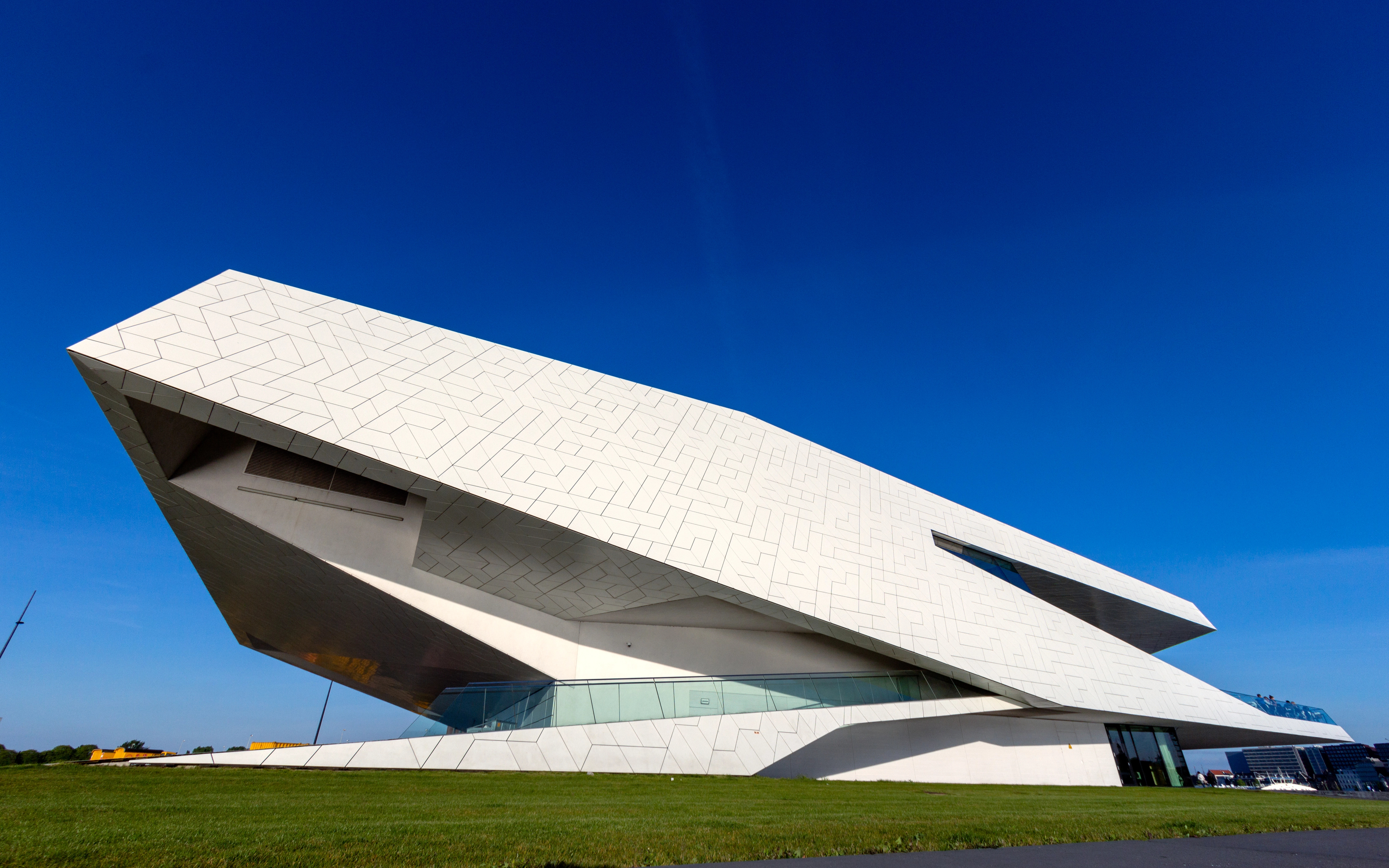 Eye Filmmuseum on the IJ waterfront in Amsterdam-Noord
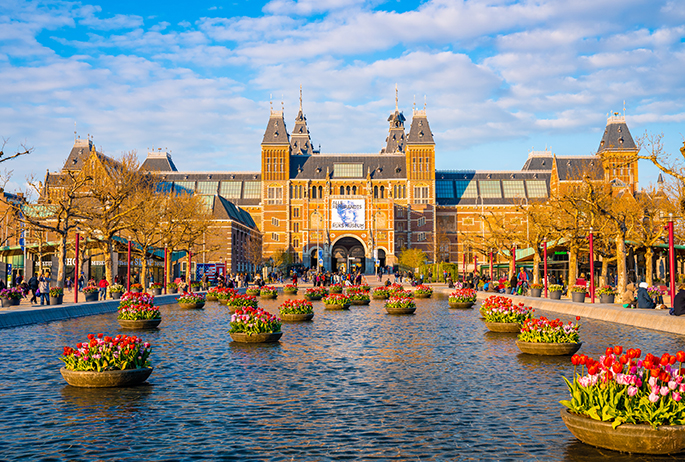 Rijksmuseum Amsterdam
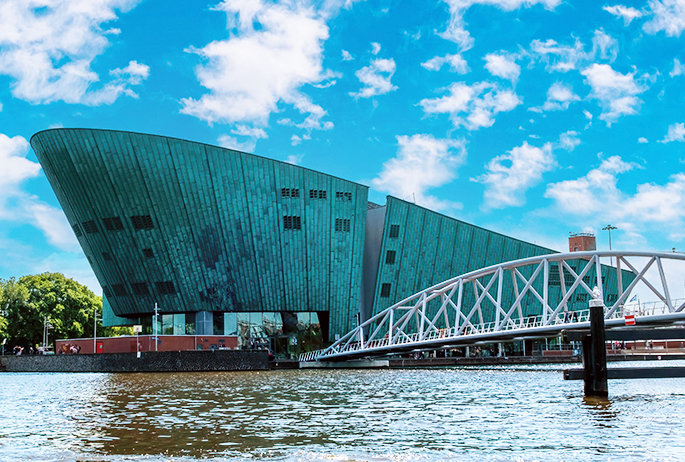
 NEMO Science Museum Amsterdam
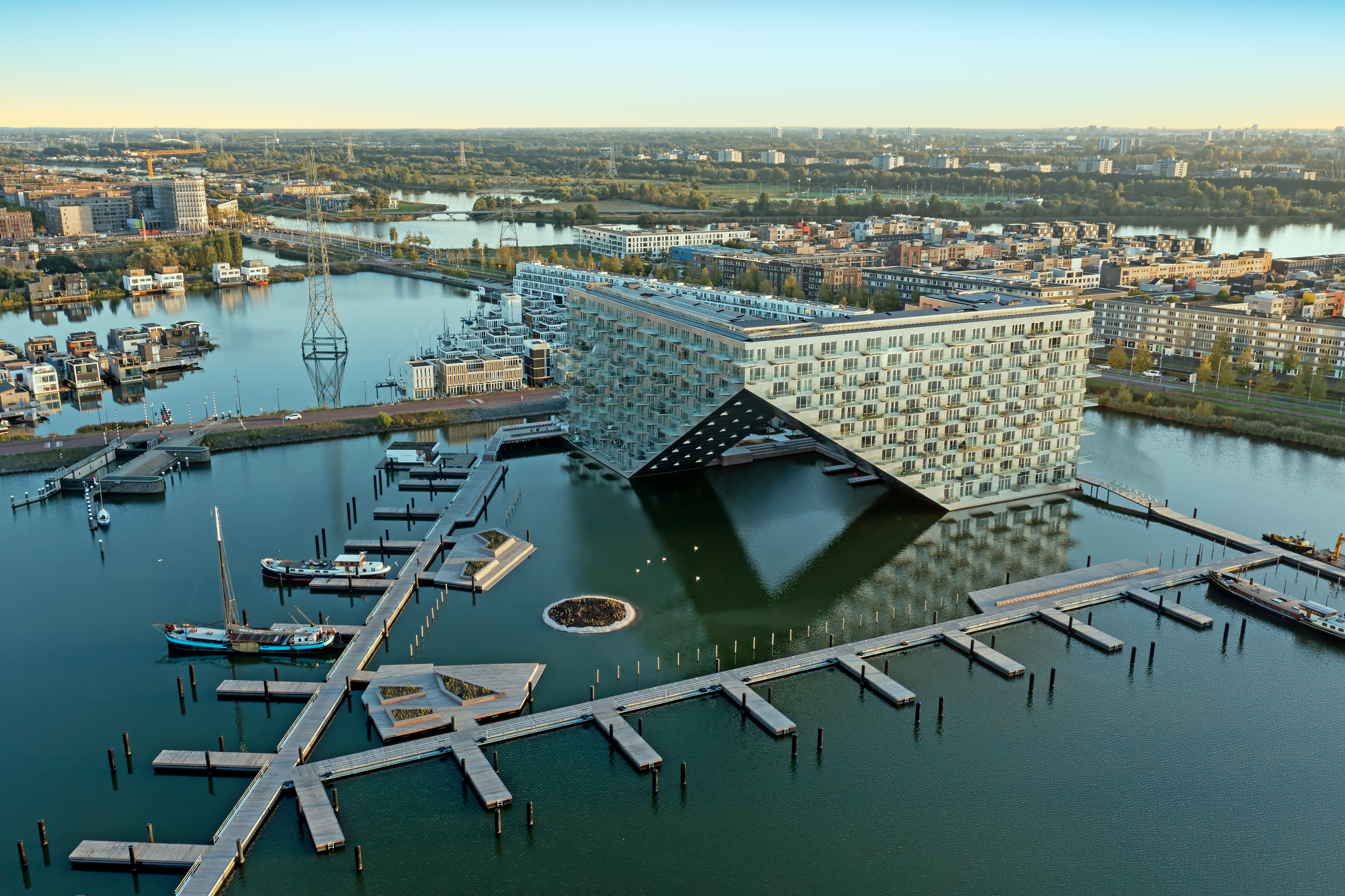
 Sluishuis in IJburg, by BIG and Barcode Architects
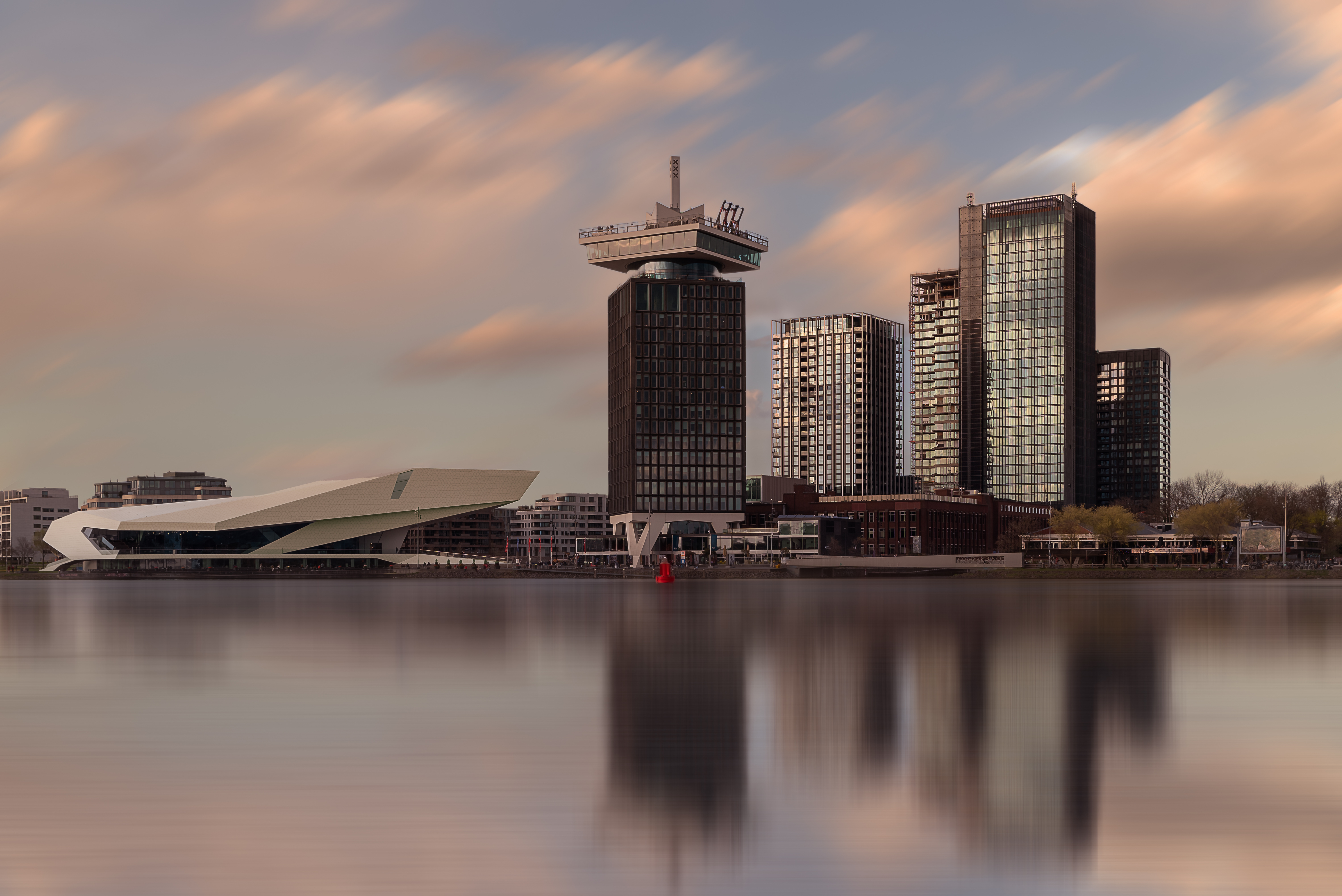
 Eye Filmmuseum and the A’DAM Tower facing the city across the IJ
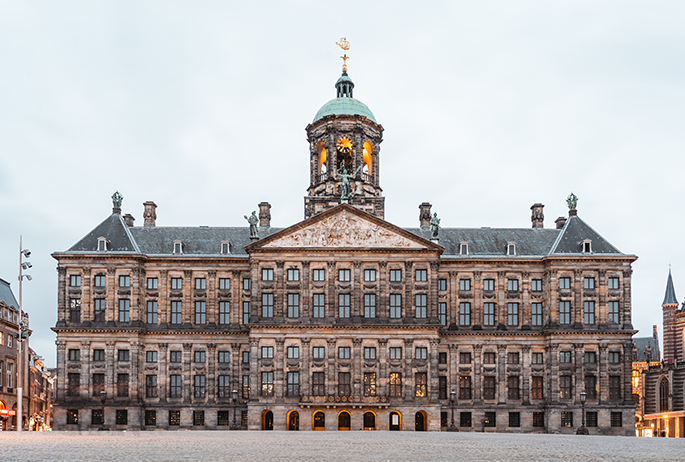
- Dam Square Amsterdam
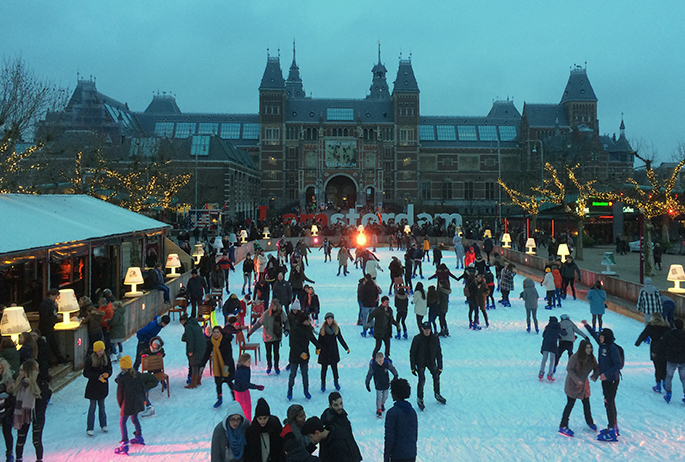
- Rijksmuseum Amsterdam
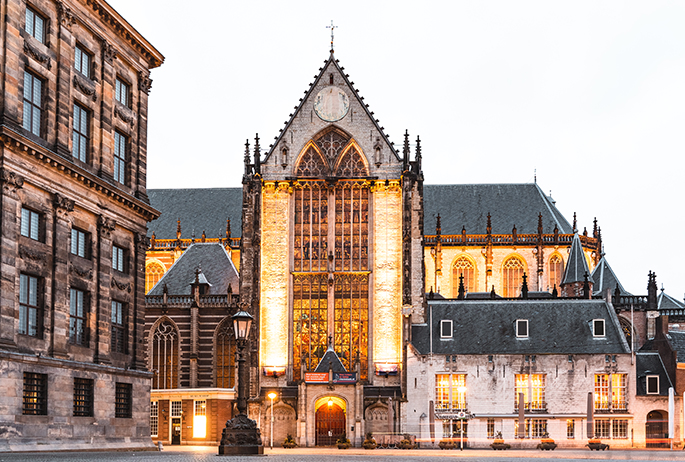
- Nieuwe Kerk Amsterdam
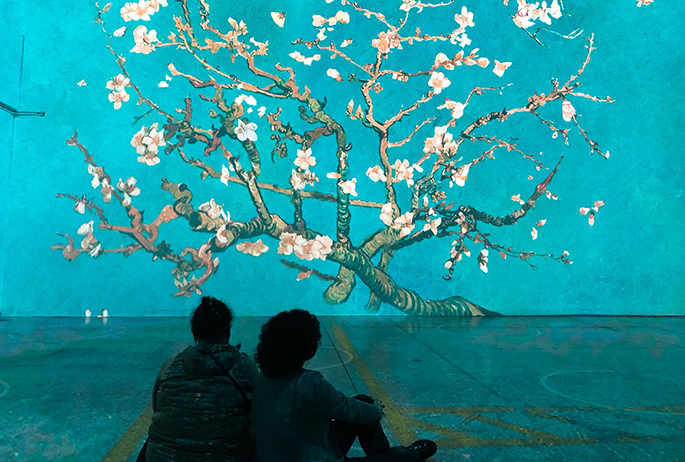
- Van Gogh Museum Amsterdam
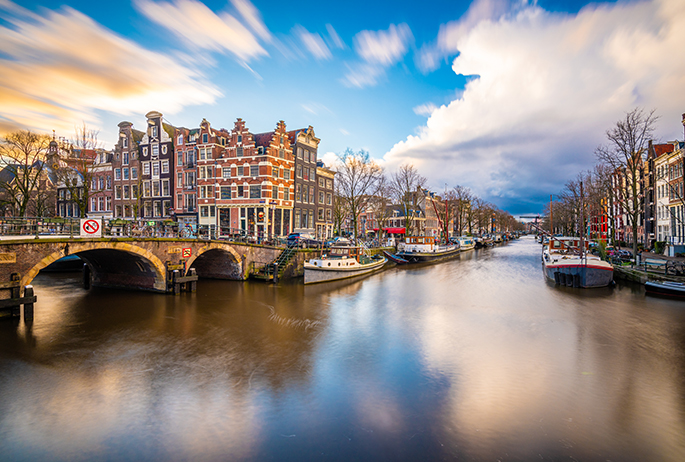
- Amsterdam
- Amsterdam
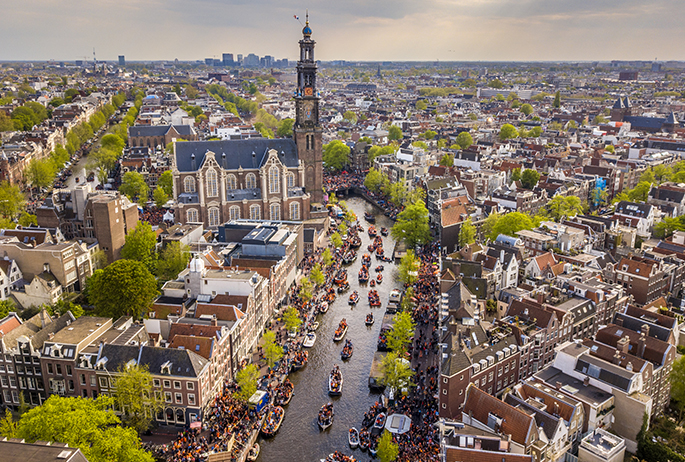 Westerkerk on King’s Day, Amsterdam.
Where to Stay in Amsterdam for Museums and Cultural Attractions
Our curated selection includes hotels and hostels near Amsterdam’s museums, galleries, and cultural attractions, alongside apartment-style accommodation and converted bridge houses. Each recommendation outlines the neighborhood, facilities, and room features that matter when choosing a base. The price categories are a general guide: rates vary by travel dates, room type, and booking conditions.
For a closer look at boutique and design hotels, including their architecture, interiors, locations, and facilities, read our Amsterdam hotels guide.
Use the interactive map below to compare accommodation locations and rates for your travel dates alongside the museums, galleries, and architectural sites you plan to visit.
Luxury Hotels in Amsterdam
Mandarin Oriental Conservatorium, Amsterdam (Museum Quarter) Set in a former bank and music conservatory near Museumplein, the hotel offers restaurants, a bar, a gym, and the Akasha spa with an indoor pool, sauna, and hammam. Pulitzer Amsterdam (Canal Belt / Nine Streets) Spread across 25 historic canal houses, Pulitzer offers gardens, a restaurant, cocktail bar, and gym. Family and connecting rooms are available; canal views depend on the room category. Tivoli Doelen Amsterdam Hotel (City Center / Amstel) This historic riverside hotel offers rooms and suites near Rembrandtplein, with breakfast and dinner at Omber restaurant. Book a river-view category if an Amstel outlook is important. Pillows Grand Boutique Hotel Maurits at the Park (Amsterdam-Oost / Oosterpark) Beside Oosterpark, Pillows offers restaurants, a cocktail bar, a guest lounge, and a gym. Its urban spa includes a private sauna and hydrojet massage bed by reservation.
Mid-Range Hotels in Amsterdam
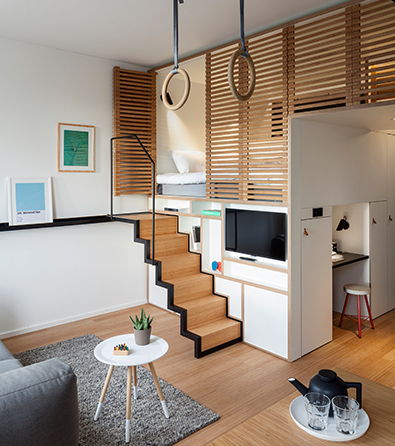
Boutique Hotel The Craftsmen (City Center / Singel) Individually designed rooms reference traditional Dutch trades, with single rooms and larger suites available. Continental breakfast is served in the canal-facing gallery or in your room. Hotel Mercier (Jordaan / Rozenstraat) Mercier offers rooms and suites with vintage-inspired furnishings, a bar, and vegan restaurant Bonboon. Check the category carefully: Indoor Rooms have no direct daylight. The Hoxton Amsterdam (Canal Belt / Herengracht) This canal-house hotel offers air-conditioned rooms, shared lounges, and Lotti’s restaurant and bar. Room sizes and views vary; select a canal-view category if desired. INK Hotel Amsterdam – MGallery (City Center / Nieuwezijds Voorburgwal) Set in former newspaper premises, INK offers rooms and suites, PRESSROOM restaurant and bar, and a 24-hour gym. Dam Square and Amsterdam Centraal are within walking distance. The College Hotel Amsterdam, Autograph Collection (Oud-Zuid / Roelof Hartstraat) A former school building near Museumplein offers rooms and suites, a bar and lounge, and a restaurant where hospitality students gain practical experience. Sir Adam Hotel, Amsterdam (Amsterdam-Noord / A’DAM Tower) Across the IJ from Amsterdam Centraal, Sir Adam offers a gym, music library, and THE BUTCHER Social Club. Reach the hotel by the free Buiksloterweg ferry and a short walk. Mr. Jordaan (Jordaan / Bloemgracht) This small canal-side hotel offers single, twin, double, and triple rooms, with breakfast available. Views vary by category, and attic accommodation has sloping ceilings. Zoku Amsterdam (City Center / Weesperstraat) Zoku’s lofts include kitchens, living areas, work tables, and raised beds reached by steps. Shared facilities include a rooftop restaurant, bar, coworking spaces, terraces, and a self-service laundry.
Affordable Hotels and Hostels in Amsterdam
The Social Hub Amsterdam City (Amsterdam-Oost / Wibautstraat) Hotel rooms include private bathrooms and desks, with kitchenettes in selected studios. Shared facilities include a restaurant-bar, 24-hour gym, workspaces, and laundry services. Volkshotel (Amsterdam-Oost / Wibautstraat) Volkshotel offers standard and individually designed rooms, a café, workspaces, and rooftop restaurant-bar Canvas. Guests can use the rooftop hot tubs and sauna; the hotel also hosts music and evening events. ClinkMama (City Center / Valkenburgerstraat) ClinkMama offers mixed and female-only dorms and private rooms, with a communal kitchen, lounge, and café-bar. Check bathroom arrangements, as some private rooms use shared facilities.
Converted Bridge Houses in Amsterdam
SWEETS – Sluis Haveneiland (IJburg) An 81-square-meter converted bridge-control building for two guests, with a small kitchen and lake views. A minimum two-night stay applies, and all guests must be over 21. SWEETS – Oosterdoksdraaibrug (Oosterdok / Near Amsterdam Centraal) This 64-square-meter bridge house accommodates up to four adults, with a separate bedroom, two balconies, and a bathtub. All guests must be over 21.
Best Art Museums in Amsterdam
Stedelijk Museum Amsterdam (Museumplein)
Why go: Modern and contemporary art, with collections spanning furniture, product design, and graphic design.
Tip: Check the current displays before visiting, especially if your main interest is design, as only selections from the museum’s collections are on view.
The Stedelijk examines modern and contemporary visual culture through art and design. Its collections include painting, sculpture, photography, moving images, furniture, design objects, posters, and artists’ books. Collection displays and temporary exhibitions explore artistic developments alongside the design of everyday objects and printed materials, making the museum particularly relevant to visitors interested in graphic communication and material culture.
Rijksmuseum (Museumplein)
Why go: Dutch painting and decorative arts, including works by Rembrandt, Vermeer, and Frans Hals.
Tip: Reserve a start time and include the Night Watch Gallery, where the painting’s research and conservation take place in public view.
The Rijksmuseum presents 800 years of Dutch art and history through approximately 8,000 objects. Paintings are shown alongside furniture, ceramics, silver, and ship models, connecting artistic production with domestic life, trade, and historical events. The Gallery of Honour focuses on seventeenth-century painting, including Vermeer’s The Milkmaid. In the adjoining Night Watch Gallery, Rembrandt’s painting is undergoing research and conservation inside a purpose-built glass chamber, allowing visitors to observe aspects of the preservation process.
Van Gogh Museum (Museumplein)
Why go: The world’s largest collection of Van Gogh’s work offers a detailed view of his development as a painter.
Tip: Book a timed ticket online in advance; admission includes the permanent collection and current temporary exhibitions.
The Van Gogh Museum traces the artist’s development from his studies of rural life in the Netherlands to his encounters with the Parisian avant-garde and his work in southern France. Paintings, drawings, and letters illuminate his experiments with color, brushwork, and composition, as well as his ambitions and relationships with other artists. The museum’s collections include The Potato Eaters and Sunflowers, while works by his contemporaries and temporary exhibitions place his practice within the artistic debates of his time.
Rembrandt House Museum (Jodenbuurt)
Why go: Rembrandt’s reconstructed home and studios reveal the materials and working methods of a seventeenth-century artist.
Tip: Check the daily schedule for paint-making or etching demonstrations, which are included with museum admission.
Rembrandt lived and worked in this house on Jodenbreestraat from 1639 to 1658. Its domestic rooms and studios have been reconstructed using an inventory of his possessions drawn up in 1656, showing how household life, teaching, and artistic production were accommodated within the same building. Exhibitions examine his work and influence, while demonstrations introduce processes such as preparing paint from pigments and printing an etched plate.
Foam Photography Museum (Canal Belt / Keizersgracht)
Why go: Photography exhibitions span documentary, fashion, historical work, and contemporary approaches to image-making.
Tip: Check the exhibition program before visiting and allow time for the bookshop if you are interested in photobooks and photography magazines.
Foam presents established photographers alongside emerging artists, with up to four exhibitions running simultaneously at its museum on Keizersgracht. Its program considers photography as an artistic practice and a means of documenting and interpreting social realities, sometimes extending into video and installation. The museum also publishes Foam Magazine and operates a bookshop, café, and Foam Editions gallery, where visitors can explore and purchase photographic prints.
Contemporary Art Spaces in Amsterdam
Amsterdam’s contemporary art spaces support exhibition making, artistic research, and experimentation across disciplines. The venues below offer different ways to engage with current artistic practice, from artist-led exhibitions and installations to workshops and residency presentations. Check their programs before visiting, particularly for events at De Ateliers and the Rijksakademie.
W139 (Warmoesstraat)
Why go: For experimental contemporary art developed through collaboration between artists, with exhibitions accompanied by performances, screenings, and discussions.
Tip: Check the event calendar alongside the exhibition listings to see whether your visit coincides with a performance, screening, or artist talk.
W139 is an artist-led space for the production and presentation of contemporary art in central Amsterdam. Founded in 1979, it supports artists in developing new projects and organizing exhibitions that address contemporary social and cultural questions. Its program emphasizes experimentation and collective approaches to making and presenting art. Located on Warmoesstraat, W139 offers a place to encounter Amsterdam’s independent art scene within the historic city center.
P/////AKT (Pakhuis Wilhelmina)
Why go: For large-scale solo exhibitions in which artists develop new work in response to the exhibition space.
Tip: Visit the exhibition venue at Groenhoedenveem 2, with the entrance on Veemkade. The Zeeburgerpad address listed elsewhere belongs to the organization’s studios and postal facilities.
P/////AKT is a nonprofit contemporary art space that invites emerging artists to develop substantial solo presentations. Artists create new work in response to the dimensions and character of the venue, treating the exhibition as a connected whole. This approach gives visitors an opportunity to follow an artist’s ideas across an entire presentation. The exhibition space is in Pakhuis Wilhelmina and opens Thursday through Sunday during exhibitions.
Mediamatic (Dijksgracht)
Why go: For artistic experimentation connecting contemporary art and design with biology, ecology, and living materials.
Tip: Review the workshop calendar before visiting and reserve a place through the relevant event page. The workshop and exhibition programs offer different ways to experience Mediamatic’s research.
Mediamatic brings artists, designers, and researchers together through residencies, exhibitions, events, and practical workshops. Its Living Labs explore the relationship between artistic practice and scientific experimentation, while public activities include fermentation and fragrance workshops. Located on Dijksgracht, Mediamatic is particularly relevant to visitors interested in biodesign, sensory research, and the use of biological processes in art and design.
Waag Futurelab (City Center / Nieuwmarkt)
Why go: For public workshops and discussions examining how design, art, and technology shape society.
Tip: Choose an event from the current calendar and check its location, language, and booking requirements before visiting.
Waag Futurelab combines cultural programming with research into technology and its social implications. Its work brings artists, designers, researchers, and citizens together through practical experimentation and critical discussion. Public activities at the historic Waag building on Nieuwmarkt include workshops exploring digital fabrication, biotechnology, textiles, and other forms of making. A scheduled event offers an opportunity to engage with the research and working processes behind these subjects.
De Ateliers / Woonhuis (Stadhouderskade)
Why go: For exhibitions curated by participating artists and opportunities to see work developed at De Ateliers.
Tip: Check the Woonhuis program and De Ateliers’ event calendar before visiting. Woonhuis has a separate entrance on the right side of Stadhouderskade 86.
Woonhuis is De Ateliers’ public project space, established in the building’s former caretaker’s home. Its program is collectively curated and run by participants at De Ateliers and includes exhibitions, performances, screenings, and workshops. De Ateliers also presents Offspring, an annual exhibition of work developed by second-year participants, alongside public Artist Talks. Together, these programs offer insight into artistic development through both exhibitions and discussions of practice.
Rijksakademie (Sarphatistraat)
Why go: For Open Studios, when resident artists share work developed through sustained research and experimentation.
Tip: Plan your visit around the announced Open Studios dates or a public lecture, performance, or screening. Check the event page for admission and booking details.
The Rijksakademie is an international artist residency that supports independent research and the development of new work. Residents have access to studios, technical workshops, specialist guidance, and a research library, alongside exchanges with fellow artists and visiting art professionals. Its annual Open Studios offers the public an opportunity to encounter work developed during the residency. Lectures, performances, and screenings provide further occasions to engage with contemporary artistic practices and debates. Read our in-depth article on the Rijksakademie for a closer look at its residency program and artistic community.
Contemporary Art Galleries in Amsterdam
Stigter van Doesburg (Jordaan)
Stigter van Doesburg presents contemporary art across media, from painting and photography to installation and performance. Its program supports emerging and mid-career artists, with a strong representation of women artists and an emphasis on sustained relationships with individual practitioners. At Elandsstraat 90, the gallery offers a focused introduction to contemporary artistic production within the Jordaan’s network of exhibition spaces.
Annet Gelink Gallery (Jordaan)
Founded in 2000, Annet Gelink Gallery presents painting, sculpture, photography, video, installation, and performance by emerging and established international artists. Its exhibitions address social, political, and cultural questions through individual artistic practices. The gallery is at Laurierstraat 187–189, with an additional exhibition program in The Bakery project space; check both presentations when planning a visit.
Upstream Gallery (Centrum / Kloveniersburgwal)
Upstream Gallery focuses on conceptual and digital art, presenting artists whose work examines technology, contemporary society, and the conditions of image-making. Its program combines exhibitions in the gallery with online presentations of works created for digital environments. Set within a seventeenth-century canal building at Kloveniersburgwal 95, the gallery provides a setting for comparing digital practices with artworks experienced in physical space.
KochxBos Gallery (Jordaan)
KochxBos Gallery presents figurative and surreal imagery alongside work engaging with popular culture, identity, and social conventions. Its artists include Ray Caesar, Claire Partington, and Sarah Maple, whose different approaches encompass digitally constructed images, ceramic sculpture, and politically engaged visual art. The gallery is at Eerste Anjeliersdwarsstraat 36, near Noordermarkt, making it a separate stop from the galleries around Elandsstraat and Laurierstraat.
GRIMM (Canal Belt / Leidsegracht)
GRIMM presents an international program of contemporary art, supporting emerging and mid-career artists working across different media. Its Amsterdam gallery is at Leidsegracht 38–40, alongside its locations in London and New York. Solo and group exhibitions are complemented by gallery publications that provide further context for the artists’ practices. Check the Amsterdam exhibition calendar before visiting, as the gallery’s website also lists programs at its other locations.
Amsterdam Architecture Guide: Buildings and Landmarks
Eye Filmmuseum (Amsterdam-Noord / IJ Waterfront)
Designed by Delugan Meissl Associated Architects and opened in 2012, Eye Filmmuseum connects film culture with the architecture of movement and perception. Its angular exterior changes appearance as visitors move around the building, while the interior alternates between open gathering spaces and enclosed exhibition galleries and cinemas. At its center, the stepped Arena faces a glazed waterfront facade, framing views across the IJ. Visit for the architecture alongside a film screening or exhibition; the museum also offers architectural tours for groups by arrangement.
NEMO Science Museum (Oosterdok)
Renzo Piano designed NEMO above the IJ tunnel, using the tunnel’s curvature to inform the museum’s rising profile. Its copper-green exterior is balanced by an interior organized around a central staircase, with restrained surfaces that direct attention toward the science exhibitions. The roof extends the building into public space through an elevated city square overlooking Amsterdam. Its renewed landscape brings planting, biodiversity, and environmental monitoring into the visitor experience. Access to the rooftop square is free during its opening hours, via the exterior stairs on the building’s east side.
Anne Frank House (Canal Belt / Prinsengracht)
The Anne Frank House preserves the Secret Annex where Anne Frank, her parents Otto and Edith, her sister Margot, Hermann and Auguste van Pels, their son Peter, and Fritz Pfeffer hid from Nazi persecution between 1942 and 1944. The museum connects the surviving spaces with photographs, documents, and Anne’s original diary, placing her writing within the history of the Holocaust. The Annex remains unfurnished at Otto Frank’s request. Timed tickets are sold only through the museum’s official website and are released every Tuesday at 10:00 a.m. Amsterdam time for visits six weeks later. For additional historical context, consider a guided walking tour of the surrounding area; these tours do not include admission to the Anne Frank House.
Sluishuis (IJburg)
Completed in 2022, Sluishuis by Bjarke Ingels Group and Barcode Architects adapts the enclosed courtyard block to a waterfront setting. One corner rises above the water, creating an opening into the central harbor, while the opposite side descends through a sequence of planted terraces. Aluminum facades reflect the surrounding water, contrasting with the timber terraces and jetties. Walk around the waterfront promenade to examine the cantilever and the building’s changing profile. A public route also leads over the roof, but access is controlled, so check the posted opening times before planning an ascent.
Valley (Zuidas)
Designed by MVRDV and fully opened in 2022, Valley combines housing, offices, shops, and restaurants in three towers linked by a planted central landscape. Smooth glass outer facades contrast with irregular stone surfaces and projecting terraces facing the interior, giving the complex the appearance of an excavated rock formation. Landscape designer Piet Oudolf selected planting for the different conditions created by height, wind, and sunlight. Follow the public pedestrian route from street level toward the central valley to see how circulation, planting, and building form are integrated; the residential terraces remain private.
Gerrit Rietveld Academie (Amsterdam-Zuid / Fred. Roeskestraat)
The Gerrit Rietveld Academie campus brings together three approaches to architecture for art education. Gerrit Rietveld’s main building, completed in 1966, is joined by the Benthem Crouwel building from 2003 and the FedLev building, fully in use since 2019. The ensemble connects the academy’s architectural history with its changing requirements for studios, workshops, and shared spaces. The school adopted Rietveld’s name in 1968. Plan an interior visit around an announced public event, such as the Graduation Show, when student work and performances provide an opportunity to experience the working campus.
Museum Het Schip (Spaarndammerbuurt)
Designed by Michel de Klerk and built between 1919 and 1921 for the Eigen Haard housing association, Het Schip is a major example of Amsterdam School architecture. Sculptural red-brick facades combine varied window shapes, entrances, lettering, and decorative details within a social housing complex. Museum Het Schip, in the former school building, examines the relationship between architectural design, housing reform, and everyday life. Join the museum’s guided tour to study the exterior and visit the former post office and museum apartment, where the design of interiors and furnishings extends the architectural ideas expressed in the facades.
Pathé Tuschinski (City Center / Reguliersbreestraat)
Commissioned by Jewish cinema entrepreneur Abraham Tuschinski and designed by architect Hijman Louis de Jong, the cinema opened in 1921. Its architecture combines Amsterdam School, Art Nouveau, and Art Deco influences. Successive restorations have preserved and reconstructed its decorative interiors while updating projection equipment and seating. Still a working cinema, it received the royal designation in 2021, its centenary year.
The German bombing of Rotterdam destroyed Tuschinski’s cinemas there in May 1940. During the Nazi occupation, the Amsterdam theater was taken over by the German film company Tobis and renamed Tivoli, removing its Jewish founder’s name. Tuschinski and his business partner Hermann Gerschtanowitz were murdered at Auschwitz in 1942; their partner Hermann Ehrlich was murdered at Sobibor in 1943, and De Jong at Auschwitz in 1944. After the war, the theater’s original name was restored. A plaque in the lobby commemorates its Jewish founders, while audio and guided tours explore its architecture and history.
Design Shops and Showrooms in Amsterdam
De Negen Straatjes / Nine Streets (Canal Belt) A compact shopping district of nine streets connecting the Singel, Herengracht, Keizersgracht, and Prinsengracht canals. Independent boutiques and specialty stores sell contemporary fashion, vintage clothing, jewelry, and home accessories, alongside galleries and cafés. Exploring the cross-streets and adjoining canal fronts on foot brings together shopping and a closer look at the architecture of Amsterdam’s historic canal district.
Droog (City Center / Staalstraat) Established in 1993, Droog helped shape Dutch conceptual design by questioning the forms, materials, and meanings of everyday objects. Its Amsterdam venue, in a historic building on Staalstraat, brings together a gallery, a café-restaurant, a garden, and spaces for performances and events. The interiors and furnishings provide an opportunity to encounter Droog’s approach beyond individual objects, with design integrated into the experience of the building. Check the current exhibition and event calendar before visiting.
The Frozen Fountain (Canal Belt / Prinsengracht) Established in 1992, The Frozen Fountain brings together contemporary furniture, lighting, textiles, and objects alongside artworks. Its early collaborations with Piet Hein Eek, Hella Jongerius, and Richard Hutten connect the showroom to a formative period in Dutch design. Work by later generations, including Sabine Marcelis and Floris Wubben, extends this focus through different approaches to materials and making. The selection is particularly relevant to visitors interested in the connections between functional design, craft, and contemporary art.
Moooi Amsterdam (Canal Belt / Utrechtsestraat) Moooi’s showroom brings together the brand’s furniture, lighting, carpets, wallcoverings, and accessories in a series of interior displays. Seeing the pieces in person offers a closer understanding of their proportions, materials, and textures, as well as how they work together within a room. Visits are by appointment from Tuesday through Saturday. Visitors without an appointment can ring the bell, but entry depends on staff availability.
Vlieger (City Center / Amstel) Established in 1869, Vlieger specializes in paper and artists’ materials, including Japanese papers, cardboard, drawing and painting supplies, notebooks, and bookbinding materials. The shop is a useful stop for illustrators, graphic designers, and visitors interested in paper craft, with opportunities to compare paper textures, colors, and weights in person. Its selection supports projects ranging from drawing and collage to bookbinding and the presentation of artwork.
Vintage Clothing Shops in Amsterdam
Episode (City Center / Multiple Locations) Episode sells secondhand clothing and accessories, with a broad selection of denim, workwear, sportswear, jackets, and shirts. Its central Amsterdam branches include Berenstraat in the Nine Streets and Waterlooplein, making it easy to incorporate a visit into different walking routes. The extensive selection suits visitors looking to browse across styles rather than focus on a particular designer or period.
Laura Dols (Canal Belt / Nine Streets) Laura Dols specializes in vintage clothing with a particular focus on 1950s styles and evening wear. The Wolvenstraat shop carries dresses, hats, shoes, bags, and accessories, alongside formal clothing for men. Its emphasis on occasion dressing distinguishes it from shops focused mainly on denim and sportswear. Visitors looking specifically for vintage wedding dresses should arrange an appointment at the separate bridal atelier in Houthavens.
Zipper (Canal Belt / Nine Streets; Haarlemmerbuurt) Zipper’s Huidenstraat shop has been part of the Nine Streets since 1984, with a second branch on Haarlemmerstraat. The selection includes secondhand and vintage clothing from several decades, alongside accessories and reworked pieces. It offers a broad introduction to vintage fashion, with an emphasis on clothing that can be incorporated into an everyday wardrobe.
Bij Ons Vintage (City Center / Nieuwezijds Voorburgwal; Canal Belt / Nine Streets) Bij Ons Vintage sells clothing and accessories for men and women at its Nieuwezijds Voorburgwal and Reestraat shops. The selection includes branded sportswear, baseball jackets, and retro clothing, alongside upcycled pieces such as patchwork denim jackets. This combination makes it relevant to visitors interested in both secondhand fashion and the adaptation of existing garments.
Marbles Vintage & Design (Haarlemmerbuurt; De Pijp; City Center / Staalstraat) Marbles sells vintage clothing and accessories for men and women, including denim, leather coats, and bags. Its branches on Haarlemmerdijk, Ferdinand Bolstraat, and Staalstraat provide options for browsing in different parts of Amsterdam. The selection focuses on wearable vintage across styles, making it a useful stop for visitors looking for clothing and accessories rather than a specialist collection of designer fashion.
Rumors Vintage & Design (Haarlemmerbuurt) Established in 2011, Rumors has two shops on Haarlemmerstraat, at numbers 29 and 99. Its selection emphasizes the 1960s and 1970s, with printed garments, suede clothing, denim, leather bags, silk scarves, sunglasses, and jewelry, alongside pieces from later decades. The focus on period silhouettes and accessories makes it particularly relevant to visitors interested in the materials and styling of these eras.
CKX Studio (City Center / Sint Annenstraat) CKX Studio brings together vintage denim, workwear, and military clothing with artworks and objects centered on shades of blue. The selection includes reworked garments, cyanotype prints, and turquoise jewelry, connecting clothing with an interest in textiles, craft, and image-making. Its focused approach makes it a relevant stop for visitors interested in indigo, the construction of workwear, and the reuse of older garments.
Cafés and Historic Bars in Amsterdam
Café de Pels (Canal Belt / Nine Streets) Café de Pels on Huidenstraat is a traditional Amsterdam brown café with longstanding connections to the city’s artistic and intellectual life. Newspapers and magazines are available to read, and the menu includes breakfast, lunch, and bar snacks. Its location makes it a convenient stop while exploring the independent shops and galleries of the Nine Streets. Seating is available without reservations.
Café de Jaren (City Center / Nieuwe Doelenstraat) Opened in 1990, Café de Jaren combines a spacious interior with high ceilings and a reading table, alongside a waterside terrace and balcony overlooking the Amstel. The setting offers different ways to pause between visits, whether over coffee indoors or a meal beside the water. Located between Muntplein and the Muziektheater, the café accepts walk-in visitors and does not take reservations.
Toki (Haarlemmerbuurt / Binnen Dommersstraat) Toki is a coffee shop near Haarlemmerdijk with an interior that brings together Scandinavian and Japanese design influences. The space combines terrazzo surfaces, simple furnishings, and seating arranged for both individual visitors and small groups. Its location on Binnen Dommersstraat makes it a convenient stop while exploring the independent boutiques and vintage shops along Haarlemmerstraat and Haarlemmerdijk.
Winkel 43 (Jordaan / Noordermarkt) Winkel 43 is a corner café on Noordermarkt, known for its Dutch apple pie. Its position at the junction with Westerstraat makes it a convenient stop while exploring the Jordaan’s shops, streets, and canals. Visit for coffee and a slice of pie, with seating inside and on the terrace facing the square.
Wynand Fockink (City Center / Pijlsteeg) Wynand Fockink’s historic tasting room on Pijlsteeg, near Dam Square, offers an introduction to Dutch jenever and liqueurs. The business traces its origins to a distillery established in 1679, which Wynand Fockink took over in 1724. Visitors can explore traditional spirits in the tasting room and purchase bottles from the adjoining liquor store, connecting a visit with Amsterdam’s history of distilling.
The Offline Club (Various Locations Across Amsterdam) The Offline Club organizes phone-free gatherings at cafés and other venues across Amsterdam, with time for reading, drawing, writing, and conversation. Its program also includes dinners and other social events. Each gathering takes place at a location listed in the event calendar, so check the venue, format, and booking requirements before attending.
More Cultural Attractions in Amsterdam and Beyond
Amsterdam Light Festival (Various Locations / Canal District)
Amsterdam Light Festival presents temporary light installations along the city’s waterways and public spaces each winter. Artists use light, movement, and reflections to create works that respond to their surroundings, offering a different perspective on the canals after dark. Visitors can explore the festival on foot or by boat, following the route published for each edition. The next edition runs from November 26, 2026, to January 17, 2027; check the current route, illumination hours, and available tours before visiting.
Heesterveld Creative Community (Amsterdam-Zuidoost / Bijlmer)
Heesterveld is a creative community that brings together living spaces, studios, and cultural activity in Amsterdam-Zuidoost. Its colorful buildings form a setting for artists, musicians, filmmakers, and other creative practitioners, with public events connecting their work to the surrounding neighborhood. A visit is best planned around an announced exhibition, performance, or community gathering, as the complex also includes private homes and working studios.
ARTIS Amsterdam Royal Zoo (Plantage)
Founded in 1838, ARTIS combines a zoo and botanical gardens with historic buildings, a planetarium, and an aquarium originally opened in 1882. The aquarium reopened in June 2026 after a five-year restoration, with displays exploring aquatic life and the importance of water. The site also has a significant wartime history: Jews and members of the resistance hid here during the German occupation. Visitors interested in the wider relationship between people and nature can also explore ARTIS-Groote Museum or ARTIS-Micropia, checking admission arrangements for each.
“Wake Me Up When I’m Famous” (De Pijp / Frans Halsstraat)
This text-based artwork pairs the phrase “Wake Me Up When I’m Famous” with a bench in front of a residential street façade. Its simple composition turns an everyday setting into a public backdrop for photographs, connecting street art with the performance of identity in social media. Treat it as a short stop while exploring De Pijp, and respect the entrances and privacy of nearby residents.
Zaanse Schans (Zaanstad / Day Trip from Amsterdam)
Zaanse Schans is a heritage area beside the River Zaan, where historic wooden buildings and working windmills reveal the region’s industrial and craft traditions. Museums and demonstrations introduce weaving, barrel-making, and the use of wind power to process raw materials. The outdoor area is freely accessible, while museums and windmills charge admission. Take a direct train from Amsterdam Centraal to Zaandijk Zaanse Schans, a journey of approximately 17 minutes, followed by a 15-minute walk across the bridge, or book a guided tour from Amsterdam.