Rome brings together ancient monuments, major museums, churches, and contemporary institutions, making it one of Europe’s richest cities for cultural travel. From the Vatican Museums, the Sistine Chapel, and the Galleria Borghese to landmarks such as the Colosseum and the Pantheon, along with newer institutions like MAXXI and MACRO, the city offers a wide cultural range across both historic and modern settings. This guide also helps you plan where to stay in Rome while exploring key cultural areas such as the historic center, Trastevere, Monti, and Prati.
To access our exclusive Rome Treasure Map, simply click here and become a Culture Treasures member. The map pins every place in this guide and adds bonus cafés, boutiques and cultural venues.
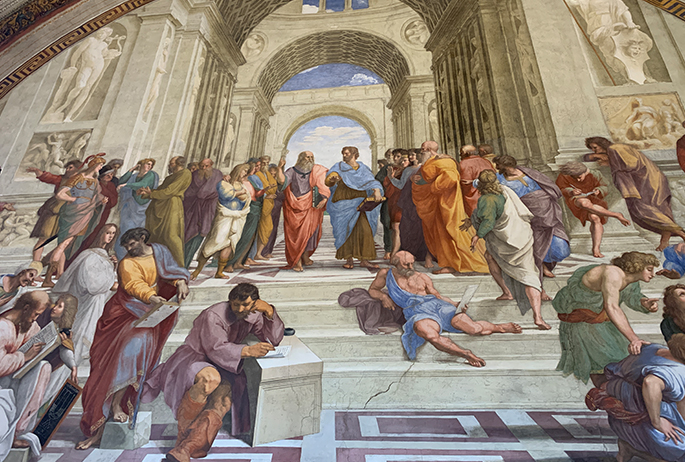
 Vatican Museums. Photo: Shachaf Dekel
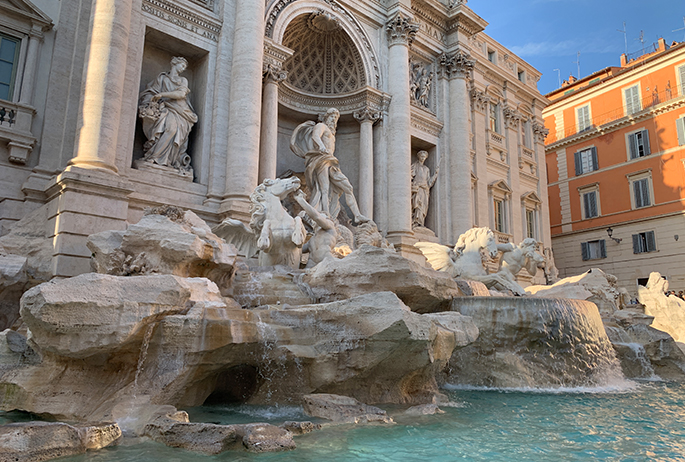
- Trevi Fountain. Photo: Shachaf Dekel
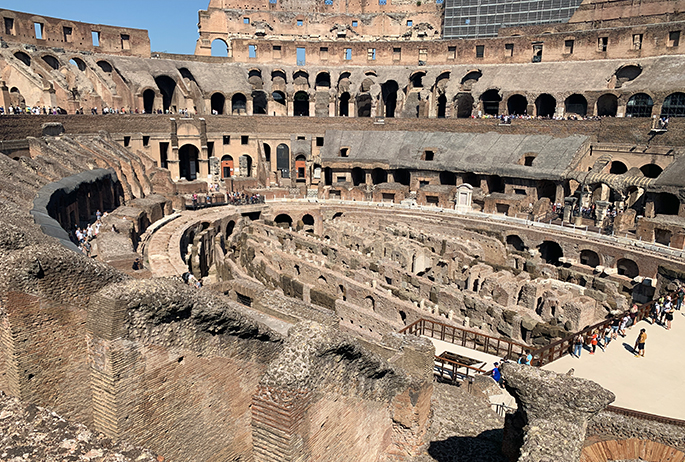
- The Colosseum. Photo: Shachaf Dekel
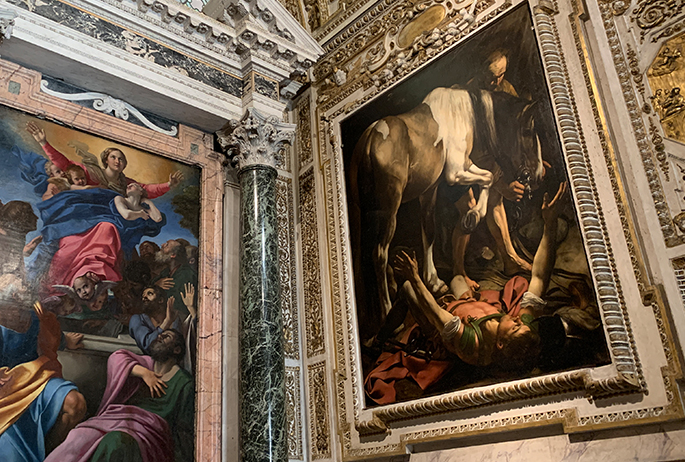
- Basilica of Santa Maria del Popolo. Photo: Shachaf Dekel
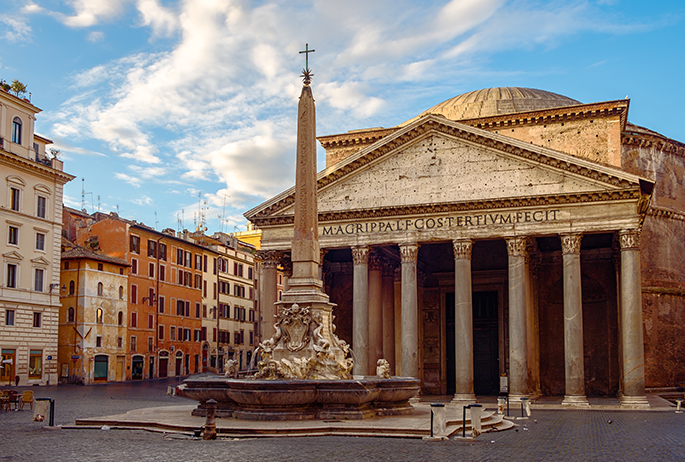
- Pantheon. Photo: Envato Elements
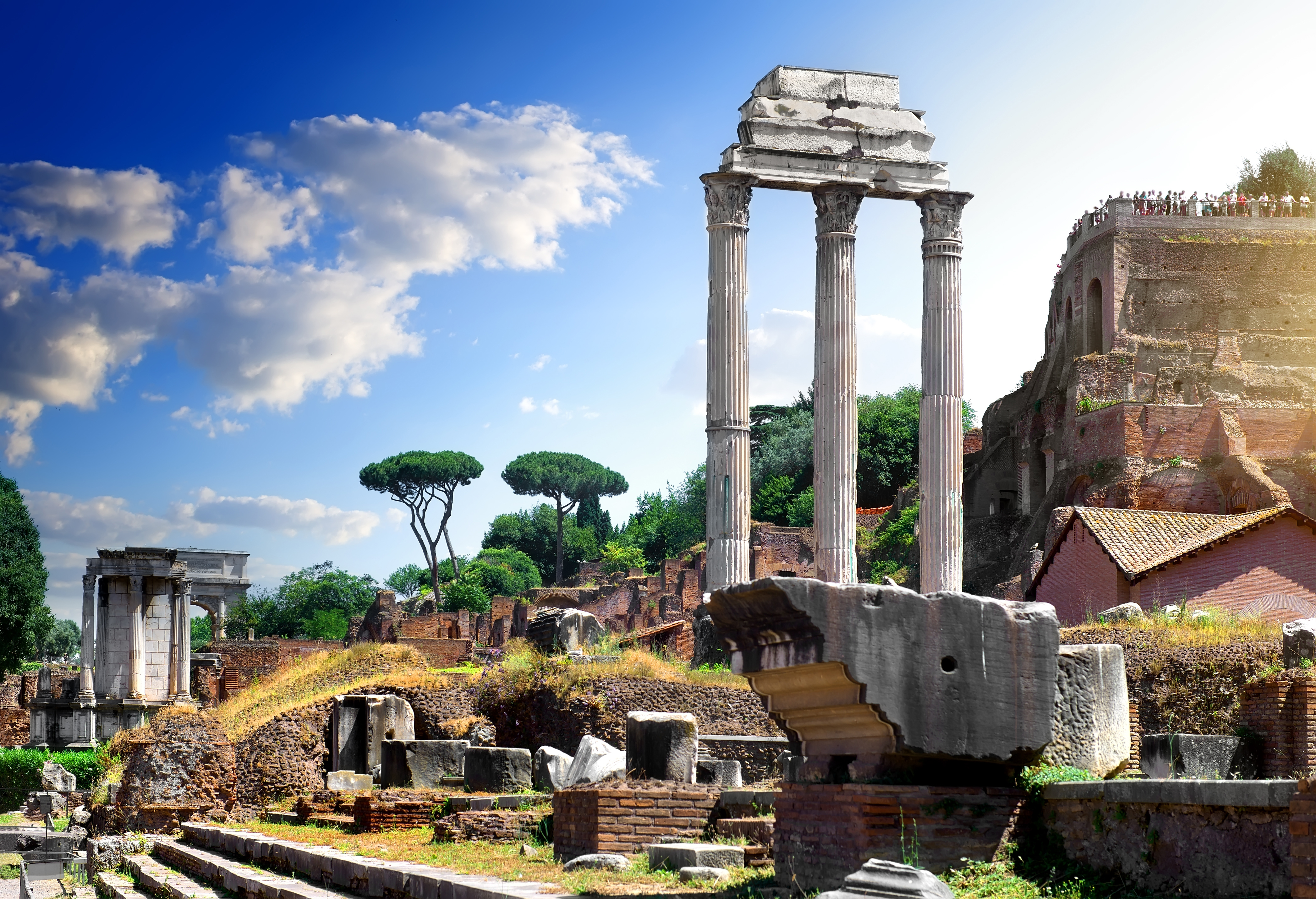
 Roman Forum. Photo: Envato Elements
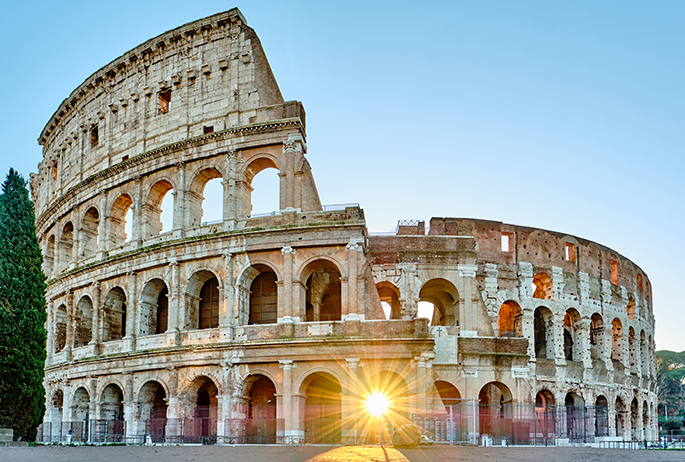
- The Colosseum. Photo: Envato Elements
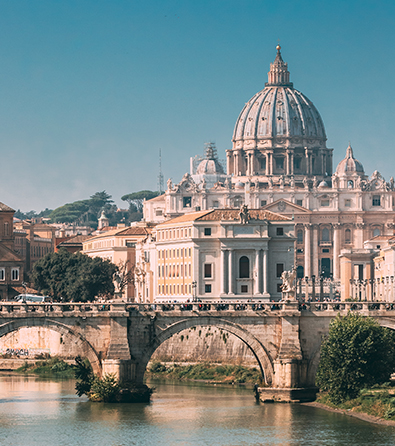
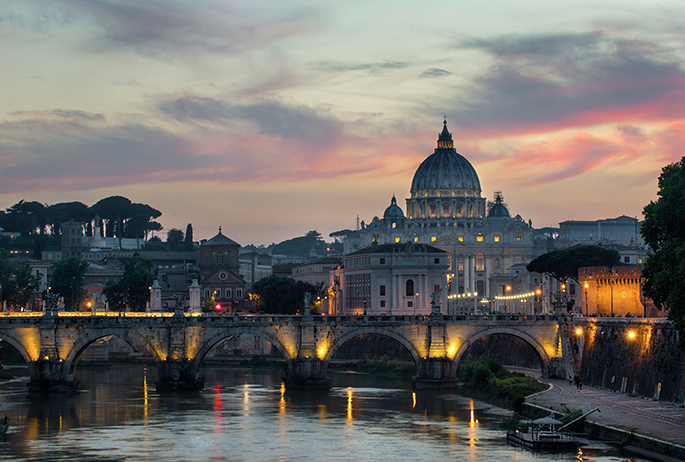
- Saint Peter Basilica. Photo: Envato Elements
Where to Stay in Rome
Planning your stay in Rome? Here are some recommended places to stay, from luxury hotels in the historic center to more affordable options in well-connected neighborhoods.
With the interactive map below, you can compare all available accommodation options in the city and find the best prices from a variety of leading providers.
Luxury Hotels
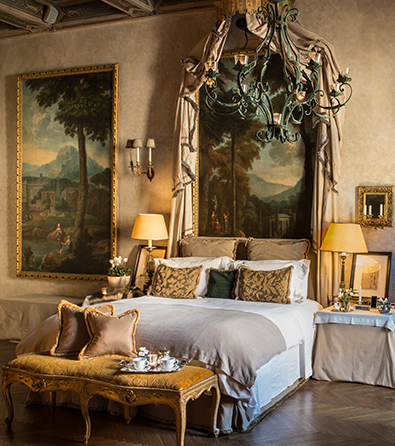
For a luxury stay in central Rome, Bvlgari Hotel Roma is located near Piazza Augusto Imperatore, within walking distance of the Spanish Steps and Via del Corso, offering a contemporary luxury experience rooted in Roman materials and craftsmanship. Portrait Roma, just off Via Condotti, is one of the most refined boutique options in the city, with views toward the Spanish Steps and a strong focus on service and privacy. Overlooking Piazza Navona, Eitch Borromini Palazzo Pamphilj is set within a 17th-century palace designed by Francesco Borromini, combining historic architecture with one of the city’s most iconic rooftop terraces. For a more intimate and historic stay, Residenza Napoleone III offers a unique experience inside a private palazzo near Via del Corso, with preserved aristocratic interiors and direct views over the city.
Mid-Range Hotels
For a mid-range stay across some of Rome’s most appealing neighborhoods, Rhinoceros Roma, developed by the Alda Fendi Foundation, offers design-led apartments within a restored complex near the Roman Forum, blending contemporary architecture with archaeological surroundings. NH Collection Roma Fori Imperiali provides a central base overlooking the Imperial Forums, within easy reach of the Colosseum and Piazza Venezia. In Monti, The Fifteen Keys Hotel is a well-regarded boutique hotel set on a quiet street close to galleries, vintage shops, and the Colosseum. Nerva Boutique Hotel, also in Monti, offers a smaller, personal stay just steps from the Roman Forum. Palazzo Navona Hotel, near Piazza Navona, is a practical option for staying in the historic center within walking distance of Rome’s main landmarks. G-Rough, also close to Piazza Navona, is known for its eclectic interiors combining vintage Italian design with Renaissance architecture. Chapter Roma Hotel, located near the Jewish Ghetto and Tiber River, offers a contemporary, urban stay with a strong design identity. Condominio Monti provides a more relaxed boutique option with a rooftop terrace in the Monti neighborhood. Casa Modelli, near the Pantheon, offers a small-scale, design-focused stay in the historic center.
Affordable Hotels
For more affordable stays in well-connected areas, The Radical Hotel Roma, near Piazza Barberini, offers a modern and accessible base within walking distance of the Trevi Fountain and Via Veneto. Hotel dei Barbieri, located in a historic building near Largo Argentina, provides a central stay at a more moderate price point. Hotel Pulitzer Roma, in the EUR district, suits travelers who prefer a quieter area with metro access to the city center. DoubleTree by Hilton Rome Monti offers a reliable and comfortable option near Termini and Monti, with good access to major transport hubs. For budget-conscious travelers, YellowSquare Rome is a social hostel near Termini with a lively atmosphere, while The RomeHello offers a well-designed and centrally located hostel experience. Ostello Bello Roma Colosseo provides a friendly, social stay within walking distance of the Colosseum, and The Bricks Rome is a more laid-back option slightly outside the historic center with good transport connections.
Historical Sites
Vatican Museums (Vatican City / Viale Vaticano)
Why go: Masterworks from antiquity to the Renaissance, culminating in the Raphael Rooms and Michelangelo’s Sistine Chapel.
Tip: Book timed tickets in advance, or choose skip-the-line tickets with a guided tour. Aim for the first entry of the day, late afternoon, or select Friday evenings when offered; dress codes apply for the Sistine Chapel.
A vast complex assembled by the papacy over centuries, the Vatican Museums display about 20,000 works from a collection of roughly 70,000. Highlights include the four Raphael Rooms, grand fresco cycles by Raphael and his workshop, and the Sistine Chapel, whose ceiling Michelangelo painted between 1508 and 1512, with The Last Judgment added later above the altar. Expect long routes and dense galleries; prioritize your must-sees and allow time for the Gallery of Maps on the way to the chapel.
Galleria Borghese (Villa Borghese / Piazzale Scipione Borghese 5)
Why go: Bernini’s virtuoso marble sculptures and Caravaggio’s canvases gathered under one roof, one of Europe’s great small museums.
Tip: Entry is by timed reservation only, so book well in advance, or opt for skip-the-line tickets with a guided tour. Arrive 30 minutes early for ticketing and the cloakroom. Closed Monday; light bags only.
Commissioned by Cardinal Scipione Borghese, the villa was designed by Flaminio Ponzio (completed by Giovanni Vasanzio) to showcase the cardinal’s collection of antiquities and contemporary art. Highlights include Bernini’s masterworks, Apollo and Daphne, The Rape of Proserpina, and David, and a deep ensemble of Caravaggio paintings such as Boy with a Basket of Fruit, Sick Bacchus, Saint Jerome Writing, and David with the Head of Goliath. The galleries also feature Raphael’s Entombment (Deposition), Titian’s Sacred and Profane Love, and Canova’s Pauline Bonaparte as Venus Victrix, set within richly frescoed rooms that make the visit as much about architecture as art.
Basilica of Santa Maria del Popolo (Piazza del Popolo / Northern Gate)
Why go: A compact masterclass in Renaissance and Baroque art, Raphael’s architecture, Bernini’s sculpture, and Caravaggio’s canvases under one roof.
Tip: It’s an active church; avoid service times. Consider booking a guided Caravaggio tour in Rome that connects his works across the city, including the masterpieces in Santa Maria del Popolo.
Founded in the 12th century and rebuilt 1472–77 under Pope Sixtus IV by Andrea Bregno, the church stands just inside the Porta del Popolo, the historic entry point for travelers arriving from the north. Highlights are exceptional: the Cerasi Chapel with Caravaggio’s Conversion of Saint Paul and Crucifixion of Saint Peter facing Annibale Carracci’s Assumption; and the Chigi Chapel, designed by Raphael (1513–16) with its mosaic dome (after Raphael’s cartoons), pyramidal Chigi tombs, and later additions by Bernini (Habakkuk and the Angel; Daniel in the Lions’ Den). Pinturicchio’s late-15th-century frescoes enrich the choir and chapels, and stained glass by Guillaume de Marcillat survives from the early 1500s. Bernini’s 1650s refurbishment unified the interior, leaving one of Rome’s most concentrated encounters with High Renaissance and Baroque Rome.
Sant’Ignazio di Loyola in Campo Marzio (Centro Storico / Piazza Sant’Ignazio)
Why go: Baroque illusionism at its peak, with Andrea Pozzo’s ceiling that “opens” to the heavens and the famous painted dome.
Tip: Stand on the small marble disk in the nave to see the perspective align. A second floor marker gives the best view of the trompe-l’oeil dome. It is an active church, so dress modestly and avoid service times.
Built in the 1600s to honor St. Ignatius, the church gained fame in the late 1680s and 1690s when Jesuit lay brother Andrea Pozzo painted the vast nave fresco often called the Apotheosis/Triumph of Saint Ignatius. Using quadratura and strict linear perspective, Pozzo turns the barrel vault into an illusion of the sky opening above, with Saint Ignatius received by Christ and the Virgin and allegories of Europe, Asia, Africa, and the Americas radiating outward. Because funds for a real dome ran out, Pozzo also created the celebrated painted “cupola” over the crossing, a flat canvas rendered to look like a coffered dome when viewed from the marked spot. The result is one of Rome’s most memorable lessons in perspective and theatrical Baroque space.
Trevi Fountain (Trevi / Piazza di Trevi)
Why go: Rome’s largest Baroque fountain, an 18th-century stage set with Oceanus at the center, roaring water from an ancient aqueduct, and pure movie-moment atmosphere.
Tip: Go at dawn or late evening to dodge crowds, or book a guided tour that includes the Trevi Fountain and the underground archaeological area. If you toss a coin, use your right hand over your left shoulder, tradition says it ensures a return to Rome.
Designed by Nicola Salvi and completed in 1762 by Giuseppe Pannini, the fountain rises about 26.3 m (86 ft) and spans 49.15 m (161 ft). At its core is Oceanus by Pietro Bracci, standing in a shell chariot drawn by sea-horses and tritons; the side niches hold allegories of Abundance and Health (Salubrity). Reliefs above recount the origins of the Acqua Vergine (19 BCE), the aqueduct that still feeds the cascade today.
Pantheon (Centro Storico / Piazza della Rotonda)
Why go: Ancient Rome’s best-preserved monument, an immense unreinforced concrete dome and open oculus that still awe.
Tip: Entry is ticketed and it’s an active church, so consider booking a guided tour for deeper context. Dress modestly, and avoid service times.
Rebuilt under Emperor Hadrian around 118–125 CE on the site of Agrippa’s temple, the Pantheon became a church in 609. Inside, the coffered dome spans about 43 m; its oculus, nearly 9 m wide, casts a moving circle of light across the marble floor (with discreet drains for rainy days). Look for Raphael’s tomb and the memorials of Italy’s first kings beneath the vast, beautifully preserved vault.
Contemporary Art Venues
MAXXI – National Museum of 21st-Century Arts (Flaminio / Via Guido Reni 4A)
Why go: Italy’s national museum for contemporary art and architecture in Zaha Hadid’s flowing concrete landmark.
Tip: Closed Monday. Book timed tickets for big shows and allow time to explore the outdoor piazza, bookshop, and café.
Opened in 2010, MAXXI brings two institutions under one roof: MAXXI Arte and MAXXI Architettura. Expect rotating exhibitions of installation, video, photography, and design alongside major architecture holdings and archives. Hadid’s building is a draw in itself, with interlacing gallery “ribbons,” long ramps, and skylit volumes that won the RIBA Stirling Prize. The Flaminio location makes it easy to pair with a stroll through the cultural district.
MACRO – Museum of Contemporary Art of Rome (Salario / Via Nizza 138)
Why go: Rome’s flagship municipal museum for contemporary art inside a converted Peroni brewery, with rotating exhibitions, film, and cross-disciplinary programs.
Tip: Closed Monday. Check the current program before you go; some shows use multiple wings and courtyards, and entry is via Via Nizza or nearby Via Reggio Emilia.
Housed in former brewery buildings expanded in the 2000s, MACRO focuses on contemporary art and hybrid practices across installation, moving image, and performance. Recent years saw the multi-year “Museum for Preventive Imagination” project (2020–2024); in 2025 the museum began rolling out a refreshed program under new artistic leadership. The complex layout, industrial halls linked by bridges and terraces, adds to the experience.
Mattatoio (ex-MACRO Testaccio) (Testaccio / Piazza Orazio Giustiniani 4)
Why go: Striking 19th-century slaughterhouse complex turned contemporary art venue, industrial archaeology meets large-scale exhibitions, research, and live programs.
Tip: Pair with a wander through Testaccio Market or a walk toward Ostiense for street art. Some events happen in “La Pelanda,” one of the site’s main halls, check listings.
Formerly known as MACRO Testaccio, the site now operates as Mattatoio under Azienda Speciale Palaexpo. The brick pavilions and iron canopies by architect Gioacchino Ersoch (1888–91) host changing exhibitions, talks, studios, and festivals, making it a key southern hub for Rome’s contemporary scene.
Villa Medici – French Academy in Rome (Pincian Hill / above the Spanish Steps)
Why go: A Renaissance villa that has hosted the French Academy since 1803, with 7-hectare gardens, a belvedere over Rome, and guided access to historic salons where art and architecture meet.
Tip: Enter via Viale della Trinità dei Monti 1. Book the 90-minute guided tour (offered in English, French, Italian, and Spanish). Closed on Tuesdays; exhibitions are included with the tour ticket.
Villa Medici blends Medici-era architecture with an active residency program for artists and researchers, making it both heritage site and working art center. Visits typically cover the cardinal’s historic apartments, courtyards, and the expansive gardens bordering the Aurelian Wall, finishing at the belvedere for sweeping city views. Alongside tours, the Academy runs exhibitions, concerts, and festivals that connect contemporary practice with the villa’s Renaissance setting. For more on Villa Medici, see our full feature here.
Galleria Lorcan O’Neill (Centro Storico / Vicolo de’ Catinari 3)
Why go: One of Rome’s flagship contemporary galleries, mixing international heavyweights and Italian talent in a dramatic 17th-century stable complex.
Tip: Open Tue–Sat, typically 11:00–19:00. Check the current show before you go; the space sits between Campo de’ Fiori and Piazza Farnese, easy to pair with a Centro Storico walk.
Founded in 2003, Galleria Lorcan O’Neill helped anchor Rome’s contemporary scene and now operates from the restored former stables of Palazzo Santacroce. Expect tightly curated solo and group shows spanning painting, sculpture, photography, video, and installation, with a roster that has included artists such as Tracey Emin, Anselm Kiefer, Martin Creed, Kiki Smith, Jeff Wall, and more. The vaulted brick bays and long gallery volumes make for striking sightlines, part of why the space is a destination for collectors and curious visitors alike.
Chiostro del Bramante (Centro Storico / Via della Pace, near Piazza Navona)
Why go: A jewel of Renaissance architecture by Donato Bramante, now a lively exhibition venue, with a first-floor vantage to view Raphael’s Sibyls in the adjacent Santa Maria della Pace.
Tip: Enter at Via/Arco della Pace 5. Go up to the first floor by the café (Sala delle Sibille) to see Raphael’s fresco through the window. Weekday mornings are quietest.
Commissioned around 1500 by Cardinal Oliviero Carafa, the cloister is a textbook of harmonious Renaissance proportions and a fitting backdrop for rotating art shows, talks, and concerts. Today it functions as a cultural hub with galleries, a café-bistrot, and a bookshop; from the upper portico, you can admire Raphael’s 1514 Sibyls across the way, one of Rome’s neatest “hidden in plain sight” art moments.
Monitor (San Lorenzo)
Why go: Longstanding contemporary space with a sharp, international program spanning installation, film, and painting.
Tip: Shows often open in the evening; confirm the San Lorenzo address before you go.
Monitor now operates in San Lorenzo with rotating exhibitions that pair Italian voices with global artists, continuing the gallery’s two-decade role in Rome’s contemporary scene.
Montoro12 Residency and Project Space (Centro Storico)
Why go: Curatorial residency and exhibition program supporting emerging and mid-career artists.
Tip: Look for open studios and short-run project shows; schedules can be seasonal.
Based near Campo de’ Fiori, Montoro12 hosts residencies, commissions, and focused exhibitions, giving visibility to research-driven practices in an intimate setting.
Fondazione Pastificio Cerere (San Lorenzo)
Why go: A former pasta factory turned foundation at the heart of Rome’s artist-studio district.
Tip: Combine a visit with a wander around San Lorenzo’s studios and cafés.
The foundation presents exhibitions, talks, and education programs inside an industrial complex that helped launch generations of Roman artists, making it a reliable stop for current discourse.
T293 (Trastevere)
Why go: Gallery known for experimental, concept-forward projects and international rosters.
Tip: Check for performance or publication launches tied to exhibitions.
From its Trastevere space, T293 stages concise, research-led shows that foreground new production across media, often introducing Rome audiences to rising international artists.
Unosunove Arte Contemporanea (Centro Storico)
Why go: Concept-focused gallery in Palazzo Santacroce with a tight program of Italian and international artists.
Tip: Hours can be compact; plan a weekday afternoon visit.
Unosunove’s program favors rigorous, research-based practices presented in a historic palazzo steps from Campo de’ Fiori, making for a compelling old-meets-new encounter.
Gagosian Rome (Centro Storico, Spanish Steps area)
Why go: Rome outpost of the global gallery network, presenting museum-grade shows by major artists.
Tip: Expect single-work installations or tightly curated displays; preview the current exhibition before you go.
Housed in a refurbished 1920s bank hall, Gagosian Rome brings headline names and historically framed projects to the city, a dependable anchor for blue-chip contemporary art.
Take a Break
Between museums, churches, and gallery visits, Rome rewards those who pause well. For coffee and pastries, Roscioli Caffè Pasticceria is a dependable stop for espresso, maritozzi, and Roman sweets; La Casa del Caffè Tazza d’Oro, near the Pantheon, is known for its granita di caffè; Sant’Eustachio Il Caffè remains a classic address for a quick espresso at the counter; and Bar del Fico, close to Piazza Navona, works well for either a morning cappuccino or an early evening aperitivo. In Ostiense, Romeow Cat Bistrot offers a quieter, vegan-friendly alternative for tea and cake.
For lunch or dinner, Trattoria Da Enzo al 29 in Trastevere is a longstanding favorite for Roman pasta dishes, while Flavio al Velavevodetto in Testaccio is especially good for cacio e pepe and gricia. Armando al Pantheon offers a more refined take on Roman classics just steps from the monument, Osteria delle Coppelle brings a lively piazza atmosphere, and Roscioli Salumeria con Cucina remains one of the city’s best-known destinations for pasta and wine. Ad Hoc, on Via di Ripetta, is a good choice for those drawn to truffle dishes and a deep wine cellar. Near the Trevi Fountain, Il Chianti Osteria Toscana is a convenient option for a relaxed meal in the historic center, with a menu centered on Tuscan cuisine.