Kyoto’s art, design and architecture are shaped by the relationship between historic building traditions, highly specialized craft practices and contemporary cultural production. Alongside major institutions such as Kyoto City KYOCERA Museum of Art, The National Museum of Modern Art, Kyoto and Kyoto National Museum, the city supports an extensive network of independent galleries, textile and ceramics spaces, design stores and architectural landmarks spanning early Edo-period design, postwar Japanese modernism and contemporary practice.
This guide brings together Kyoto’s leading art museums, contemporary galleries, craft and design institutions, historic and modern architecture, independent design stores and carefully selected places to stay. It covers the museums of Okazaki, galleries and design spaces in central Kyoto, craft traditions associated with Nishijin and Gojozaka, and buildings by architects including Kunio Maekawa, Sachio Otani, Arata Isozaki, Tadao Ando, Hiroshi Hara and Kazumasa Yamashita.
To access the Kyoto Treasure Map, click here and register as a Culture Treasures member. The map includes every place in this guide, together with additional cafés, design stores and cultural venues.
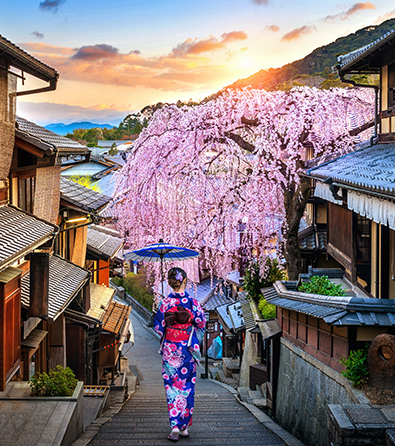
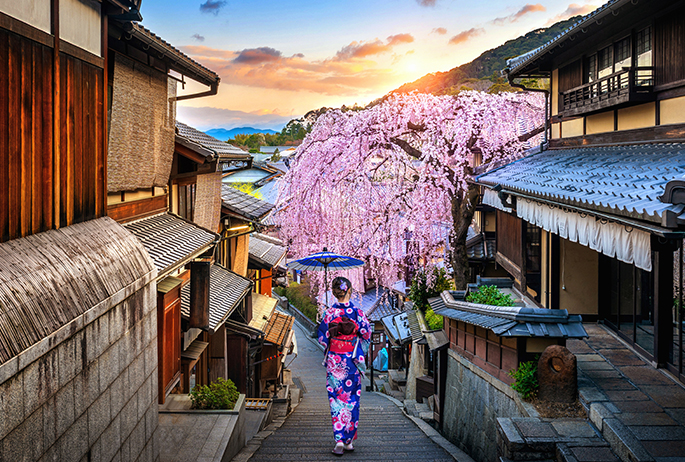 Kyoto. Photo via AdobeStock
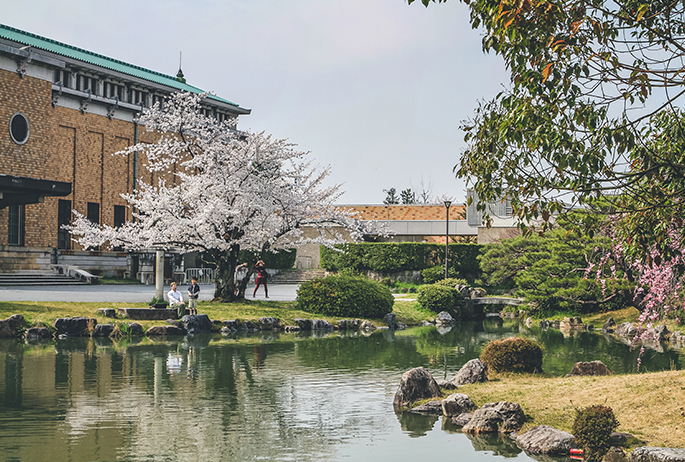 Kyoto City KYOCERA Museum of Art. Photo: seaonweb /depositphotos.com
 Kyoto National Museum. Photo: RnDmS /depositphotos.com
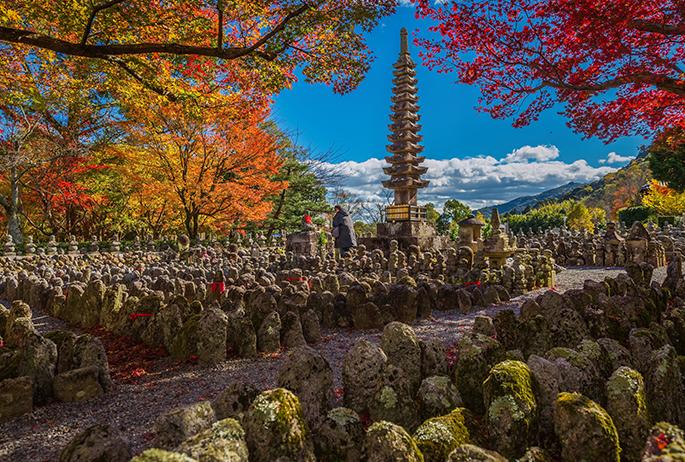
- Adashino Nenbutsuji Temple. Photo via Depositphotos
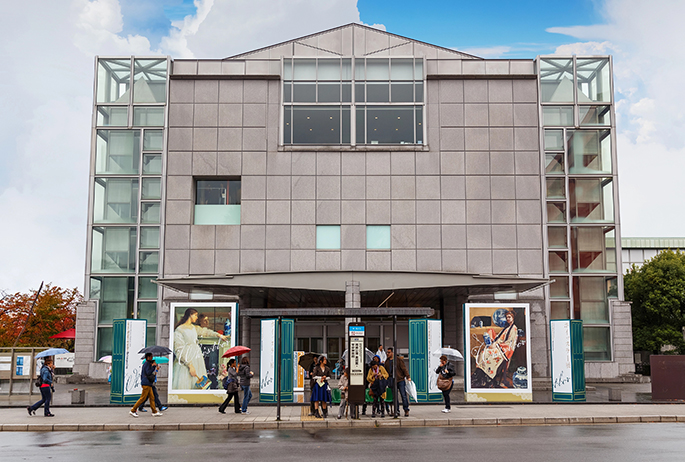
- The National Museum of Modern Art, Kyoto. Photo: cowardlion /depositphotos.com
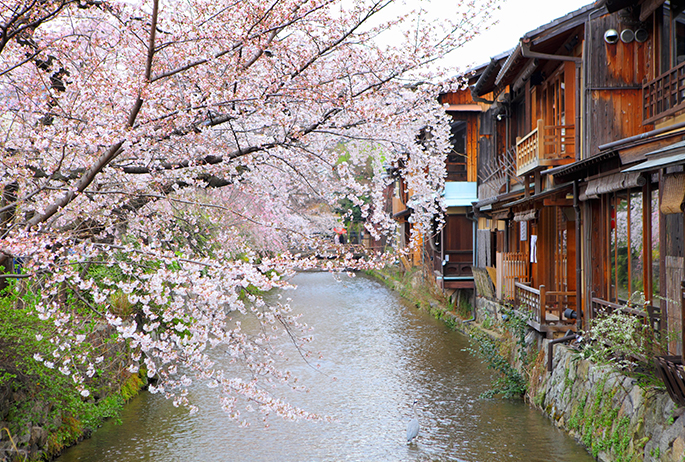
- Kyoto. Photo via Depositphotos
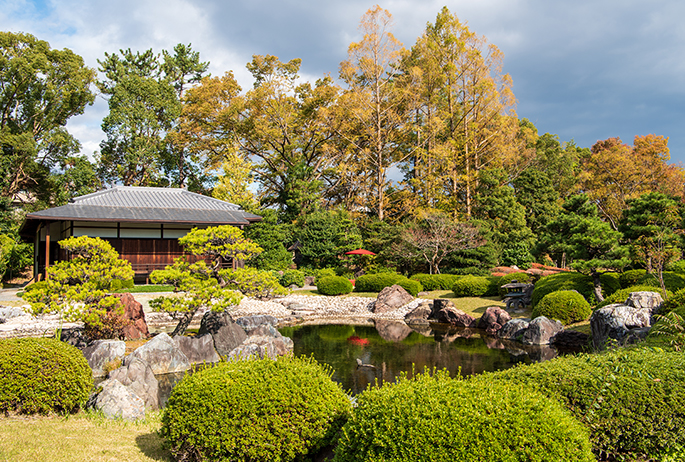
- Nijo Castle, Photo via AdobeStock
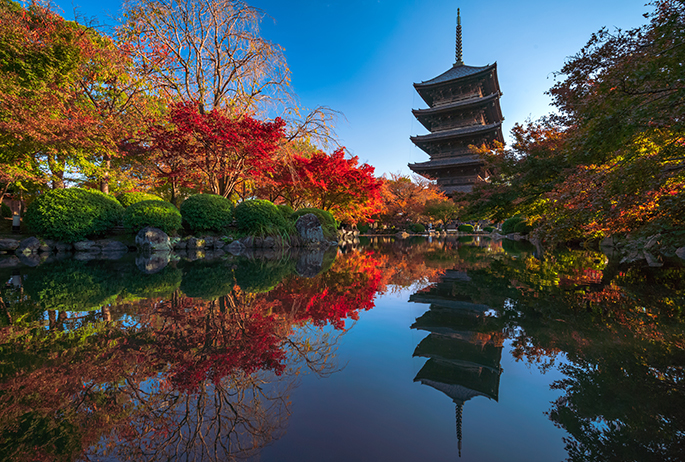 Toji Temple. Photo via AdobeStock
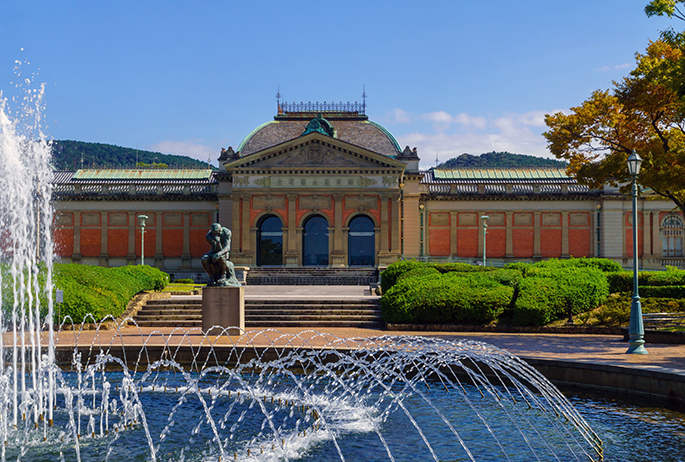
Where to Stay in Kyoto for Museums and Cultural Attractions
Kyoto’s cultural institutions and historic districts are distributed across several areas rather than concentrated in a single centre. Gion and Higashiyama provide access to temples, preserved streets and traditional performing arts, while Karasuma and Kawaramachi are better connected to contemporary galleries, design stores and central transport routes. The hotels below are arranged by general price category, although rates vary substantially by season.
For a curated selection of boutique and design hotels, chosen for their architecture, interiors, and connection to Kyoto’s cultural context, read our guide to the Best Boutique and Design Hotels in Kyoto.
Use the interactive map below to compare hotels across Kyoto and find the best available rates.
Luxury Hotels in Kyoto
For a luxury stay in Kyoto, The Shinmonzen (Gion Shirakawa) is a nine-suite hotel designed by Tadao Ando with interiors developed through collaborations with artists and designers. Each suite has a private balcony, while three include tatami-floored bedrooms with futon beds. The hotel maintains a contemporary art collection and houses Jean-Georges at The Shinmonzen. THE HIRAMATSU KYOTO (Muromachi / Karasuma) incorporates a converted Meiji-period machiya formerly used as the home and shop of a textile merchant. Its preserved lattice façade, entrance passage and original structural elements are integrated with contemporary guest rooms, two restaurants and interior gardens. Fufu Kyoto (Nanzen-ji / Okazaki) is located beside the Lake Biwa Canal and within walking distance of Nanzen-ji and the Okazaki museum district. Every room includes a private hinoki bath supplied with natural hot-spring water, while the hotel’s garden retains mature maple and pine trees that preceded its construction. Sowaka (Gion / Higashiyama)combines a converted century-old former ryotei restaurant with a contemporary annex. Its 23 individually designed rooms vary in plan, materials and relationship to the internal courtyards, so the distinction between the original building and the annex should be considered when booking. Marufukuro (Gojo / former Nintendo headquarters) combines three preserved buildings from Nintendo’s former headquarters with a new annex designed and supervised by Tadao Ando. Guest-only spaces include lounges and the dNa library, which presents books and archival material connected with Nintendo’s history and visual culture. Ace Hotel Kyoto (Karasuma) forms part of the ShinPuhKan complex, which integrates the former Kyoto Central Telephone Office, completed in 1926, with a new structure by Kengo Kuma and Associates. The hotel interiors were developed with Los Angeles-based Commune Design, combining contemporary furniture, graphic art and commissioned work by Japanese makers. Genji Kyoto (Kamo River / Kawaramachi) is a small hotel with rooms facing the Kamo River, the city or internal courtyard gardens. Interiors incorporate custom furniture, washi screens and works by Kyoto-based artists responding to episodes from The Tale of Genji. A rooftop garden provides views across the river toward Higashiyama. Hotel The Celestine Kyoto Gion (Higashiyama) is positioned between Gion and the Kiyomizu-dera approaches. The hotel includes a large communal bath, an internal courtyard and a complimentary shuttle connecting it with Kyoto Station. 伝心庵 Garden Villa Denshin-An (Ryoan-ji / northwest Kyoto) is a century-old Japanese house rented to one group at a time. The property includes tatami rooms and a private garden, but does not provide the full range of services associated with a conventional hotel. Its location is suited to visits to Ryoan-ji, Ninna-ji and Kinkaku-ji rather than central Kyoto nightlife.
Mid-Range Hotels in Kyoto
For a mid-range stay, THE GATE HOTEL KYOTO TAKASEGAWA by HULIC (Kawaramachi / Takase River) combines part of the preserved former Rissei Elementary School with a contemporary hotel building. Selected rooms and suites are located in the former school, while the upper-level restaurant and terrace provide views toward Higashiyama. GOOD NATURE HOTEL KYOTO (Kawaramachi) is located on the upper floors of GOOD NATURE STATION, a multi-level complex containing a food market, restaurants, cafés, retail spaces and a small gallery. The hotel is particularly convenient for Kawaramachi, Gion and the southern end of the Teramachi shopping district. NOHGA HOTEL KIYOMIZU KYOTO (Higashiyama) integrates artworks and craft objects by creators based in Kyoto throughout its rooms and public spaces. Facilities include a bakery café, restaurant and weather-dependent rooftop bar with views toward Kiyomizu-dera and the Higashiyama hills. Candeo Hotels Kyoto Karasuma Rokkaku (Karasuma) combines a preserved and renovated Kyo-machiya, formerly the Ban family residence and now a registered tangible cultural property of Kyoto City, with a contemporary guest-room wing. The machiya contains the reception and an upper-floor library, tatami lounge and self-service bar, where guests can purchase wine, Kyoto craft beer and small refreshments. Coffee and tea are available without charge. The modern wing contains the guest rooms and the SkySpa, a gender-separated Japanese-style communal bathing facility using heated water rather than natural hot-spring water. OMO5 Kyoto Sanjo by Hoshino Resorts (Sanjo) is a contemporary city hotel near the intersection of Sanjo and Kawaramachi. Rooms range from 16-square-metre queen rooms to larger layouts for three guests, with timber-toned interiors and under-bed storage in selected categories. The hotel also organizes neighbourhood walks and cultural activities focused on the surrounding Sanjo district. ASAI Kyoto Shijo (Shijo) is a 114-room hotel with compact guest rooms and a large ground-floor communal hub used for dining, working and informal gatherings. Its restaurant draws on Bangkok street-food culture, reflecting the Thai origins of the ASAI brand rather than reproducing a conventional Kyoto hotel interior. THE BLOSSOM KYOTO (Gojo) offers several room categories alongside a communal bath, fitness room and guest lounge. Its location is quieter than the Kawaramachi entertainment district while remaining within walking distance of Gojo Station and central shopping streets. Hotel Resol Kyoto Kawaramachi Sanjo (Kawaramachi) is a centrally located hotel whose interiors refer to the spatial language of Kyoto machiya and kura storehouses. Its Living Lobby is set on the former site of Tsuboya, a long-established soy-sauce merchant, and incorporates details drawn from the history of the property. Hotel Gracery Kyoto Sanjo (Sanjo) is a two-building hotel located within the Teramachi shopping arcade, close to Shinkyogoku. Rooms in the North Building are primarily doubles, while the South Building is organized around twin-room categories; all have bathrooms separated from the toilets. This is principally a location-driven choice rather than a recommendation for distinctive contemporary design. Miru Kyoto Gion (Gion) is a small, ten-room hotel near the Shirakawa Canal, combining contemporary Japanese interiors with references to machiya architecture. Its seven room categories include Western-style layouts and tatami rooms, with sizes ranging from approximately 23 to 34 square metres. Kyoto Machiya Fukune (Central Kyoto) is a collection of five separate two-storey machiya suites rather than a single private townhouse. Each suite includes tatami rooms, a private courtyard garden and an open-air bath, with layouts accommodating between three and five guests.
Affordable Hotels in Kyoto
For a more affordable stay, Piece Hostel Sanjo (Sanjo) combines dormitories and private rooms with extensive communal spaces. Its West Building contains a shared kitchen and lounge, while the overall design was developed to bridge the conventions of a hostel and a compact city hotel. Mulan Hostel (Arashiyama) is a small property located approximately two minutes on foot from Hankyu Arashiyama Station and seven minutes from Togetsukyo Bridge. Its position is convenient for exploring Arashiyama, although it is separated from central Kyoto and is not immediately beside the bamboo grove. Laon Inn Gion Nawate (Gion) is a functional 40-room hotel two minutes on foot from Gion-Shijo Station. The rooms range from 13.12 to 16.71 square metres and include double, queen and twin configurations. Its principal advantage is direct access to Gion, Pontocho and the eastern bank of the Kamo River. THE REIGN HOTEL KYOTO (south of Kyoto Station) is a 51-room design hotel with Scandinavian-influenced interiors and artworks integrated throughout its shared spaces. Built on the former site of an art gallery, it offers rooms ranging from compact 18-square-metre layouts to larger rooms with terraces or views across southern Kyoto. The hotel is approximately six minutes on foot from Jujo subway station and two stops from Kyoto Station. Rinn Gion Shirakawa (Gion) is a 22-room hotel beside the Kamo River and the Seseragi no Michi promenade. Rooms range from 31-square-metre twins to a 95.8-square-metre river-view suite, while shared facilities include a coin-operated laundry, microwave, ice machine and water dispenser. The hotel is within walking distance of the Shirakawa canal, Pontocho and central Gion.
Best Art Museums in Kyoto
Kyoto City KYOCERA Museum of Art (Okazaki)
Why go: To explore a major public art museum where a 1933 building has been reworked through a carefully integrated contemporary intervention.
Tip: Begin at the sunken plaza and Glass Ribbon, then follow the route through the restored central hall to the newer Higashiyama Cube.
Opened in 1933 as Kyoto Enthronement Memorial Museum of Art, the institution is set within one of Japan’s oldest surviving public art museum buildings. The 2020 renewal by Jun Aoki and Tezzo Nishizawa preserved the building’s Imperial Crown Style architecture while introducing new circulation routes, exhibition spaces and the glazed Glass Ribbon. The program encompasses modern and contemporary Japanese art alongside major temporary exhibitions.
The National Museum of Modern Art, Kyoto (Okazaki)
Why go: To explore modern Japanese art through collections with particular strength in artistic production from Kyoto and western Japan.
Tip: Check the current collection display before visiting, since works on view rotate and only part of the museum’s collections can be shown at one time.
The museum originated in 1963 as the Kyoto Annex of the National Museum of Modern Art, Tokyo. Its present building, designed by Fumihiko Maki, opened in 1986. The collections encompass painting, sculpture, prints, ceramics, textiles, photography and design, with sustained attention to artists and craft practices associated with Kyoto and the wider Kansai region.
Kyoto National Museum (Higashiyama)
Why go: The city’s primary institution for pre-modern Japanese art, including Buddhist sculpture, painting, and decorative arts.
Tip: Focus on the Heisei Chishinkan Wing, where the museum’s main collection is displayed in a chronological layout; the original Meiji-era building is primarily of architectural interest.
Founded in 1897, the museum preserves important works of Japanese cultural heritage. The Heisei Chishinkan Wing, designed by Yoshio Taniguchi and opened in 2014, provides modern exhibition spaces, while the original Meiji-era building remains on site.
Hosomi Museum (Okazaki)
Why go: To explore a private collection spanning Buddhist and Shinto art, tea utensils, Rinpa painting and modern Japanese decorative arts.
Tip: Follow the galleries vertically through the building, paying attention to the views across the central atrium and the transition between the above-ground and subterranean levels.
Opened in 1998, the museum presents the Hosomi family collection through rotating thematic exhibitions. The building, designed by Tadasu Oe, contains three floors above ground and two below, creating a compact sequence of galleries arranged around a central atrium.
ZENBI, Kagizen Art Museum (Gion)
Why go: To examine modern and contemporary Japanese craft through a focused museum established by the historic confectioner Kagizen Yoshifusa.
Tip: Look for the relationship between the objects on display and Gion’s tea and confectionery culture, particularly in exhibitions concerned with lacquerware and serving vessels.
Opened in 2021, ZENBI was conceived as a cultural salon in Gion. Its collection and exhibition program center on the work and legacy of lacquer artist Tatsuaki Kuroda while extending to ceramics, woodwork and other areas of Japanese craft.
Contemporary Art Galleries and Art Spaces in Kyoto
Kyoto Art Center (Nakagyo)
Why go: To follow a multidisciplinary program of exhibitions, performance, residencies, workshops and artistic research within a former school.
Tip: Do not limit the visit to the scheduled exhibitions. Walk through the former classrooms, corridors, staircases and courtyards to understand how the educational building has been adapted for cultural use.
Kyoto Art Center opened in 2000 in the former Meirin Elementary School. The present reinforced-concrete building was completed in 1931 and later adapted as a cultural centre while retaining many of its original educational spaces. The program supports visual art, performance and interdisciplinary work by artists based in Kyoto and internationally. Read our in-depth article on the Kyoto Art Center on Culture Treasures for context before your visit.
Taka Ishii Gallery Kyoto (Shimogyo)
Why go: To see focused exhibitions by Japanese and international artists presented by one of Japan’s established contemporary art galleries.
Tip: Check the gallery’s limited opening days before planning the route, and read the exhibition text in advance when available, since the displays are often concise and centred on a single body of work.
The Kyoto space presents exhibitions across painting, sculpture, photography and installation. Its program connects Kyoto’s contemporary art context with the gallery’s wider representation of postwar and contemporary Japanese artists.
Imura Art Gallery (Sakyo / Marutamachi)
Why go: To follow a Kyoto-based contemporary program encompassing painting, sculpture and mixed-media practices.
Tip: Pair the gallery with nearby cultural institutions on the eastern side of the Kamo River, but confirm the current exhibition dates before making the journey.
Founded in Kyoto in 1990, Imura Art Gallery works with Japanese contemporary artists through exhibitions, publications and participation in art fairs. Its long-running program provides a useful perspective on artistic production developed outside Tokyo’s principal commercial-gallery district.
Kyoto Craft and Design Museums
Kyoto Museum of Crafts and Design (Okazaki)
Why go: To explore the materials, tools and production processes associated with Kyoto’s 74 officially recognized traditional industries.
Tip: Compare related processes across different fields, such as dyeing, weaving and surface decoration, rather than viewing the exhibition only as a survey of finished objects.
The permanent 74 Crafts Exhibition introduces Kyoto’s traditional industries through finished works, tools, raw materials, process documentation and demonstrations by craftspeople. The display encompasses textiles, ceramics, lacquerware, metalwork, woodwork, paper and other practices that remain central to the city’s material culture.
Kondo Museum (Gojozaka)
Why go: To explore the work of ceramic artist Yuzo Kondo in the house and studio connected with his life and practice.
Tip: Look closely at the relationship between Kondo’s cobalt-blue underglaze painting and the contours of his porcelain vessels, particularly where brushwork follows or disrupts the form.
Opened in 1987, the museum is dedicated to Yuzo Kondo, a Kyoto-born ceramic artist designated a Living National Treasure for sometsuke underglaze blue decoration. Displays of his work and archival material documenting his practice connect the artist to Gojozaka, one of Kyoto’s principal ceramics districts.
Gallery Nichinichi (Kamigyo)
Why go: To see contemporary ceramics and functional objects presented in direct relationship to domestic space.
Tip: Check which maker is being shown before visiting, since the scale, arrangement and use of the rooms are adapted to each exhibition.
Gallery Nichinichi presents ceramics, vessels and related works by contemporary makers in an intimate residential setting. Its program demonstrates how functional objects can be discussed and exhibited through proportion, placement and use, rather than separated from the domestic contexts for which they were made.
Kawai Kanjiro’s House (Higashiyama)
Why go: To explore the domestic environment, furniture, ceramics and working spaces of a central figure in Japan’s twentieth-century Mingei movement.
Tip: Continue beyond the principal living rooms to the studio and climbing kiln at the rear. Together they show how domestic life, display and ceramic production were connected within the property.
Completed in 1937, the house was designed by ceramic artist Kawai Kanjiro and served as his residence, studio and place of display. Its timber construction, furniture, collected objects and kiln provide direct insight into the relationship between his ceramics, domestic design and the ideas associated with the Japanese folk craft movement.
Kyoto Architecture Guide: Buildings and Landmarks
Nijo Castle (Nakagyo)
Why go: To examine early Edo-period architecture, painted interiors and landscape design within a major shogunal complex.
Tip: Follow the sequence of rooms in the Ninomaru Palace according to their changing scale and decoration. The progression from reception spaces to more restricted chambers reflects the hierarchy of the shogunal court.
Nijo Castle was established in the early seventeenth century as the Kyoto residence of Tokugawa Ieyasu. The Ninomaru Palace preserves a sequence of audience rooms with painted screens, carved transoms and architectural details structured around rank and ceremonial movement. The castle forms part of the UNESCO-listed Historic Monuments of Ancient Kyoto.
Kyoto International Conference Center (Takaragaike)
Why go: To examine a major work of postwar Japanese modernism by architect Sachio Otani.
Tip: Compare the massive exterior concrete forms with the purpose-designed furniture and interior details. The contrast reveals how architecture, objects and public circulation were conceived as a single system.
Selected through a national competition in 1963 and opened in 1966, the complex is organized through monumental concrete forms, elevated circulation and interiors developed with Isamu Kenmochi Design Associates. Architecture, furniture, landscape and commissioned artworks were integrated within a single civic environment. Access to some interiors depends on the conference and event schedule.
ROHM Theatre Kyoto (Okazaki)
Why go: To examine the adaptation of Kunio Maekawa’s postwar cultural architecture for contemporary performance use.
Tip: Walk around the external terraces and concrete frame before entering the foyer. These elements make the relationship between the original structure and the renovated performance complex easier to read.
The building opened in 1960 as Kyoto Kaikan and is an important civic work by Kunio Maekawa. Its renovation retained the principal elements of the original modernist architecture while adapting the complex to current theatre and concert requirements. It reopened as ROHM Theatre Kyoto in 2016.
Kyoto Concert Hall (Kitayama)
Why go: To examine Arata Isozaki’s use of geometry and ceremonial circulation in a late twentieth-century cultural building.
Tip: Follow the spiral ramp leading towards the main hall. The gradual ascent, shifting sightlines and sequence of foyers are more important to understanding the project than the exterior alone.
Completed in 1995, Kyoto Concert Hall consists of three principal volumes aligned in response to the historical city grid, Kitayama Street and the direction of the Kamo River. Its processional circulation transforms the approach to the auditorium into a carefully structured spatial sequence.
Garden of Fine Arts Kyoto (Kitayama)
Why go: To experience Tadao Ando’s open-air exhibition architecture through concrete planes, ramps, water and large-scale reproductions of canonical artworks.
Tip: Follow the descending route from street level without reversing direction. The sequence reveals how Ando uses changing viewpoints, reflected light and the sound of water to organize the project.
Completed in the 1990s, the Garden of Fine Arts is structured as a sequence of exterior galleries rather than as a conventional museum. Reproductions of works from different periods are installed across concrete walls and water surfaces, making movement through the architecture central to the display.
Kyoto Station (Shimogyo)
Why go: To examine Hiroshi Hara’s interpretation of a railway station as transport infrastructure, commercial complex and monumental civic interior.
Tip: Cross the central concourse, climb the grand stair and continue to the elevated walkways and roof terraces. Remaining at platform level reveals very little of the building’s sectional complexity.
Completed in 1997, Kyoto Station was designed by Hiroshi Hara and Atelier Φ. Its vast central atrium links rail platforms, retail areas, hotels and public circulation through exposed structure, bridges and stepped terraces. The building provides a deliberate contemporary counterpoint to conventional representations of Kyoto’s historic architecture.
Face House (Shimogyo)
Why go: To examine Kazumasa Yamashita’s anthropomorphic façade and the relationship between postwar Japanese architecture, graphic form and domestic scale.
Tip: Step back far enough to read the façade as a face, then approach the ground floor to see how the windows and entrance function at the scale of the shop and gallery.
Designed in 1974 as a combined home and office, Face House gives the building a recognizably human expression through its windows, openings and façade composition. The ground floor now functions as a shop and gallery presenting stationery, tableware, domestic objects and works by artists and designers, while the upper levels remain private.
Kyoto Architecture Center at TIME’S (Sanjo / Kiyamachi)
Why go: To explore architecture exhibitions and public programs within Tadao Ando’s TIME’S complex beside the Takase River.
Tip: After viewing the exhibition, follow the narrow concrete passages and descend towards the river. The shifting relationship between circulation, water and the surrounding streets is fundamental to Ando’s design.
Opened in September 2026, the Kyoto Architecture Center presents exhibitions, talks, research and public programs concerned with Kyoto’s built environment. Its location within TIME’S, developed by Tadao Ando in stages from the 1980s, allows the institution to use the building itself as a primary subject of architectural study.
Kyoto Design Stores and Independent Shops
ISSEY MIYAKE HaaT / Kyoto (Nakagyo)
Why go: Explore HaaT’s textile-led womenswear, which brings Japanese craft traditions into dialogue with materials and techniques developed with makers in India.
Tip: Look for the store-exclusive Kumo Shibori and Roving Kogin pieces, then examine how their pleating, embroidery and dimensional surfaces relate to the textures and colours of the interior.
HaaT / Kyoto is the first flagship store dedicated to HaaT, the ISSEY MIYAKE brand established in 2000 under creative director Makiko Minagawa. Its collections combine textile research with techniques developed in collaboration with craftspeople in Kyoto, elsewhere in Japan and India. Store-exclusive designs include Kumo Shibori garments with cloud-like pleated surfaces and Roving Kogin wool pieces inspired by traditional Japanese stitching. The shop is set within a former sugar merchant’s building dating back approximately 150 years. Tokujin Yoshioka retained its timber framework and roof while introducing pale pink aluminium, modular display panels, concrete floors and a glazed view towards a stone garden.
Karimoku Commons Kyoto (Nakagyo)
Why go: To explore contemporary Japanese furniture through full-scale interior settings, material samples and temporary design exhibitions.
Tip: Compare the joints, edge profiles and timber finishes across different collections. These details show how the designers’ ideas are translated into repeatable industrial production.
Karimoku Commons Kyoto functions as a showroom, meeting place and exhibition venue for the Japanese furniture manufacturer. Its displays bring together work by Japanese and international designers while providing a detailed account of timber selection, construction, finishing and manufacturing.
SOU・SOU Kyoto and SOU・SOU Tabi (Kawaramachi / Nakagyo)
Why go: Explore a group of closely connected shops that reinterpret Japanese clothing, textiles and everyday objects through SOU・SOU’s distinctive graphic patterns.
Tip: Make SOU・SOU Tabi the principal stop and try the footwear in person. The split-toe construction and sizing feel different from conventional shoes, so walk around the shop before choosing a pair.
SOU・SOU’s Kyoto shops are distributed across a network of narrow lanes near Shinkyogoku, with individual spaces dedicated to women’s and men’s clothing, Ise cotton, bags, gifts, childrenswear and contemporary Western-style garments. The most distinctive is SOU・SOU Tabi, which specializes in Japanese-made jika-tabi, everyday split-toe footwear and patterned tabi socks. The designs combine the functional construction of traditional work shoes with original textiles based on Japanese seasons, plants and graphic motifs.
Kyukyodo (Teramachi)
Why go: To explore a long-established Kyoto specialist in incense, calligraphy materials, paper and Japanese stationery.
Tip: Continue beyond the incense displays at street level to examine the seasonal papers, envelopes, brushes and writing materials presented on the upper floors.
Founded in Kyoto in 1663, Kyukyodo developed from an apothecary into a specialist supplier of incense and materials for calligraphy and ceremonial correspondence. The Kyoto store provides insight into the relationships between paper, scent, writing and seasonal customs.
D&DEPARTMENT KYOTO by Kyoto University of the Arts (Shimogyo)
Why go: To examine a curatorial approach to long-life design that places regional products within a broader survey of Japanese manufacturing.
Tip: Look for the Kyoto-specific selection and read the information about each maker. The value of the store lies in how objects are contextualized through origin, production method and continued use.
Located within the grounds of Bukkoji Temple, D&DEPARTMENT KYOTO presents household objects, clothing, food and publications selected for durability, regional context and continuity of production. The Kyoto branch places particular emphasis on products and makers connected with the prefecture.
Traveler’s Factory Kyoto (Nakagyo / ShinPuhKan)
Why go: To explore a stationery system organized around refillable notebooks, paper accessories and personal travel documentation.
Tip: Look for the Kyoto-specific refills, stamps and printed editions. These distinguish the branch from the standard Traveler’s Notebook selection available elsewhere.
Opened in 2020, the Kyoto branch is located on the ground floor of ShinPuhKan. The store presents Traveler’s Notebook products, writing tools and locally specific editions within a compact interior connected to the wider design complex.
Maana Living (Higashiyama / Kiyomizu)
Why go: To see Japanese furniture, ceramics, textiles, antiques and domestic objects presented at the scale of a private interior.
Tip: Examine how contemporary pieces are placed alongside older timber, plaster and architectural details. The setting demonstrates how the objects might function within a lived environment.
Opened in 2025 at Maana Kiyomizu, the store brings together contemporary objects, antiques and commissioned pieces within a restored Kyoto house. Its selection focuses on domestic use and on the relationship between historic interiors and current Japanese craft production.
Oud (Higashiyama)
Why go: To explore a closely curated selection of furniture, art, lighting and domestic objects presented within a greenhouse-like interior.
Tip: Consider the placement of individual objects in relation to plants, daylight and older materials. The spatial composition is as important to the visit as the retail selection.
Oud brings together collectible furniture, artworks and functional objects without separating art from domestic use. The selection changes as individual pieces are sold, so the space should be understood as an evolving interior rather than a conventional furniture showroom.
Kyoto Cultural Places and Experiences
Murin-an (Okazaki)
Why go: To explore a Meiji-period garden structured through water, topography and carefully controlled views towards the Higashiyama mountains.
Tip: Follow the stream from its narrower upper section towards the open lawn. This reveals how changes in water flow, planting and scale shape the transition from an enclosed garden to a broader landscape.
Murin-an was developed between 1894 and 1896 as the Kyoto residence of statesman Yamagata Aritomo. Its stroll garden was created with gardener Jihei Ogawa VII and uses water drawn from the Lake Biwa Canal. Entry is managed through timed periods, and advance booking is advisable.
Kyoto Imperial Palace and Kyoto Gyoen National Garden (Central Kyoto)
Why go: Explore the architecture of Japan’s imperial court through ceremonial halls, residential buildings and gardens reconstructed according to architectural traditions developed over several historical periods.
Tip: Admission to the palace is free and advance registration is not required. The buildings are viewed from the exterior. Free English-language tours currently begin at 10:00 and 14:00 and last approximately 50 minutes. Check the official calendar before visiting, as access may change during Imperial Household events.
Kyoto Imperial Palace served as the emperor’s principal residence for approximately five centuries, until the imperial court moved to Tokyo in 1869. Most of the present buildings were reconstructed in 1855 following a major fire. The complex includes the Shishinden, the principal ceremonial hall; the Seiryoden, originally associated with the emperor’s residence and later used for ceremonies; the Kogosho; and the Otsunegoten, which became the main residential building. The route also passes the Oikeniwa pond garden and the more enclosed Gonaitei garden.
The surrounding Kyoto Gyoen National Garden should not be confused with the enclosed palace grounds. The approximately 100-hectare area was formerly a district of residences belonging to court nobles. After the imperial court and aristocratic families moved to Tokyo, most of these residences were removed and the area was gradually transformed into a public landscape of broad gravel avenues, lawns and planted woodland.
Adashino Nenbutsuji (Sagano)
Why go: To experience a religious landscape formed by thousands of stone grave markers gathered from the surrounding area.
Tip: Continue to the small bamboo path at the rear of the temple grounds, but do not confuse it with Arashiyama’s principal bamboo grove. Here it forms part of the temple’s enclosed commemorative landscape.
The temple is associated with approximately 8,000 stone grave markers and Buddhist figures commemorating people buried in the Adashino area. Its present main hall dates from 1712 and contains an Amida Buddha image attributed to the Kamakura period.
Gion Corner Traditional Arts Performance (Gion)
Why go: Explore seven Japanese performing arts within a concise stage program that includes Kyomai dance performed by maiko from Gion Kobu.
Tip: The maiko dance is one part of a 50-minute survey rather than a complete geiko and maiko production. For a full-length dance performance, check the dates of Kyoto’s seasonal odori before choosing Gion Corner.
Located beside the main Gion Kobu Kaburenjo theatre, Gion Corner introduces Kyomai dance, chanoyu tea preparation, koto music, ikebana, bugaku court dance and kyogen comedy within a single performance. Depending on the season, the final theatrical section presents either noh or bunraku puppet theatre. The Kyomai dances are generally performed by maiko from Gion Kobu and include a seasonal work alongside the established repertoire piece Gion Kouta.
Kintsugi Workshop
Why go: Explore kintsugi through a hands-on introduction to a repair practice that treats breakage as part of an object’s material history rather than something to conceal.
Tip: Book in advance and check whether the workshop uses natural urushi lacquer, synthetic lacquer or another modern adhesive. This affects both the process and the finished repair.
Traditional kintsugi is a multi-stage process in which broken ceramics are repaired with natural urushi lacquer and the joins are finished with powdered metal. Its underlying principle is not to restore an object to an apparently untouched state, but to make the repair visible and acknowledge its continued life after damage. Short workshops necessarily condense a process that normally involves several applications and extended curing periods, but they offer an accessible way to engage with the technique, its materials and the ideas behind it.
Zen Meditation at a Private Temple with a Monk
Why go: Explore the principles and practice of zazen through a monk-led session inside a Kyoto temple that is not normally open to the public.
Tip: Book in advance. The meeting point is in Kodaiji Park, followed by a short walk to the temple. The activity is not listed as suitable for children under 12 or visitors with limited mobility.
This 90-minute experience begins with an introduction to Zen Buddhism and instruction in the posture, breathing and attentional methods used in zazen. A resident monk then leads the meditation practice, followed by time for questions and tea overlooking the temple garden. English-language guidance makes the religious and practical context accessible without presenting the session as a performance for visitors.
Maruyama Park (Higashiyama)
Why go: Explore Kyoto’s oldest public park and its landscape design, developed as a circuit-style garden with paths arranged around a pond, streams and the natural slopes of Higashiyama.
Tip: Look for the large weeping cherry at the centre of the park, known as the Gion Shidarezakura. The present tree is a second-generation specimen grown from seeds collected from its celebrated predecessor.
Opened as a public park in 1886, Maruyama Park was later redesigned by landscape gardener Jihei Ogawa VII, who completed its circuit-style garden in 1914. Its best-known feature is the Gion Shidarezakura, a weeping cherry illuminated during the spring blossom season. The original tree lived for more than 200 years before dying in 1947. The tree standing in the park today was grown from its seeds and planted on the site in 1949.
Kyoto Cafés and Tea Houses
KYO AMAHARE and Sabo KYO (Nakagyo) A gallery and design store set within a 130-year-old Kyo-machiya near Nishiki Market. The building contains three gardens and presents contemporary Japanese ceramics, tea utensils and objects for domestic use. At the rear, the reservation-based Sabo KYO tea room is set within a former storehouse and serves structured courses combining Japanese tea, seasonal confectionery and vessels commissioned from contemporary makers.
Walden Woods Kyoto (Shimogyo) A café arranged across two levels in a renovated early twentieth-century building. Coffee is ordered on the ground floor, while the all-white upper room replaces conventional tables and chairs with benches around the perimeter. The largely unobstructed centre creates an open, communal space shaped by movement, daylight and freestanding lamps.
Blue Bottle Coffee Kyoto Cafe (Nanzenji) A café designed by Jo Nagasaka of Schemata Architects across two connected machiya buildings dating back approximately 100 years. The renovation removed later finishes to expose the original roof structure, timber framework and clay walls, while a continuous floor links rooms of different scales. The café is located on the approach to Nanzenji and currently provides 44 seats.
% Arabica Kyoto Arashiyama (Arashiyama) A compact coffee shop positioned beside the Hozu River, immediately upstream from Togetsukyo Bridge. Large openings establish a direct visual connection with the river, bridge and surrounding hills, making the landscape an integral part of the restrained interior.
Ogawa Coffee Sakaimachi Nishiki (Nakagyo) A branch of the long-established Kyoto coffee company set within a renovated Kyo-machiya near Nishiki Market. Opened in 2022, the café retains the townhouse’s elongated spatial structure and timber elements while introducing contemporary service areas. An internal courtyard brings natural light and planting into the sequence of rooms.
Starbucks Coffee Kyoto Ninenzaka Yasaka Chaya (Higashiyama) A Starbucks set within a renovated traditional townhouse on the historic Ninenzaka street. Opened in 2017, the branch retains the building’s narrow circulation, noren entrance and connected domestic rooms. Visitors remove their shoes before using the tatami seating rooms on the upper floor.
YUGEN (Nakagyo / Kyoto Imperial Palace) A Japanese tea specialist located in a quiet residential area near Kyoto Imperial Palace. Tea is prepared and served at the ground-floor counter, while the wider selection connects Japanese tea with works by contemporary makers in ceramics, porcelain, glass, metal, wood and textiles.