Discover where to stay in Tokyo through a curated selection of boutique and design hotels across the city’s most culturally significant and well-connected districts, from Ginza, Aoyama, and Shibuya to Otemachi, Nihonbashi, and historic Asakusa. As a global capital of architecture, design, and contemporary culture, Tokyo offers a distinctive range of thoughtfully designed accommodations, from luxury ryokan-style stays and refined urban retreats to design-led hotels set in historic buildings. This guide highlights well-located, architecturally considered hotels selected for their design concept, atmosphere, and proximity to major cultural landmarks, museums, and key transport hubs, ideal for travelers planning a culturally immersive and design-conscious stay in Tokyo.
HOSHINOYA Tokyo (Otemachi / Chiyoda)
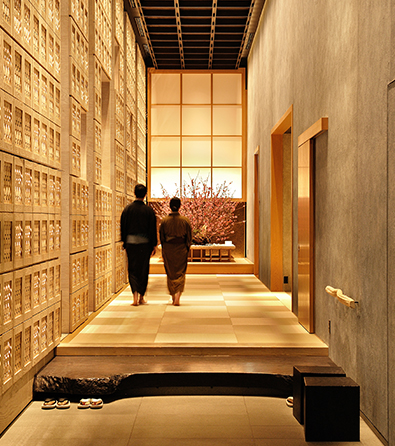
HOSHINOYA Tokyo is a luxury ryokan-style hotel developed by Hoshino Resorts, reinterpreting the traditional Japanese inn within a contemporary high-rise structure in central Tokyo. Designed by architect Rie Azuma (Azuma Architect & Associates), the property combines contemporary architecture with elements rooted in Japanese hospitality, including tatami flooring, minimalist interiors, and a spatial concept inspired by classical ryokan design adapted to an urban context.
 Photo courtesy of HOSHINOYA Tokyo
- Photo courtesy of HOSHINOYA Tokyo
- Photo courtesy of HOSHINOYA Tokyo
- Photo courtesy of HOSHINOYA Tokyo
- Photo courtesy of HOSHINOYA Tokyo
- Photo courtesy of HOSHINOYA Tokyo
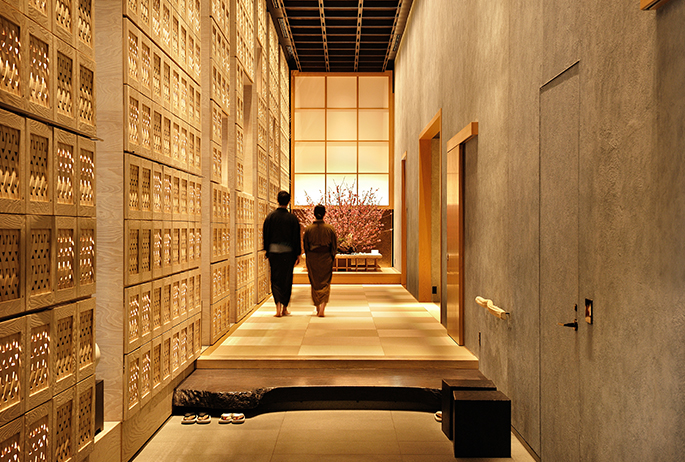
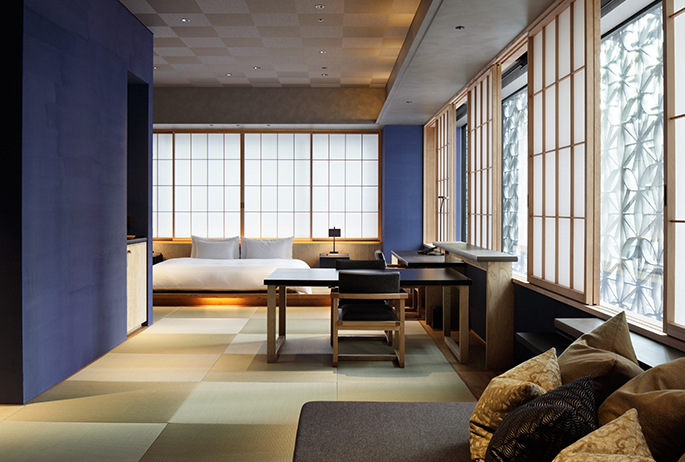
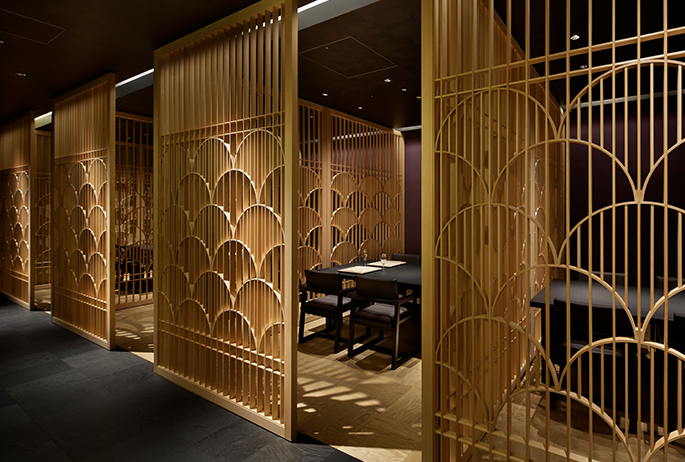
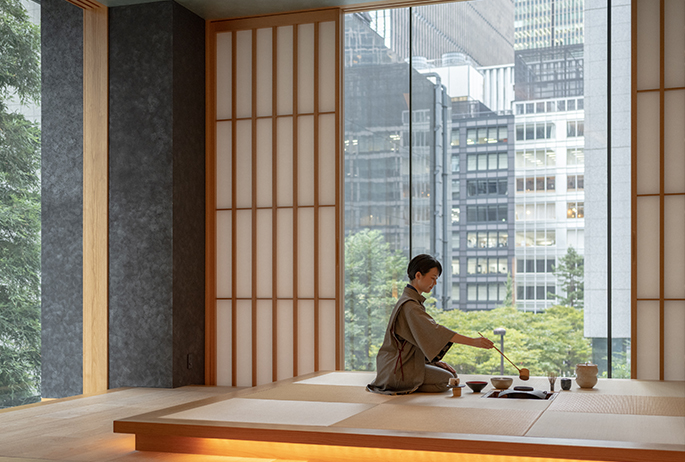
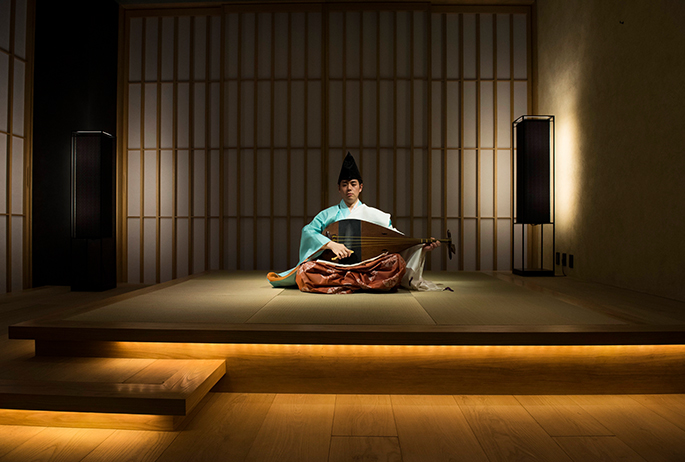
The hotel offers guest rooms designed with traditional materials and minimalist aesthetics, alongside shared guest spaces that reflect the ryokan philosophy of calm, privacy, and attentive service. In addition to the onsen-style bathing experience and refined Japanese dining, the hotel offers cultural programs on-site, including tea ceremonies, traditional performances, and curated activities that introduce guests to Japanese arts, rituals, and the concept of Omotenashi.
HOSHINOYA Tokyo is ideal for a culturally immersive luxury stay in Otemachi, within walking distance of Tokyo Station and the Imperial Palace, with convenient access to the city’s major cultural districts.
Aman Tokyo (Otemachi / Chiyoda)
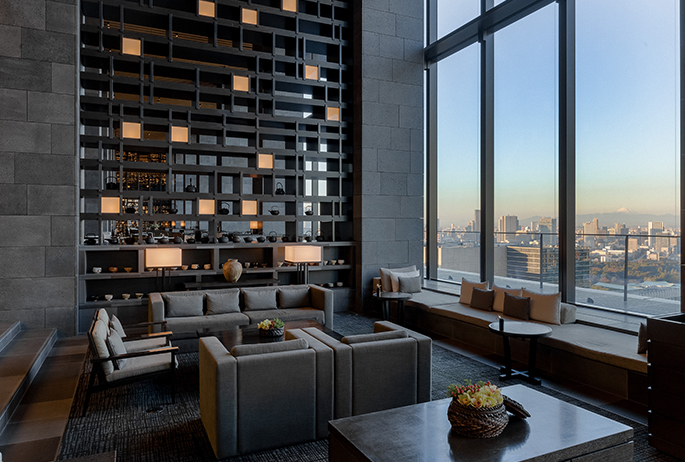
Aman Tokyo is a luxury urban sanctuary occupying the top six floors of The Otemachi Tower in central Tokyo, overlooking the Imperial Palace Gardens and the surrounding skyline. As Aman’s first urban concept hotel, the property translates the brand’s resort philosophy into a vertical architectural setting, with interiors inspired by traditional Japanese residences and characterized by the use of washi paper, wood, and stone. The soaring lobby, rising nearly 30 metres, incorporates an engawa-inspired spatial element that references classical Japanese architecture while framing panoramic city views.
- Photo courtesy of Aman Tokyo
- Photo courtesy of Aman Tokyo
- Photo courtesy of Aman Tokyo
- Photo courtesy of Aman Tokyo
- Photo courtesy of Aman Tokyo
- Photo courtesy of Aman Tokyo
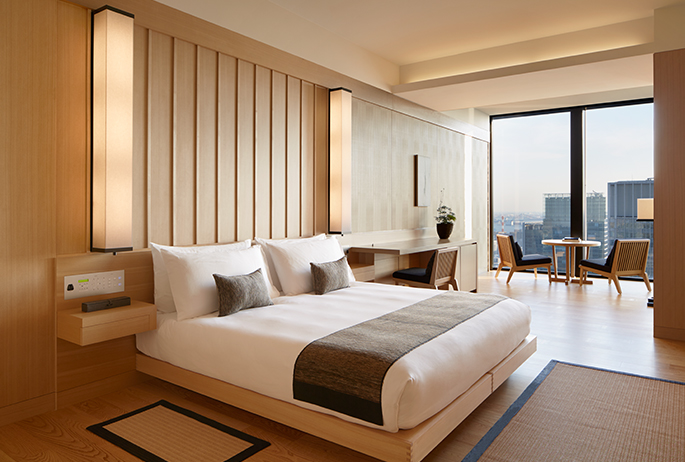
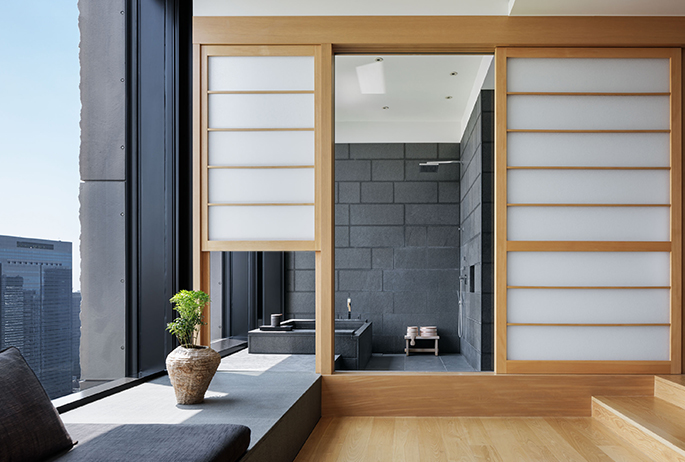
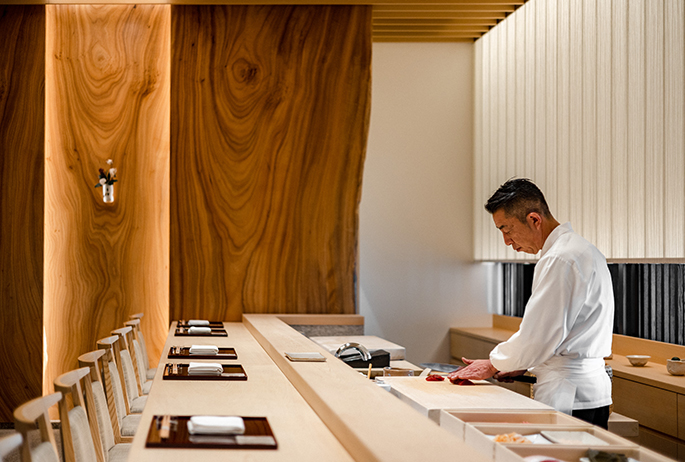
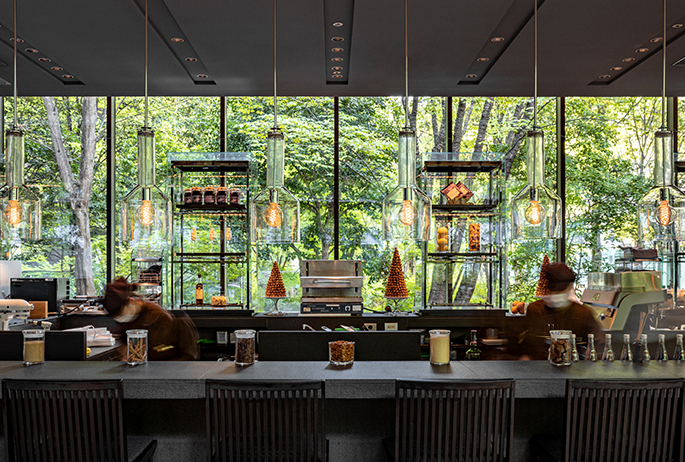
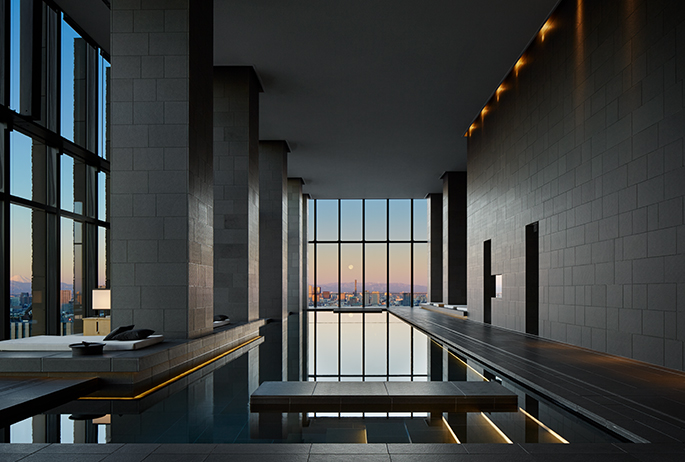
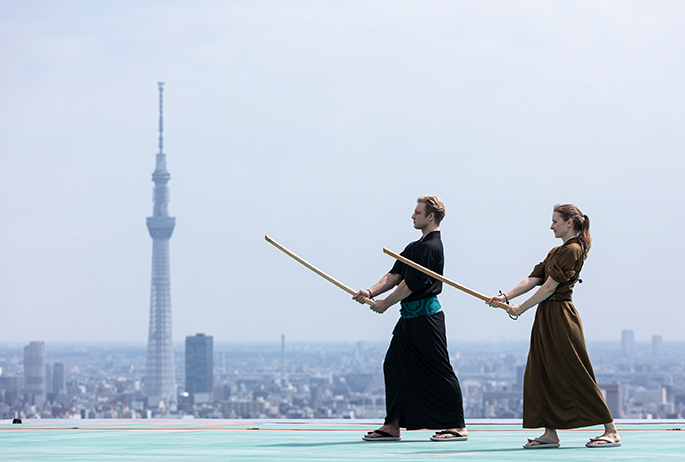
The hotel features 84 spacious suites with deep-soak furo bathtubs, minimalist layouts, and panoramic views of Tokyo, alongside Aman Spa spanning two floors, including onsen-style baths, an indoor pool, yoga and Pilates studios, and holistic treatments inspired by Japanese wellness traditions. Cultural experiences connected to the stay extend beyond the property through curated activities arranged by the concierge, such as Sumida River cruises, behind-the-scenes visits to sumo stables, and private Iaido swordsmanship sessions, offering guests structured access to traditional Japanese culture while staying in central Tokyo.
Aman Tokyo is ideal for a refined and culturally immersive luxury stay in Otemachi, within walking distance of Tokyo Station, close to the Imperial Palace Gardens and Ginza, and directly connected to Otemachi subway station, offering seamless access to Tokyo’s major cultural districts and transport hubs.
Trunk Hotel Yoyogi Park (Shibuya / Yoyogi Park)
Trunk Hotel Yoyogi Park is a contemporary design hotel located between Shibuya and Yoyogi Park. The hotel was designed by architect Keiji Ashizawa, with interiors created in collaboration with Copenhagen-based Norm Architects and the in-house design team, TRUNK Atelier. The design combines a minimalist design approach, natural materials, and extensive indoor planting that establishes a direct relationship between the interiors and the surrounding park environment.
- Photo courtesy of Trunk Hotel
- Photo by Tomooki Kengaku. Courtesy of Trunk Hotel
- Photo by Tomooki Kengaku. Courtesy of Trunk Hotel
- Photo by Tomooki Kengaku. Courtesy of Trunk Hotel
- Photo courtesy of Trunk Hotel
- Photo courtesy of Trunk Hotel
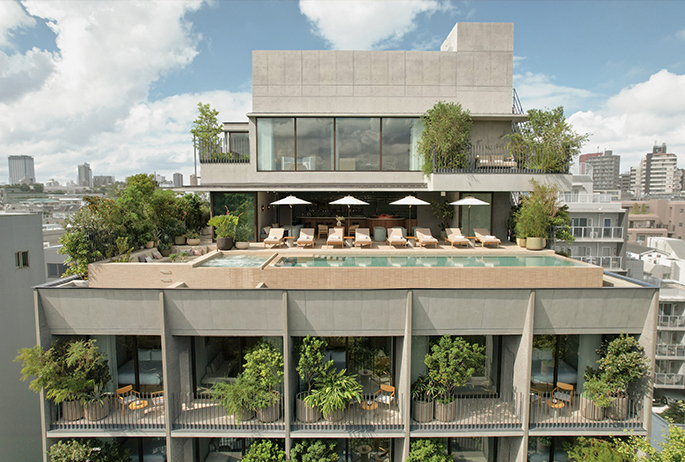
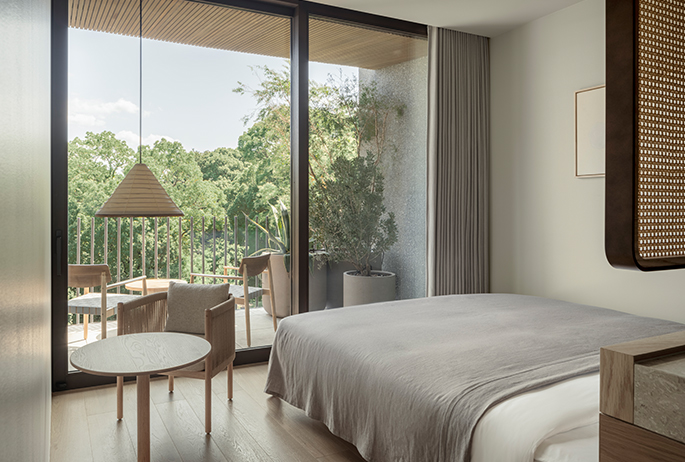
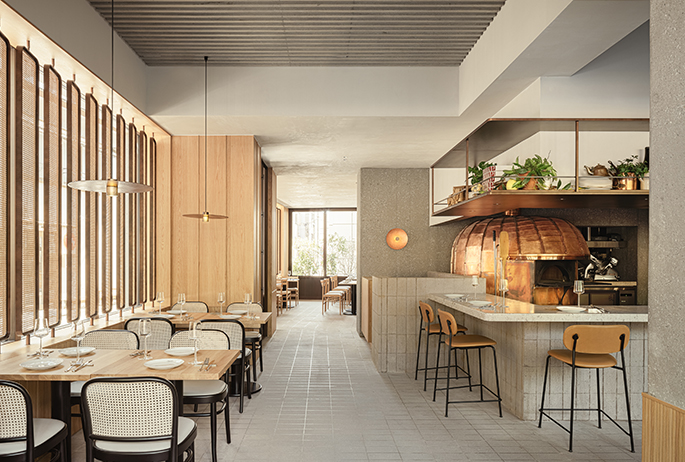
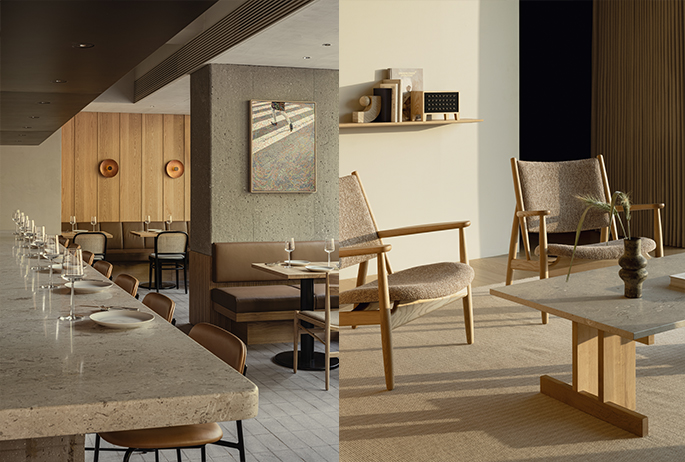
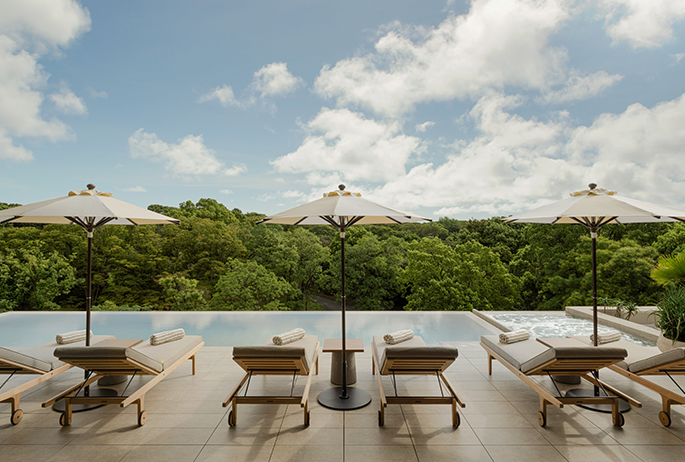
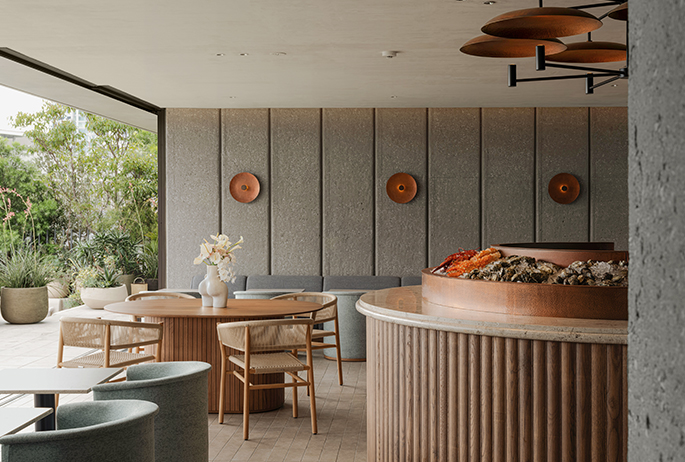
The guest rooms include custom-designed furniture, curated books and objects, natural materials, and loungewear such as robes and original pajamas developed by the hotel. Interiors feature artworks by outsider artists from Atelier Yamanami, a social welfare organization in Shiga Prefecture, with selected pieces available for purchase and proceeds returned to the artists. Public areas include Pizzeria e Trattoria L’OMBELICO, lounge spaces, and TRUNK POOL CLUB, an elevated pool and terrace overlooking Yoyogi Park, where guests are served light meals, drinks, and cocktails.
Trunk Hotel Yoyogi Park is ideal for a design-focused stay near Yoyogi Park, within walking distance of Meiji Shrine and with convenient access to Shibuya’s cultural venues, galleries, and major transport connections.
MUJI HOTEL GINZA (Ginza / Chuo City)
MUJI HOTEL GINZA is a design hotel located above the global flagship MUJI store in Tokyo’s Ginza district, an area known for high fashion and contemporary design culture. With architectural credit attributed to UDS Ltd., the hotel extends MUJI’s philosophy of simplicity and functional living into hospitality, creating a space that appeals both to enthusiasts of the brand’s design ethos and to guests unfamiliar with MUJI who are seeking a thoughtfully designed urban stay.
- Photo courtesy of MUJI Hotel Ginza
- Photo courtesy of MUJI Hotel Ginza
- Photo courtesy of MUJI Hotel Ginza
- Photo courtesy of MUJI Hotel Ginza
- Photo courtesy of MUJI Hotel Ginza
- Photo courtesy of MUJI Hotel Ginza
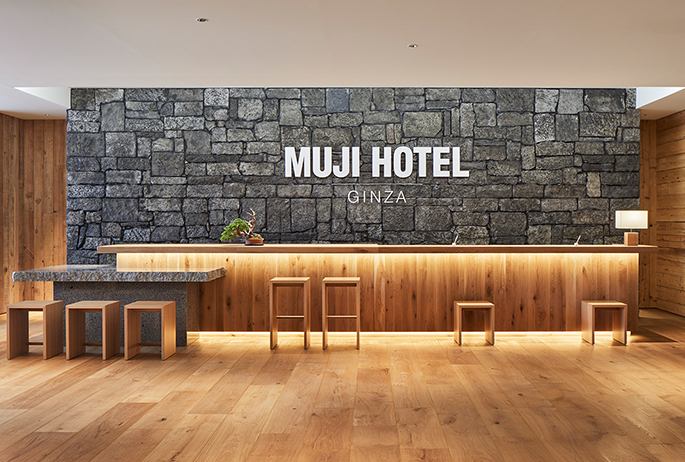
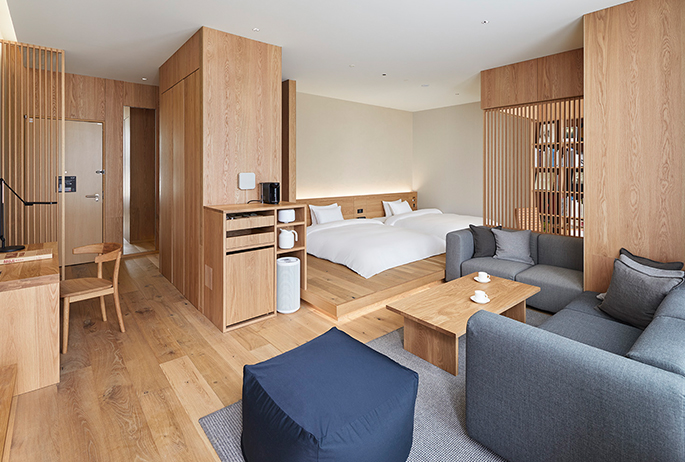
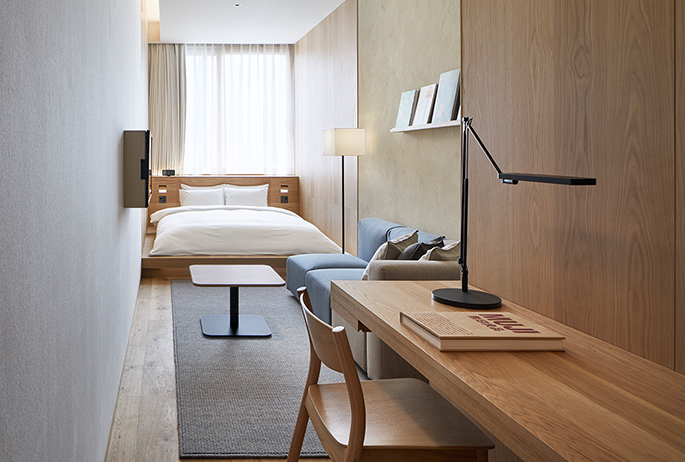
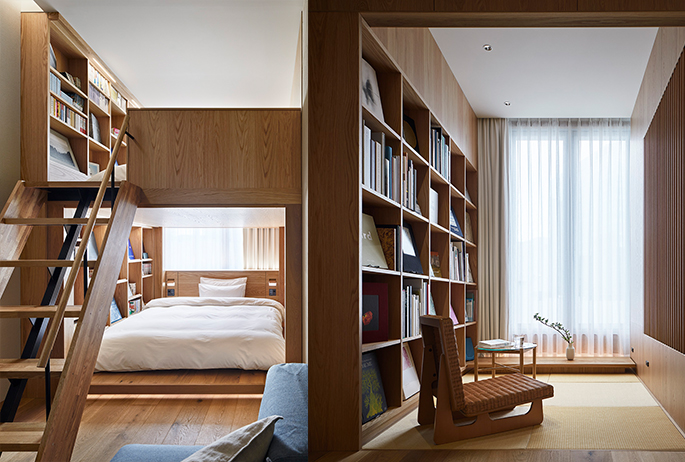
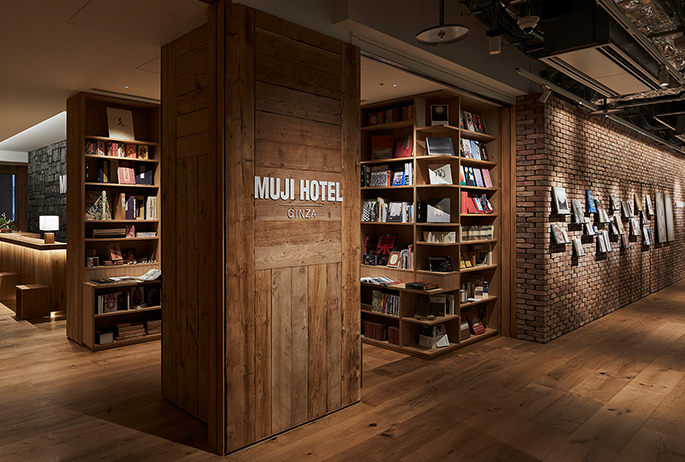
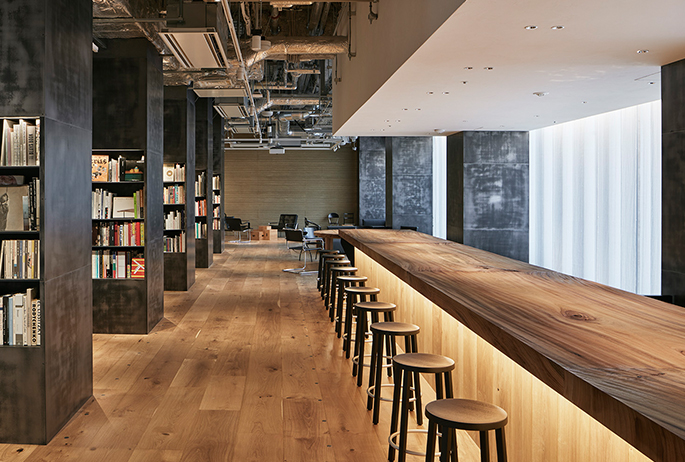
The property offers 79 guest rooms, including compact layouts measuring approximately 2.1 meters in width. Rooms are furnished with MUJI products and designed to prioritize calm and restoration within a minimal footprint, with extensive use of wood, high ceilings (approximately 2.8 meters), and a curated selection of books in each room themed around “Kacho Fugetsu” (flowers, birds, wind, and the moon). Dining and cultural venues in the same building, including MUJI Coffee & Bakery, ATELIER MUJI GINZA, MUJI BOOKS, MUJI Coffee & Salon, and MUJI Diner, operate independently and are not part of the hotel, but guests can enjoy them on site. MUJI Diner serves preservative-free dishes prepared with minimal additives, MUJI Coffee & Bakery offers sandwiches made with bread baked fresh daily, and ATELIER MUJI GINZA includes two design-and-craft galleries, a library focused on art and design, and lounge spaces used for exhibitions and events. The hotel also features a restaurant called Japanese Restaurant WA, which offers a breakfast buffet and Japanese-style lunch for all guests. In the evening, it serves as an exclusive lounge for hotel guests only.
MUJI HOTEL GINZA is ideal for a minimalist, design-conscious stay in central Tokyo, within walking distance of Ginza’s major shopping streets, galleries, and cultural venues, and with convenient access to multiple subway lines for exploring the city.
Hotel Indigo Tokyo Shibuya (Shibuya)
Hotel Indigo Tokyo Shibuya is a contemporary, urban-design hotel located on the 13th to 28th floors in central Shibuya. The property reflects Shibuya as both a high-energy urban district and a place of creative exchange, with original illustrations, art, design references, and a collection of more than 2,100 records integrated throughout the hotel. Guest rooms continue this concept, and optional record players are available for in-room listening.
- Photo courtesy of Hotel Indigo Tokyo Shibuya
- Photo courtesy of Hotel Indigo Tokyo Shibuya
- Photo courtesy of Hotel Indigo Tokyo Shibuya
- Photo courtesy of Hotel Indigo Tokyo Shibuya
- Photo courtesy of Hotel Indigo Tokyo Shibuya
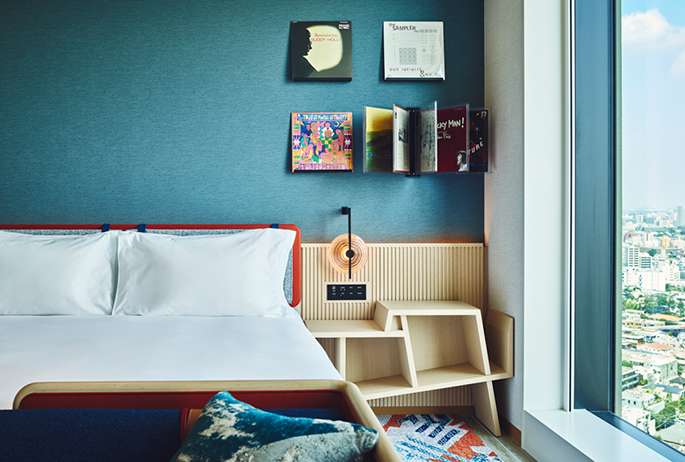
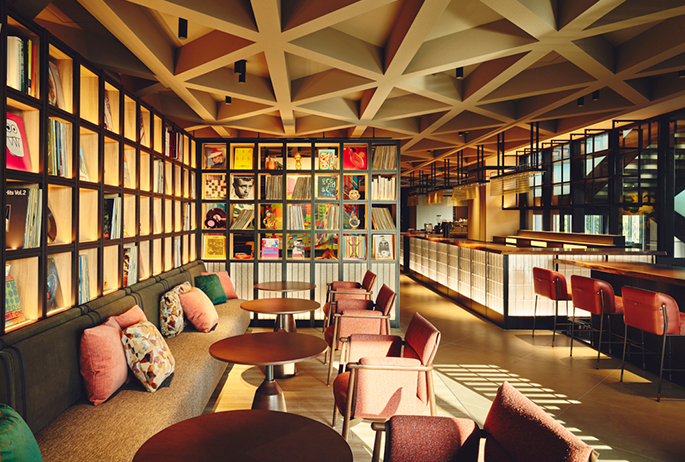
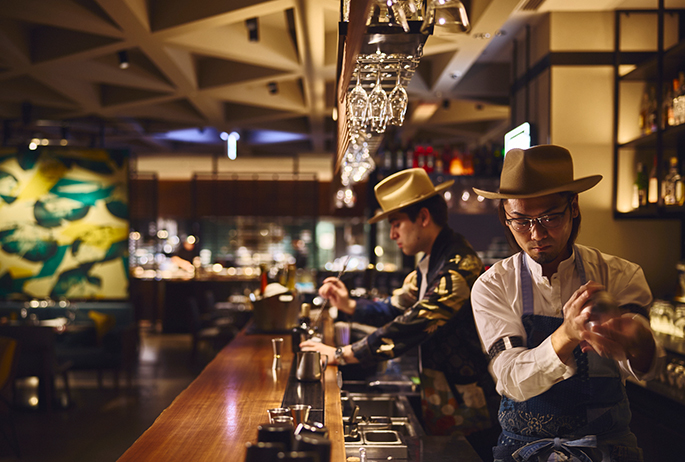
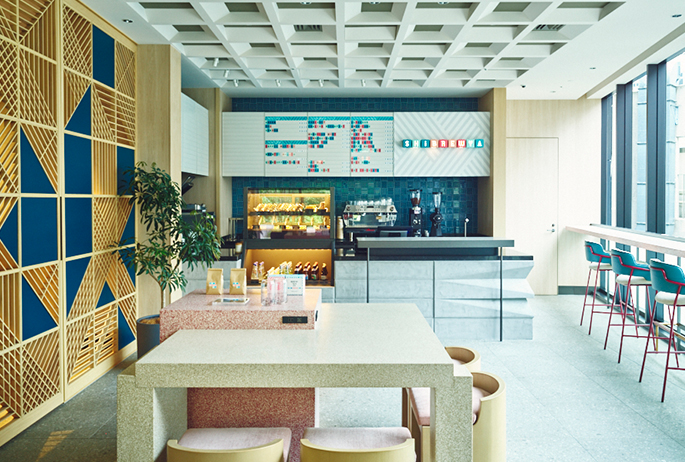
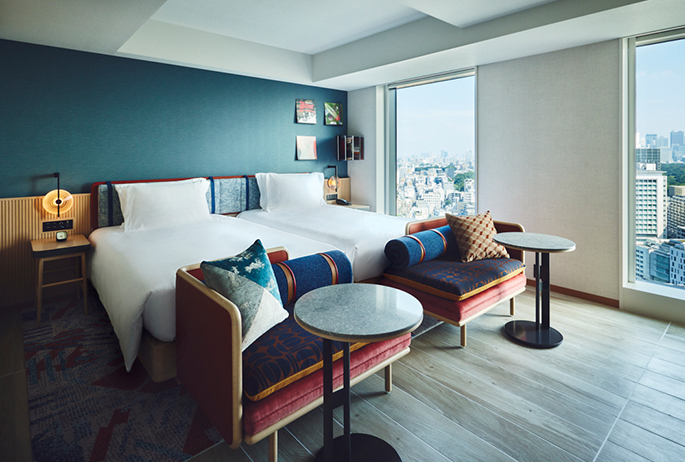
The hotel offers a wide range of room categories, from compact Queen Standard rooms to larger premium rooms with baths, corner layouts, and views toward the Shibuya Scramble Crossing, Tokyo Skytree, and, on clear days, Mount Fuji. Dining and shared facilities include Gallery 11, an all-day restaurant and bar serving Italian cuisine with a Japanese twist; an outdoor terrace; the neighborhood café Shibrewya for coffee and baked goods; and a fitness center equipped with Technogym equipment.
Hotel Indigo Tokyo Shibuya is ideal for a culturally focused stay in Shibuya, just a short walk from Shibuya Station and close to the scramble crossing, record stores, live music venues, and major cultural landmarks across the district.
Hotel K5 (Nihonbashi Kabutocho)
Hotel K5 is a design hotel founded in 2020 in Nihonbashi Kabutocho, set within a historic 1923 bank building formerly known as the Daiichi Bank Annex. The project preserves key architectural elements of the early 20th-century structure while reinterpreting it as a contemporary design hotel within Tokyo’s former financial district. The interiors were designed by Stockholm-based Claesson Koivisto Rune, a design partnership of three architects, who developed the concept around the Japanese notion of “Aimai,” deliberately softening spatial boundaries to create a cohesive and immersive environment. Abundant indoor planting curated by Yard Works further enhances the dialogue between the building’s concrete heritage and a quieter, nature-oriented atmosphere.
- Photo courtesy of HOTEL K5
- Photo courtesy of HOTEL K5
- Photo courtesy of HOTEL K5
- Photo courtesy of HOTEL K5
- Photo courtesy of HOTEL K5
- Photo courtesy of HOTEL K5
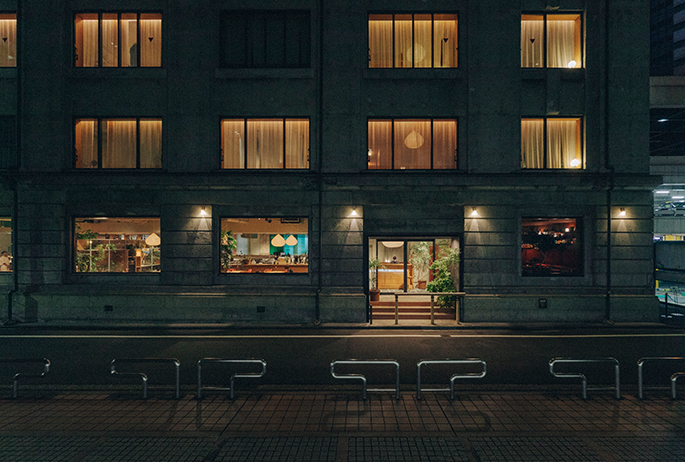
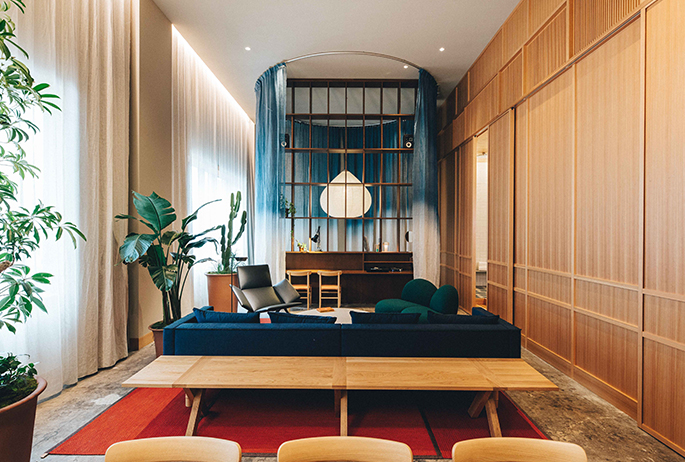
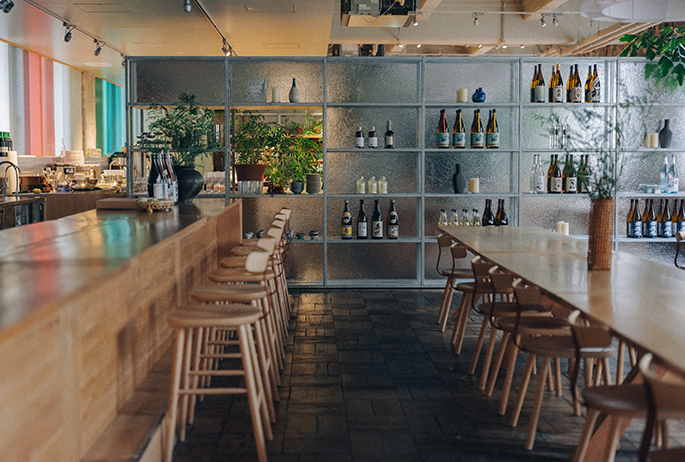
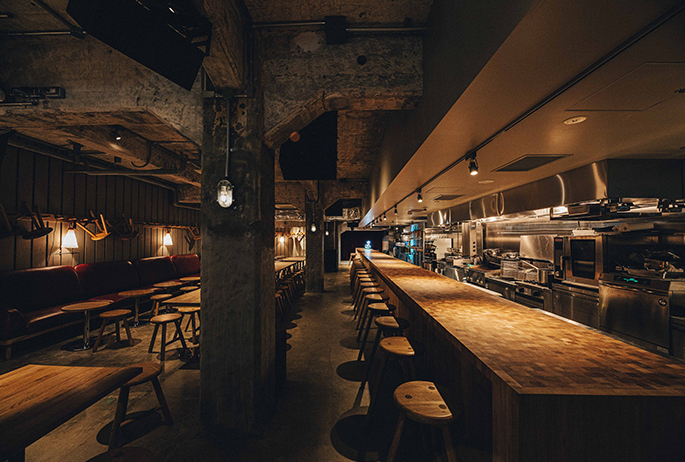
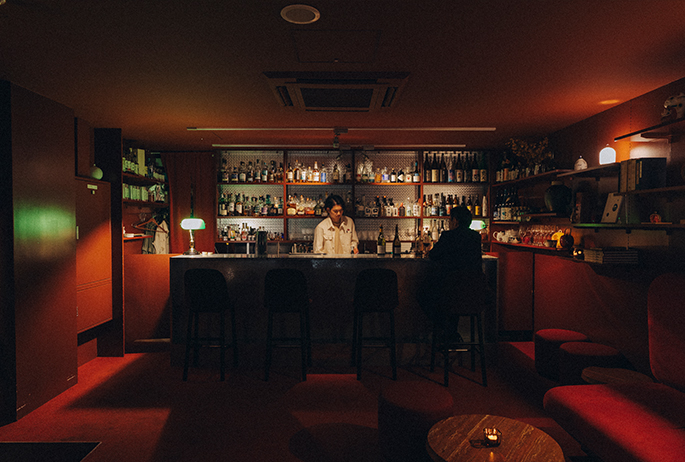
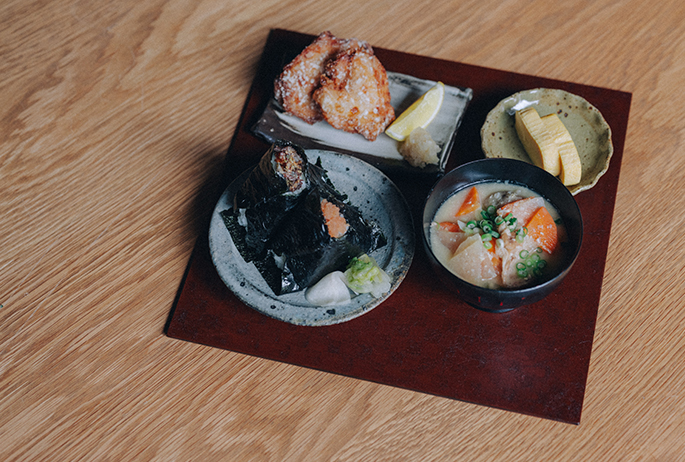
The hotel’s accommodation floors (2nd to 4th) are conceived as tranquil, sensorial spaces focused on calm and relaxation, while the basement and ground floor host the more dynamic food and beverage areas. Public spaces include CAFE DANCE, an all-day café serving homemade waffles, brunch dishes, natural wines, and tapas, and AKAI BAR, a cocktail bar with a focus on Japanese whisky and gin, arranged within a continuous open layout that supports a slower, social rhythm. Guest rooms feature minimalist bathrooms with bathtubs and showers, record players instead of televisions, curated books, plants, and custom furnishings that emphasize privacy, comfort, and a design-led stay experience.
Hotel K5 is ideal for a design-focused stay in Nihonbashi Kabutocho, a historic financial district currently undergoing cultural and architectural revitalization, with convenient access to central Tokyo, Tokyo Station, and major transport hubs.
SOIL Nihonbashi Hotel (Nihonbashi / Ningyocho)
SOIL Nihonbashi Hotel is a 14-room design hotel located in the Nihonbashi–Ningyocho area, conceived as a small, neighborhood-oriented property where historic alleyways and contemporary urban life coexist. The architecture and design were developed by Kiyoaki Takeda Architectural Design Office under the concept of “Backstreet Gardening,” integrating abundant greenery throughout the building and reflecting a local tradition of sharing plants among residents. The project emphasizes the relationship between nature and architecture, with planted balconies, indoor greenery, and a rooftop farm garden that introduce a softer, nature-focused spatial atmosphere within a dense city context.
- Photo courtesy of SOIL Nihonbashi Hotel
- Photo courtesy of SOIL Nihonbashi Hotel
- Photo courtesy of SOIL Nihonbashi Hotel
- Photo courtesy of SOIL Nihonbashi Hotel
- Photo courtesy of SOIL Nihonbashi Hotel
- Photo courtesy of SOIL Nihonbashi Hotel

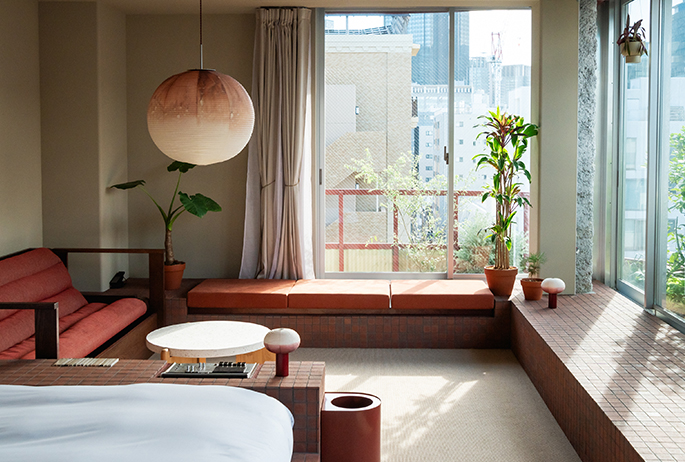
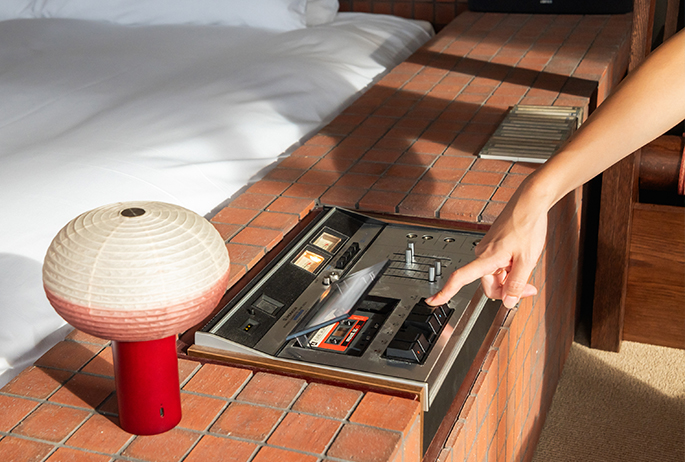
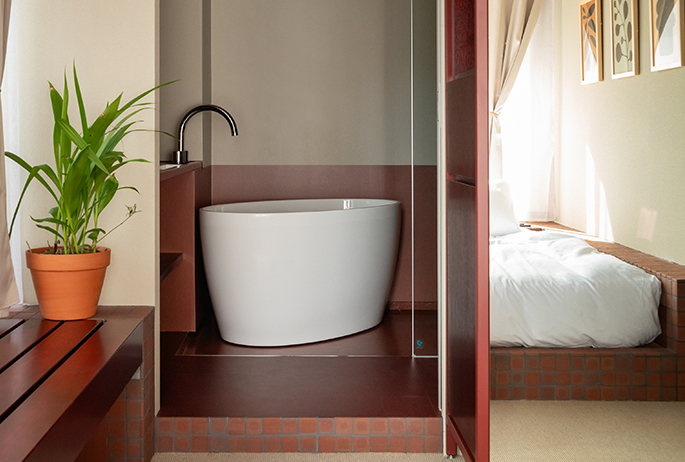
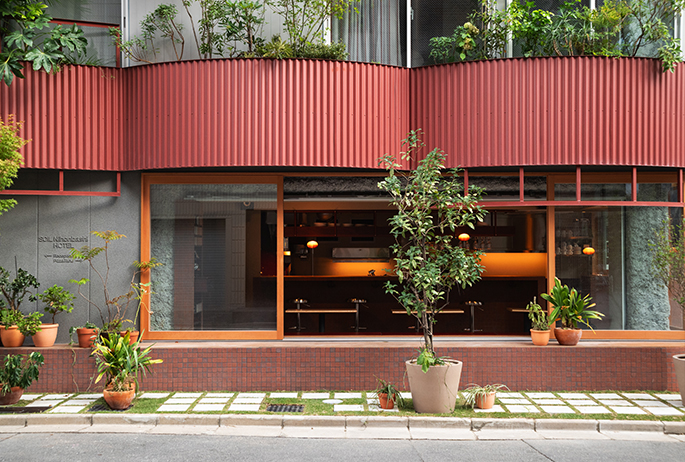
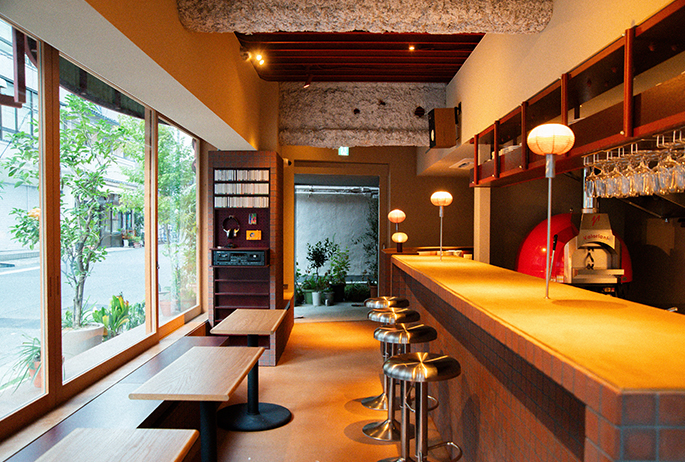
Guest rooms are compact yet thoughtfully designed, with large openings, natural light, and balconies framed by greenery that create a close connection to the surrounding streetscape. Selected rooms include bathtubs, sofas, or loft-style layouts, while interior details such as custom furniture, cassette players, and original design objects enhance the tactile, residential character of the stay. Public spaces include the sourdough pizzeria Pizza Tane on the ground floor, where dough is fermented for over 24 hours using a house-made starter and paired with seasonal ingredients, alongside communal areas that incorporate original interior pieces by staple studio and commissioned artworks by Andreas Samuelsson displayed throughout the hotel.
SOIL Nihonbashi Hotel is ideal for a design-led stay in Nihonbashi, within walking distance of Ningyocho Station and close to traditional shops, cafés, and cultural sites, offering a locally immersive experience connected to the surrounding neighborhood and its creative community.
The Aoyama Grand Hotel (Aoyama / Minato City)
The Aoyama Grand Hotel is a luxury hotel in Tokyo’s Aoyama district, opened in 2022 and located on the former site of Bell Commons, a well-known cultural and commercial complex that once brought together fashion boutiques, restaurants, and creative spaces. Reflecting the design-oriented character of Aoyama and nearby Omotesando, the hotel is conceived as a refined urban retreat combining mid-century modern influences with Japanese minimalism, expressed through clean architectural lines, walnut tones, and brushed brass detailing.
- Photo courtesy of THE AOYAMA GRAND HOTEL
- Photo courtesy of THE AOYAMA GRAND HOTEL
- Photo courtesy of THE AOYAMA GRAND HOTEL
- Photo courtesy of THE AOYAMA GRAND HOTEL
- Photo courtesy of THE AOYAMA GRAND HOTEL
- Photo courtesy of THE AOYAMA GRAND HOTEL
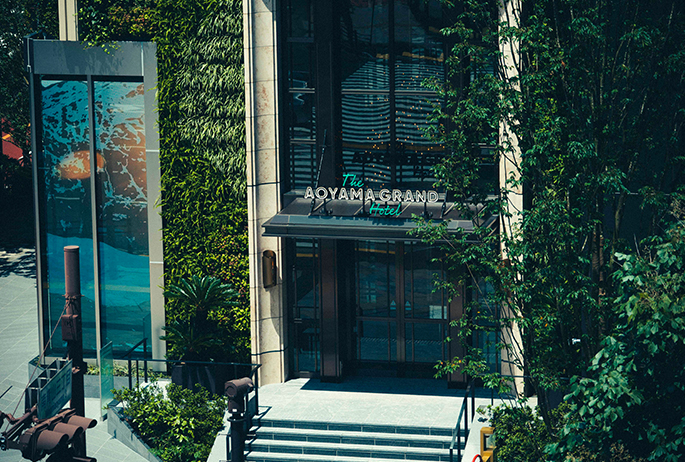
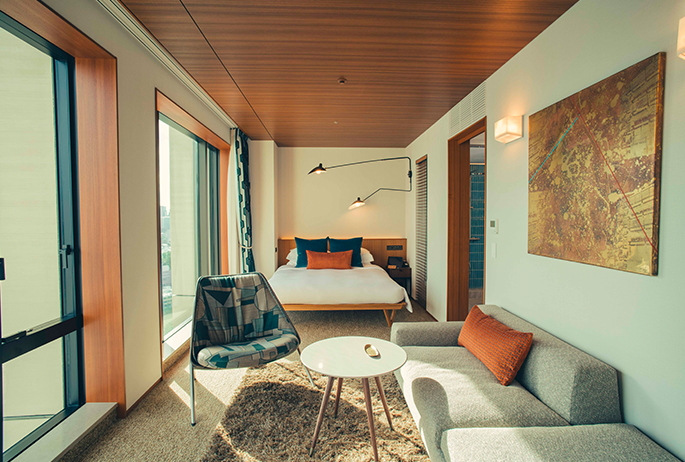

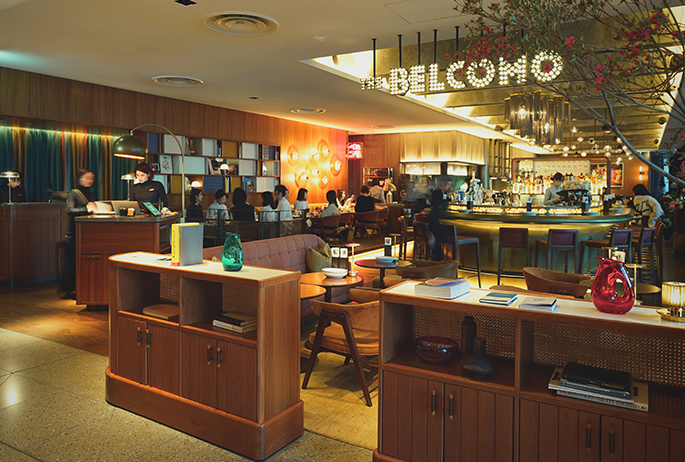
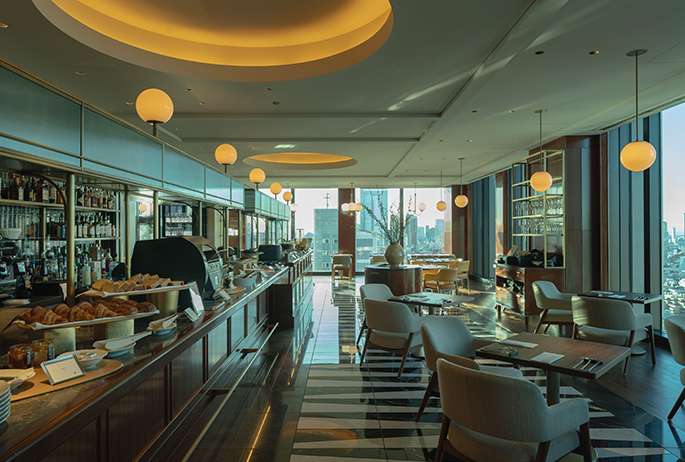
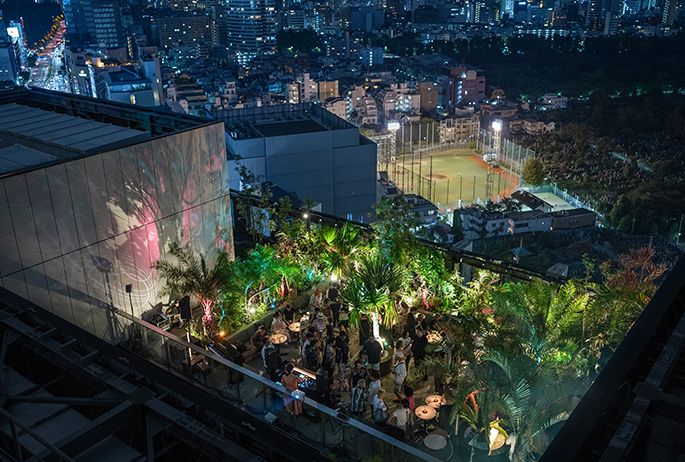
The hotel offers 42 rooms and suites ranging from approximately 32 to 61 square meters, all featuring floor-to-ceiling windows with city or indoor-garden views and bath amenities. Dining is a central component of the guest experience, led by THE BELCOMO, an all-day dining restaurant named after the original Bell Commons and conceived as a contemporary gathering space open to both guests and local residents. Additional venues include ROSSI, a top-floor Italian restaurant with panoramic city views, SHIKAKU, a contemporary Japanese restaurant focused on seasonal ingredients and counter-style dining, and Tonkatsu Junchan, a lunch-only restaurant produced and supervised by kaiseki chef Jun Kurogi. The night bar also collaborates with SG Club, a renowned cocktail bar from Shibuya, contributing to a refined bar program. Additional facilities include a fitness center.
The Aoyama Grand Hotel is ideal for a design-conscious stay in Aoyama, within walking distance of Omotesando and with easy access to Roppongi’s museums, Shibuya, and Tokyo’s leading cultural institutions.
OMO3 Asakusa (Asakusa / Taitō)
OMO3 Asakusa is a city tourism hotel by Hoshino Resorts, designed as an accessible, design-conscious stay in the historic Asakusa district. Opened in 2023, the property was designed by NOMURA Co., Ltd. and follows the OMO brand concept of urban exploration, featuring contemporary interiors and a central OMO Base lounge with neighborhood maps, local recommendations, seating areas, and orientation spaces that support guests in exploring the surrounding area and planning their stay in Tokyo.
- Photo courtesy of Hoshino Resorts
- Photo courtesy of Hoshino Resorts
- Photo courtesy of Hoshino Resorts
- Photo courtesy of Hoshino Resorts
- Photo courtesy of Hoshino Resorts
- Photo courtesy of Hoshino Resorts
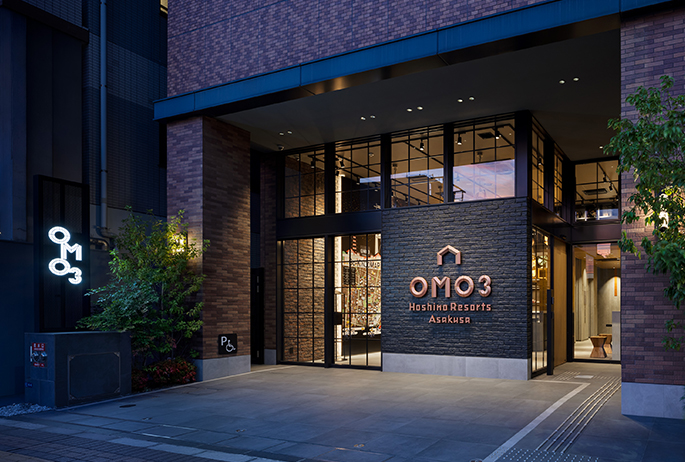
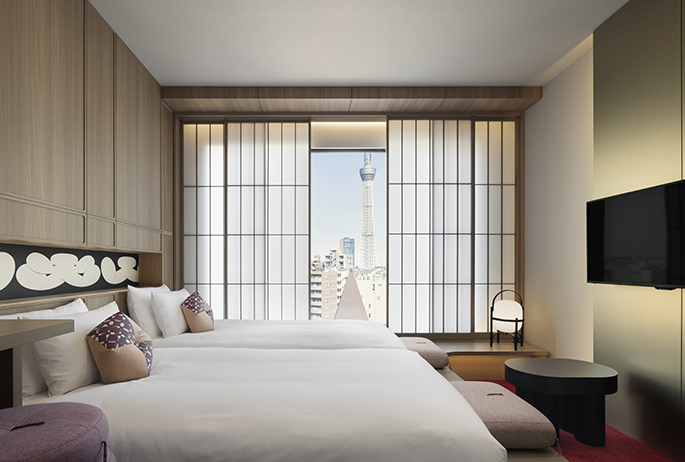
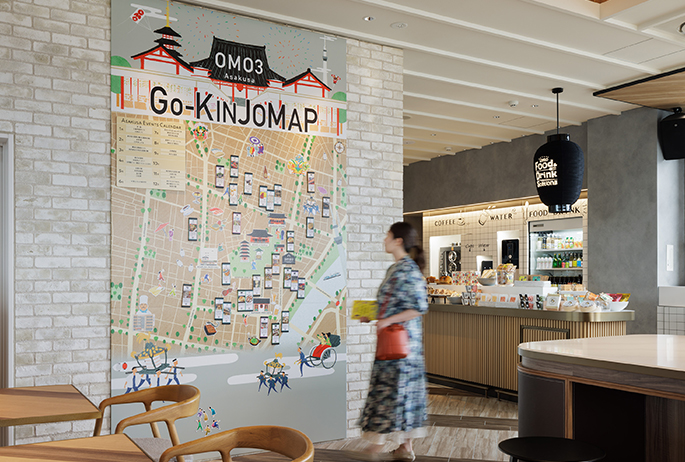
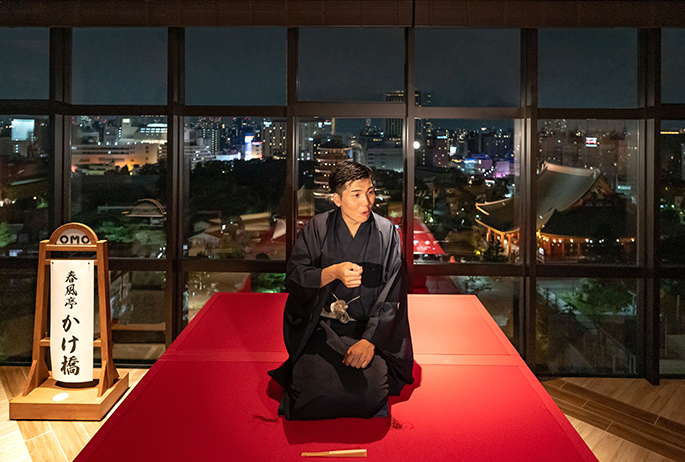
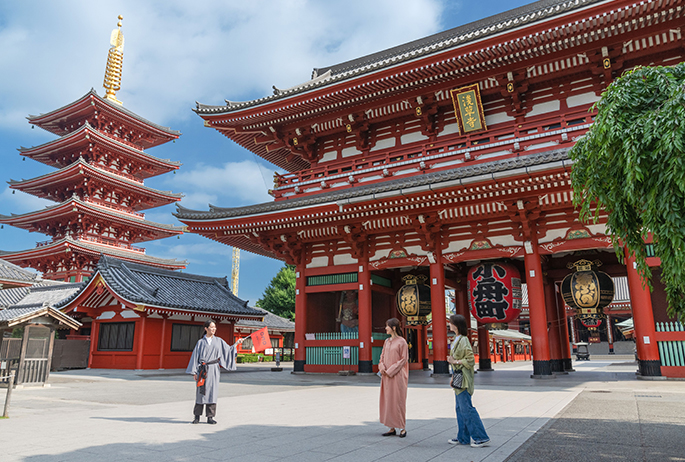
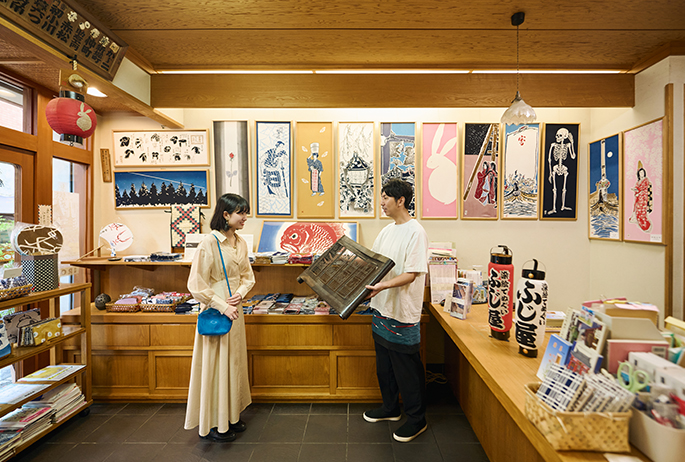
The hotel features compact, efficiently designed guest rooms alongside shared lounge spaces and practical amenities suited to short urban stays. A key aspect of the stay is the OMO brand’s guided neighborhood experiences, including curated walking tours and locally led activities that introduce guests to Asakusa’s history, streets, and cultural landmarks.
Ideal for a culturally focused stay in Asakusa, within walking distance of Sensō-ji Temple and close to Asakusa Station for convenient access across Tokyo.
With the interactive map below, you can compare all available accommodation options in the city and find the best prices from a variety of leading providers.
* These recommendations have been thoughtfully curated for you and include affiliate links. By booking through them, you help support our ongoing cultural work, at no extra cost to you.