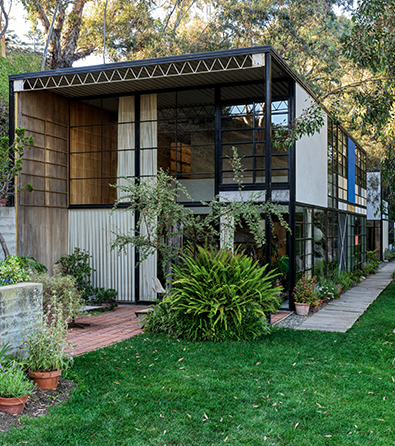
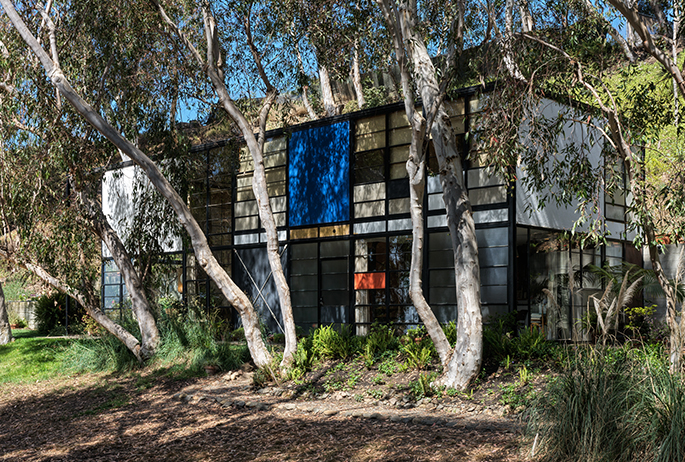
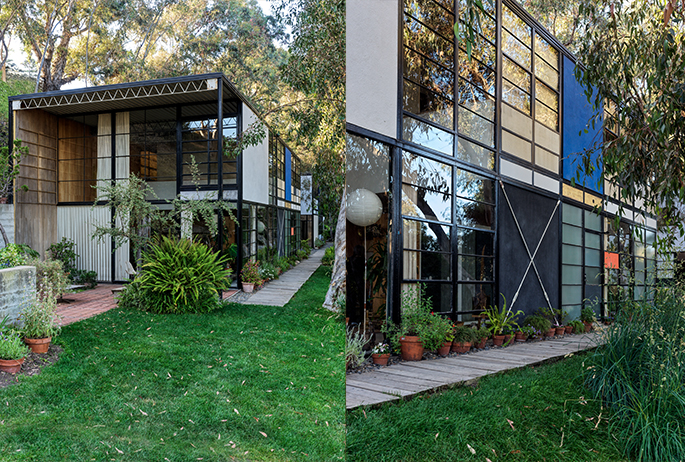
Eames House, also known as Case Study House No. 8, is one of the most iconic landmarks of modern architecture in the United States. Located in the Pacific Palisades neighborhood of Los Angeles, the house was completed in 1949 and designed by Charles and Ray Eames, two of the most influential figures in twentieth-century design. Conceived as both a home and a creative workspace, the Eames House is a key destination for travelers interested in architecture, design, and cultural history, offering a rare opportunity to experience modernism as a lived environment rather than as a museum exhibit.
 The Eames House as Photographed by Chris Mottalini, 2025 © 2025 Eames Office, LLC. All rights reserved
- The Eames House as Photographed by Chris Mottalini, 2025 © 2025 Eames Office, LLC. All rights reserved
- The Eames House as Photographed by Chris Mottalini, 2025 © 2025 Eames Office, LLC. All rights reserved
- The Eames House as Photographed by Chris Mottalini, 2025 © 2025 Eames Office, LLC. All rights reserved
- The Eames House as Photographed by Chris Mottalini, 2025 © 2025 Eames Office, LLC. All rights reserved
- The Eames House as Photographed by Chris Mottalini, 2025 © 2025 Eames Office, LLC. All rights reserved
- The Eames House as Photographed by Chris Mottalini, 2025 © 2025 Eames Office, LLC. All rights reserved
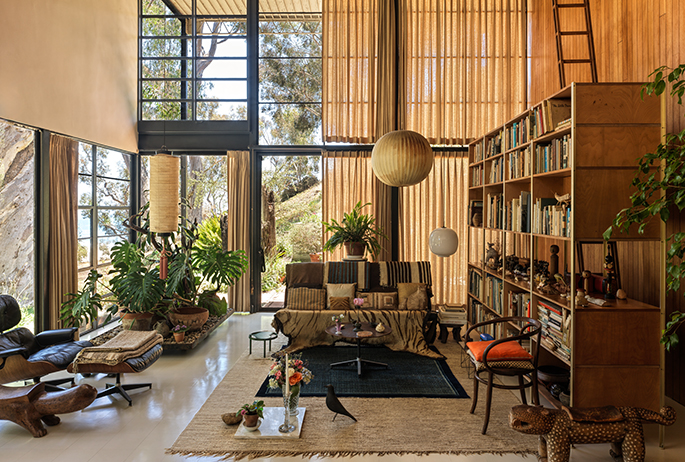
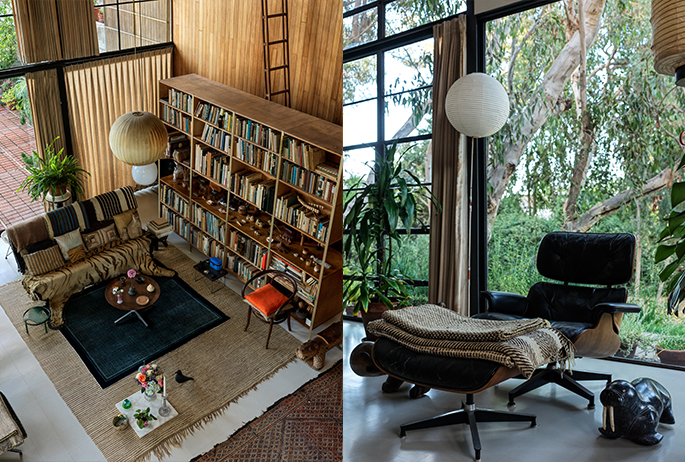
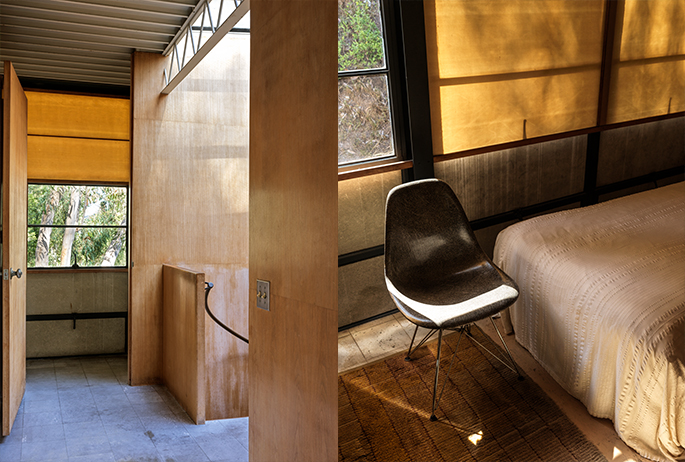
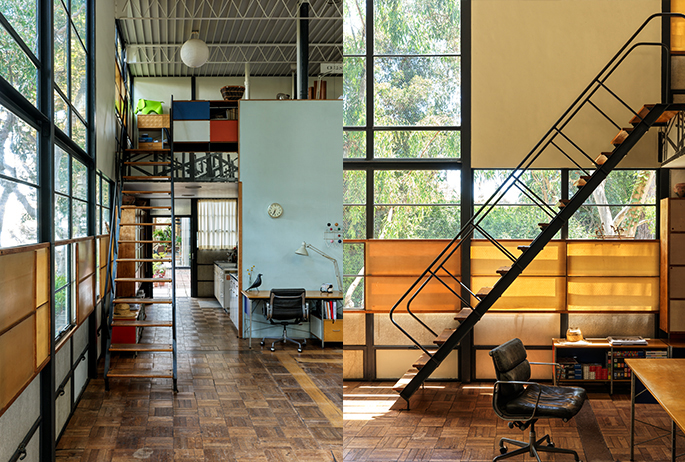
Charles and Ray Eames developed a collaborative practice that operated at the intersection of design, architecture, and film. After their marriage and move to Los Angeles in the early 1940s, they established the Eames Office, a multidisciplinary studio that brought together creators from across creative disciplines. Central to their practice was the belief that design should improve everyday living and be accessible to many rather than reserved for a privileged few. The Eames Office’s emphasis on experimentation and a rigorous approach to understanding problems before solving them produced work that feels both familiar and visionary.
Over more than four decades, Charles and Ray Eames produced a remarkable body of work that reshaped modern design. They pioneered techniques in molded plywood, plastics, and mass production that brought high-quality designed objects into everyday life, with pieces such as the Eames Lounge Chair and their molded plywood chairs becoming icons of modern furniture. At the same time, they expanded design beyond objects to include experimental films and large-scale exhibitions, all grounded in the conviction that thoughtful design could enrich how people live, work, and learn. Their legacy continues to influence designers and cultural institutions around the world.
The Eames House began as an experimental commission within the Arts & Architecture Case Study House Program, which aimed to explore new models for modern, affordable housing in the aftermath of the Second World War. Charles Eames initially developed the project in collaboration with Eero Saarinen, a close creative partner, as a prototype rather than a private residence. Their original proposal, known as the “Bridge House,” was designed to span the meadow on the site, demonstrating the potential of industrial materials and prefabricated construction. When postwar shortages of steel delayed the project, Charles and Ray Eames reworked the design independently, reusing materials that had already been ordered and transforming the concept into two rectangular structures, one for living and one for working, carefully positioned along the hillside.
“The house would make no demands for itself and would serve as a background for life in work, with nature as a shock absorber.” Charles Eames
In designing Eames House, Charles and Ray Eames introduced two guiding principles that shaped the project as it exists today: preserving the meadow and the mature eucalyptus trees along the hillside, and maximizing spatial volume while using minimal materials. They reconfigured the house and studio as structures tucked discreetly into the slope, integrating the architecture into the landscape rather than imposing it upon it. The meadow itself was left untouched and became an extension of daily life, used for work, gatherings, and reflection.
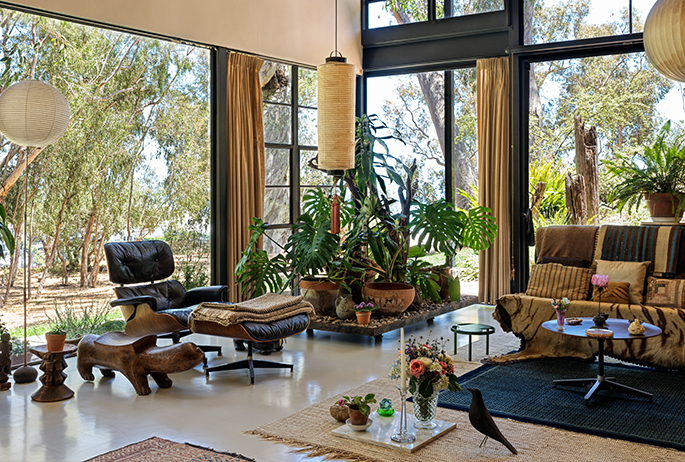
Charles and Ray Eames moved into the house on Christmas Eve in 1949 and lived and worked there for the rest of their lives. The interior evolved continuously, filled with furniture prototypes, artworks, textiles, books, toys, and objects collected from around the world. Rather than presenting a fixed or formal composition, the house functioned as a living environment shaped by daily use, reflecting the Eameses’ belief that good design emerges from curiosity, experimentation, and close attention to human experience.
Today, the Eames House is preserved by the Charles & Ray Eames Foundation, which is dedicated to safeguarding the site and expanding the designers’ intellectual and creative legacy. Through research, public programs, and educational initiatives, the Foundation ensures that the Eames House remains not only an architectural landmark but an active cultural site that continues to inspire new generations of designers and thinkers. Visiting the Eames House offers an experience that goes beyond a conventional architectural tour and into the lived world of Charles and Ray Eames. Guided visits introduce the design of the house and studio, allow access to the working Studio, and include time to explore the surrounding grounds. Exterior views of the house and meadow are typically part of the visit, while private tours offer deeper engagement with the spaces and collections, which remain largely as they were during the Eameses’ lifetimes.